

the fastest
1.2 Hybrid 48V 110 Pop 5dr eDCT-6
- 0-6211.2s
- CO2
- BHP108.6
- MPG
- Price£19,485.004
For the electric version, performance is what you'd expect: smooth, quiet and with a prompt response to the accelerator pedal. Although the response itself is pretty languid. Again, not unexpected.
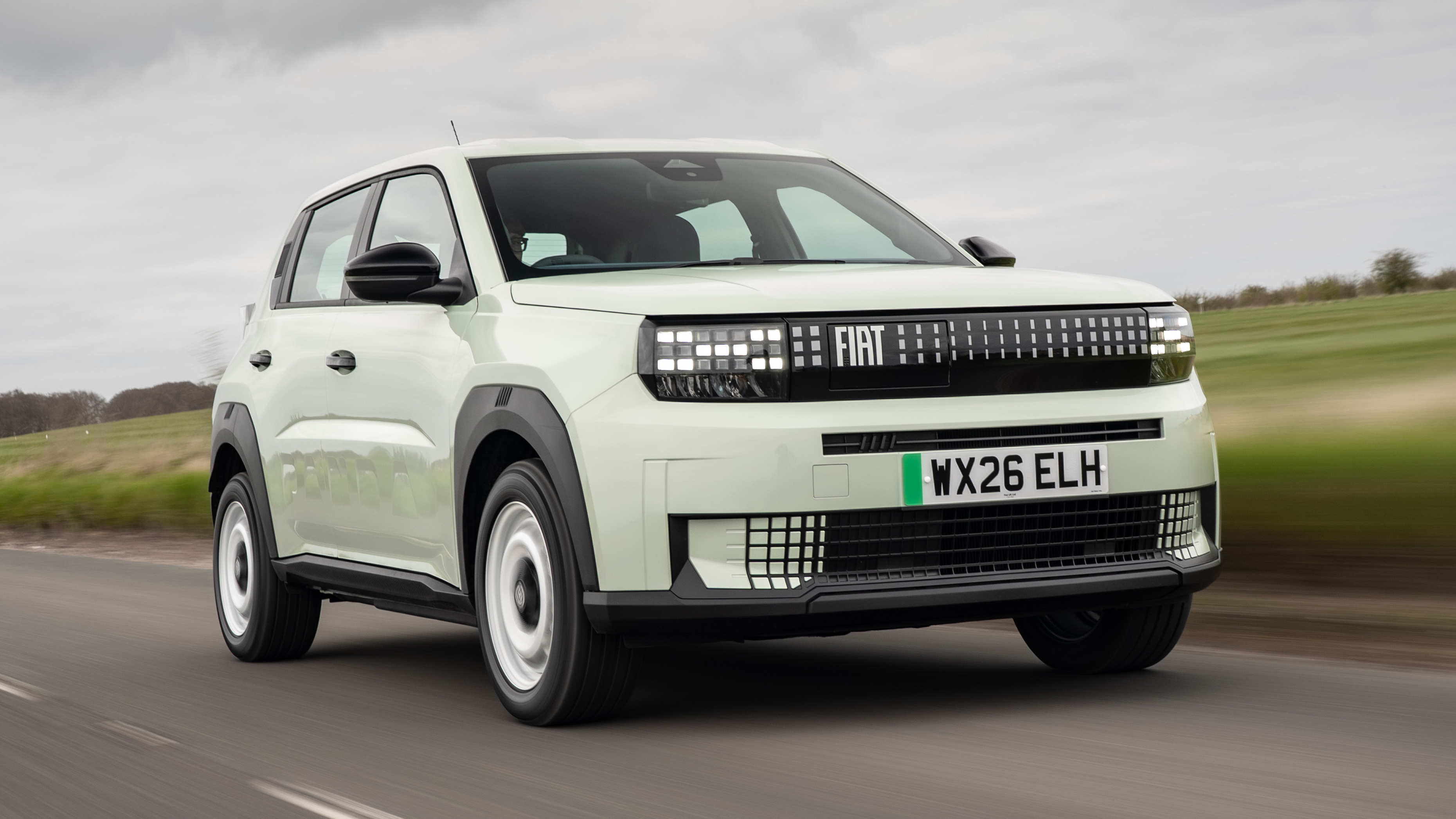
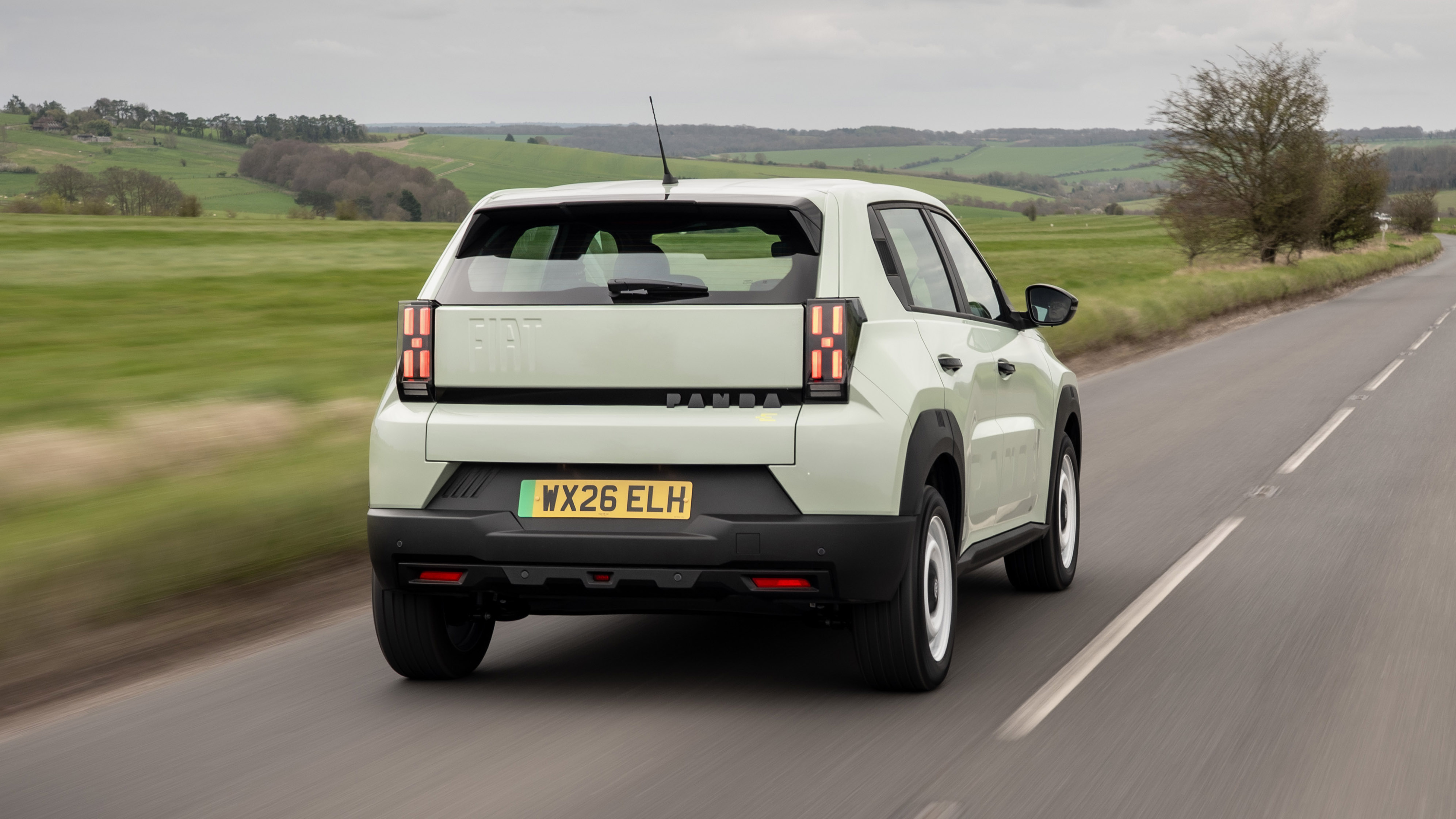
Throwing shade on the Panda 100HP of blessed memory, the Grande Panda electric has 111bhp to dispense through its front wheels. It weighs around 1,500kg, which is light for an EV but not for a supermini. Net result is an 11-second 0-62mph time. Top speed is 83mph. We did hit that dizzy rate of knots on an Italian Autostrada, after a bit of a run-up. The car sits pretty happily at 70-80mph. It feels like a limited top speed, imposed by Fiat to stop you draining the 44kWh battery in a matter of minutes.
The little turbo three-cylinder suits the Big Panda's personality to a tee. It's thrummy and responsive, and with 109bhp on tap (plus a 100kg+ weight saving vs the EV) there's enough shove to push it to 62mph in 10 seconds. The six-speed auto gearbox generally keeps up well, too.
The battery might be under 1kWh in capacity, but the Grande Panda runs on electricity alone more often than you might imagine. The engine doesn't need to kick in until 18mph either, so you can potter about town in relative silence.
We saw a mightily impressive 54.3mpg over almost 200 miles of real world town, country and motorway driving.
Nope. If you want to be economical, keep the heater off and treat the pedals like glass. Power and steering weight and the rest are resolutely non-configurable. And a sport mode would be idiotic in an economy car. The Grande Panda keeps it simple.
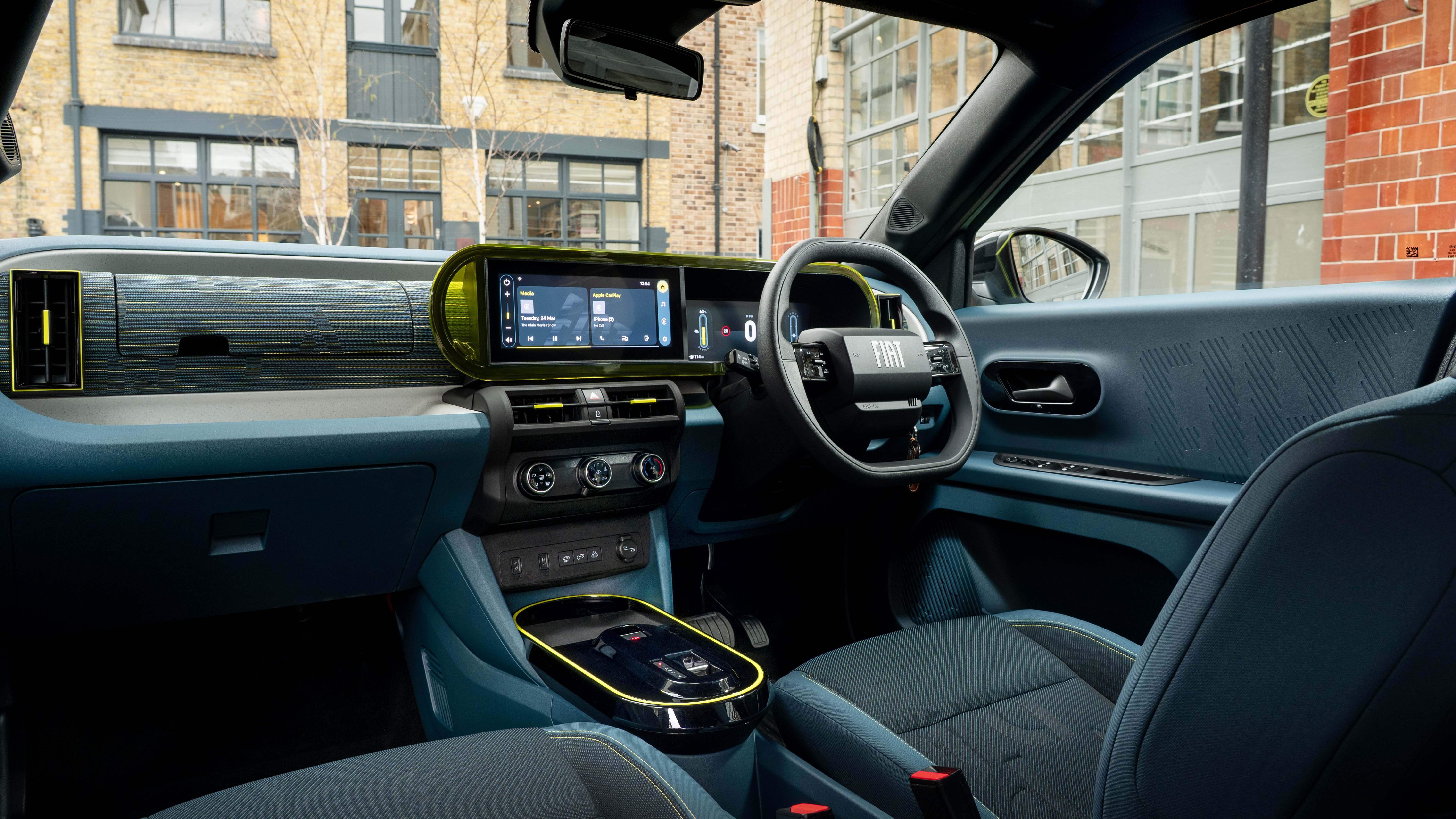
By the same token there's no enhanced regeneration or one-pedal mode in the EV. Indeed, the Grande Panda Electric has a C position next to PNRD, and that's ‘coast’, encouraging you to anticipate well and lift off early, the key to eco-driving. In the hybrid, you get an L position to hold lower gears.
The steering in the EV is too light and a little lazy for our taste, and it's a bit too keen to roll as well. It's more composed than a Citroen e-C3, but the Citroen uses that to its advantage. The hybridised Grande Panda is better. It still has that light steering that lacks feel, but the car responds to your inputs better and rides with a bit more composure.
On our UK test of the Electric we found the ride a touch firm – nowhere near as absorbent as the e-C3, which really goes all out for comfort. You'd think that would make the Grande Panda the more engaging car in bends, but it screams reluctance when you pick up the pace. You can almost hear it cry 'Please can we go home now?'
The Hybrid is a little more game, and with less weight to carry around it's better at dealing with bumps in the road. On motorways both Pandas are pretty stable, and wind noise isn't much of a bother. The tyres and suspension are generally quiet too, so it feels solidly built and refined for a car this small.
Given the low price you're not showered with advanced driver assist tech. Speed limit alert and lane departure assistance are present, as the law demands. And as the law demands they're activated every time you start the car. But they each have their own actual deactivation switch on the dash. Excellent. Because, as with any car, they sometimes get it wrong.
For the human at the wheel, night driving is eased by the standard LED headlights.
Range for the EV is 199 miles WLTP – roughly 150 in mixed driving – from a 44kWh battery. Charging is claimed to be 27 minutes for 20 to 80 per cent, which represents only about 85 additional motorway miles. Same problem as any EV with 200 miles WLTP.
It peaks at 100kW but not for long, so on the more common (and sometimes cheaper) 50kW DC posts, it won't take much more time. Also, it's an LFP battery. That type is robust against being fully charged and discharged, so you can use every per cent without a care.
For the petrol version, the WLTP data is 56.5mpg and 115g/km CO2. Well beaten by a Yaris full-hybrid, but decent for a mild hybrid and – based on our 200-mile drive across varying roads – not unachievable in real life.
Get all the latest news, reviews and exclusives, direct to your inbox.