



25
That pretty much sums it up. The original Audi A2 has long been revered by the motoring press for its distinctive shape, cutting-edge aluminium frame, sub-900kg kerbweight and 1.2 diesel’s rather spectacular 94mpg. In the pre-hybrid era! Makes today’s plug-ins look like charlatans.
Anyhow, as well as being frugal the A2 was cool, clever, delightfully over-engineered, roomy and fun to drive. So obviously it was a box office bomb. In its seven years on sale between 1999 and 2006, Audi shifted just 176,000 of ‘em and lost somewhere in the region of 1.33 billion euros on it. Oh sheiße!
The problem was the A2 offered A3 levels of space… so people just bought that. Forget the radical engineering, why pay saloon money for a supermini?
Because this time its overheads are much, much lower. Through VW Group’s one-size-fits-all MEB platform, it has access to a ready-made canvas that doesn’t need an eye-watering sum of money to get it off the ground, and there’s a proven market for compact electric crossovers. Which is what this is. Already the business case looks like it’d last more than five seconds on Dragon’s Den.
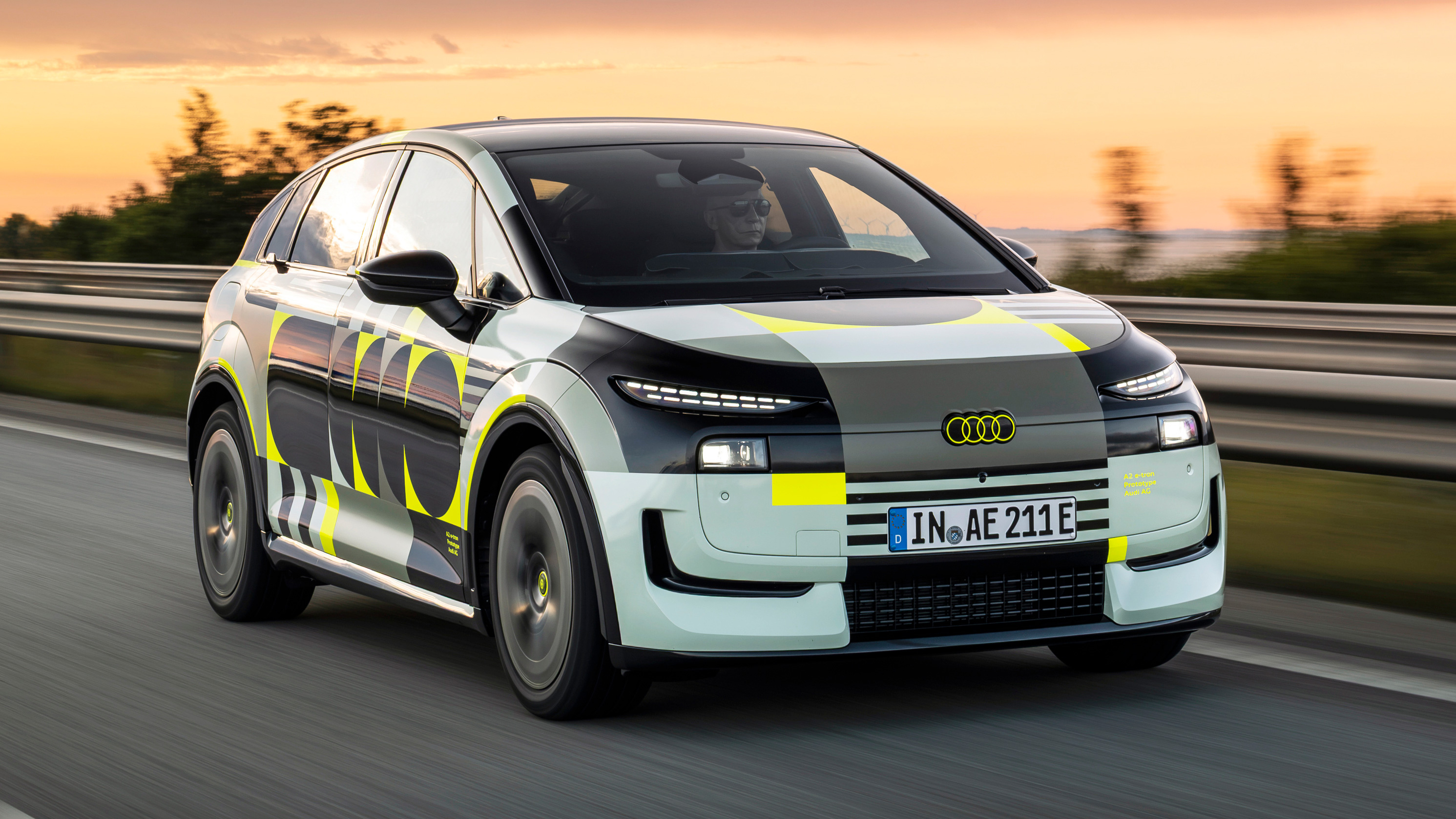
Audi has also recognised that it can play up to its heritage without looking utterly shameless. This isn’t a Ford Capri reincarnated as an SUV, this is a modest family car coming back as a modest family car. Only this time the powertrain is different.
I wouldn’t go that far. Although Audi is billing the new A2 as an economy meister and claims to have made a number of advancements that live up to the spirit of the old car.
Audi is billing the new A2 as an economy meister
Count ‘em. Silicon carbide semiconductors are 10 per cent more efficient than plain old silicon ones. The motor — of the permanently excited synchronous variety — gets thinner laminations (2mm instead of three) to reduce energy losses. New oil reduces friction with the transmission, and is said to be worth 12km when it’s cold.
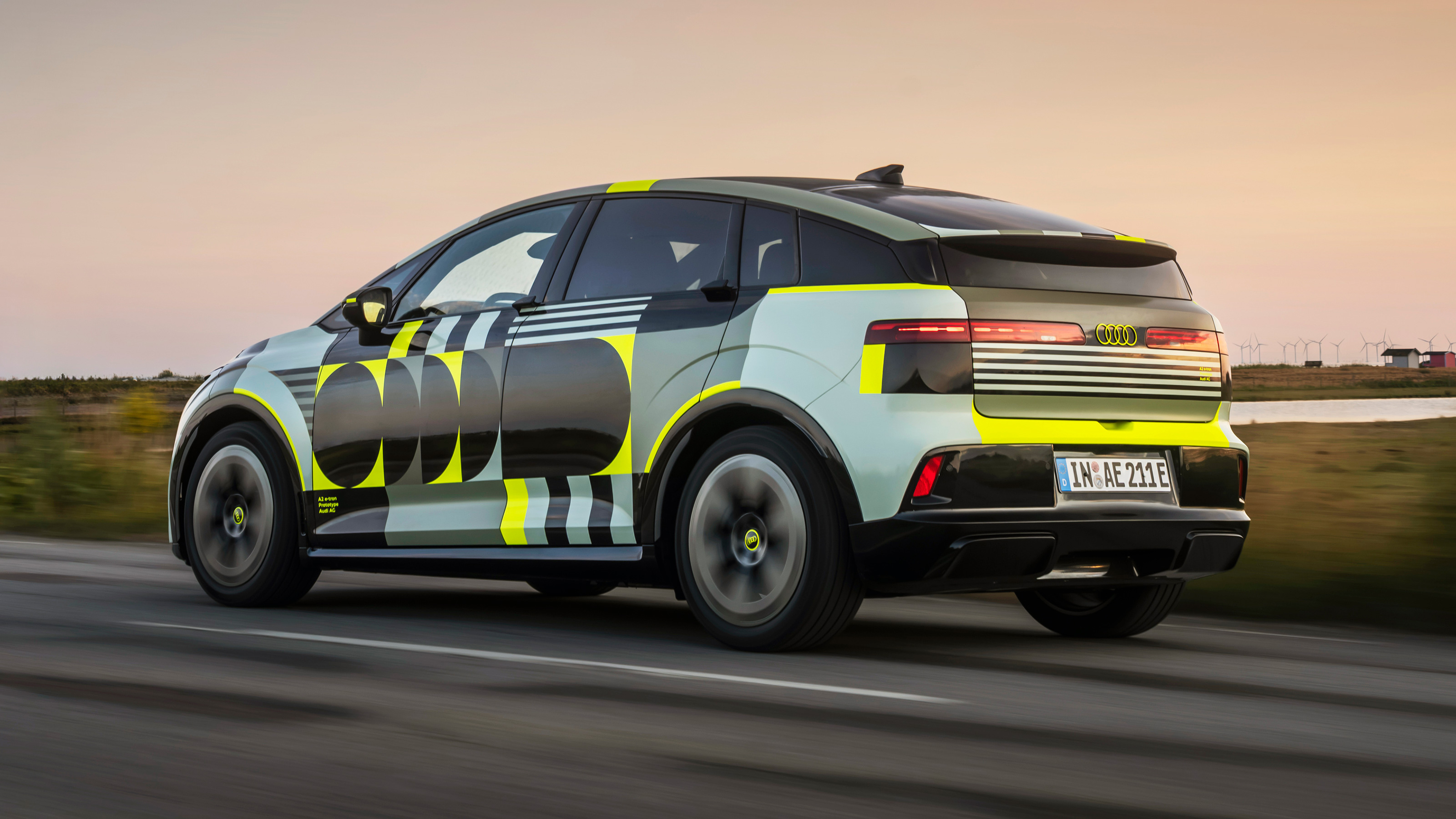
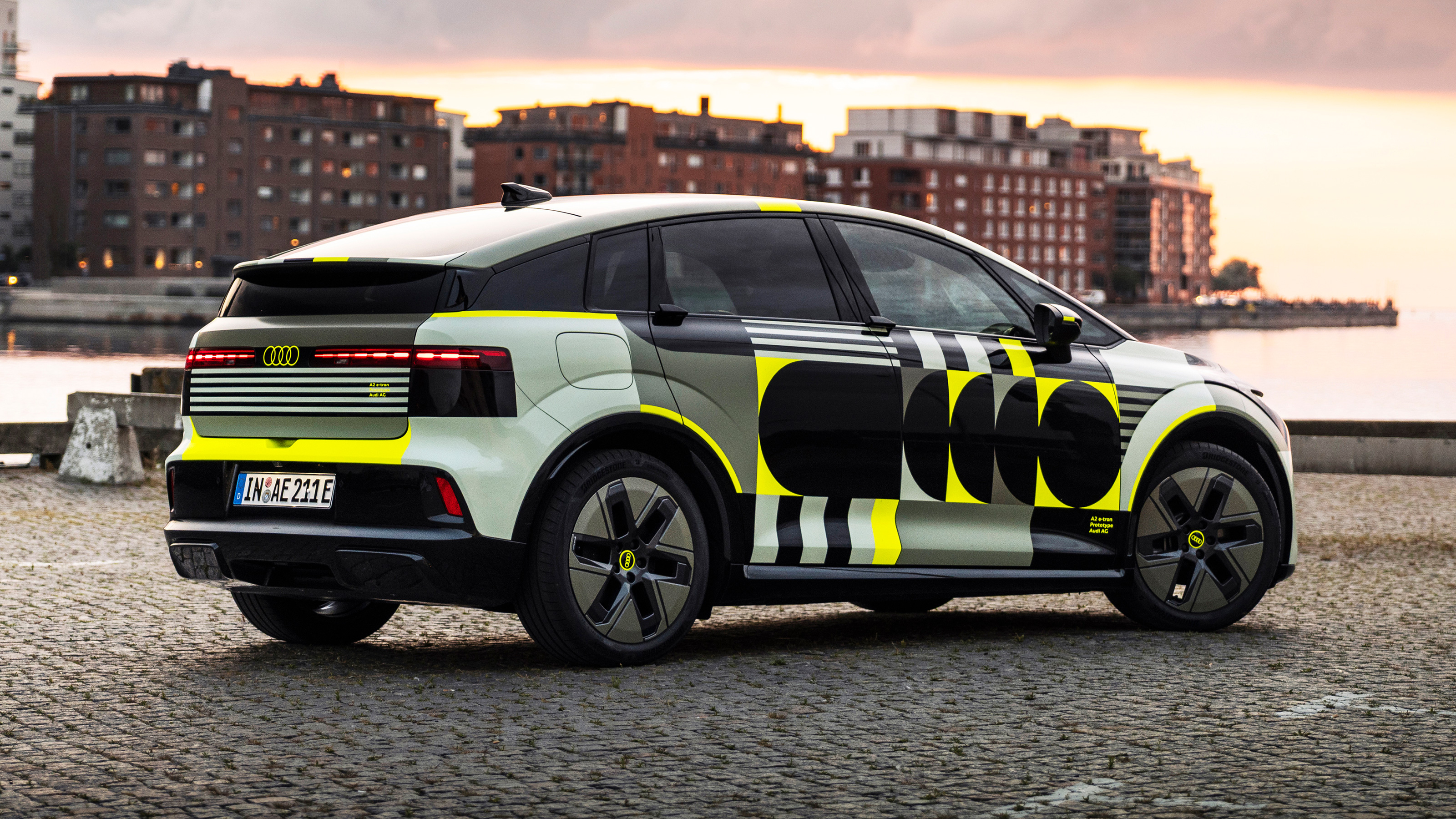
And then there are the exhaustive measures to reduce drag, which according to Audi — armed with pie charts and a PhD-level formula — account for more than half of the energy demand above 62mph. The rounded front end, flowing roofline and flat rear all help airflow pass over the car undisturbed; an active air-intake behind the grille stays closed when cooling isn’t required; design details at the front end create air curtains to reduce turbulence on the flanks, and inlets ahead of the front wheels (called gap reducers) quell the air inside the wheelarches.
A front spoiler guides clean air over the floor, which is entirely enclosed and incorporates its own spoilers to channel airflow away from the exposed parts of the rear axle, and towards a diffuser which finishes the job. Phew.
Get all the latest news, reviews and exclusives, direct to your inbox.
Meanwhile the tyres — fairly stocky 235/45R19s from Bridgestone — have been chosen to cope with the weight of the rear axle, which in turn minimises the amount of sidewall squidge and lowers drag.
And yes, all of that was fine-tuned in a wind tunnel.
But we haven’t even got to the best bit. Even the lettering on the sidewalls has been to aero boot camp. And that saves 0.001Cd. Hilarious! And brilliantly nerdy. Might only be worth a few yards over the course of the car’s life, but Audi did it anyway.
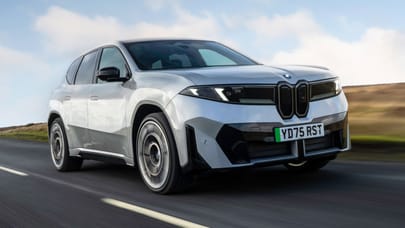
All that means a drag coefficient of 0.24Cd, a hundredth better off than the original car but slightly behind the current A6 e-tron.
Um, no actually. Audi’s opted for LFP (lithium iron phosphate) cells, which doesn’t pack the same punch as NMC chemistry but does make do without rare earth metals, while the charging performance should hold up better with age. Also, it’s cheaper. A lesson learned from the Mk1, perhaps.
It does at least boast a cell-to-pack design, allowing engineers to cram in as much energy as possible into the available space.
The new A2 ought to make your electrons (and the money you pay for them) count. Driving this virtually finished, Bauhaus wannabe prototype very gently across the Øresund Bridge from Denmark and along the southern tip of Sweden, I coaxed 5.45 mi/kWh out of the A2 over two-and-a-half hours at an average speed of 33mph and with temperatures in the mid-to-late teens. So slow and steady, and nothing we weren’t seeing from the first-gen Kia e-Niro seven years ago, but anything over 5.0 mi/kWh is mightily impressive.
Apply that to this car’s 58kWh battery and you’re looking at close to 300 miles of range. An even bigger 79kWh pack is likely to be offered when this car goes on sale, and a repeat performance from that would break 400 miles. Peak DC charging for this one has been confirmed at 105kW, with Audi claiming 10-80 per cent top-ups in 26 minutes.
Ah, yes. About that. That’s because the new A2 is essentially the facelifted ID.3 in a more slippery skin. Same windscreen, same frontal area, and you can bet your house that the motors and performance will be the same as well. So let’s have a fiver on 189bhp and 0-62mph in around eight seconds.
The new A2 is essentially the facelifted ID.3 in a more slippery skin... and you can bet your house that the motors and performance will be the same as well
Not that you’ll want to undo all that effort by using full throttle. In Efficiency mode acceleration is tremendously delicate, and when you lift off the thing could coast for days. Even in Dynamic mode, the A2 gathers speed rather than lurching forward in a manner that might cook its carefully honed algorithm.
The brake pedal has a lot of travel and allows precise adjustment, but most of the time they slow down using regen only, so the paddles behind the steering wheel are really just an alternative serving suggestion. Steering is typical Audi — precise but not heavy — though I’ve got nothing to offer on cornering for now. Turns out the tip of Sweden doesn’t have corners.
The ride on this car was quite firm and fairly busy at low speed, but that’s because it was running sports suspension which transferred a noticeable amount of noise into the cabin. Tyre roar was more prominent than wind noise on the motorway, and Audi has deployed acoustic glass on the side windows to tackle sound intrusion.
Visibility won’t be the A2’s forte: the rear-view mirror is hampered by the narrow back window, and the A-pillars get in the way at junctions. The seats are decent and give you plenty of manual adjustment, but you have to sit quite low for your elbows to perch comfortably on the armrests.
Oh, and the indicators are weird. It’s a block rather than a stalk, and easily confused with the cruise control. No doubt practice will eradicate that as an issue.
In answer to your first question, quite soon. Audi will reveal the A2 in all its glory in the autumn, with sales starting at the end of the year. Prices are TBC, but somewhere in the middle of £30k and £40k feels about right.
Or to put it another way, the same sort of ball park as the A3 saloon. The irony.
Get all the latest news, reviews and exclusives, direct to your inbox.
