

the fastest
250kW GTX Pro 79kWh 5dr 4MOTION Auto [6 Seat]
- 0-626.1s
- CO20
- BHP335.3
- MPG
- Price£68,982
You hear people say that skateboard battery and motor packaging is good for electric sports cars because it keeps the centre of gravity low. But sports cars had low centres of gravity already. Imagine the gains in a van. Not just carrying mass low, but how it’s distributed fore and aft.
Vans are only balanced when they’ve got goods in the back. Not this one. And no one ever bought a van for the quality of its powertrain, so electric power is a revelation.
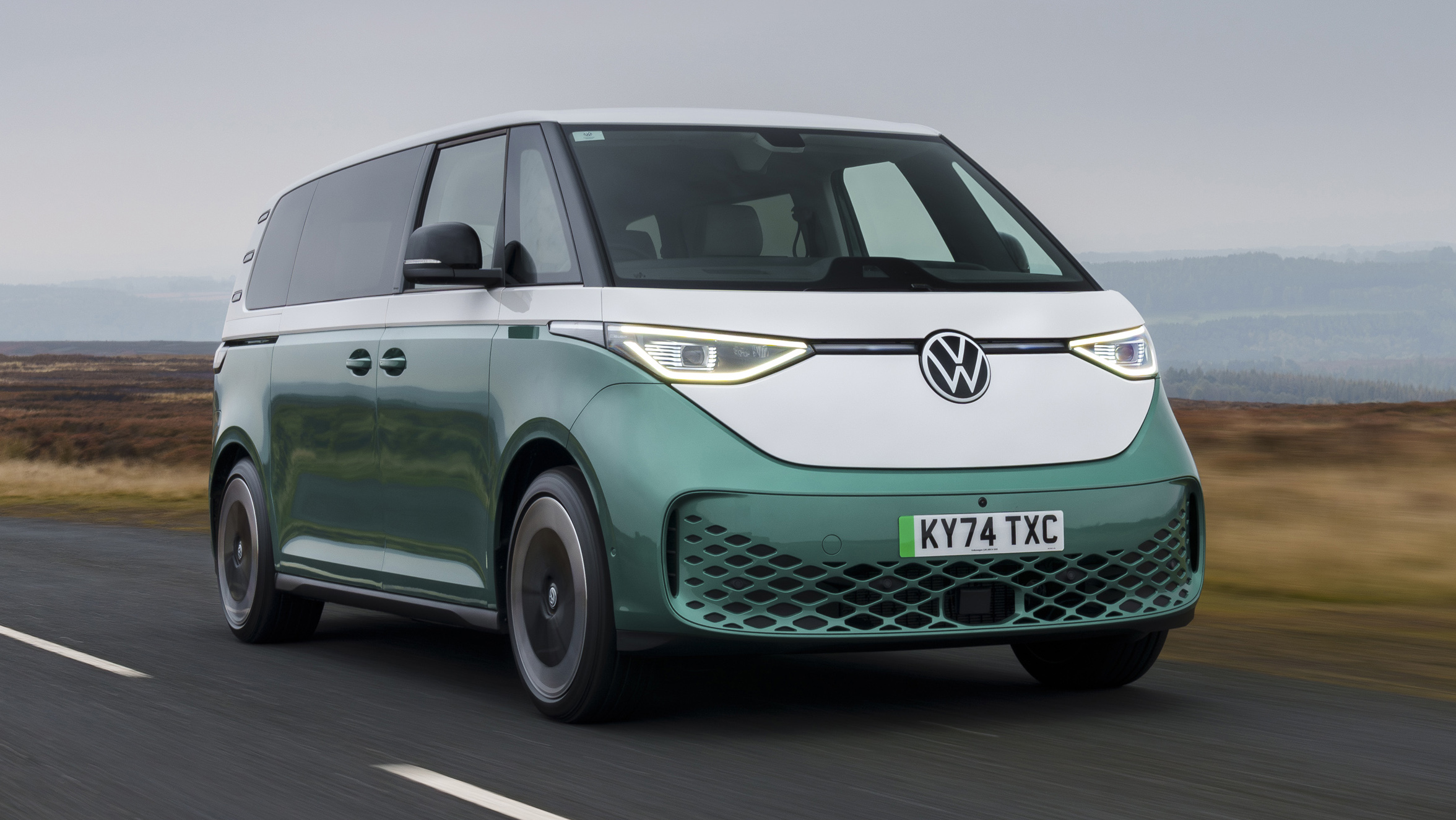
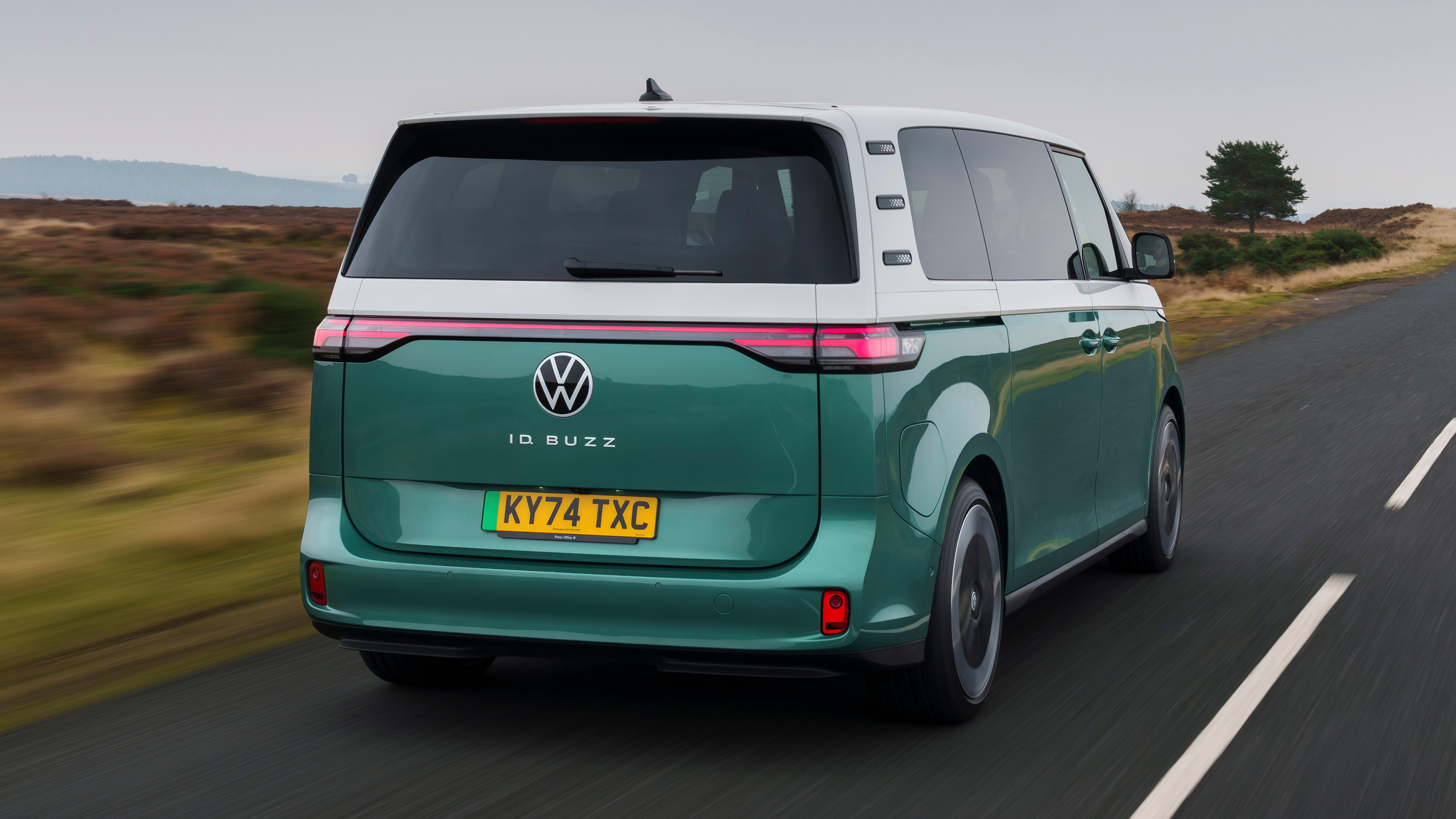
That’s the key question, and the answer is: no, it’s not. Which is a good thing. Although this looks like a van, and acts like a van and riffs heavily on the van theme, it’s a passenger car. So it’s as smooth and sophisticated to drive as any SUV or estate car. Maybe a touch more cabin echo and cavitation (especially in the Cargo), but this is a car that’ll happily cruise at motorway speeds in silence, ride capably and drive diligently and precisely.
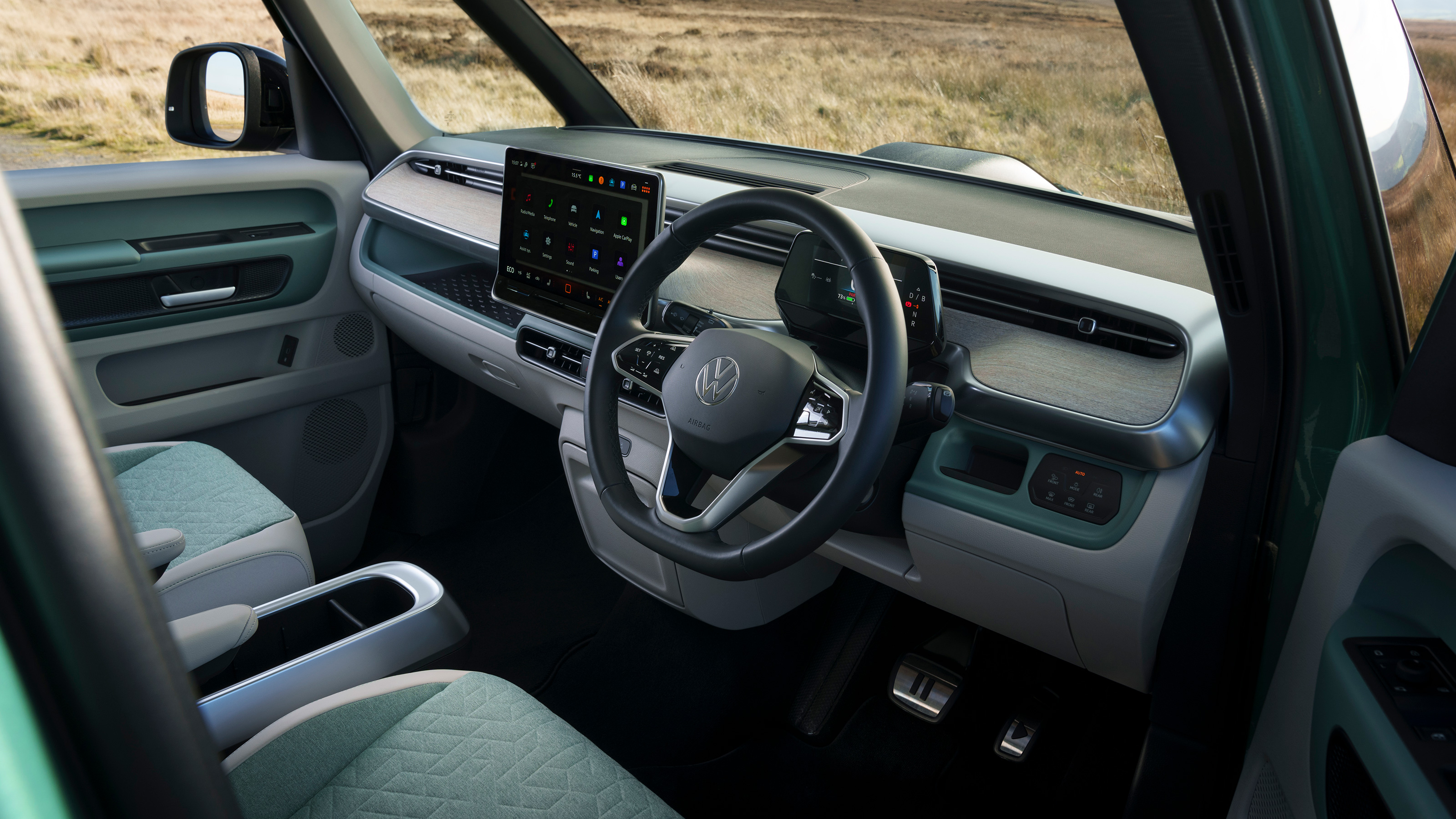
Unlike sporting EVs this goes straight into the basket marked ‘cars that make sense with electric powertrains’. It’s everything you’d hope a family car, let alone a van, would be: effortlessly smooth, entirely silent, simple to manage, responsive and torquey.
Yes, because it has a diesel-beating turn of speed, the right amount of performance for a tall, upright family car. Quick enough that you don’t want more (0-62mph takes 7.6 seconds), slow enough that the acceleration doesn't get ahead of the chassis and cause issues. We do wonder if the 145kmh (99mph) top speed is quick enough. Especially for a car designed, built and sold in Germany.
Of course, if you’re partial to taking part in the traffic light grand prix, there’s always the GTX. That sees off the 0-62mph sprint in 6.4 seconds, though top speed remains limited to 99mph.
The Buzz is neat, flat and controlled around corners. And there is something about this being rear-wheel drive, like an original VW van: you do sense that you’re being pushed, rather than pulled, along. The GTX has a grip and shove advantage but somehow grates against the Buzz’s basic, laid back character.
Oh, and an 11.2-metre (11.8-metre in LWB) turning circle is amazingly tight for a machine of this size. There’s the usual suite of driver ‘safety’ systems (adaptive cruise, lane keep etc) and around town visibility is good and it’s simple to manoeuvre and park. But, as with most other marques, those safety systems can be infuriating – you’ll have a heart attack the first time the rear cross-traffic alert jams the brakes on for no apparent reason.
A little. Although there’s a full partition between people and parcels, you’re more aware of echoes, vibrations and noise penetration here. Sound insulation in the bare metal back has been done away with. It also feels a little cruder on the road, the ride fractionally less sophisticated and supple, despite the smaller wheels.
We’ve recently run a couple of long-term ID.Buzzes, which you can read all about by clicking these blue words. First up was a Style LWB (282bhp/86kWh battery/286 miles claimed range), followed by a GTX LWB (335bhp/86kWh battery/280 miles).
But even the front drive Style wasn’t brilliant, averaging out at around 2.6 mi/kWh, or a real world 220 miles. Not brilliant. The GTX was even more not brilliant, returning around 2.3 mi/kWh, or under 200 miles of range real world. Worth noting that the Kia PV5 performed much better when we test drove it in similar conditions.
At up to 185kW, it’s fast. Five to 80 per cent in 30 minutes. But fast chargers cost more, and electricity costs are more ridiculous by the day, so you’ll be charging at home. Overnight will get you back to 100 per cent and cost under £10 instead of nearer £50.
Besides charging at home, you can use it to charge your home. Yup, the Buzz comes with bi-directional charging (called Car2X) allowing it to function as an energy storage device. Charge it on cheap electricity overnight then push that back into your home at peak times. Potential money saving device.
One other minor complaint here – the front windscreen washers are borderline useless when the roads are really mucky. They’re simply not powerful enough to reach the upper half of the screen, and the wipers wash most of the fluid away immediately. What do we want? Wiper blades with integrated washer fluid dispensers! When do we want it? Now!
Get all the latest news, reviews and exclusives, direct to your inbox.