

VOLKSWAGEN
210kW Style Pro 86kWh 5dr LWB Auto [7 Seat]
£65,100
Retro-inspired styling, airy and uplifting driving environment, more fun to be around than any SUV
Underneath the glitter it’s a regular MPV, below par efficiency/range, a Kia PV5 is half the price
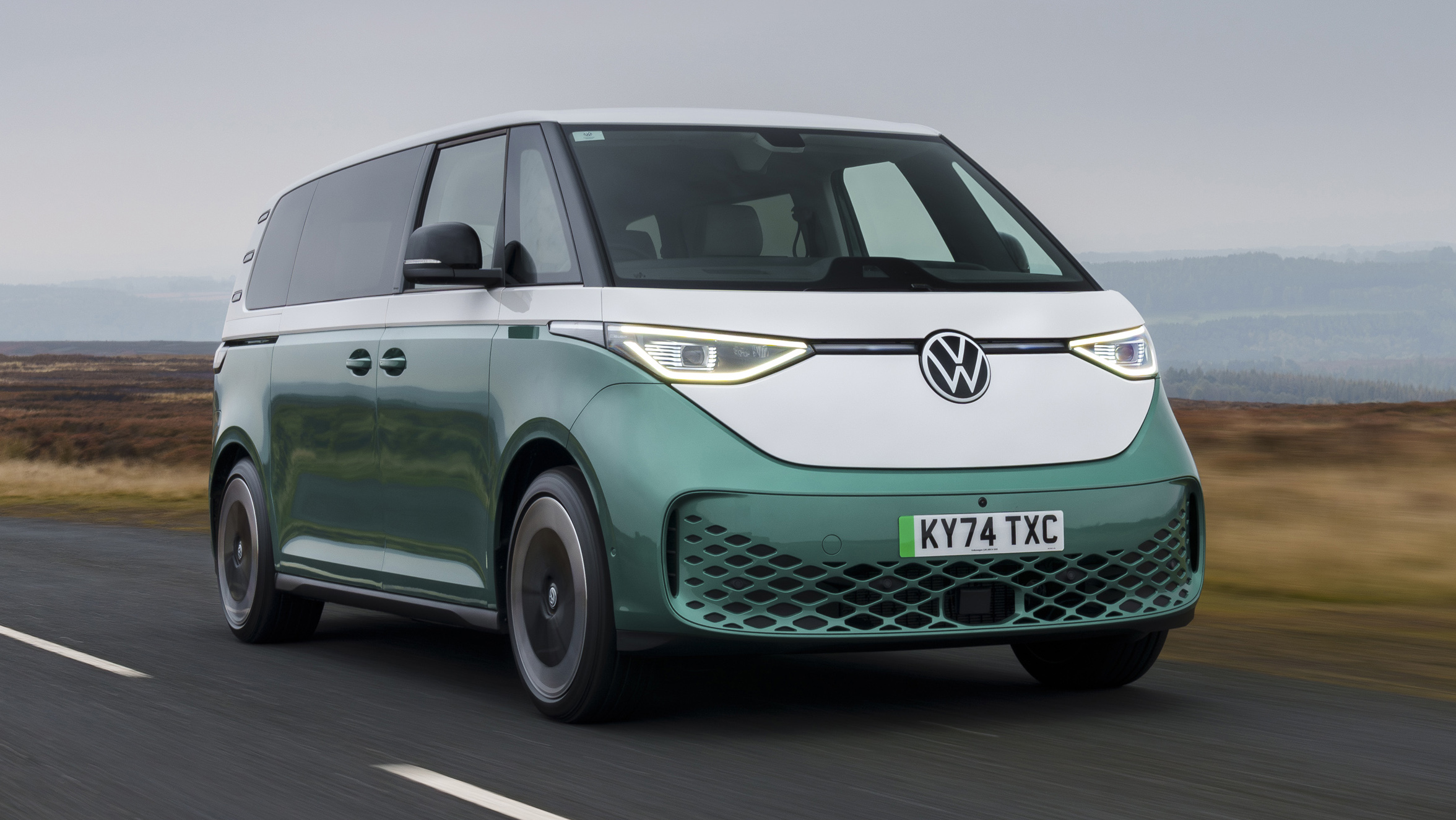
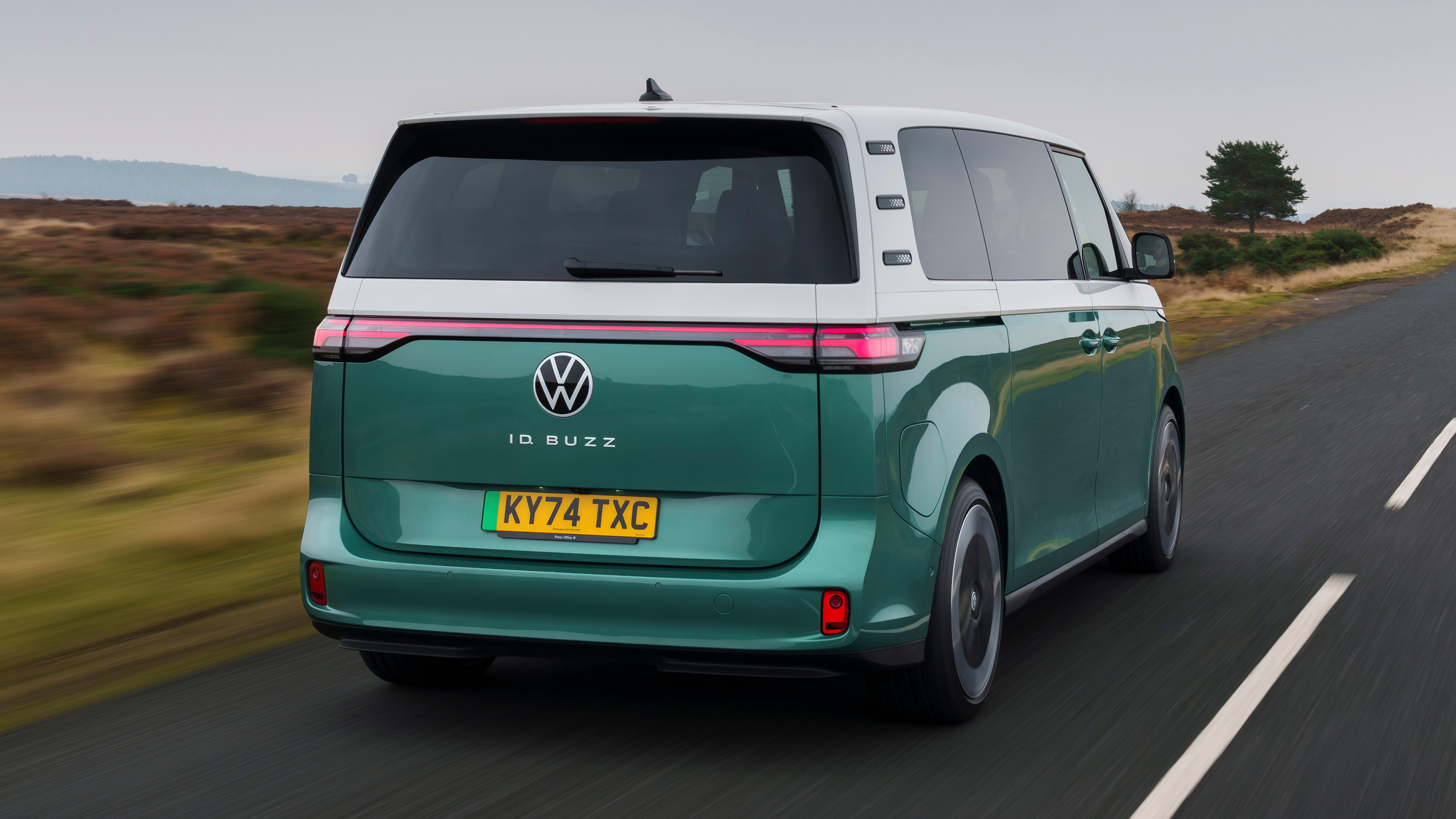
It’s the retro recreation we’ve all been waiting for, VW’s take on a latter day Type 2, a nod to a funkier electric future and a family wagon you might actually want to drive. It’s the ID.Buzz.
No ‘California’ camper van version just yet, in fact word on the street is that’s been pushed to the end of this decade to allow demand to warm up a bit.
Five versions are now available: a five-seater, a six-seater, a seven-seater, a dual motor GTX, or an ID.Buzz Cargo commercial van with up to three seats across the front and a cavern behind. Spoiler alert – the stretch six- or seven-seater (they’re the same, just a different cabin layout) is categorically the one you want… more on that in a bit.
That’s about the size of it. But compared to any other family car out there, this is going to look and feel very different. It makes the humble MPV desirable, for a start. But that is what this is: an MPV. There are a few neat options though, including a load divider to vertically split the boot and provide a raised floor that lines up with the folded rear seats. A mattress makes this a semi-Cali, plus there’s a whole host of third-party companies waiting to sell you all sorts of accessories – even a full camper conversion if you can’t wait for the official one.
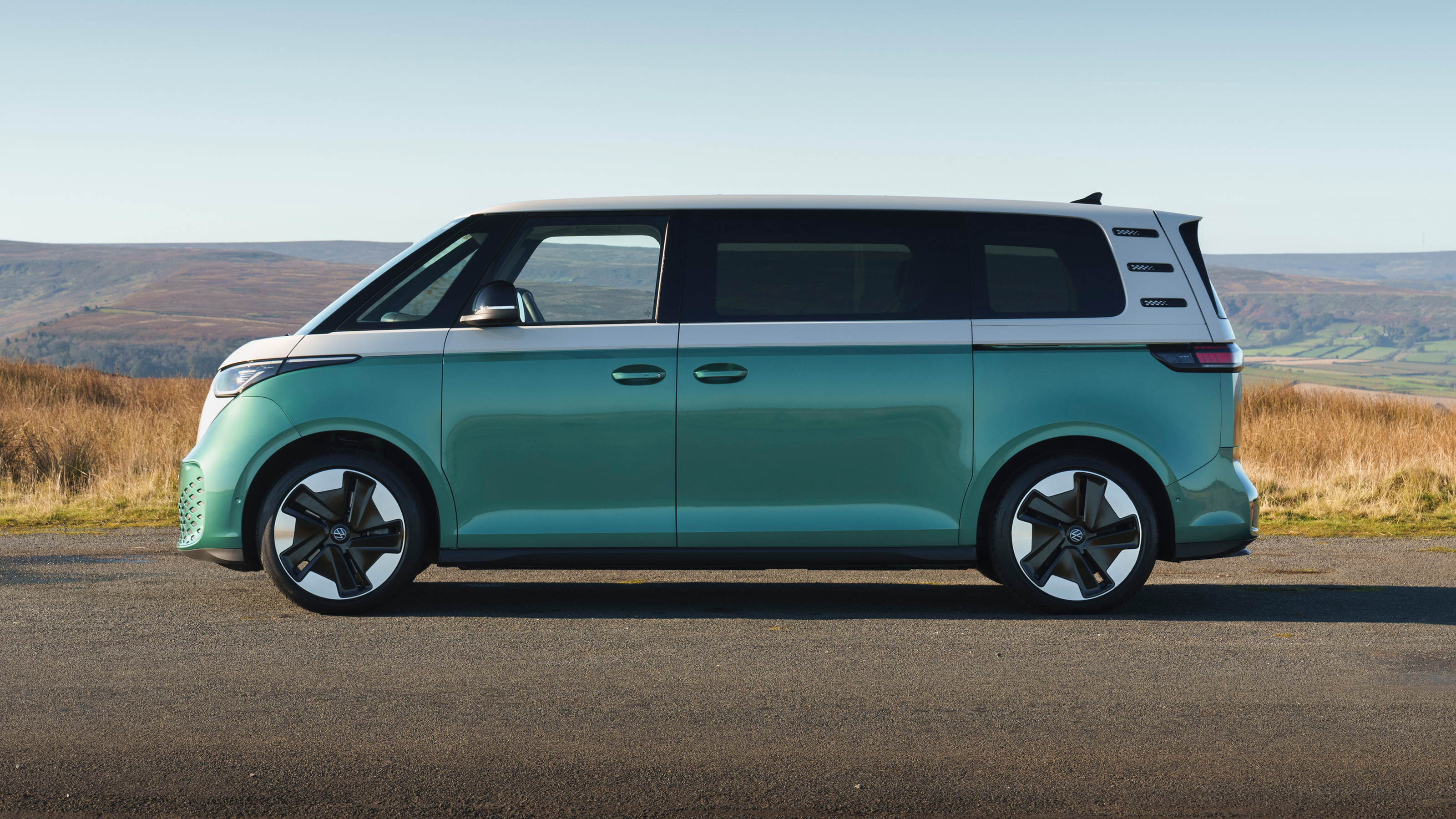
The basics are as follows. It uses the same MEB platform as the ID.3, ID.4 and ID.5, but that’s scaleable, so here it’s been lengthened, gaining a 2,988mm wheelbase that’s as long as the Caravelle’s. There are sliding doors both sides. The RWD five-seat version packs 282bhp and hits 62mph in 7.6 seconds. And you feel it: there’s a clarity to the throttle response and a surge off the line that does a miraculous job of masking the 2.7-tonne kerbweight.
The 79kWh battery is good for 283 miles of range (on the WLTP test) – think more like 170 if you’re loaded and motorwaying it, but in reality probably around 200-230 miles. Unless it’s winter, when you’re likely back at the lower figure.
Don’t go thinking it’ll be a perfect family ski-tripper. You’ll be visiting every aire in France. A five to 80 per cent charge takes 35 minutes (assuming you can find a 185kW charger). However the stretched seven-seat version and its bigger wheelbase means more room for cells, with an 86kWh battery upping the range to 293 miles and charging ability to 200kW.
The GTX version (see pictured below) is what you want if going fast with the aerodynamic profile of a hay bale is your thing. Available exclusively in 4WD, with a motor on each axle for a total of 335bhp and 413lb ft of torque, the 0-62mph drops to 6.1s and the price leaps up to almost £70k. But you do get a towing capacity of 1,800kg versus 1,000kg for the standard Buzz.
It’s being phased out. The Transporter and California versions will continue, but VW is pointing those wanting a combustion-engined people carrier towards the T7 Multivan now.
Moving on. Despite that Caravelle-matching wheelbase the overhangs are smaller so the Buzz is about 200mm shorter overall. It’s also 30mm lower and about 60mm wider. But it’s a lot smaller inside – the body frame is thicker, which is great for torsional stiffness and refinement, but cuts into interior space.
However, by SUV standards it’s massive. Where they have boots of around 600 litres, the five-seater is 1,121 litres. Shame the three seats across the back are rather ordinary, even if the 60:40 split bench does slide and fold flat. Go for the seven-seater and you’ve got options – 306 litres of space with all the seats in place, 1,340 with the third row folded and 2,469 with the second row folded too.
Stunning. Simple as that. It may feel rather plain and ordinary in the back and boot, but up front is where VW has invested. The view forward is compelling. The upright windscreen is a long way away, bracketed by tall quarterlights so you feel surrounded by glass. Meanwhile the dash design and door trims are bright and uplifting.
The driving position is more relaxed than a Caravelle, the steering comes out to you a bit more, you sit lower in relation to the pedals. There’s still armrests on both sides. Be aware that if you go for the Cargo the cabin is notably greyer, more plasticky and less uplifting. And you still have to deal with the other fly in the ointment: interacting with VW's notoriously patchy infotainment. At least you get a bigger screen now - a 12.9-incher - and a moderately better interface.
It’s not demanding to drive, but it shouldn’t be – the ease of EV is the appeal. So this is light and easy to pilot, and combined with the driving environment delivers a sense of wellbeing that no SUV this side of a Range Rover can match. The ride is a little lumpen on the biggest wheels, the steering a little numb on the smallest, but by van or even MPV standards the ID.Buzz is a sophisticated thing. It feels strong, robust, smooth and carries itself well.
Around town it’s wieldy and since only the rear wheels are driven, the turning circle is impressively tight. There are driving modes. VW needn’t have bothered.
Prices for the five-seat passenger car start at £60,005, the seven-seater starts at £60,530 – a remarkably short price walk – the GTX is £68,530 and the Cargo version costs from £39,205 (including plug-in vehicle grant). That’s the one campervan converters will be focusing on before VW gets its own eye in. Just bear in mind one of the reasons the Cargo is cheaper is that it uses those more basic materials inside and doesn’t have the same noise insulation. Rain rattles the roof.
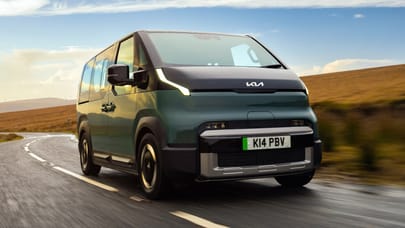
But. And it’s a big but. There’s now an elephant in the room, and it’s called the Kia PV5. It’s arguably as funky to look at as the Buzz, it’s of similar size, and you can have it in passenger or cargo versions. Oh, and it absolutely smashes it on price – undercutting VW’s retro bus by almost thirty grand. Thirty grand!
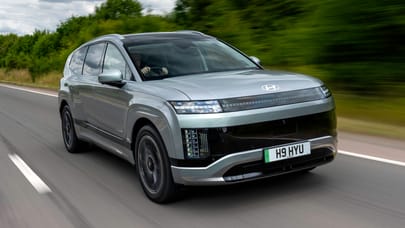
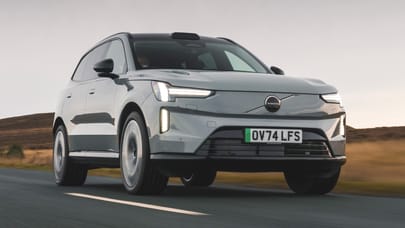
For now though, that’s really its only rival, aside from the seven-seat SUVs that you may have your eye on (we’re looking at you Kia EV9, Hyundai Ioniq 9, Peugeot e-5008, Volvo EX90, upcoming Mercedes-Benz GLB et al). This is bigger inside, friendlier and far more forward looking than any of them.
The ID.Buzz is a convincing vision of a family car done better. We love it because it’s different, because it’s a new anti-SUV template, because it’s fun to be in and around. But equally we’re not blind to its drawbacks. It’s far from cheap – as the Kia PV5 has demonstrated – and the efficiency/range could be better.
And while for those up front the experience is unique and special, it’s a shame that for those behind, apart from sliding doors and intensely generous headroom, there’s less to lift the spirits. The seven-seat version has at least unlocked the Buzz’s potential making proper use of the space and versatility the Buzz promised, and for only a few quid more. And the sliding doors/windows are a lot of fun.
All said and done, if you’re looking at any other premium crossover or SUV – be it electric or internal combustion – doesn’t this look like a brighter, more engaging and interesting alternative? It’s beguilingly simple and yet entirely uplifting.
Get all the latest news, reviews and exclusives, direct to your inbox.