the fastest
EV550 404kW SV Ultra 119kWh 4dr Auto
- 0-624.3s
- CO20
- BHP541.8
- MPG
- Price£222,575
It's both capable and immensely serene. So you will be too.
You use all the accelerator to obtain the power. This isn't one of those EVs that hammers forward on the twitch of your toe. So it's easy to find exactly the acceleration you want, and drive it smoothly. You can switch on a synthesised noise, which was composed by a musician and sounds pleasant. It ebbs and flows with accelerator position, and rises in pitch with speed. But mostly this is a car for silence, isn't it?
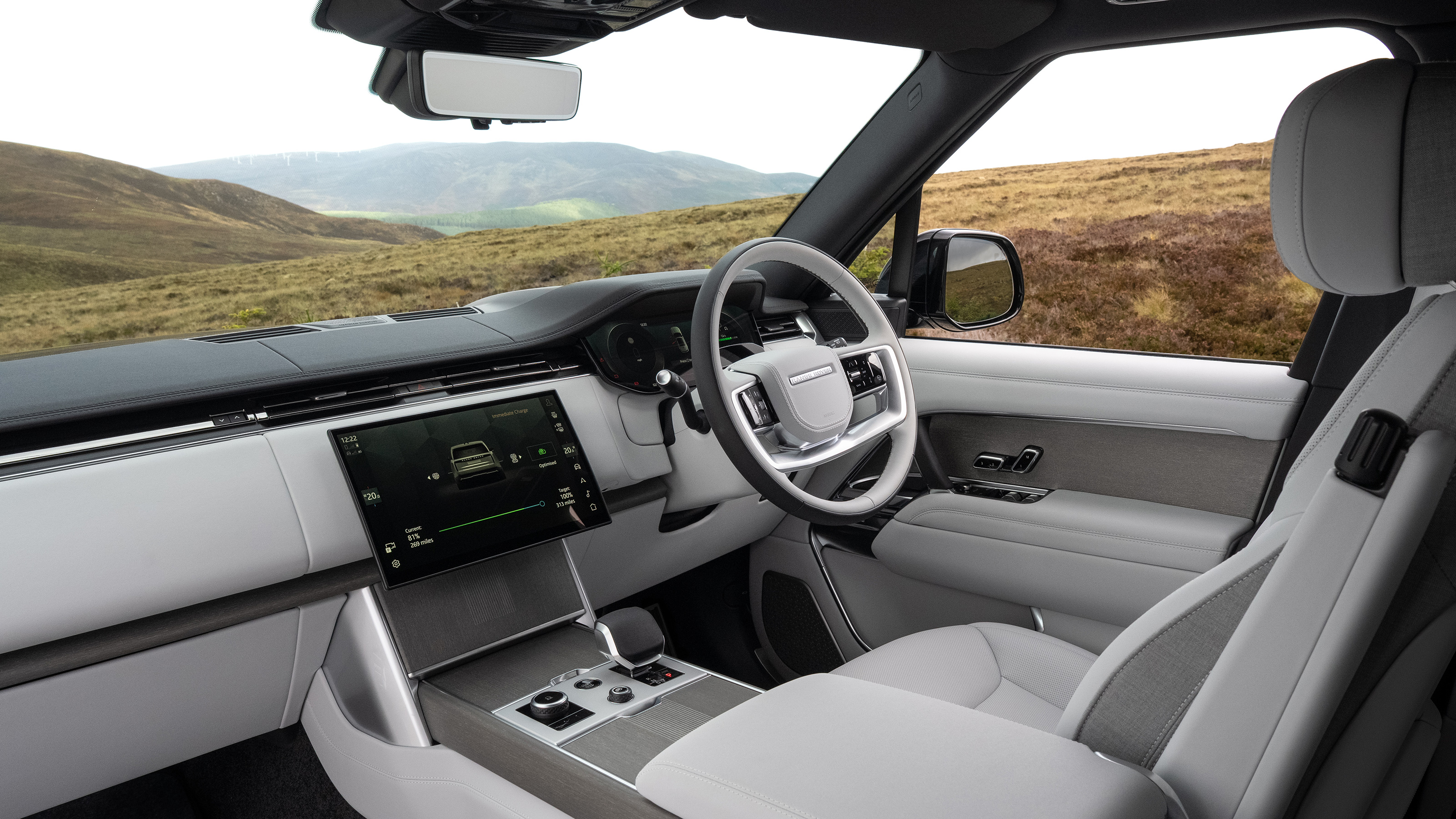
Two different levels of foot-off regeneration can be found via a screen menu, not paddles unfortunately. But you can also tug back the drive selector from D to S. S isn't sport, it's single-pedal. This uses the brakes to bring you to a halt, but it also adds extra regen at speed. So we just kept the car in no-regen mode, then shifted to S on the approach to, say, a downhill corner. Just like you'd downshift a petrol auto.
It'll get from rest to 62mph in 4.5 seconds. The car stiffens its springs and dampers to keep it level as it launches.
Unless you're stupid, yes it can. Those dual chambers have a useful trick. Valves can determine whether it uses just the smaller, or the larger, or both chambers, giving three different spring rates. That trick is used across the car, with the adaptive dampers too, to keep the body fairly level in cornering. There's also four-wheel steering, and front-rear torque vectoring by altering the power fed through the two motors. All of which means the chassis has an awful lot of thinking to do.
Side note: the electric Range Rover has lost the combustion versions' active anti-roll bars, because the centre of gravity is so much lowered. That saves weight and complexity, although they must have had some benefit in sharpish cornering, as they're still fitted to the Range Rover Sport Electric.
Despite all the tech, it doesn't feel like a computer-controlled car. Movements are natural and fluent. Your hands roll the wheel in comfort and it pours itself through corners very consistently. Get on the power on the way out and you can feel the rear tyres working; do that as it goes over a crest and you feel the fronts go light.
There's a dynamic mode, which stiffens the damping a little and adds extra rear steering. On quick but heaving roads this is a fine compromise, whereas in most SUVs with this sort of chassis tech, 'sport' mode would be a recipe for slam and thump on a UK back-road. Comfort mode floats a little. In neither do you get much wheel shudder, although it can occasionally make a bit of a bang as a rear wheel drops into a really big pothole.
Not only does it ride and corner well, it also travels in a straight line with little steering disturbance from bumps or camber. This matters when you're piloting this ruddy great ship down a narrow road and someone comes the other way.
It can climb stupid slopes and tackle deep, deep ruts. Most impressive perhaps is the 900mm wading capability, which is close to floating.
But any Range Rover can do all that. More impressive here is the ease. For a start you don't have to stop and engage low ratio. There isn't one, because the motors have all the torque at zero revs. Also, the response times of motors versus that of an engine and brake-activated traction control is blinding-fast, which means there's less of the clunking and buzzing you're used to.
Off-road cameras tell you about obstacles obscured by the bodywork. Okay, they're actually ordinary surround parking cameras, and can be used as such, but this is a much more evocative use of the tech.
A twist knob in the centre console gives the three road modes (dynamic, comfort, eco) and then twists further for off-road modes optimised for conditions – sand, grass, snow, and rocks. They optimise acceleration aggression, ESP thresholds, ride height, damping and so on. Oh and you can even build your own custom modes.
Get all the latest news, reviews and exclusives, direct to your inbox.