



25
This is a car that's going to be bought more for its interior practicality as for its decor, so let's start there.
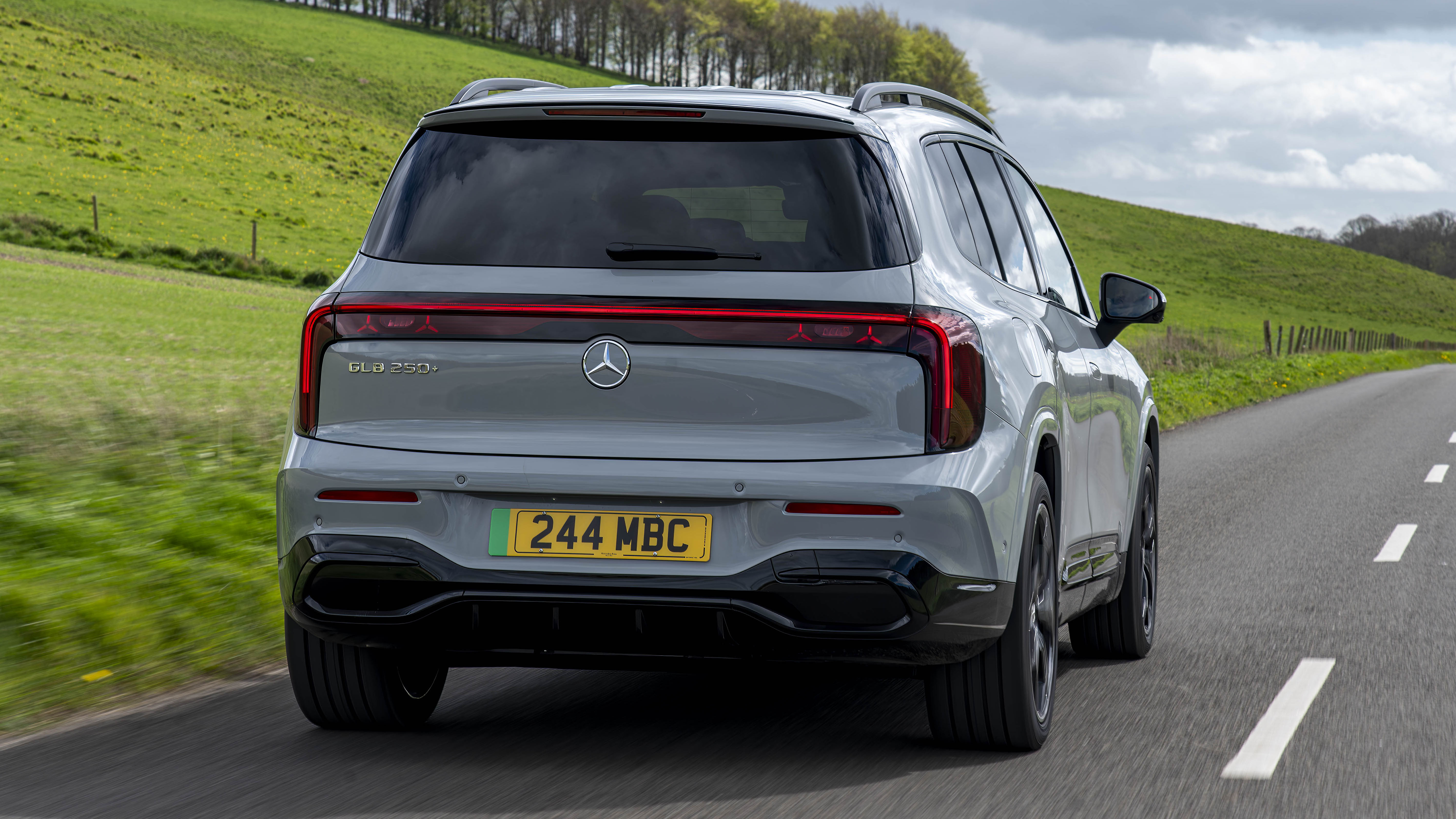
Back home in Germany you can get a five-seater with a slightly deeper boot, but all UK cars are seven-seaters. The two rear ones fold separately, which is just as well because if you're using all seven the boot's less than you'd find in a supermini. Although you always have the 127 litres of space for squish bags in the frunk/froot. That size doesn't shrink even when there's another motor under it. In five-seat mode the rear boot is 540 litres.
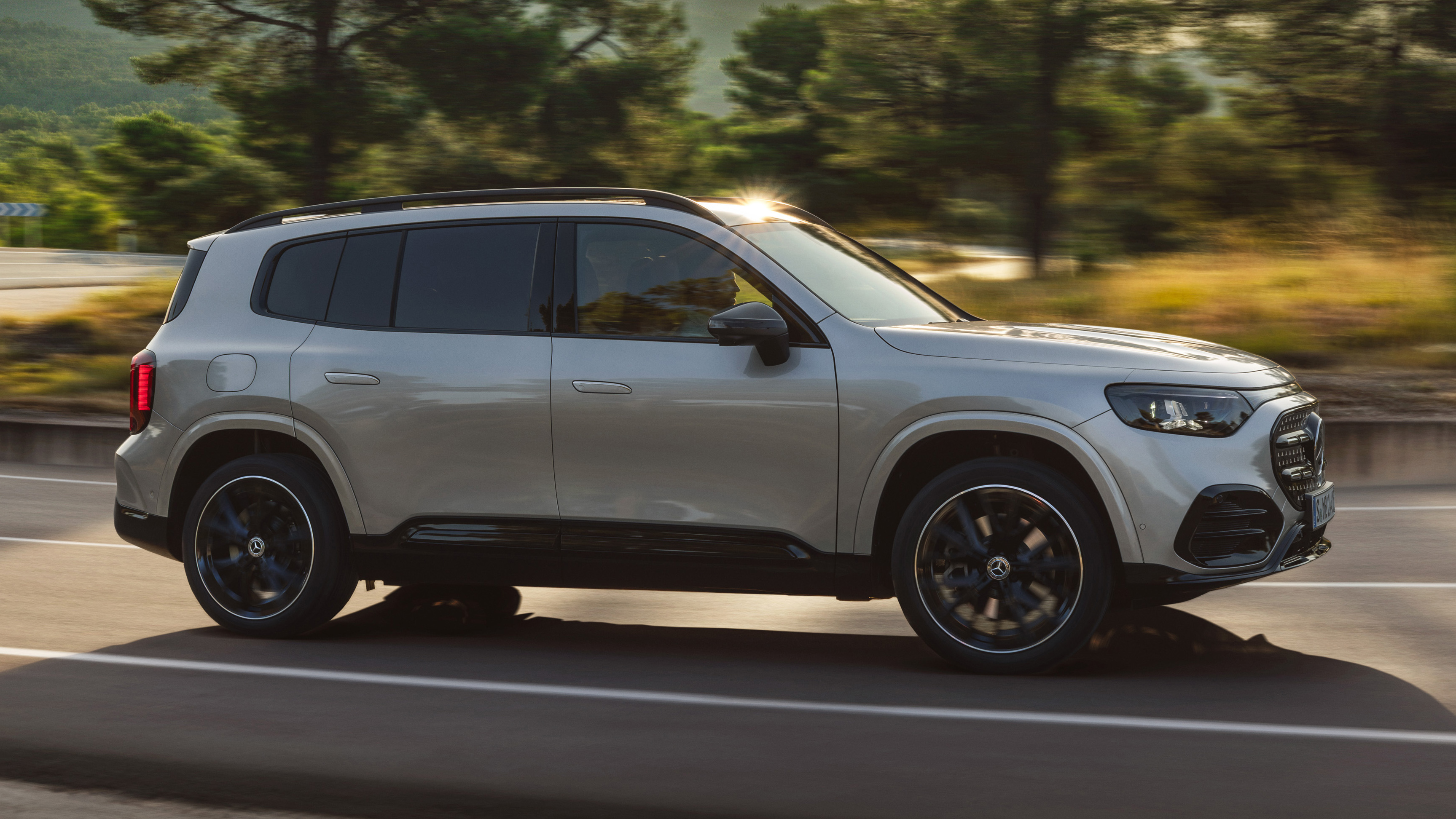
The middle row splits 60:40 and both halves slide fore and aft. So you can usually get an interior arrangement where the legs of seven adults, likely to be different lengths, are all accommodated equitably.
Mind you it's likely the smallest most flexible people will end up in row three because access isn't that great.
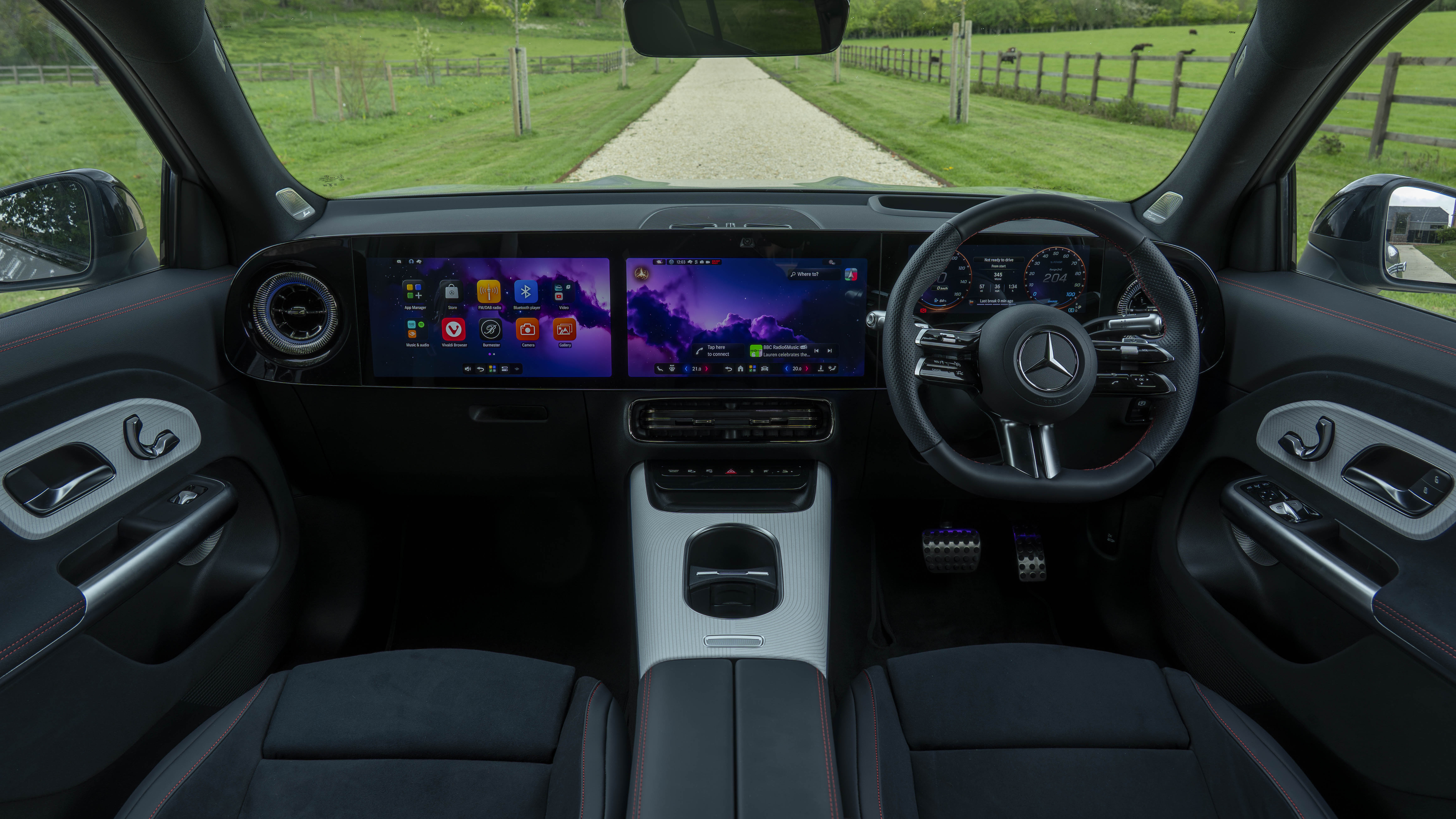
There's a front passenger screen on the top two versions. Seems like an expensive way to avoid the passenger holding their own phone or tablet that becomes a projectile in a crash.
For the driver, it's Mercedes' new generation screen system. All very slick and glossy, with a well-organised driver's info rectangle. The central touchscreen is based on what Mercedes calls zero layer: pretty well everything is available after a single jab at one of the boxes on the homescreen.
The standard steering wheel has the briefly fashionable capacitive touch buttons. Too easy to accidentally activate. The AMG Line one positions them further away from the heel of your hand so it happens less often.
Mercedes also bangs on endlessly about the AI capability. Talk to the car, why don't you. Ask it anything. Not just turning the heat down or the map to north-up. Oh no, you can ask for it to find you a well-reviewed Lebanese restaurant and book a table, or read you a potted history of the town you're by-passing. Jolly good. But why? Why? You have six passengers. Ask them to research on their phones. They'll just laugh at you if you have a conversation with the car. Or interrupt you and confuse the bot.
One good thing though: it's very good at calculating long-journey charge plans. It knows where uphills will suck energy, and it knows which chargers are most powerful and which are occupied. That all feeds into its planning. Splendid, but that's not Mercedes' achievement – it's Google's. Polestar and Renault and others have just the same.
What few other manufacturers have is the sense of solid quality of a Mercedes. The rigid bodyshell and sea frames – nothing flexes. The dash and upholstery are well-wrought.
Only some of the hard plastics are let-down, and the jet-style LED-lit air vents look great but feel cheap. Also, when you drive at night, their LED glow reflects onto the side windows directly in line with the mirrors. Ah.
Overall though, it’s all fairly eye-catching. It’ll surely impress any passengers, particularly kids. But there’s more than a sense that Merc has prioritised aesthetics over functionality in here.
Get all the latest news, reviews and exclusives, direct to your inbox.
