



25
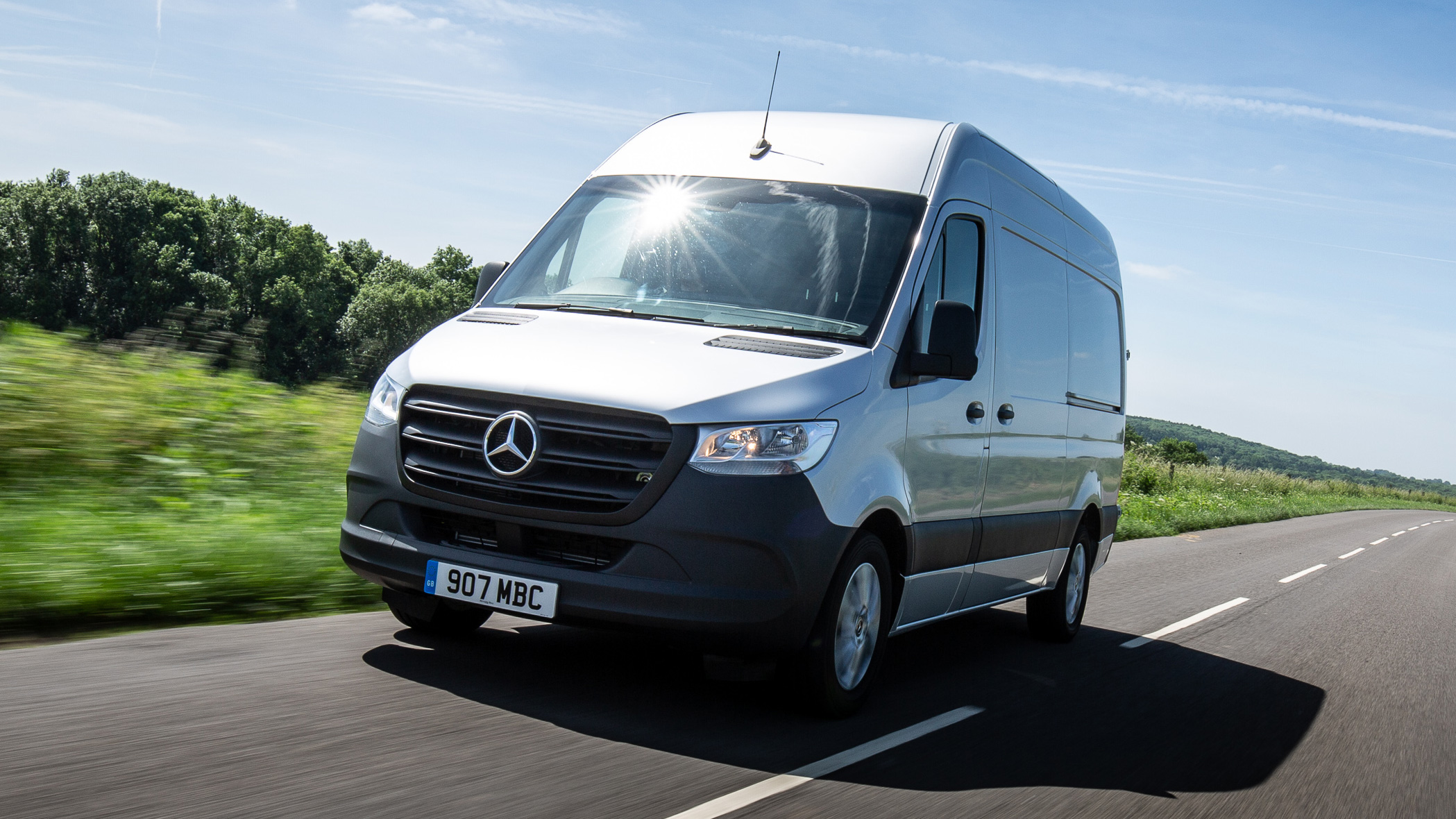
Really rather lovely. Of the many, many different configurations, we’ve tested the most potent, 188bhp 2.0-litre 4cyl diesel in rear-wheel drive with nine-speed automatic gearbox. Naturally that one’s also the torquiest of the line-up, generating 332lb ft where the other two muster a mere 250 and 280lb ft apiece. So unless you’re a courier of ultra-fine goose down for the bedding needs of high-net-worth individuals, it’s the top-end engine that you want.
Although it doesn’t trouble an E 220 d for refinement, the Sprinter’s 2.0 is a far cry from the rattly tractor engines that lived in vans universally a generation ago. It’s responsive and builds speed well – even with a big load in the back – and the revs don’t wear out your eardrums in the cabin. Good start.
The accelerator pedal allows for fine adjustment from a standstill right through to big road speeds, but isn’t so immediate that you and your precious tools or cargo end up lurching out of junctions. The brake pedal too is nicely judged, so you can slow and stop with precision. And the steering is light (or course it is, it’s a commercial vehicle) but doesn’t feel entirely detached from the wheels – the Sprinter copes with countryside roads just as well as urban ones.
Haha, now there’s a thought. Most importantly the ride is tremendous for such a whopping entity: it’s soft and forgiving rather than rigid like a shopping trolley, and even though it’s set up for big payloads it won’t punish your bum for it. Happy days. Rough road surfaces are handled with ease… but it’ll still clatter through the kind of ugly potholes that are talked about in hushed tones at the local Red Lion. So watch out for those.
Body control is impressive too. Even though the suspension is compliant the Sprinter is still remarkably composed going around corners, and it doesn’t pitch or rock from side to side very much at all. Probably helps that the wheelbase is longer than most train station platforms, but still.
Quick enough. Normally we’d reach for some 0-62mph times here but as Mercedes hasn’t published any, let’s just say it’s more ‘Zone 2 Parkrun’ than ‘Sprinter’.
But that’s not the point, is it? No-one in their right mind is going to be doing full-bore starts in a van full of goods. The important thing is that torque is readily available and the gearbox is punctual, so you won’t spend several seconds revving the nuts off it as you wait to change up. Good news for fuel efficiency.
Depends on which weight class you go for. The 3,500kg GVW vans manage between 27.5 and 32.2mpg (for both manual and auto) in RWD, or 23mpg in AWD. Step up through the ‘special license required’ options – 3,880kg, 4,100kg, 5,000kg – and fuel economy gradually tanks towards the low 20s.
The Sprinter is far more competitive in this respect than it used to be, but a Ford Transit will go further on the same amount of fuel. That adds up over time.
We haven’t driven the eSprinter yet, so we can’t verify its range claims. But on paper it smokes an eTransit on account of having a far bigger battery.
Get all the latest news, reviews and exclusives, direct to your inbox.
