

the fastest
500kW 106kWh Performance Prime 5dr Auto
- 0-623.9s
- CO20
- BHP670.5
- MPG
- Price£91,975
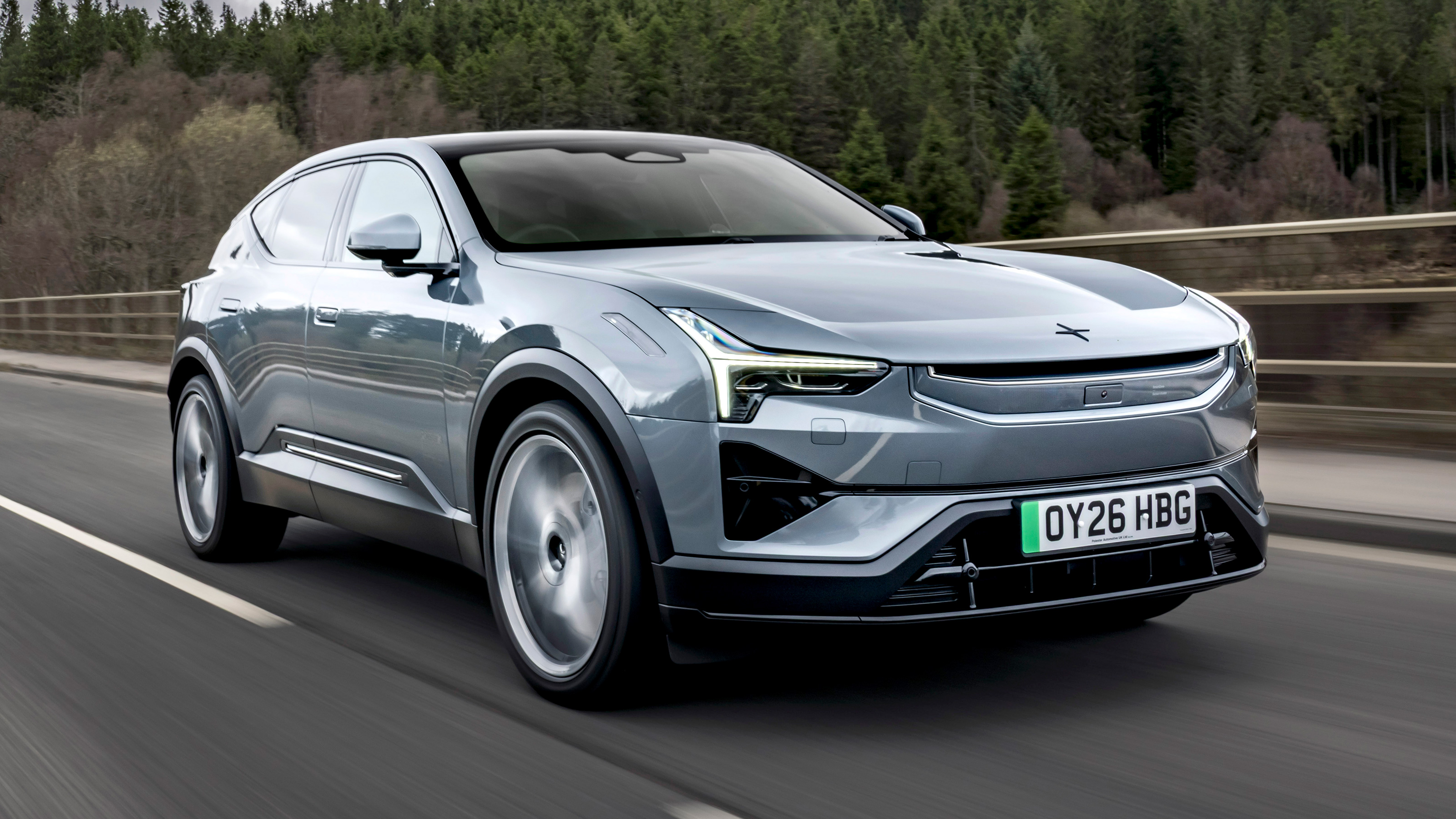
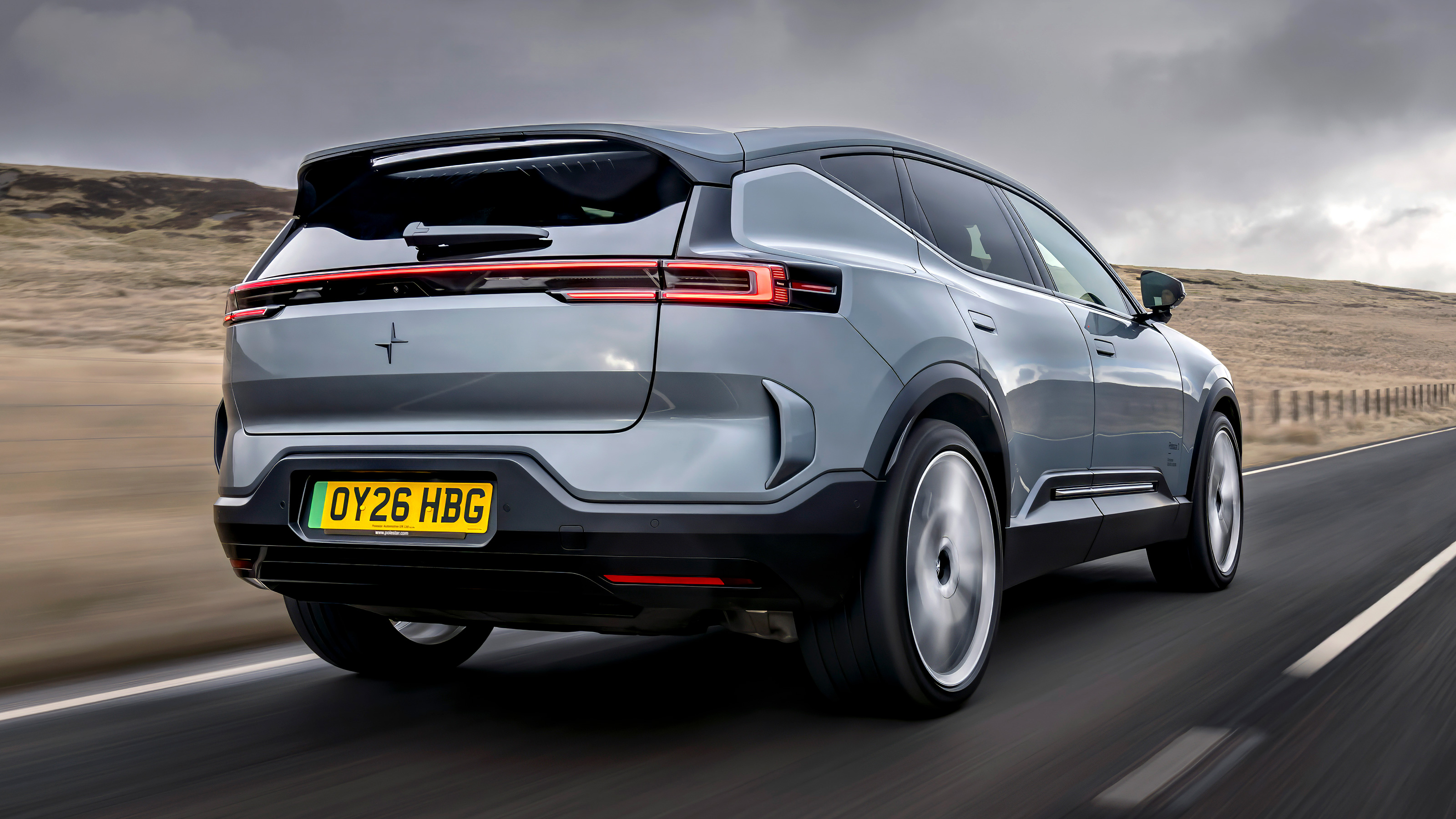
The Polestar 3 is quick, if just short of EV-blistering. The entry Rear Motor car is more than brisk enough in everyday life, though it’s unlikely to make unsuspecting passengers shriek when you surprise them with an overtake or a swift junction exit.
The Dual Motor can do that, however, its 536bhp/546lb ft peaks putting it in the realm of the old, range-topping Performance, ensuring its acceleration is near-as-dammit identical. You could hop in one of these, smile from ear to ear at its abilities, and not realise you weren’t in the top-rung Polestar 3.
Nope, those honours go to a 670bhp/642lb ft beastie that properly competes with the most boisterous cars in the sector. Yet the throttle does genuinely remain progressive and you’ll be deliberately exploiting its sportscar-troubling performance, not clumsily stumbling into it.
The permanent magnet synchronous rear motor is new to all models for 2026 and produces broadly the same output across the range, the front motor output being responsible for the wildest leaps in performance as you ascend the configurator. The twin-motor cars both heavily bias their output towards the rear, though, boosting the feeling of dynamism, while a subtly revised steering and suspension setup means the front axle feels nimbler too.
It’s an engaging thing with a bit of speed and tension through its damping – though at over 2.5 tonnes in its spanglier trims, there’s a tipping point at which too much commitment makes it feel a touch clumsy. But it fares better than lots of rivals, its centre-of-gravity as comparatively lower as its swept silhouette suggests.
The chassis is tuned by the folks who worked on the excellent old souped-up Volvo Polestar Engineered cars, and it’s pleasingly responsive and engaging when you've switched the dual-chamber air suspension and active dampers to their awakened settings. There are several parameters of damping and steering, but you have to dig deep into menus to find them so you'll probably do it as a set-and-forget at the start of a trip.
The accurate steering and well-sorted geometry mean it goes where it's pointed even on bumpy UK roads. Brembo brakes with big, 400mm front discs are standard across the range, so stopping is good across its three regen settings. There’s no one-pedal mode.
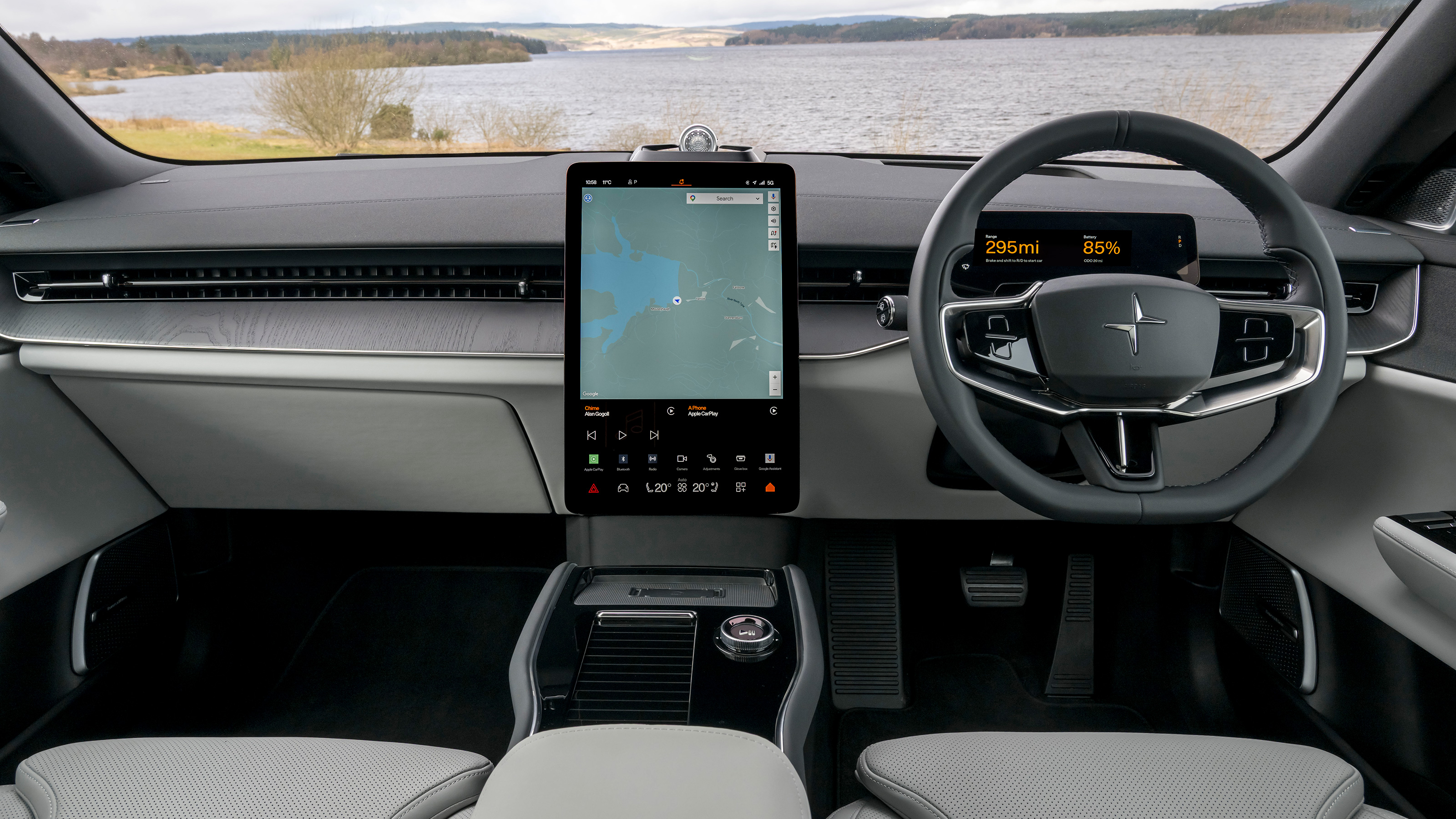
All told it's actually a pretty lively thing, not the soft and tranquil pod the cabin design might have you expecting. Though, lightly insistent ride aside, it’s pretty good at cosplaying ‘calm’ too. Refinement is decent and the minimalist interior and standard pano glass roof ensure it all feels refreshingly airy. Porsche and BMW tend to stray too far down the ‘sporty’ route, tying their chassis down with stiff damping and short springs, and something like a big Volvo will always be on the armchair side of relaxed. The Polestar is somewhere in-between; sporty enough to be fun, relaxed enough to just potter if that’s what you’d prefer.
As with any Polestar, you’re getting all the advanced driver-assistance systems you want, and quite a few you’d rather not have. The mandated speed limit warning still throws up all sorts of fictions, but extinguishing it is easier than ever thanks to a shortcut icon that stays fixed on the home screen. Bliss.
Charging from its 92 or 106kWh (gross) batteries is much improved on before, the replacement of 400V with 800V architecture helping it catch up with the numerous rivals which the launch Polestar 3 undeniably lagged. The smaller battery peaks at 310kW on a rapid DC charger, while the larger claims the same 350kW as fancier Hyundai, Kia and Genesis EVs. That means a top up from 10 to 80 per cent in as little as 22 minutes. Let’s call it half an hour once you’ve faffed with the payment screen and gone inside to get a coffee.
There’s up to 11kW AC charging – useful rather than stunning – and that's only if you can find a three-phase post. Most public AC posts and home wallboxes are 7.4kW single-phase and with batteries this big, that could mean 17 hours flat to fill. Not a simple overnight job, it’s worth noting.
Its range figures all bombilate around the high 300s on paper, so expect 250-300 miles in the real world with some occasional exploration of its performance. And likely 200 max if you’re really exploring it.
Get all the latest news, reviews and exclusives, direct to your inbox.