



25
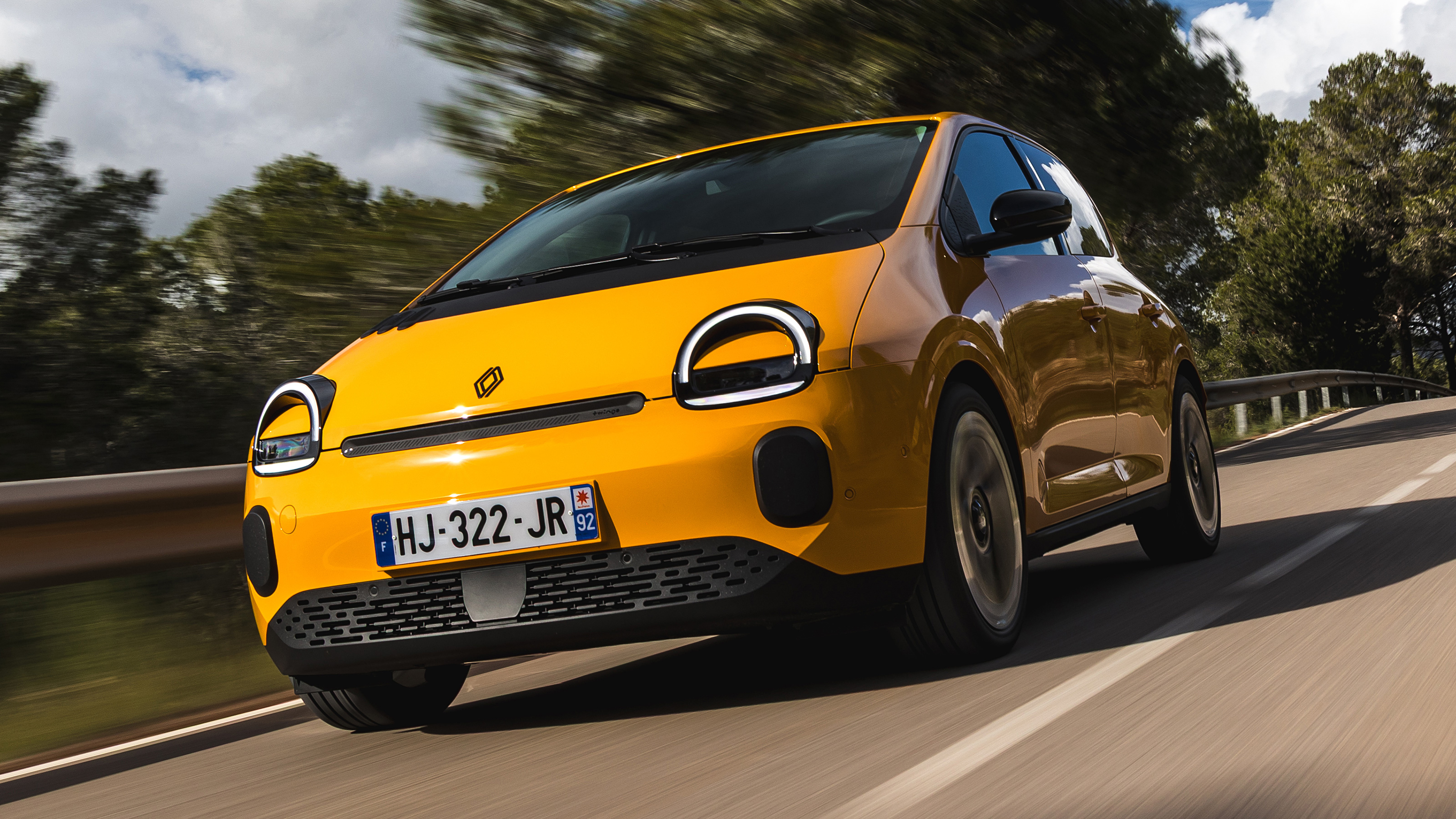
On the road it feels more expensive than it is. The ride is plush and quiet over coarse zitty surfaces, and supple and nicely damped in swallowing bigger upsets. It's close to an e-C3, but without as much suspension travel.
Acceleration is leisurely. The 80bhp motor gives you 0-62mph in 12.1 seconds. So you won't be doing much open-road overtaking but it's fine for daily biffing around, and the calibration of the pedal gives you a good sense of how much stopping power you're applying.
Top speed is limited to 81mph, because it's geared for efficiency, and anyway high speed is a range assassin. At speed there's a fair bit of wind noise and some road noise too, but otherwise the Twingo is acceptably quiet.
Load the tyres up and the steering gives you just enough information to work with, but no more. Grip is decent and the Twingo stays pretty neutral through bends, while the meek torque (129lb ft, since you ask) means no traction loss or writhing of the wheel.
Just don't pretend it's a Clio 220. Apply hot hatch logic here and the Twingo will resist: it's less dynamic than the bigger Renault 5 because the suspension's not as capable – so you can't push the tyres into the road as much – and the smaller dimensions mean there's less car to lean on. Imagine trying to jump from your toes instead of your knees. Yeah, it's like that.
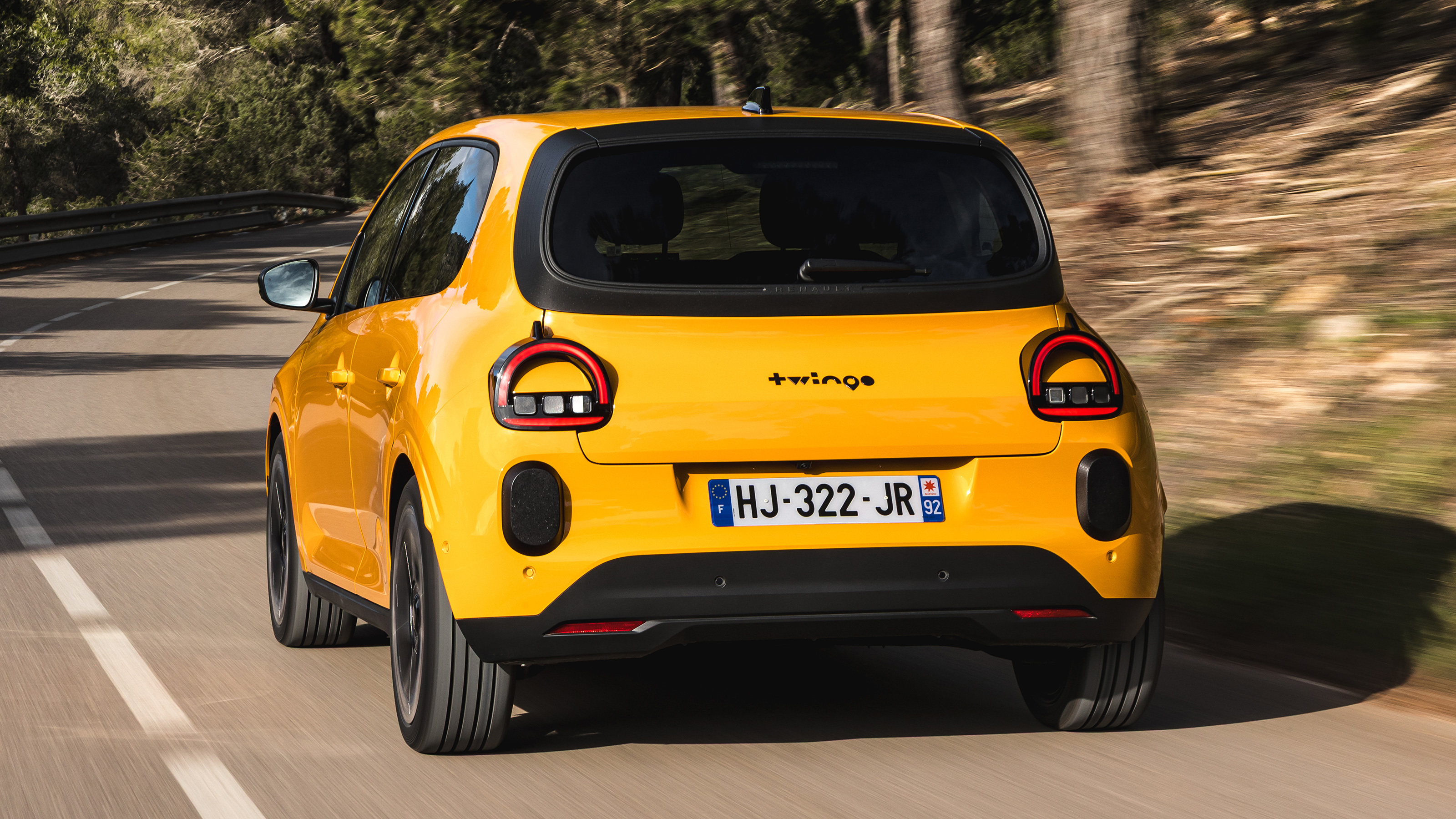
That simpler rear suspension – torsion beam instead of multi-link – brings a different character versus the R5. It's not as agile or precise in bends and you can't use the accelerator to tighten or free your cornering line. The more straightforward and gentler input-output protocols of the Twingo perhaps make it more relaxing for everyday driving.
Besides, versus the rest of the world's cheap baby cars, this thing is a paragon of decorum.
You get regeneration paddles, and mostly the brakes are well integrated. But regen level four is one-pedal driving, activating the discs at low speed, and you can feel the automated transitions.
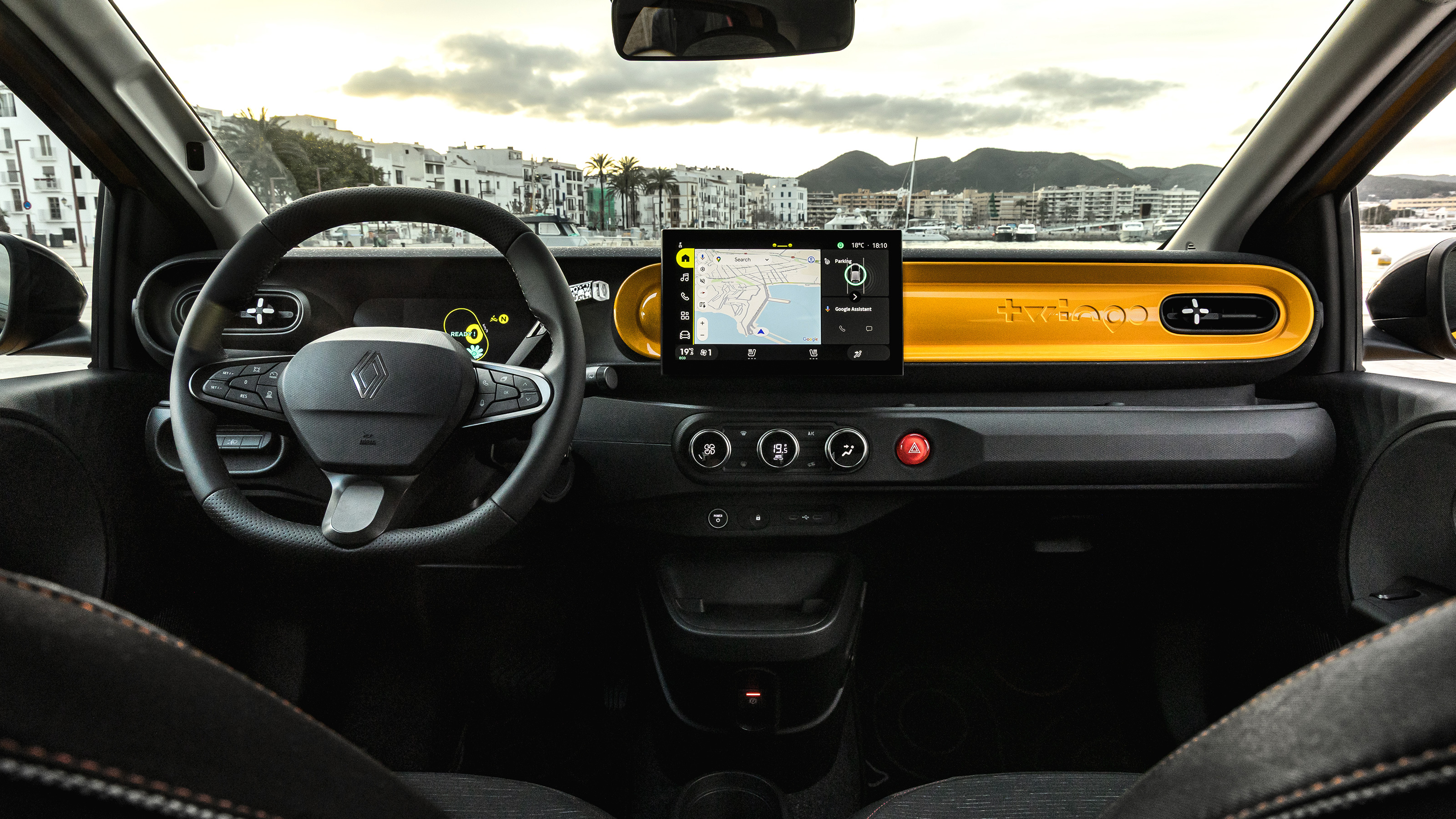
As with any Renault you set up a custom bank for your own settings for lane keeping, speed warning, following distance and so on. Then after they've defaulted on when you start the car, it's just one physical button to re-set it to your liking.
As with Chinese and Korean but not European opposition, the top spec has full adaptive cruise with lane following, and cross traffic alert and blind spot assist. Unlike most Chinese cars, they're well calibrated.
Get all the latest news, reviews and exclusives, direct to your inbox.
