


Car Review
Renault Twingo review
Advertisement
“Baby Renault keeps the price down but desirability up. Delightful for urban use. Of course limited for road-tripping”
Good stuff
Low price and high efficiency, refinement, good driver interface, delightful design, adjustable back seats
Bad stuff
Just four seats, London-Glasgow would need four half-hour stops
Overview
What is it?
Four words sum it up and it's something that we've been tantalisingly short of: small versatile cheap EV.
It's a revival of the Renault Twingo name, which was previously a Smart-based rear-engined car, and previously previously a fairly conventional FWD little mini. Previously previously previously it was a small, versatile, cheap petrol car that was achingly cute… but not sold in the UK.
Advertisement - Page continues below
Yes, in design and spirit this Twingo E-Tech is a reinterpretation of the design of the original and wildly successful 1992 Twingo. It's another of Renault's over-shoulder glances, like the 5.
Do we need another small EV?
Well, we need more cheap EVs. The Twingo will land in Britain with at least one version under £20,000. And the Electric Car Grant will knock some more off that.
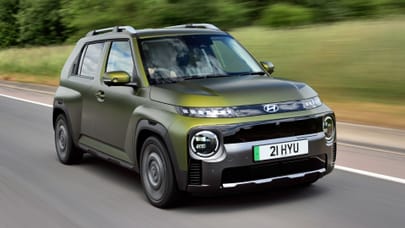
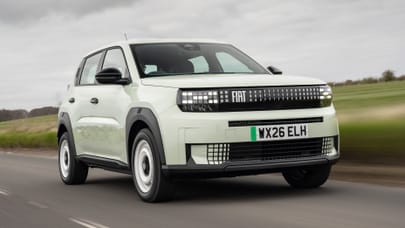
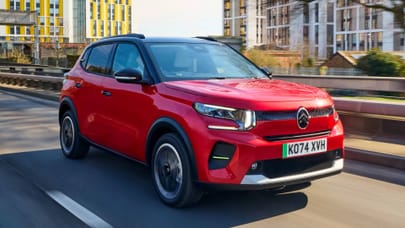
The electric Fiat Grande Panda and Citroen ë-C3 are rivals. It's just a four seater but otherwise more versatile. The closest in spirit to the Twingo is the Hyundai Inster, but you have to go up-spec to get its Twingo-style rear seats.
You might say the BYD Dolphin Surf or Leapmotor T03 are rivals too, but only if you want to punish yourself with touchscreen insanity and ADAS hysteria.
Advertisement - Page continues below
IRL, does it look good or like a cartoon frog?
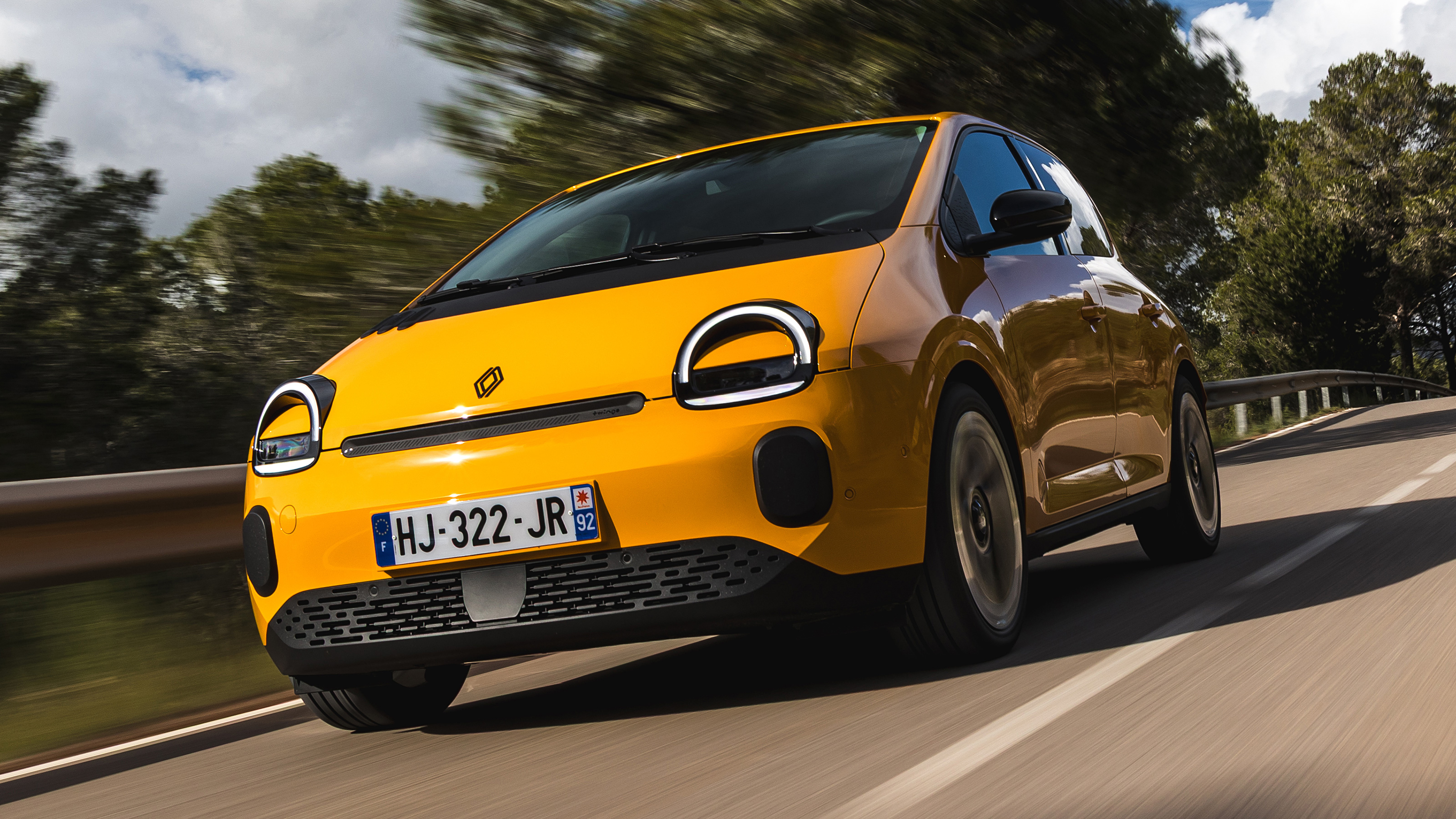
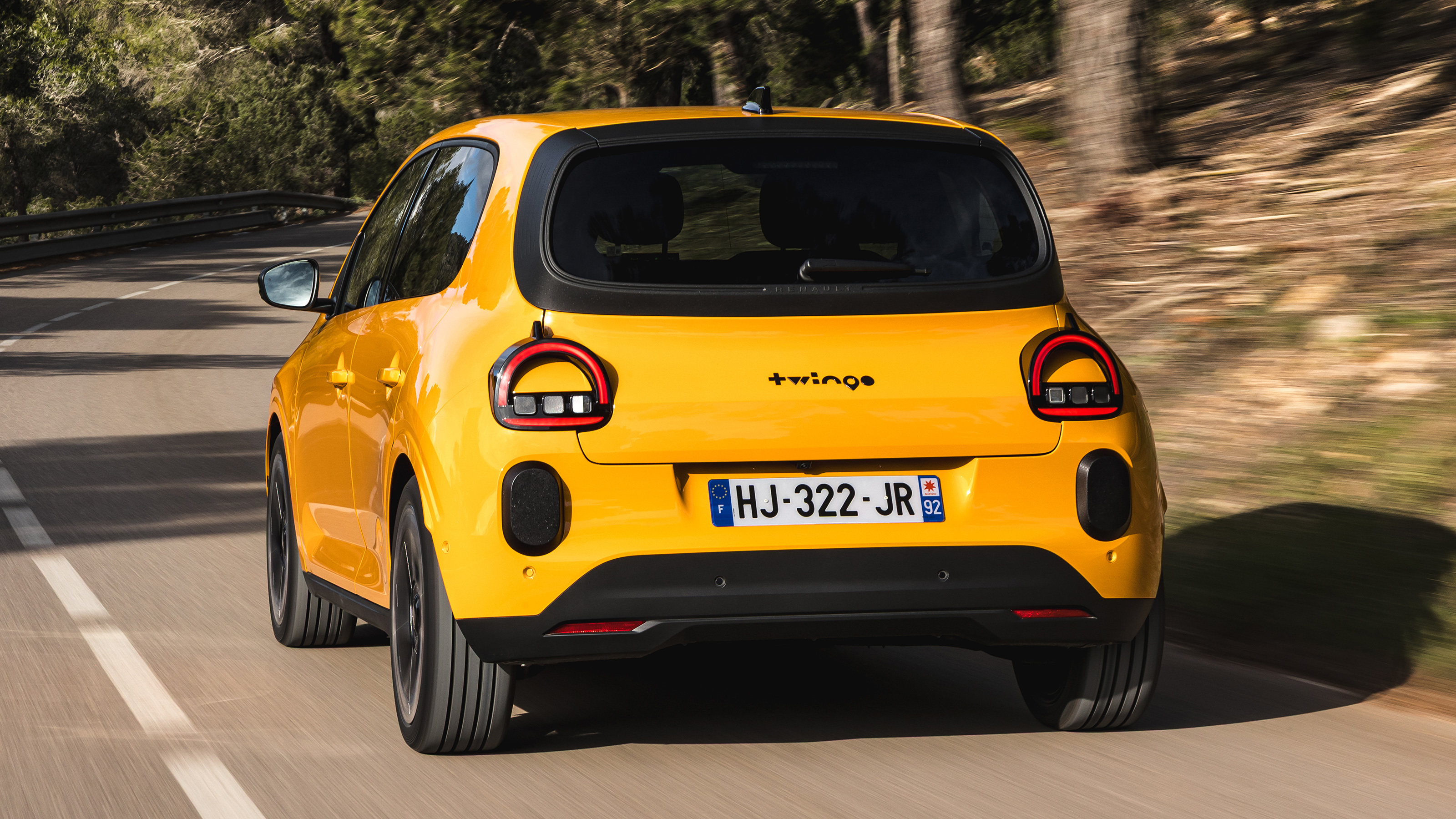
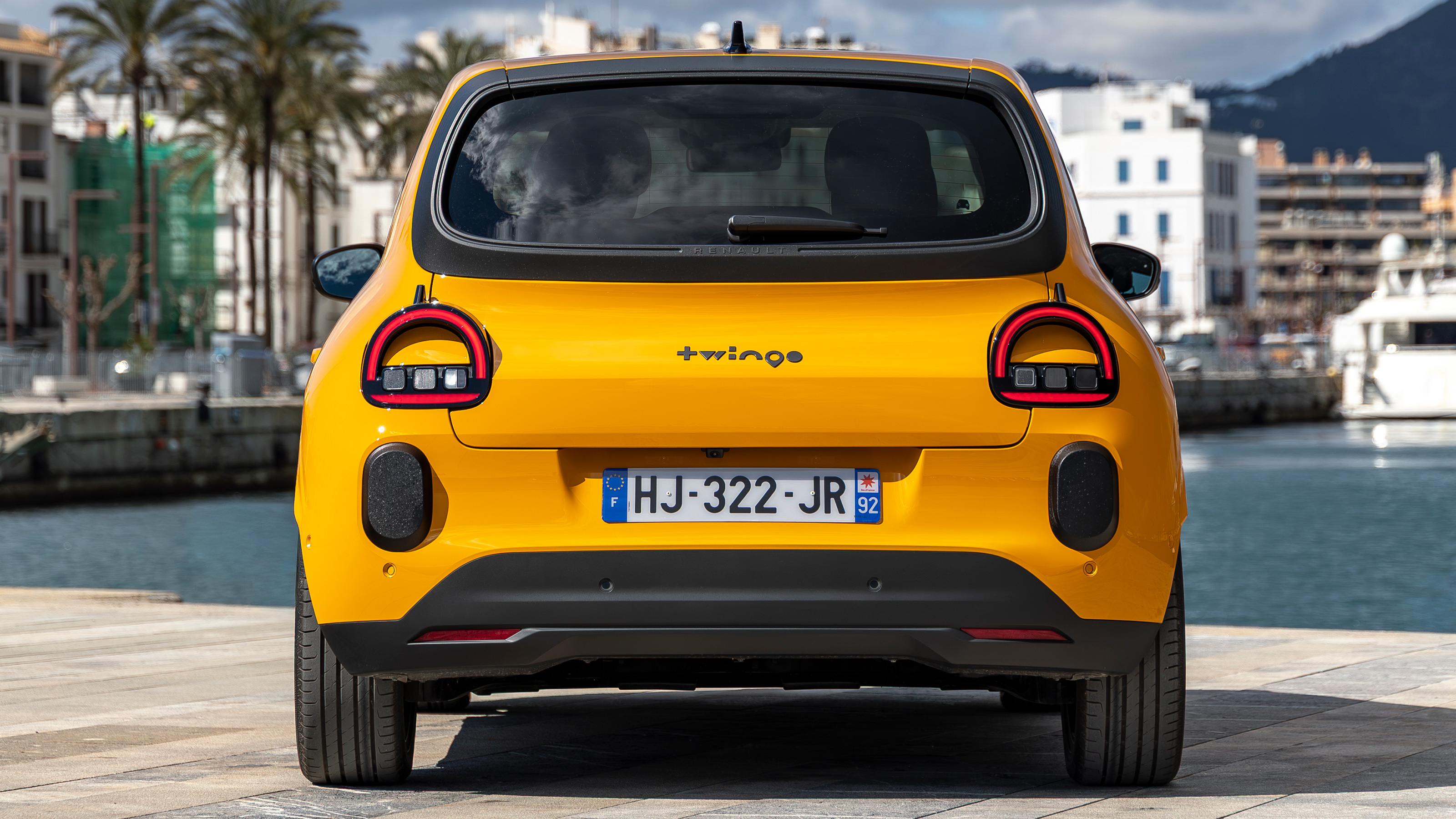
Its design is the first Renault done wholly under Gilles Vidal. Although it adds two more doors and a longer wheelbase, it honours the original Twingo's one-box shape, as its shovel-front's windscreen goes as one plane into the bonnet. You know, like a Countach. The arched, and arch, LED lights and smiling air inlet, the soft panel curves, the rounded rear side glass, the form of the tailgate… the entire confection is a knowing backward glance.
It's not short of sophistication. The rear side glass lies flush, which looks crafted and expensive.
Paradoxically it's a cost-saver. The glass is pulled tight to the metal because it's a front-hinged flap, like a three-door car's. If it wound down that'd be more expensive. Yet at speed its venting effect is effective.
What’s this about a versatile interior?
Although it isn't a cheap feature, Renault was obsessed with giving the Twingo sliding rear seats like the original. So it's just a four-seater. Each rear seat slides fore and aft. If back, you have the rear legroom of a Golf-sized car. If forward, very little, but a decent boot. Slide just one and you have a medium boot and space for three adults plus a child seat or a big bag on the seat behind the driver.
How cheap? And how?
We don't know the answer to this first question because it doesn't go on sale in the UK until late 2026. And although it's built in Europe (Slovenia) with a European battery, Renault isn't entirely sure it'll get the full £3,750 grant. The electricity grid in Slovenia is quite carbon-intensive and that's taken into account on grant eligibility. In a car this cheap, that big grant really matters.
How else did they get the price down? It re-uses a floorpan from the 5 and 4 and Nissan Micra. It'll also be used in a Dacia or two and the next Ford Fiesta. In copying its own homework, Renault saved development and tooling cost, and can buy parts from suppliers in vast numbers to drive the price down. Standard industry platform-sharing logic.
But there are more cost savings. A torsion beam rear axle replaces the R5's multi-link. Drive comes from a very compact new 80bhp motor. The battery is a cell-to-pack design using LFP cells, not the higher-density but more expensive NMC. The 27.5kWh pack also has an electric heater to liven it up on cold days, but saves money and weight by doing without liquid cooling. So it can charge at only 50kW peak. All those things make the pack 20 per cent cheaper than a modular NMC equivalent.
So do we get low range, slow charging and poor performance?
Well, because it's fairly low in capacity, 15-80 per cent is still only half an hour. The small motor means a limited 81mph top speed, and a decidedly gentle 0-62mph of 12.1 seconds. But that motor is light, and with less torque its gearbox is lighter, and the brakes too. All at less cost. The battery weighs just 212kg, the whole car 1,200kg.
That all adds up to excellent efficiency of 5.1 mi/kWh, and so decent range for a small battery. It's rated at 163 miles WLTP range.
With limited performance, you're more likely to achieve the WLTP range. We got 6.2 mi/kWh in gentle warm-weather driving and even averaged 4.8 mi/kWh on the motorway where EV efficiency usually tanks. That's outstanding.
How does it drive?
It's peaceful. Slow enough to be relaxed, and it rides surprisingly well, even on the UK's coarse excuse of a road network (don't be fooled by the pictures, we've driven it here in LHD). The tyres make little noise unless you're cruising at the national speed limit. So it feels like a bigger and more mature car than it actually is.
The steering is accurate enough but isn't blessed with feel, and the cornering doesn't have the joie de vivre of an R5 because the suspension's both softer and less sophisticated in design. More in the Driving section of this review.
What's the verdict?
“We choose cars irrationally… the Twingo is a happy car that radiates optimism”
The Twingo's cleverness is it brings cheapness through strategies that don't make it a chore to use. It's adaptable in many ways and restricted in only two – just four seats, and only two non-stop motorway hours of range.
It meets one definition of a special car. Low price, comfort and the versatile interior mean it creates use-cases for itself that no other little car can.
It's refined and very comfortable for the price, and OK to drive. Crucially, as our era demands it's green and cheap. That's all entirely rational.
But we also choose cars irrationally, and the Twingo speaks to that. It's a happy car that radiates optimism.