



25
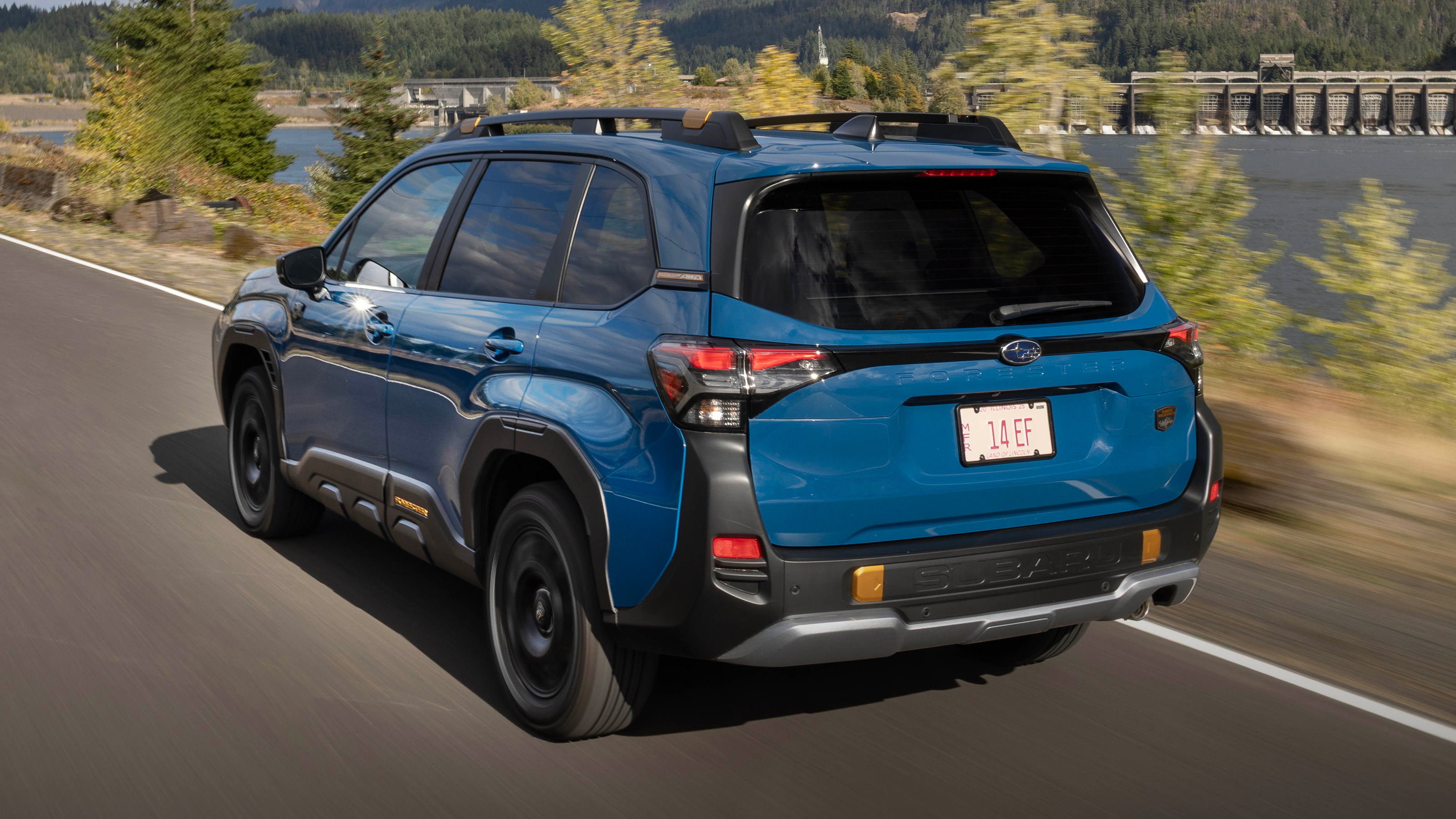
Fairly spacious, with 106.6 cu ft (3,019 liters) of passenger space, which means the second row can fit three people in relative comfort, with enough headroom between them and the panoramic moonroof. Behind them is a good 27.5 cu ft (779 liters) of space that can be extended to a nice 69.1 cu ft (1,957 liters) if you’ve got more stuff to haul than you do friends.
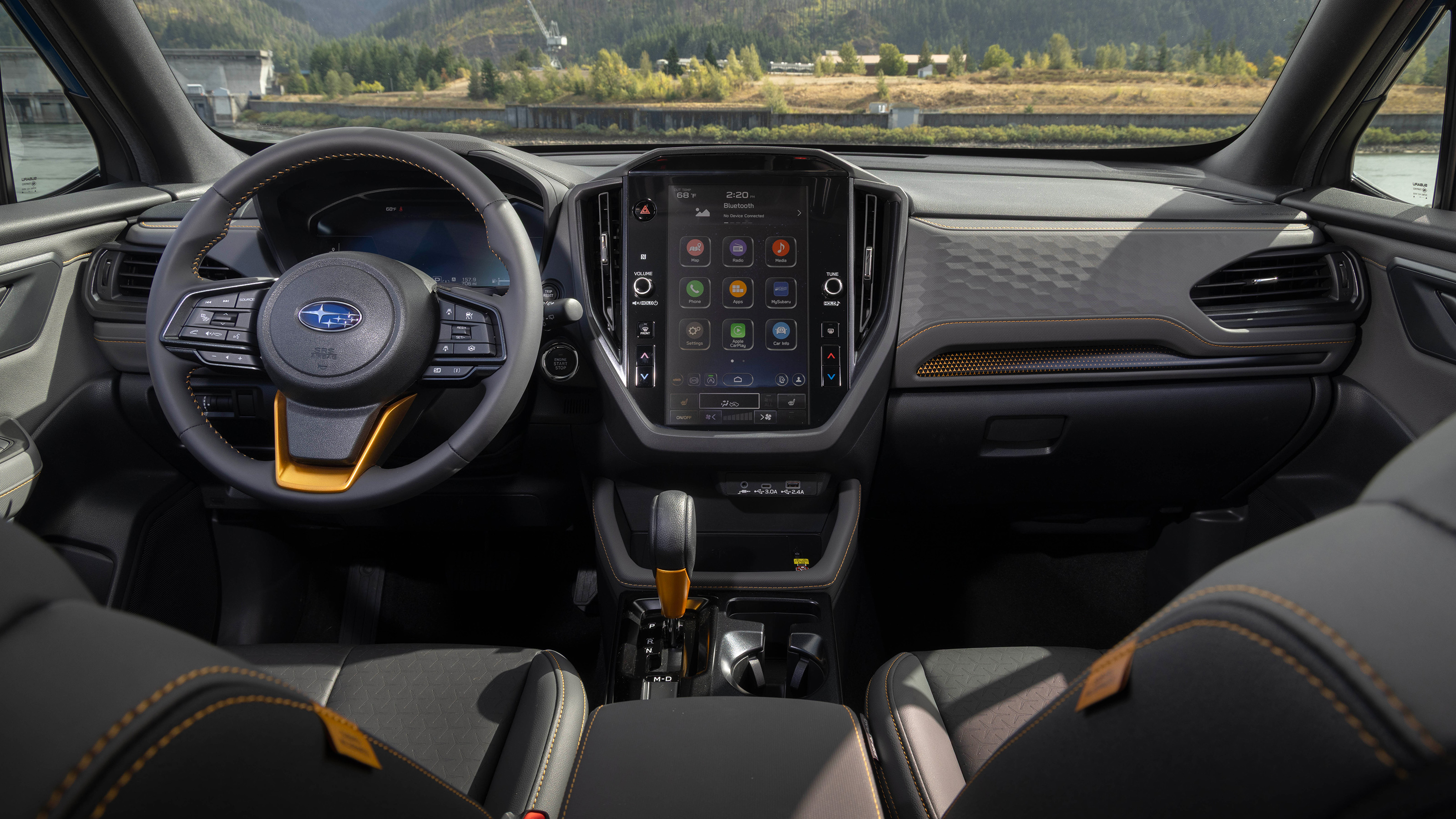
In terms of layout, the cabin is function-forward, with handholds, storage and USB ports about to meet the various needs of the typical Subaru driver. Everything is pretty much where you expect it to be, and it’s not devoid of style either.
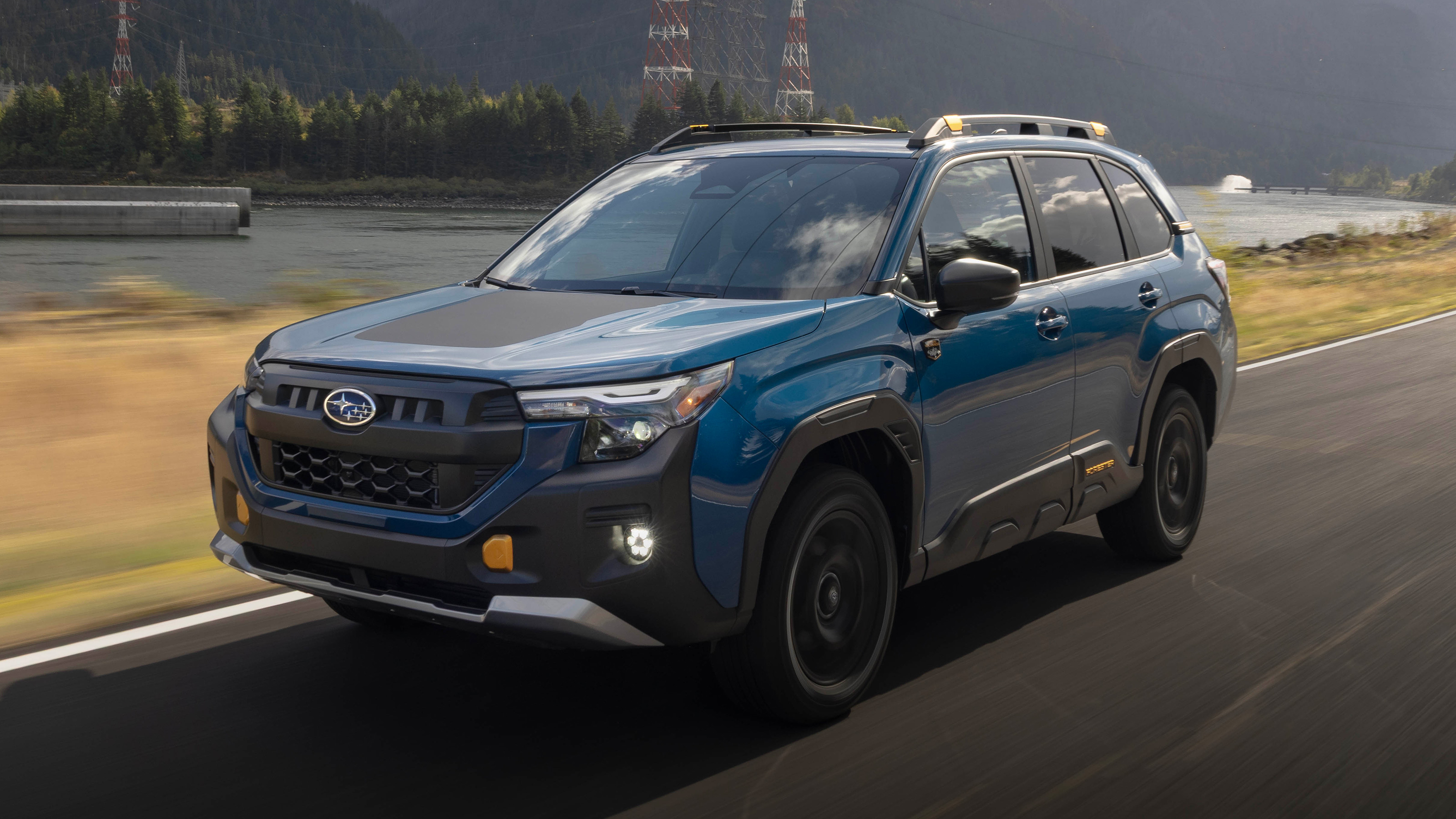
The tech you don’t see in the Subaru Forester works great, particularly with the no-fuss X-Mode driving system. This program is a press-and-forget system for traversing the wilderness, intelligently laying down power to maximize grip on the various terrain the Forester finds itself traversing.
Same goes for the robust camera system and the passive safety software, particularly the Subaru EyeSight driver assist suite. This includes automatic emergency steering, lane-keep assist, automatic braking while in reverse along with all the adaptive cruise control functions.
Where the tech mainly falters is the 11.6-inch tablet touchscreen interface which dominates the dashboard. Though integrated with hard inputs for volume and HVAC controls, most of the Forester’s functions live within the menus here. That would merely be slightly annoying if the software didn’t lag like a knockoff iPad trying to run MS Flight Sim on max settings. This is doubly frustrating if/when Apple CarPlay and Android Auto are paired, which only work wirelessly, compounding the connectivity issue. We say ‘if’ because just pairing devices is a trial-and-error chore.
There’s also the particularly intrusive driver monitoring system. They’re commonplace now, though rarely is one so strict when it comes to keeping the driver’s eyes forward. The alerts were truly bothersome in casual instances like heavy traffic, changing radio stations or even in the moment it takes to remove a pair of sunglasses.
In fairness, it’s not bad when you’re driving driving, but it’s very pernicious in the small moments where a sliver of deferred attention should be acceptable.
Get all the latest news, reviews and exclusives, direct to your inbox.
