



25
Decent. There’s a sense the designers have tried to break out from the norm, with some interesting materials and surfaces. But, crucially, they haven’t gone all gung-ho at the sacrifice of practicality. Good news.
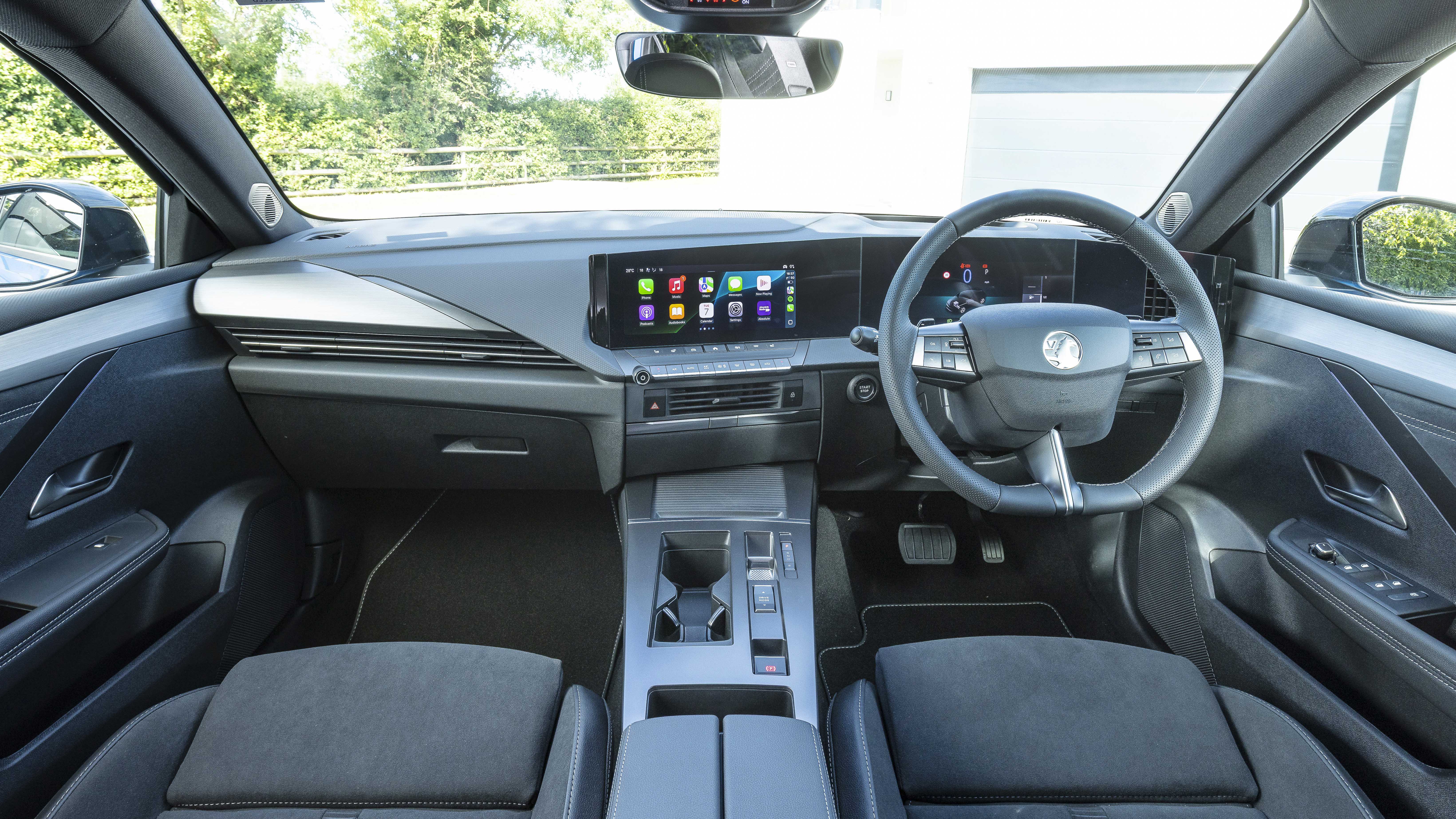
For example, the centre console. The gloss black finish – very prone to fingerprints and dust – is no longer, with it now wearing a new scratch-resistant satin grey look instead. Much better. Otherwise, there’s new seven-colour ambient lighting. But that, aesthetically at least, is about your lot.
The two screens take a black-visor approach atop the dash, echoing, you might say, the car's frontal styling. To our eye the large gaps between these come across as quite jarring, but there's no denying the setup works ergonomically. No ducking or straining to see the speed readout in here (yes we're looking at you, Peugeot 308).
The central touchscreen is angled towards the driver, which makes jabbing at it slightly easier when you're driving. And to that end there's a little plinth for resting your hand, though in practice you're just as likely to accidentally fiddle with the climate controls as you are to pick out Radio 4 from a line-up.
That said, there's a good choice of tiled layouts, and well-integrated phone mirroring: your phone's navigation can feed graphics to the driver screen or HUD.
The driver's screen gives you configurable layouts. Annoyingly none of them feature any kind of analogue speedo, and the rev counter is a silly little bar graph. Oh, and if you're wondering how you flick through the trip computer data, there are two (completely unmarked) buttons on the tips of the stalks. Bit of an oversight, that.
The population of actual buttons is a bit thin, but at least climate controls are represented, and even the heated seats. A 'car' button leads you immediately to screen shortcuts for lane-keeping etc. It can also be pre-configured so that holding it down for three seconds or longer immediately turns anything unwanted off.
Very much so. As part of the facelift Vauxhall has also introduced ‘Intelli-Seats’ as standard, which, believe it or not, are inspired by the seat design on bicycles: they get a recessed channel running up the middle of the front seat base, to reduce pressure on your tailbone. Clever.
But comfy and supportive front seats have a bit of a drawback: they're bulky and mean rear room is only average. Another reason to get the estate? The PHEV lacks the pure-combustion car's boot underfloor bay, so capacity falls from 422 litres to 352 (1,339 litres drops to 1,268 with the seats folded down). That's still more than you get in the 308, plus a bunch of other rivals like the VW Golf and Toyota Corolla.
The centre console between the front seats is higher than normal, with deep storage wells all along its length, although again, you're robbed of some in the PHEV.
Get all the latest news, reviews and exclusives, direct to your inbox.
