


Advertisement
“VW’s smallest ID with big-car ideas. An excellent all-rounder, even if it is a little bit vanilla in the styling. Satisfying rather than sexy”
Good stuff
Great steering, nice body control, excellent range and charging for a supermini
Bad stuff
Not the most striking design, touchscreen buttons can be annoyingly tiny, rear axle can thump over bigger bumps
Overview
What is it?
VW’s smallest ‘ID’ (i.e. fully electric) product, birthed with the weight of the Polo name attached. So it’s a supermini with the option of a 37kWh (LFP) battery, or a bigger 52kWh (NMC). Ranges range from 200 miles to 280, the max charging rate is 105kW for the biggest battery, and speeds vary according to the model – all of which is on par for other new cars in this price and size bracket, though unlikely to blow your socks off.
VW wants this to be very much a product that reinforces those VW tropes; so styling that’s not in any way outrageous, easy to operate, decent space and a high level of perceived quality. Nothing too challenging – even within an EV space that’s way more familiar to most than even five years ago.
Advertisement - Page continues below
This is also just the latest iteration of the platform-shared VW bits – MEB+ – that make up the ID. Cross, the Cupra Raval and Skoda Epiq, so aiming hard for distinct character is key.
The good news is that the ID. Polo is really appealing. Not a car that instantly impresses, but a few solid hours of driving and it starts to show a breadth of ability and charm – very much a scaled-down version of a VW product than a ‘cheap’ one.
Sounds… kinda dull.
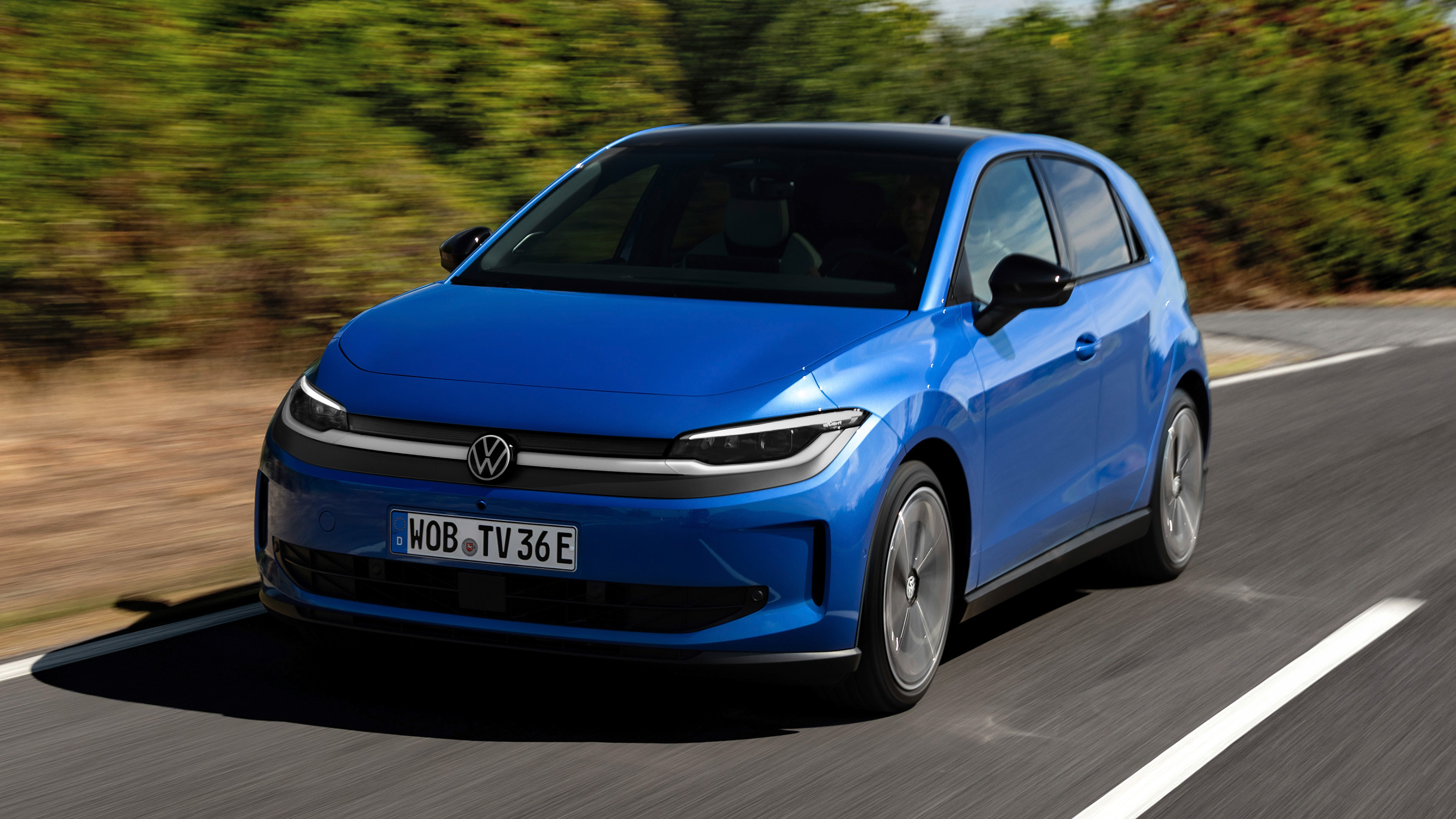
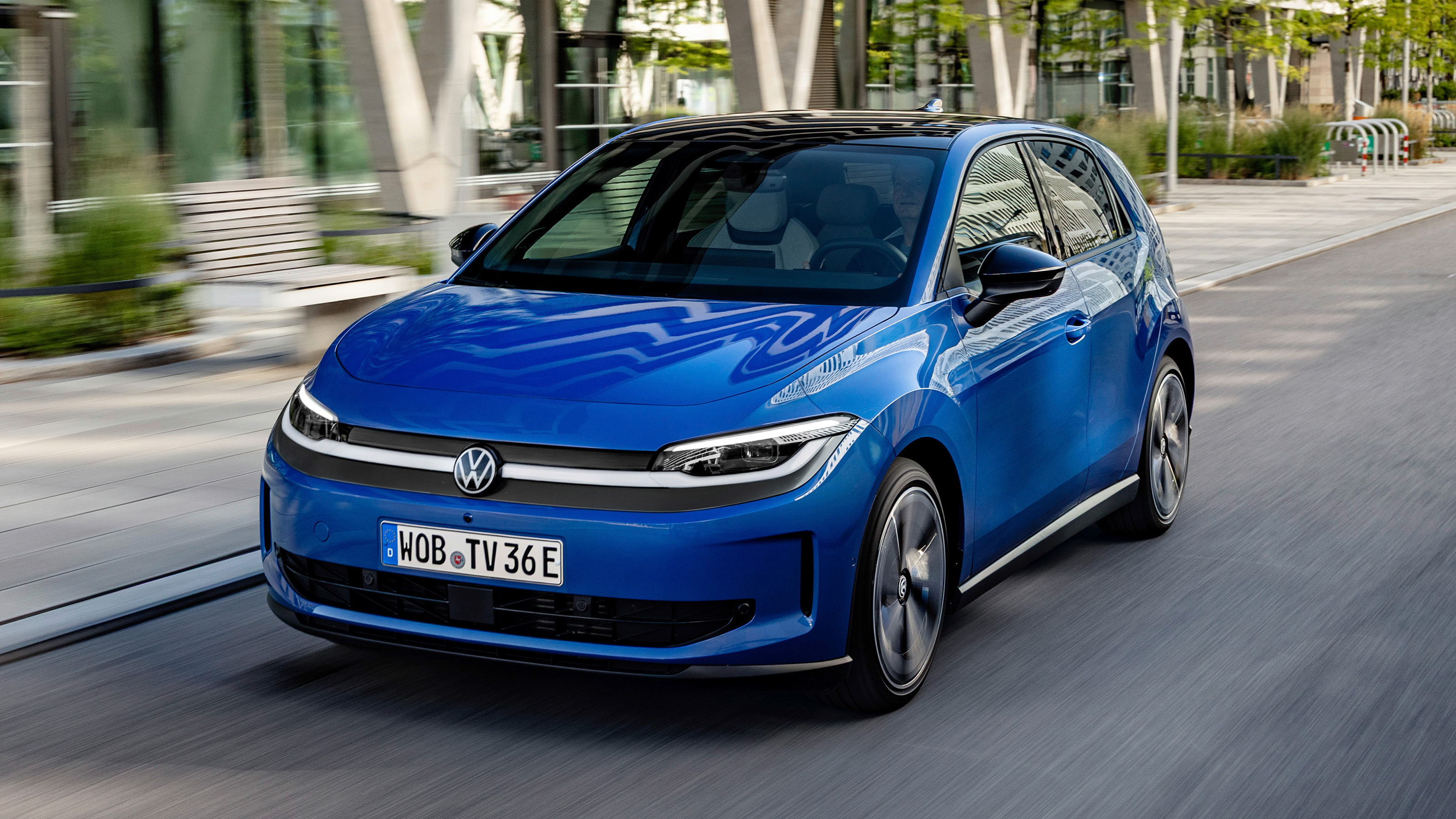
Aha. Yes, the ID. Polo does suffer slightly from a lack of first impression. There’s a subtlety to it that comes across as a bit visually Teflon. But it’s got some decent detail if you care to look, plus it’s that kind of boring that that means it won’t go out of fashion. The Cupra Raval (essentially the same car with Cupra’s twist) goes the other way and takes more visual risks – but that’s not the VW mothership way.
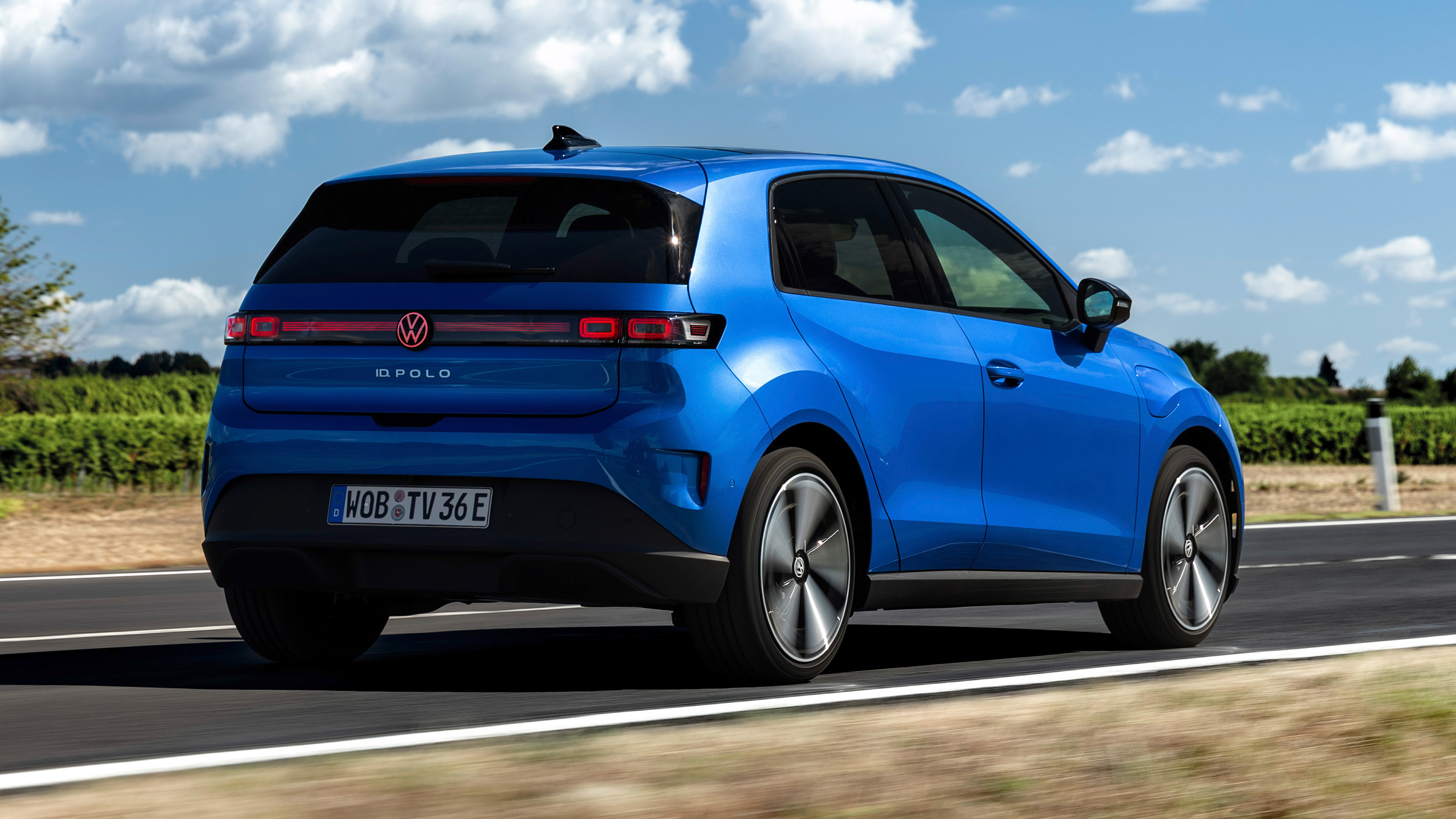
What you get instead is a classic supermini monobox, just over four metres long with a front-wheel drive powertrain. Strong horizontal elements across the front and rear lights give it some width, but it’s an M&S sweater of a thing, rather than a Gucci hoodie. There’s seating for five, though it’s necessarily small-ish in the back seats, and there’s a big – if oddly deep – boot at 441-litres. For reference, your usual ICE hatchback tends to have 60 litres less.
Advertisement - Page continues below
The interior is the same kind of vibe – straight and clear, well-thought out and useful, without too much surprise and delight. But also no chintzy jazz hands. Definitely no-nonsense here.
What models are available?
As well as the two battery sizes there are a triplet of power outputs (114bhp, 133bhp and 208bhp), all front-wheel drive. Europe gets ‘Trend’, ‘Life’ and ‘Style’ as trim options, with the UK getting the latter two, plus a pair of ‘Launch Edition’ cars for the first tranche.
We’ve only driven the 208bhp, top-spec car so far, and that proved to have more than enough poke for a little inter-urban roustabout. Although the step down from over 200bhp to 133 might be very noticeable… we shall have to see when the other cars come on stream. Don’t forget that there’s already the ID. Polo GTI on the cards with 224bhp and 0-62mph in 6.8 seconds, so the 208bhp car is not going to be the sportiest of ID. Polos.
What about the details?
The ID. Polo really is a car that needs a little bit of time spent to really appreciate, because first impressions really are fairly stark. Compared to the Raval there’s definitely less visual heft and interest, though that feels entirely deliberate. The ID. Polo is unfussy, conservative and traditional.
Small-wheeled versions do seem to suffer from the ‘big body’ syndrome of a lot of electric cars, though 19-inch wheels on what is supposed to be a supermini look good but feel intellectually too big. But there’s a nicely thought-out front end with a very horizontal graphic and a glass-covered light strip, a similarly clean rear. The side profile is probably the ID. Polo’s weakest link – although you can just about tell this is a VW product.
Inside is the same; good seats, an excellent relationship between the hollowed-out door cards and the dash, simple single touchscreen with some real switches. It feels simple to operate and get comfy in, without the cheesy bells ’n’ whistles you sometimes get when designers try to add character. Nice, hard-wearing materials, too.
There’s not a huge amount of space in the rear seats – not a massive surprise in a small car – but there is a big boot, though it’s deep rather than wide or long, so the packing might get weirdly specific if you want to use all the volume.
How does it drive though?
Generally really very well. The 208bhp feels punchy if not eye-widening. The 52kWh battery version (the only one you can have with this motor) brings kerbweight up to a not-inconsiderable 1,576kg, but it never really feels like it. With a 0-62mph time of 7.1 seconds and 214lb ft of torque from the new APP290 drive system, it’s actually pretty fast.
And the best bits are all good news for people who actually like driving; the steering is rapid and precise, the body control is excellent and the brakes strong and progressive. Yes, it’s still a torsion bar at the rear – McPherson struts on the front – and yup, it can thump a little bit on big bumps, but clever bushing and resonance damping make it feel plusher than it actually is. Those vital few euros spent on better damping playing a big part. Apocalyptic UK B-roads will provide a proper test, but on smoother Austrian carriageways, it’s a big-car feel in a small-car package.
There are also generous applications of more expensive-feeling bits throughout – from the advanced driver assistance systems, to LED head and taillight set-ups to a Harman Kardon stereo. And yes, it’s got the ‘retro’ digital dialset which works very nicely. It’s good stuff.
What's the verdict?
“It’s a slightly conservative take on what an electric supermini might be, but there’s not much wrong with that”
Very solid from VW. The ID. Polo offers the kind of usability and happy harmony that will make a cracking foundation for the ID range – and it’s a really good VW Polo, no matter the motivation.
It’s a slightly conservative take on what an electric supermini might be, but there’s not much wrong with that; option it up and you’ll get a car that feels like a size option rather than a budget necessity. It probably looks a bit generic on first appraisal, but a decent colour and the correct wheels can liven it up, and you’ll soon come to appreciate a more sober outlook.
The interior is useful, the battery offerings and trim levels make sense and it’s practical, well-built and calm. Better than that, it’s also remarkably fun to drive – even if this version isn’t the explicitly ‘sporty’ one – although we need to drive the lower-powered variants to make sure that carries across the range.