




25
It’s the question I get asked more than any other. ‘Those doors. What happens if…?’ Well, it hasn’t happened yet. The closest I’ve got is being unable to open the driver’s door and having to clamber in from the passenger side. Not what you want when you lucked into a spot close to the entrance at Sainsbury’s.
But it’s good to be prepared, so what you need to know is that if you press and hold the unlock button on the remote, the windows drop and you can go in Dukes of Hazzard style. Provided you’re more Luke Duke than Boss Hogg.
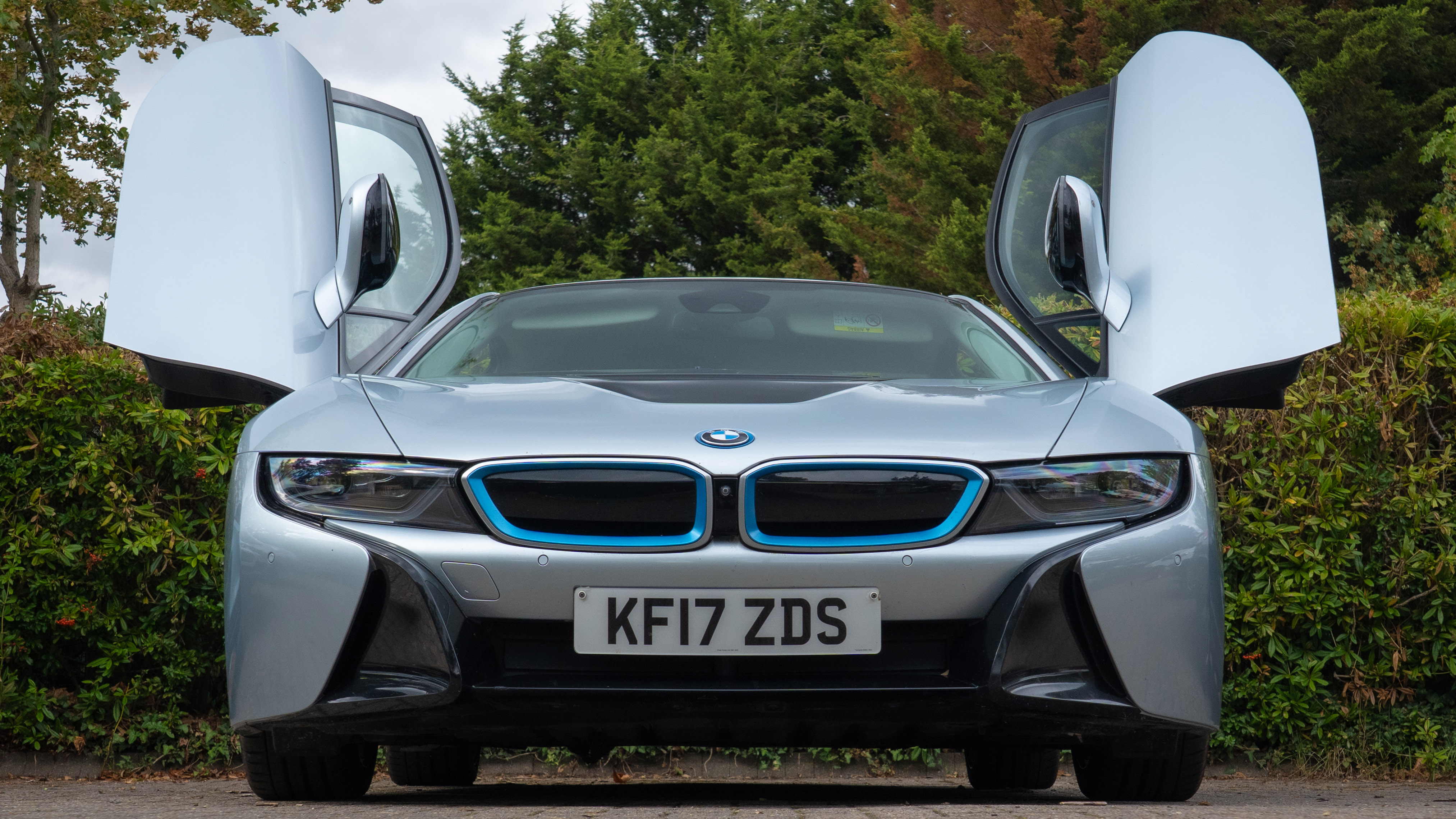
Hopefully your car does something similar, because I don’t think the i8 has much worse access issues than most other cars. People just assume that because the doors swing upwards they take up masses of room. But I’ve just been out and measured how much space they need to swing up and it’s about 50cm. Open a conventional door that far and it’ll be a squeeze to get in.
And conventional doors are boring. The i8 needed to feel like a supercar and there’s no better way to do that than give it daft doors. Especially when they look exotic, but aren’t actually that exotic. Koenigsegg has doors that push outwards then rotate upwards, McLaren doors do a sort of funky twist and pivot.
The physics of those movements are immensely complex. But the i8's doors just swing open over a single arc on regular hinges that just happen to be on the A-pillar rather than the door jamb. Nothing more complicated than that.
Having said that, if you ask an engineer what the most complicated part of a car is, you expect them to say something about the inner workings of the gearbox or the front suspension’s planes of movement, but the answer I get time and again is that it’s the doors: closures, seals, sounds, hinges.
They’re tricky things. So although I’m saying the i8's are straightforward, I bet somewhere in Munich there’s a man shaking his head.
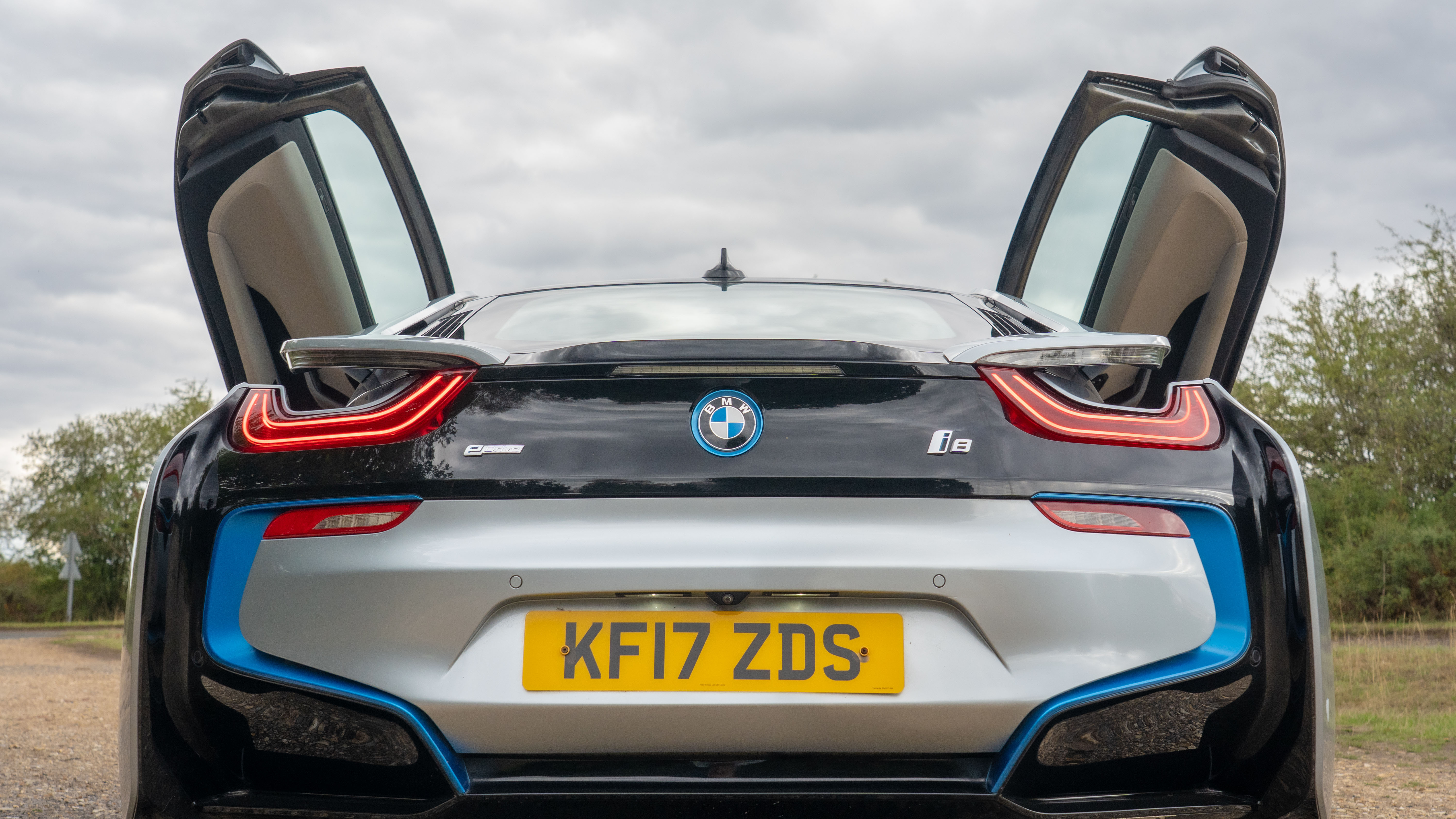
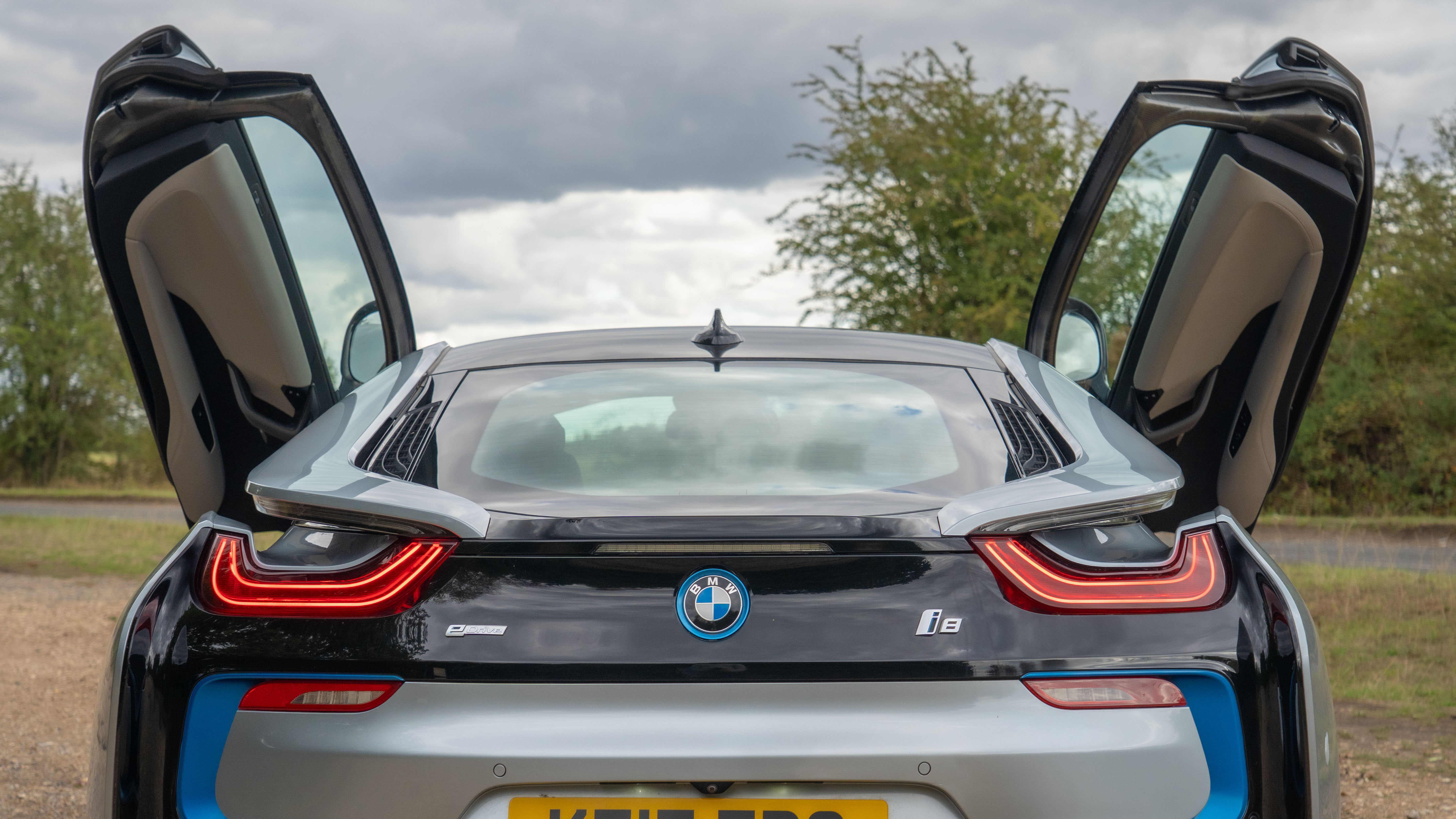
And in every other way those doors must have been fabulously complex to engineer. The door skins are aluminium, bonded to a carbon fibre door structure. You can see the weave on both door and frame, and it's one of those little treats I enjoy every time I get in and out.
In fact now I think about it, the i8 has one of the most satisfying ‘handshakes’ of any car. The click of the hidden door release, the hushed push up from the strut, that glimpse of carbon - it gets me every time.
I digress. Carbon construction had two major benefits for the i8's doors: it meant the apertures could be big as the structure was so rigid and strong, so access to the back seats is easier than in many other 2+2s, and it meant the door didn’t weigh much - 50 per cent lighter than if it had been made of steel, reckoned BMW. Which meant a smaller strut, saving more weight…
Of course, they do require a certain technique. Lean back a bit, one leg in, then this sort of duck/twist/reverse manoeuvre until bum drops over the high sill and pull the trailing leg in. Getting out is less complex, but requires more physical exertion and remembering to not stand up straight too soon.
The dealer I bought the car off was a large chap and only ever drove the i8 once. He went into the car head first and came out head first. Neither was good for his dignity.
Get all the latest news, reviews and exclusives, direct to your inbox.
