First LookTop Gear
Meet the new T-Roc R: a 328bhp version of Volkswagen's 'automotive cardigan'
Very Sensible VW gets a Very Unsensible Makeover...
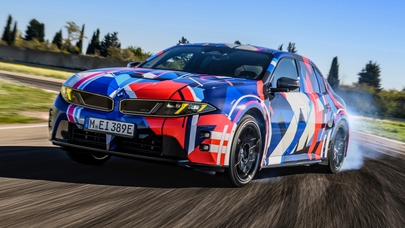
Latest in the line of VW’s full-fat ‘R’ performance models is the T-Roc R, a 328bhp (333PS), all-wheel drive, semi-satanic version of the automotive cardigan that is the T-Roc. Yes, the Golf for those with hip issues gets a version with ‘Nürburgring Mode’ and 0-62mph in five dead. And a drift mode obviously, because what is a small SUV without the ability to sling it sideways around a GP circuit?
It might not make up the bulk of the T-Roc’s sales mix, but we admire the ambition, and given the state of UK roads, the suspension travel when trying to drive quickly is probably quite welcome. Still, what we have is a T-Roc on the MQB evo platform sporting a mild-hybrid version of the familiar EA888 evo5 2.0-litre four-cylinder petrol, which now features a 48-volt electrical system as well as an electric supercharger (EAV) running in parallel with the traditional - albeit variably-vaned - exhaust gas turbo on the hot end. That should fill in any lag while the pressure-driven blower gets going.
Advertisement - Page continues below
What that gives you is a max of 328bhp between 5,750 and 6,500rpm, and 310lb ft (420Nm) of torque from 1,900 to 5,250rpm - so it’ll pull from very low. Always a good thing in the real world.
All of that drives through 4Motion all-wheel drive with a torque splitter - so you can throw power and torque between the front and rear axles and between the rear wheels, depending on which one has the most grip - so in theory, you can juggle 100 per cent of the torque to the outside rear wheel when loaded up in a corner. And it’s not just for grip; it’ll also encourage the car to rotate and feel a bit more nimble, and also help stabilise when accelerating/braking when there are different grip levels at each wheel. Not new, but clever stuff - and possibly not what you expect in a T-Roc.
Of course, the T-Roc R also gets VW’s Dynamic Chassis Control (DCC) as standard, and you get an electronic diff lock, performance swivel bearings to keep things neutral, shorter auxiliary springs, stiffer actual main springs, stiffer rear anti-roll bars and all sorts of other little tweaks. The DCC itself gets ‘7+2’ driving profiles - which sounds like ‘9’ according to maths. But they consist of seven ‘normal’ modes and two special.
That’ll be Eco, Comfort, Sport, Snow, Offroad, Race and Individual, and then Special and Drift, with the last pair accessed through a sub-menu in the Race profile. Sounds… complicated. Let’s all play the ‘programme the shortcuts’ game before we actually need to access the performance. The normal modes are self-explanatory, but Special is actually the Nürburgring mode, where the damping is set softer than Race to handle bumpy, more road-biased stuff (it was developed at the ‘Ring, where there are divots and cambers and weird surface changes) - and you can drop the ESC if you wish, eliminate upshifts and kickdown and generally do everything yourself with the seven-speed DSG ‘box.
Advertisement - Page continues below
Drift just does what it says on the tin and overspeeds the outside rear, as long as you’re on a closed course away from the general public, kindergartens, groups of puppies and old people’s homes, obviously. Oh, and something that sounds really annoying is the ‘motorsport’ start-up; press the engine start button for one and a half seconds without pressing the brake, then press the brake, and the start-up ramps to 3,000rpm before backing off through the Akrapovic exhaust system. And it’ll backfire when decelerating, which is a ‘characteristic sound from the world of motorsport’ apparently. So a pop’n’bang map, then.
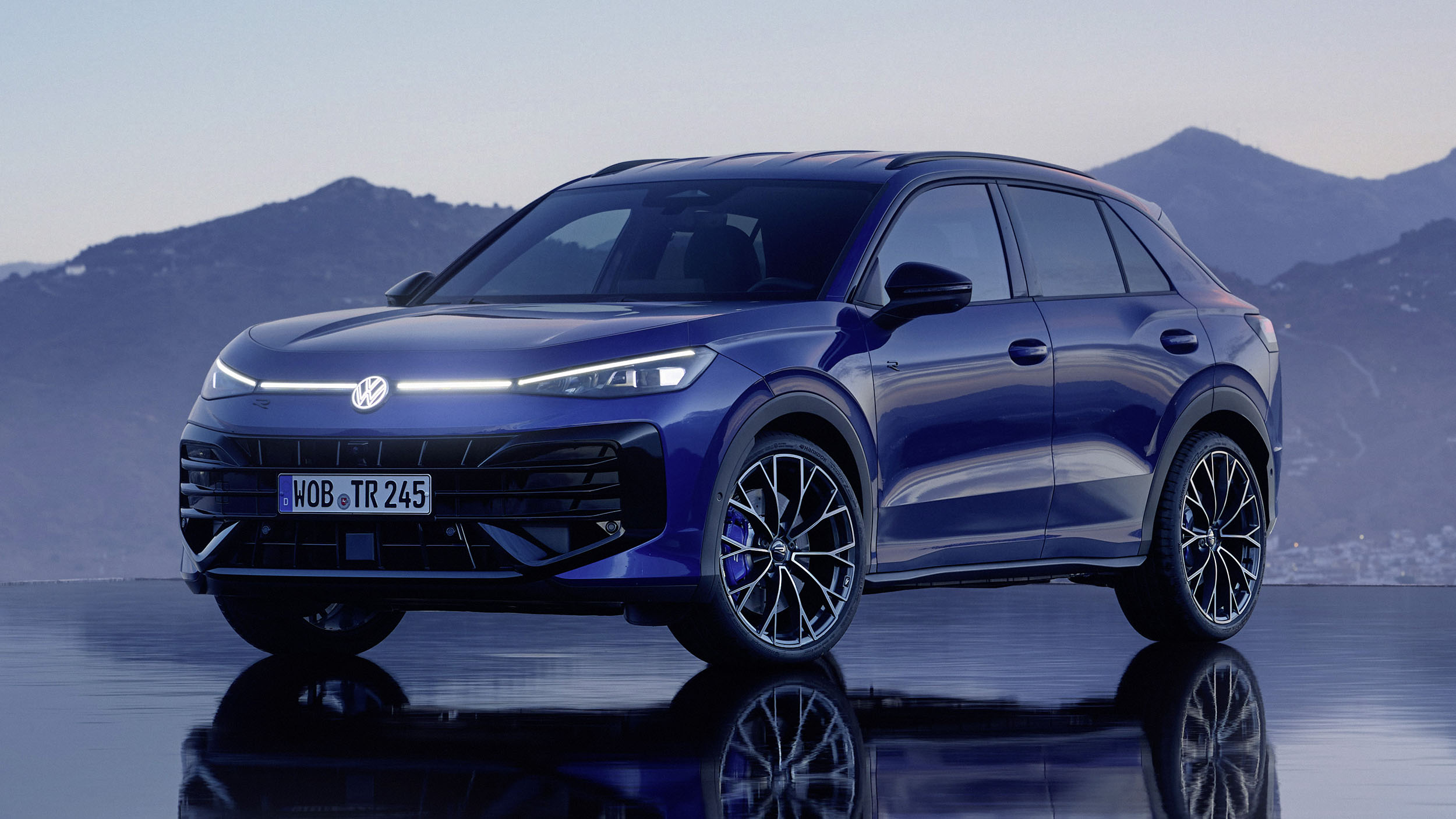
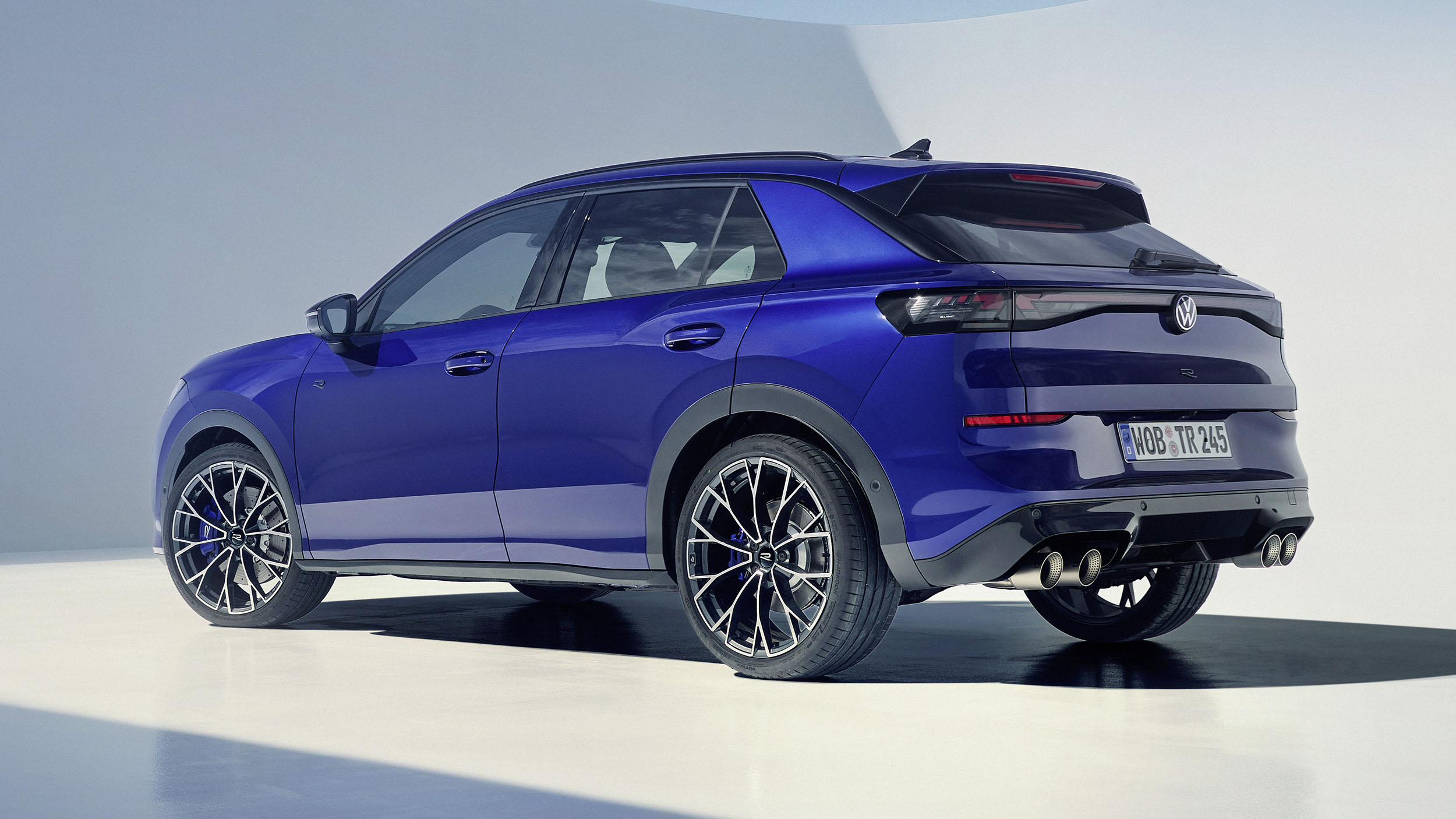
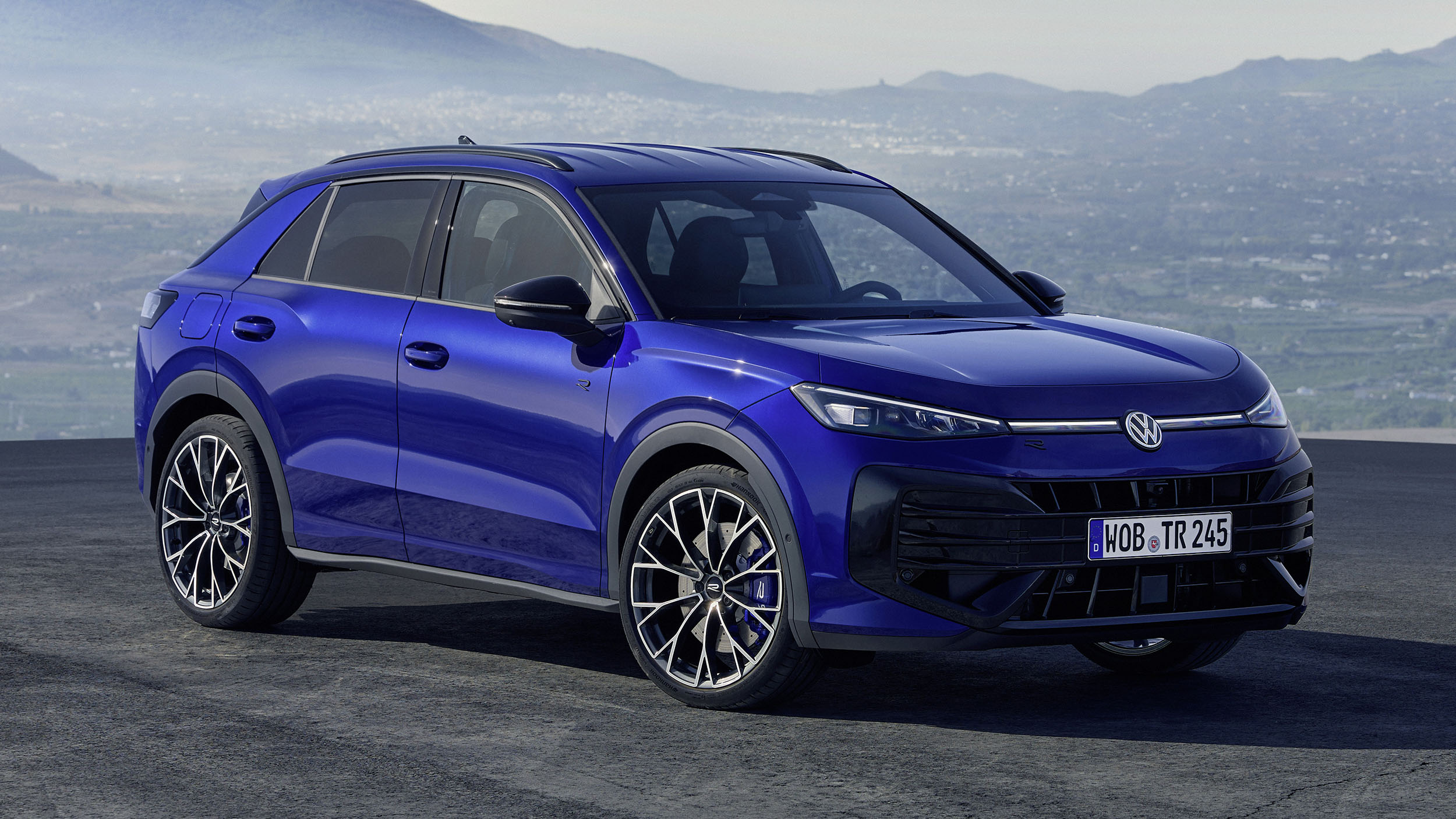
Still, the yobbish bits haven’t been translated to the outside, because the T-Roc R is actually fairly subtle. Specific 19 or 20in alloys with ‘R’ caps cover big brakes with blue calipers, and it sits lower with a more meaningful stance. The front bumper has a car-width intake and various cross bars, with an ‘R’ logo offset on the front - which looks suspiciously like the rest of the badging fell off. There’s another R logo below the black mirrors, different side skirts and a bespoke rear bumper/diffuser which features - if optioned - that titanium exhaust from Akrapovic.
Lighter and slightly rowdier than stock, but still a little rough-throated with that four-pot rasp - though we’ve only heard it revved at a standstill, so here’s hoping it’s a bit meatier under load.
As for the inside, it’s modern ‘Roc, which is very nice but calmly sober. So the usual screens and practical space, but with an R Performance steering wheel (with the option of velour or leather), a wheel which features an ‘R’ button for mode selection of ‘R mode’. There are specific R views (central rev-counter with R logo, 3D-style layout, paddle/gear position/GPS laptimer/G meter etc) and functions on the Digital Cockpit Pro (standard) and funkier, more supportive seats with a blue R embossed into them and blue contrast stitching - all of which is par for the R course. At this point, the preponderance of the letter ‘R’ all gets a bit tiring. It’s even on the sills.
Top Gear
Newsletter
Get all the latest news, reviews and exclusives, direct to your inbox.
All in all, this points to a T-Roc that’s been slathered with R, but in a very specific way. It’s a proper performance car upgrade, with plenty of detail. And with one big bonus: the T-Roc R expands the use case of something like a Golf R by having that rough-road capability. It might be a slightly odd one, but VW has done a thorough job, at least. Prices haven’t been announced as yet, but production starts in the first quarter of ’27. Presumably as long as the month has an R in it.