



25
Mini Countryman JCW
1998cc
296.4bhp
5.4s
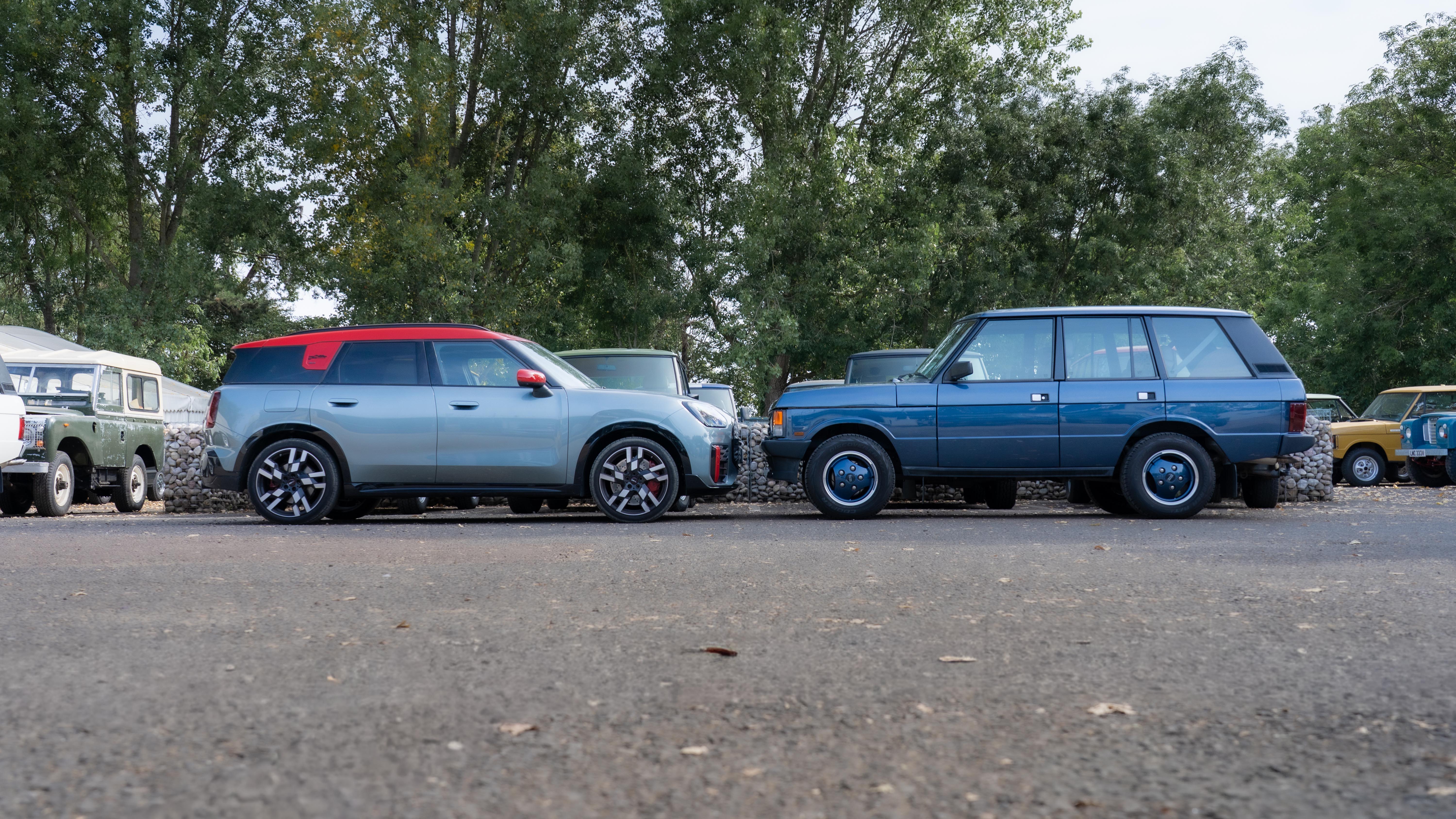
Here we are, the un-mini Mini and the OG SUV. Yeah, today’s mid-size crossover lines up about equally with the first full-size luxury off-roader. It’s a fascinating comparison, charting not only the size, but also the weight and spec changes that cars have undergone over the last 55 years.
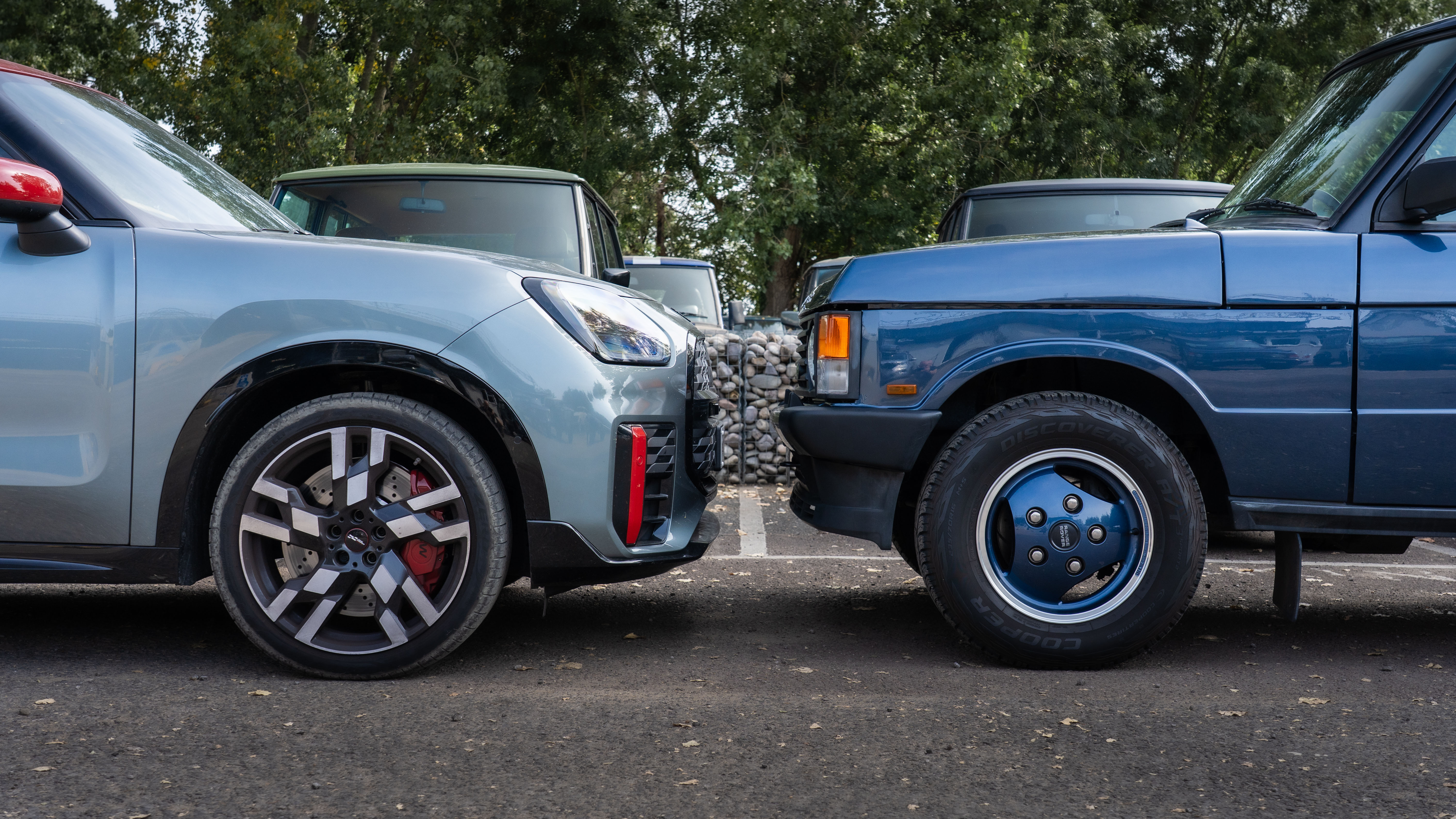
Let’s deal with the fundamentals first. The modern Mini Countryman is both longer (by 2mm) and wider (by 62mm) than the first Range Rover from 1970. They’re almost exactly the same weight and about equally spacious inside. The thing that strikes me most is the wheels. The Range Rover looks big because it's riding on a set of 16s, the Mini small because it’s propped up by 20s. The rolling circumference of those wheels is about the same, the plump tyres have gone in exchange for much bigger brakes (385mm front discs play 298mm).
We know cars grow with each generation, that’s not a surprise. The modern Range Rover is 600mm longer than the original from 1970, but what’s strange about the Mini is how fast it has grown. Across its lifetime the Range Rover has added about 10mm a year, the Countryman (since it came out in 2010) over double that. It’s a heck of a growth spurt.
And it’s logical. Mini needed to separate the Countryman from other cars in its range that it was in danger of overlapping with, the Clubman and the Paceman. So it grew to move up a class and compete with the big kids in a big market, going up against a host of other family cars such as the Nissan Qashqai, Volvo XC40, Peugeot 3008 or indeed Range Rover's smallest model, the Evoque. No overlap with other Minis, just a lingering concern that the name was being stretched.
We are where we are. The Mini is big, but does a good job of feeling small. Both on the road (where that’s a good thing) and inside (where it’s bad). As I mentioned above it’s not any less spacious than the early Range Rover, rather it’s the perception of space that’s very different.
The Range Rover is light and bright inside, the skinny pillars and deep glass giving it an airy feel. In the Mini you sit lower in a comparatively dark, poorly lit cabin. And that’s despite it having a panoramic glass roof - although both it and the side windows are pretty heavily tinted. Dark cabins are the bane of modern motoring. A quest for privacy I guess, and I appreciate that the thicker pillars and limited glass area mean more protection. But they also mean big blind spots.
From the Range Rover's lofty driver’s seat you don't miss a thing as you peer imperiously down that square bonnet. Because the Mini has exchanged a traditional instrument binnacle for a small head up display, you get to see a bit of bonnet here too, but you’re tucked deeper into the car.
Now let's remove those rose-tinted specs. Yes, we all look at the Range Rover as a classic piece of design and engineering and it absolutely is. But the progress made across the last half century is incredible. From power and fuel economy to equipment and technology, new cars are remarkable. Not always in a good way - we can all do without the bongs, beeps and ‘helping’ hands, but this Mini is probably both twice as efficient as the Range Rover, and twice as fast. I’ve been using the built-in car systems recently because Apple CarPlay displays so badly on the circular screen, and they’ve been great. So has the pairing with the phone app.
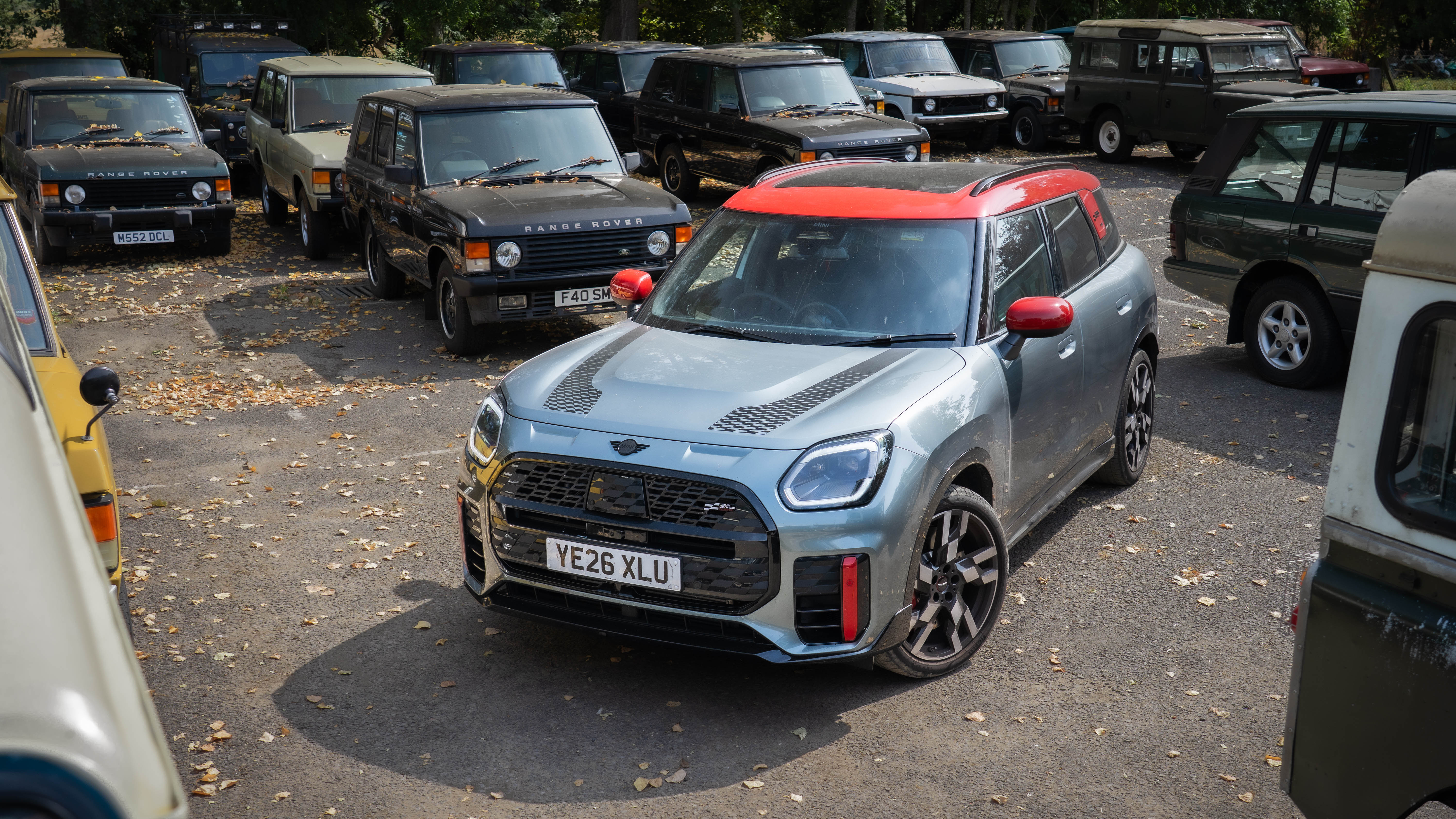
None of this is radical or new to Mini, it’s just progress. And sometimes it’s good. I don’t need to say ‘and sometimes it’s not’ because we’ve all done battle with touchscreens and menus and lane keep and so on. But it’s fun to drive old stuff, fun to compare where things have come from and where they’re headed to, fun to park Mini and Range Rover together. Next step getting biggest and smallest Minis together?
Thanks to: www.kingsleycars.co.uk
Get all the latest news, reviews and exclusives, direct to your inbox.
