Electric
Top Gear
Here's why the Tesla Cybertruck got cancelled
Tesla's controversial truck is being phased out. We look at what went wrong
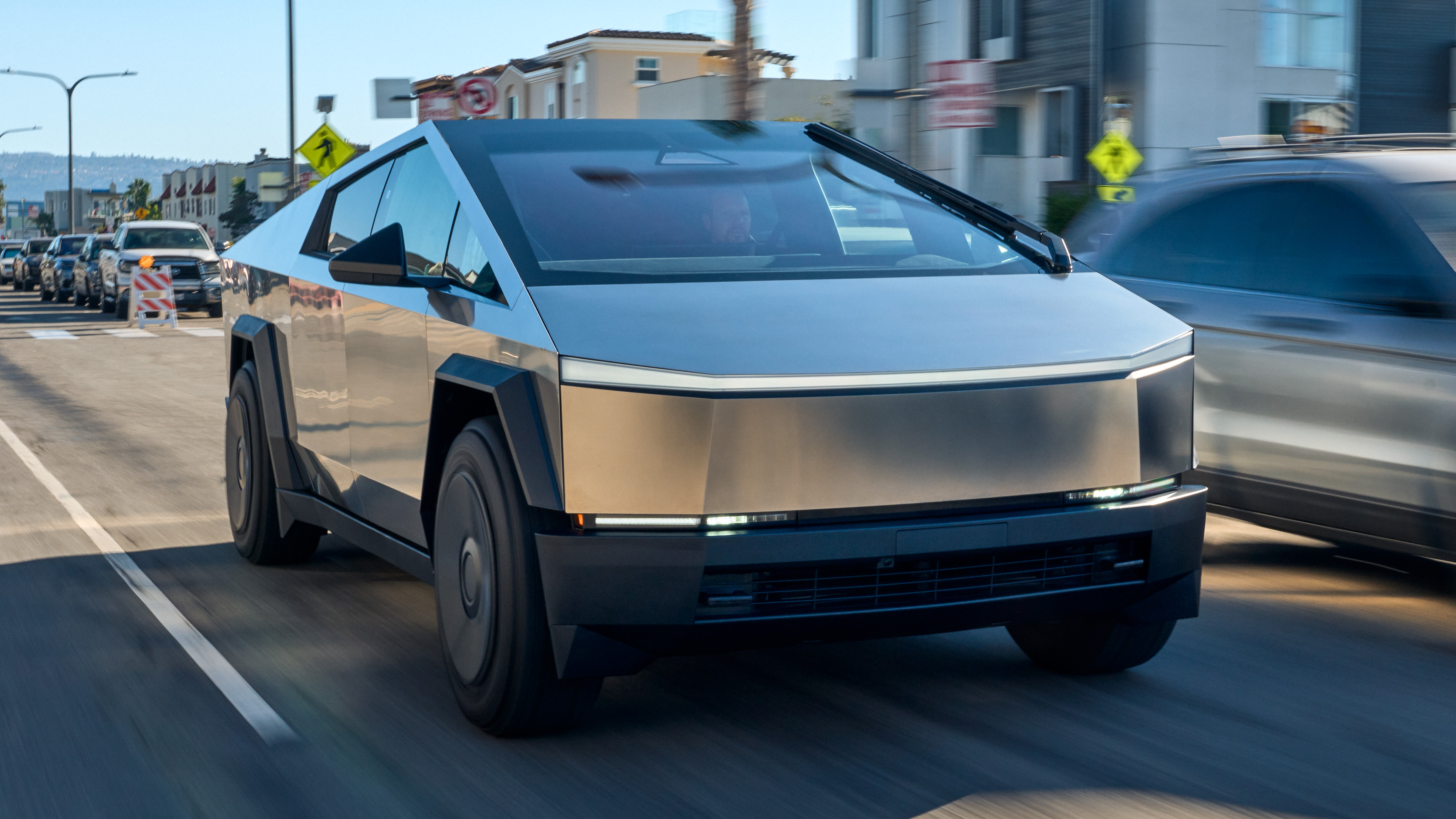
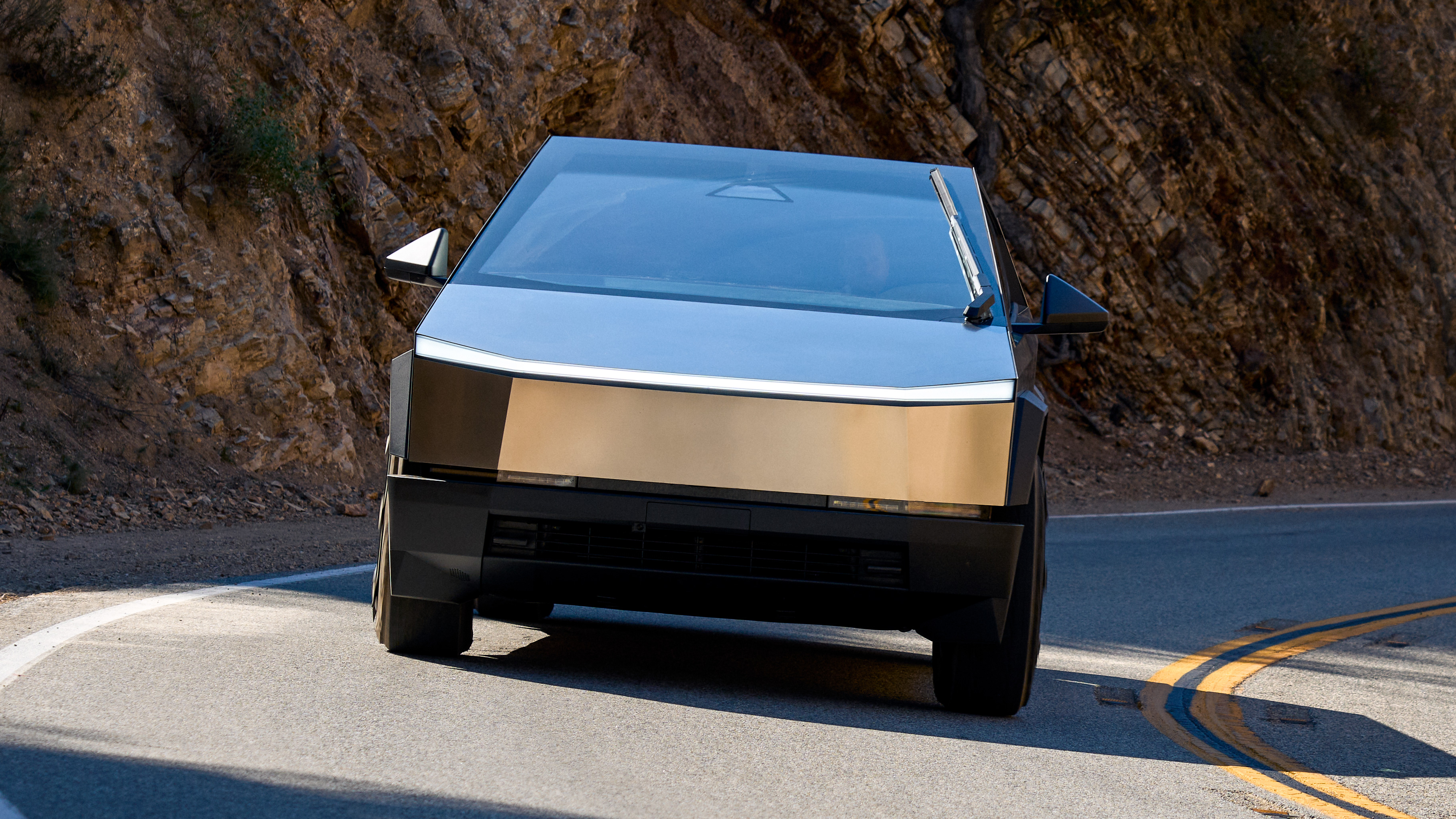
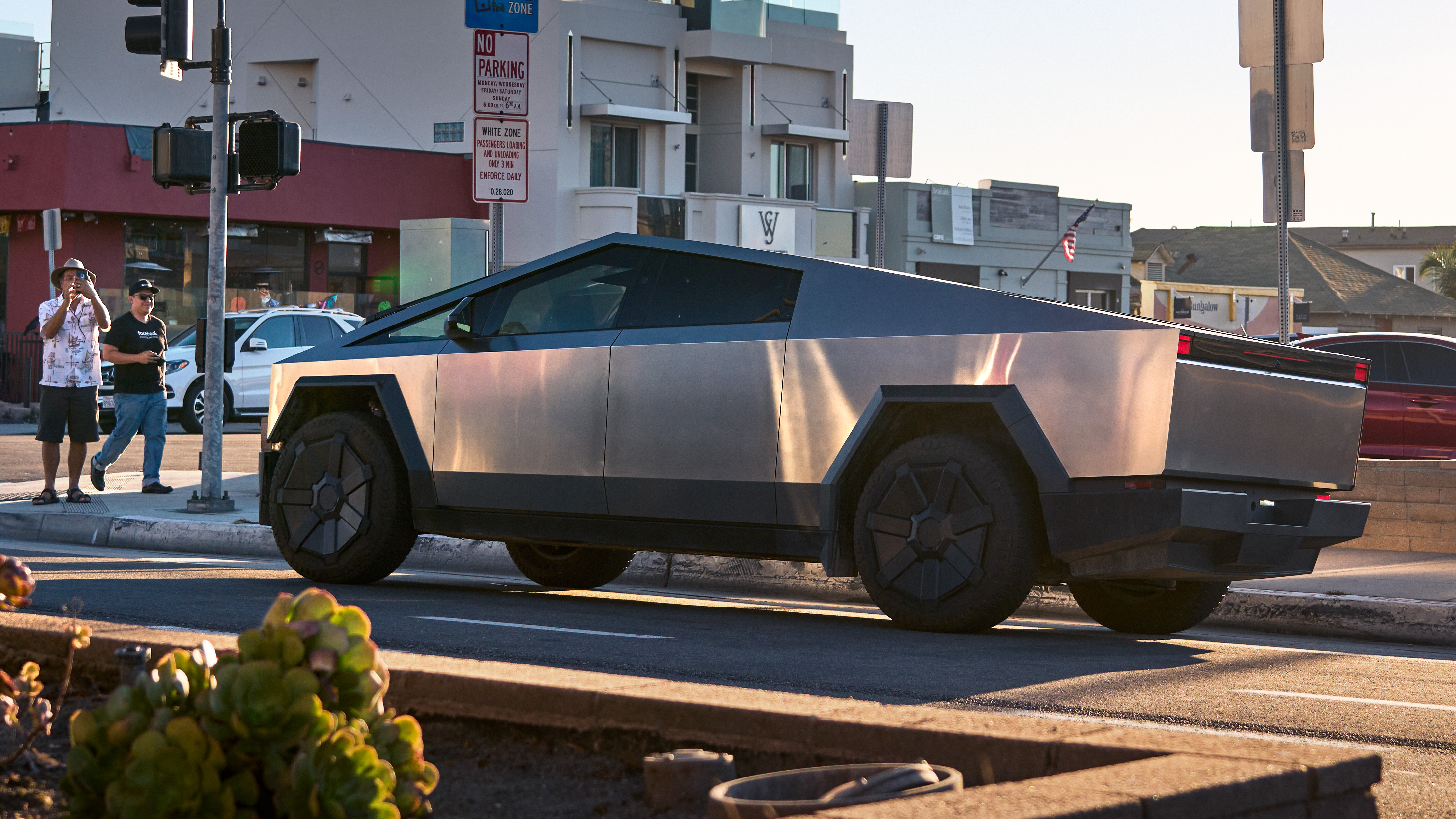
Tesla is planning to stop production of the Cybertruck at its ‘gigafactory’ in Texas. Whether this is good or bad news depends on who you are.
“The Cybertruck order rate far exceeds our production rate,” Elon Musk wrote on X on Monday. “We will try to make as many as possible before shutting down the line in about eight months but will have to return deposits for a lot of people.”
Advertisement - Page continues below
Hmm. We might need clarification on the nature of ‘a lot’ in this context. And indeed, the nature of the deposits the company has been sitting on for a number of years. Musk also noted that production is winding down not because sales were less than expected but because Tesla has other things to be getting on with.
“This is not a case of Cybertruck being unprofitable, as has been reported by legacy media,” he tweeted on Monday. “But rather that the opportunity cost of the complexity of Cybertruck is vastly outweighed by the value of incremental Cybercab production.”

Hmm again. That Texas production facility isn’t called a Gigafactory because it’s a boutique operation, is it? Indeed, Musk has previously described it as the biggest factory in the United States. We can’t verify that, but we know it covers more than 10 million square feet of factory floor.
We shall be monitoring the take-up on Cybercab, given that Musk reckoned there would be a million robotaxis on the road by… 2020. Indeed, he no longer views Tesla as a carmaker: it’s a robotics and autonomous vehicle company.
Advertisement - Page continues below
There’s always SpaceX, which has just had its IPO; by floating less than five per cent of the company, it raised $75bn. Musk sees a “path to SpaceX being worth orders of magnitude more than the current Earth economy”. On its first day trading, it hit a valuation of $2.1 trillion.
Cybertruck: why it’s been axed
Elon Musk is no stranger to improvisational PR appearances. But the Cybertruck’s reveal, at Hawthorne in California back in November 2019, set a tone. During a demonstration of the truck’s supposedly ‘unbreakable’ armour glazing, Tesla’s chief designer Franz von Holzhausen lobbed a steel ball at the driver’s window. It smashed. As did the one behind when the challenge was repeated. Musk swore a bit and declared there was “room for improvement”.
It was expensive. Tesla said at the reveal that prices would start at $39,900 (£30,900 back then). By the time it was launched that had doubled to $80,000, and most cost $100k or more. As of today, the only configuration available to order is the 'Cyberbeast' priced at $109,990. And that represents a 10 per cent increase. You can no longer order the $82,490 Dual Motor AWD.
Tesla claimed the Cybertruck would have a range of 500 miles. That claim was later reduced to 325, which meant a real-world figure of 250. At a push. A proposed $16k range extender failed to materialise. Tesla promised a towing capacity of 6,300kg. It managed 4,990kg in the end.
Top Gear
Newsletter
Get all the latest news, reviews and exclusives, direct to your inbox.
Recalls tend to send the mainstream media into a right old tizzy but are an accepted fact of the automotive world. That said, the Cybertruck endured rather more than most – 11, according to official NHTSA (National Highway Traffic Safety Administration) figures. Amongst the list of issues include wayward trim panels (due to ‘environmental embrittlement’), faulty brake rotors and loose accelerator pedals.
Musk reckoned the Cybertruck would sell up to 250,000 units per year in pick-up truck hungry America. The factory and supply chain were geared up for that sort of volume. It managed 30,000 in its best year. It’s also worth noting that SpaceX – another of Musk’s companies – bought 1,279 Cybertrucks in the final quarter of 2025.
In Q1 and Q2 of this year, Cox Automotive estimates that 7,263 Cybertrucks were sold in the US. Compare and contrast with Ford, which sold 801,525 F-series trucks in the US last year, or Ram which shifted 374,059 vehicles. Not EVs admittedly, but even so, it was a tough sell.