



Big Reads
"A fairground ride with a steering wheel": flat out in the Lambo Revuelto SV
Can the new hybrid V12 bull live up to that suffix? TG straps in and finds out
"That is what an SV should feel like!" I shout into the closest engineer’s face, making him flinch into a smile, my own voice muffled by a helmet that smells faintly of disinfectant and my own sweat. “But I... er... what I really need to... ummm... CAN I DO MORE LAPS?” Welcome to the first experience of the Lamborghini Revuelto Super Veloce, a car that is very much more than the sum of its parts. Or lack of them.
It’s been a busy and confusing day, but the past 40 minutes of driving has been worth it. Of course, sometimes you just have to err on the whiter shades of a lie. You pull into a pit from the first experience of a car and the engineers, PR people, designers and various other bodies huddle in with expressions that veer from hopeful to wary, all keen for that initial horse’s mouth debrief.
Advertisement - Page continues below
And yes, sometimes you’re forced into vague hand waving and blurry platitudes, non-committal answers and ambiguous, slightly moronic chatter. This is not one of those times. We’ll get to the reasons in a little bit, but first, I should explain why we’re here. Because ‘here’ is the Nardò Technical Centre, originally known as the Pista di prova di Nardò della Fiat when it was built in 1975.
Photography: Jonny Fleetwood

It’s a place where manufacturers test, break, fix and repeat, all in perfect secrecy. It’s 20-odd kilometres north-west of the town of Nardò, Italy, in the southern region of Apulia, and just driving through the garage section, I saw... things. Things that were I to reveal, would mean that I never worked in the automotive industry again. And I’d never be able to come back to Italy, or eat pasta without guilt.
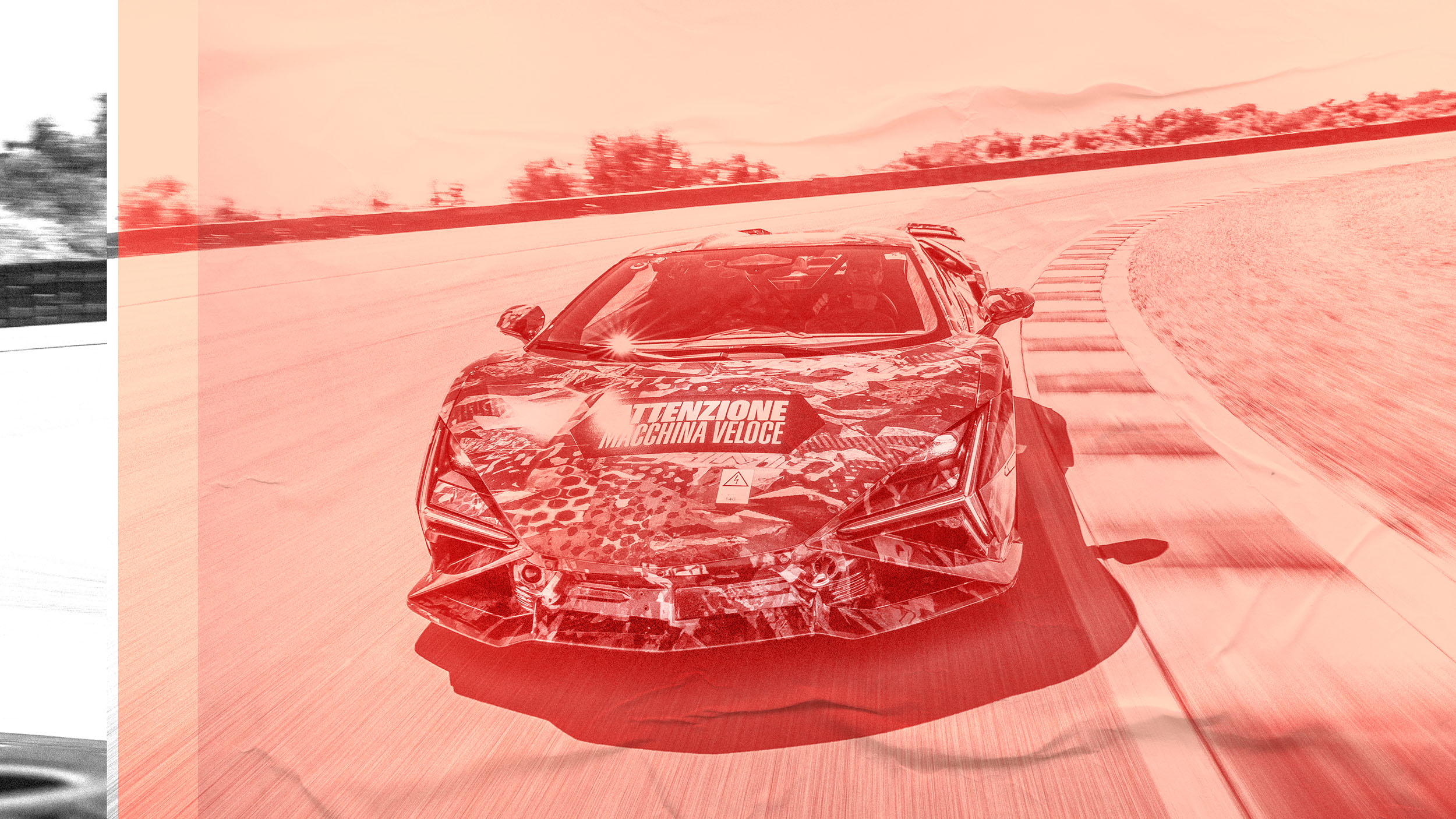
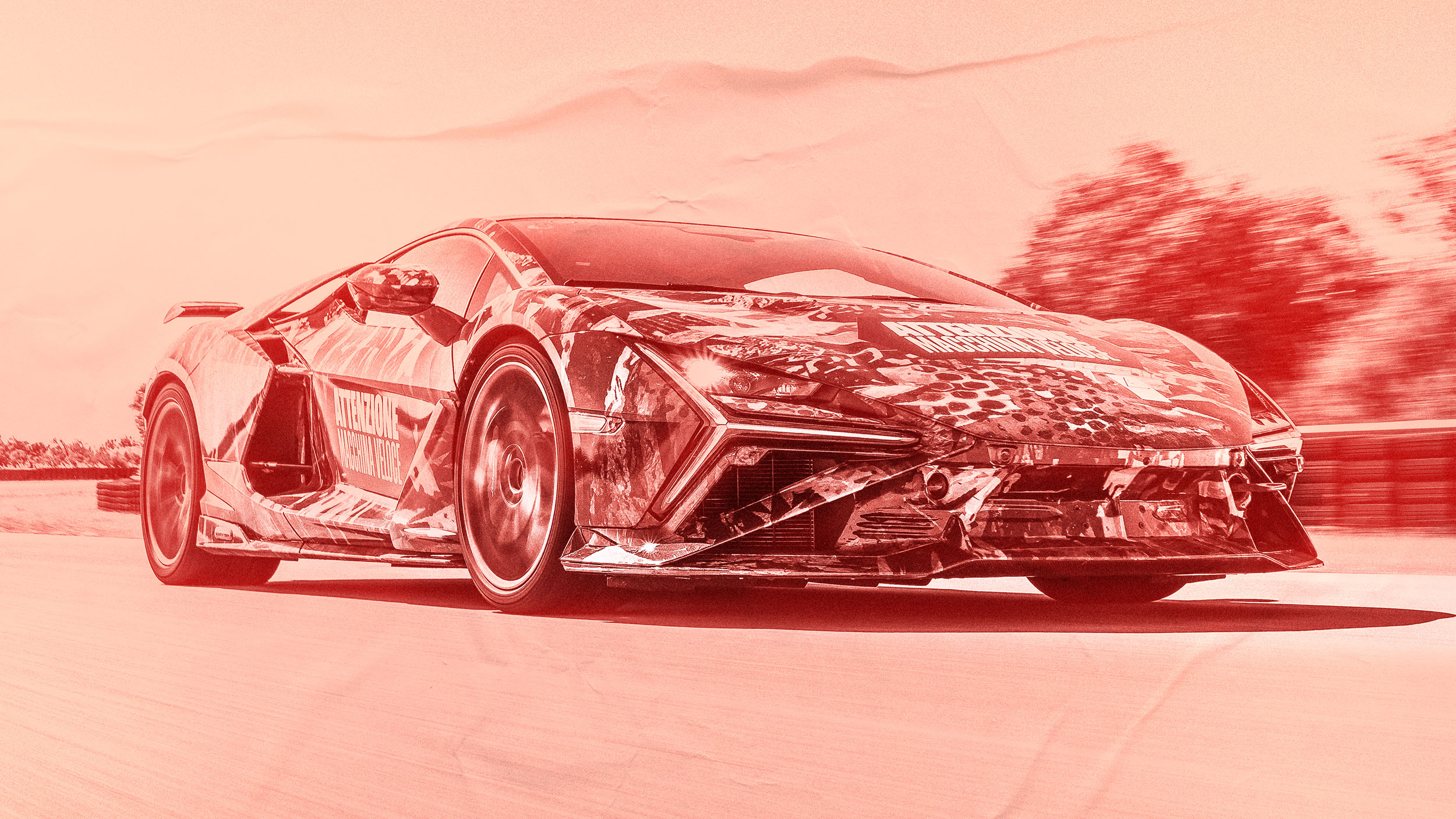
We’re here to drive a very late model – technically a prototype – of Lamborghini’s new track-biased Revuelto SV, replete with camouflage. Latest in a line of ‘Super Veloce’ semi-specials that stretches back a half-century to the Miura. My last SV was the Aventador, a brilliant, foible-filled car with character and soul dripping from every pore, crippling carbon seats and a seven-speed SSG ’box that only worked properly at the redline, but I’ve driven a few SVs. Even one of those Miuras.
Advertisement - Page continues below
All of them promise more than the standard car, and if you’re talking about more than the 1,001bhp of the standard Revuelto with its triplet of electric motors and 6.5-litre naturally aspirated V12, then you’re getting into really very heavy stats. But as it turns out, there aren’t many massive headlines. Lamborghini actually provides more in this context by the accretion of marginal gains and the removal of complexity.
So the basic format is the same. Lamborghini hasn’t ripped out the EV, it’s not a manual and the SV still gets the three electric motors, a pair of axial-flux (pancake) motors on the front axle to give all-wheel drive, a more regulation radial-flow motor integrated into the eight-speed dual-clutch ’box to support the V12 until it can really fill its lungs.
Yes, there’s an uplift in horsepower from the electrical system of around 50bhp, but that’s not actually that much – five-ish per cent of total. So you’re looking at 1,050bhp, a similar 1,051lb ft of torque, zero to 62mph in under 2.5 seconds and a top speed that grazes the belly of 215mph. Faster, then. But not that much faster than a bog standard Revuelto.
So what’s changed? The looks and aero, but we’ll get to that in a minute. There’s a new 7.3kWh battery designed to give more reliable and repeatable performance when battering around a racetrack, and Lamborghini talks of responsiveness and optimisation. It weighs the same as the standard car.
The interesting bit is that Lamborghini has ditched the road-biased car’s electronically adjustable suspension and replaced it with passive (although manually adjustable) damping, in pursuit of what the company refers to as ‘pure driving feel’. So less convenience, but more connection. They’re developed from the GT racing programme and come complete with setup instructions and advised settings for various major racetracks. Which sounds promising.
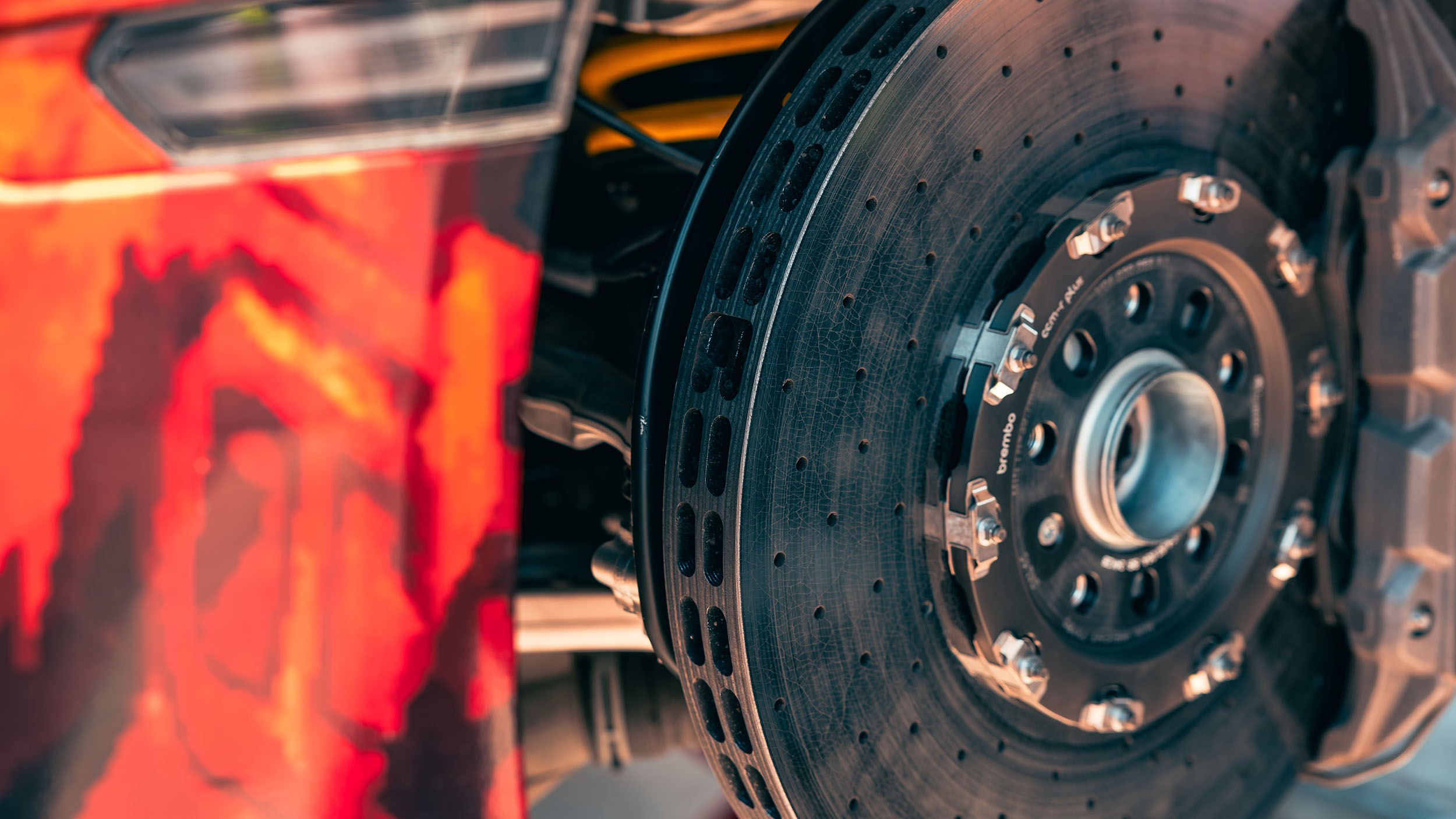
The brakes come from the same place – endurance racing – and are now called CCM-R Plus. They look a little weird. The standards are 420x40mm for the front brakes, 410x32mm at the back, with 3D carbon structure where the carbon elements are laid down, rather than being random. The ventilation is also machined rather than cast into the structure, essentially creating larger and more precise air gaps, leading to better thermal efficiency and reliability. Again, important for consistent laps and pedal feel.
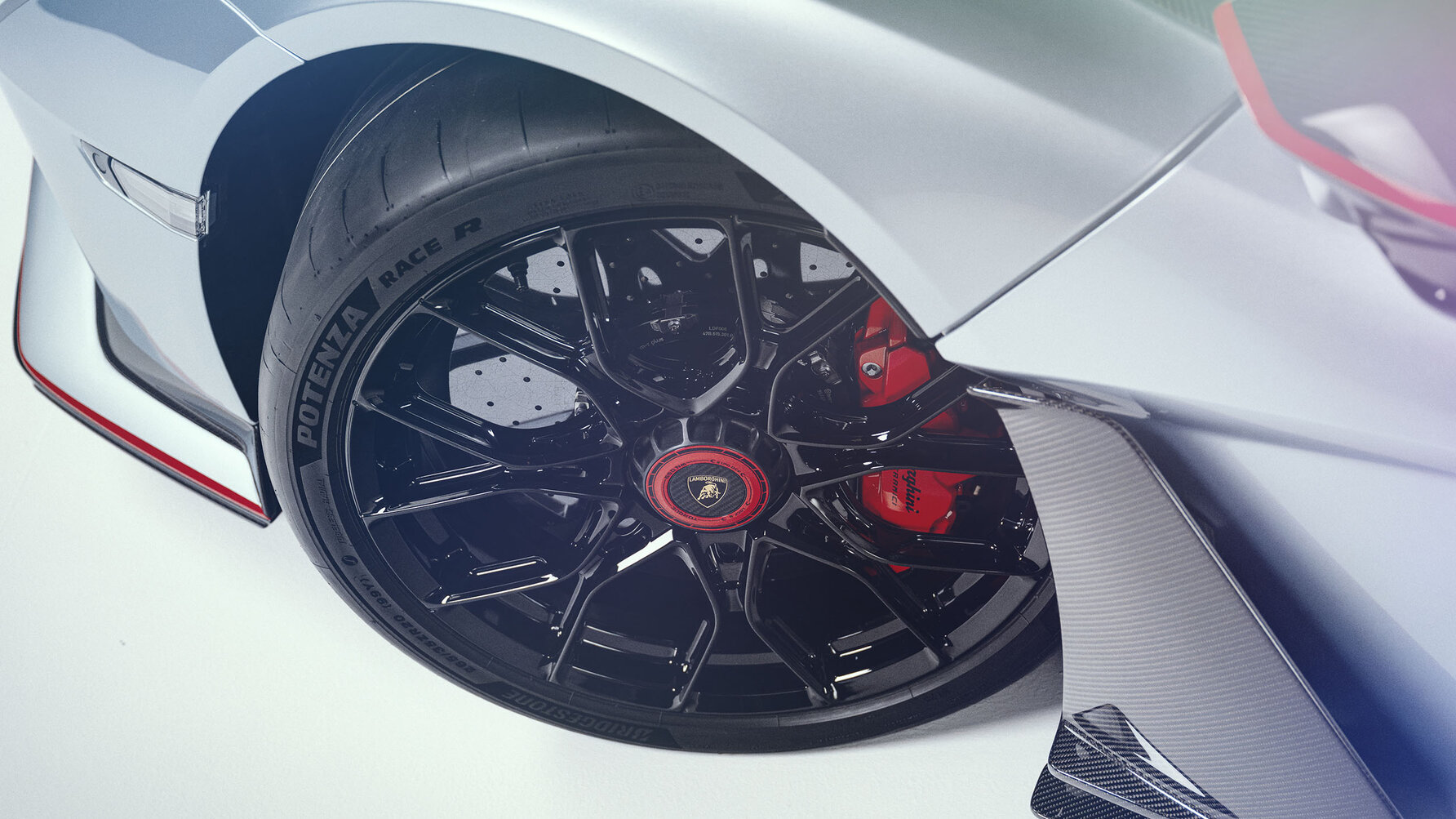
The numbers are a bit dry, but impressive: 11 per cent more peak deceleration, 23 per cent more heat dissipation and a 12 per cent reduction in disc temperature. There’s even a special coating that means the brakes require much less time to get up to temperature – from the first hit, they should be ready to go. Those sit behind lightweight wheels called ‘3D Superlight Dromos’ (20in fronts and 21s at the back), featuring a new central locking ‘monolocker’ and shod with a variety of Bridgestones. They vary from Potenza Race R, basically a track semi-slick, to Blizzak LM005. Yep, you can fit your SV with a manufacturer-approved winter tyre, which makes all sorts of nonsense possible.
Top Gear
Newsletter
Get all the latest news, reviews and exclusives, direct to your inbox.
Which is all very nice to know, but the proof is in the performance not the presentation. So helmet on, avoid a couple of telemetry wires on the driver’s side, don’t press the big red fire extinguisher button with your right elbow. Important, that. Fire up the V12 – it’s already in Sport mode – and off we go. Bluntly, the SV delivers from the first 100 yards.
Yes, the car has been delicately set up for this track and has done thousands of hours here, but Nardò’s test track isn’t a race circuit; there are bumps and yumps and inconvenient corners and cambers – it’s a place to test a car, rather than set lap times. And yet the steering immediately grabs your attention; delicate, precise, well weighted.
The SV is not, however, the fastest thing ever
Faster than the standard car, but not so keen an edge that it might slice at your wrists. Knock the car back into its most relaxed setting, but there’s an energy to it even in ‘Strada’ mode – minute body roll, just enough to let you know what’s happening, a feeling of immersion rather than just operation. Let loose a bit – you’re talking just under 200mph at the end of the back straight and I bailed it very early – into a fifth-gear left, still at white-face speed. It just sticks. No fuss, no porpoising, no wash. The kind of cornering speed and composure that feels like bait.
And those brakes? Magnificent. It stops with feel, authority and stability. Every. Single. Time. It’ll ride kerbs, handle bumps, notably fail to try and eat you alive if you lift and turn or misapply an apex. Two laps and there’s confidence and more speed. Three and I’m considering selling a child and re-mortgaging the house for 98-Ron. Four, and the crest on corner 10 becomes a jump. Downforce be damned, everything’s a jump if you’re going fast enough.
The SV is not, however, the fastest thing ever. Of course it’s blistering, and the track unravels through the front windscreen, washed blurry through the rear glass before becoming just a flash of memory with the V12 howling its way to a 9,500rpm redline. But the biggest impression is one of texture and reliability, a car that through whatever knotted gravities and abused trajectories it creates, maintains a joint venture with the driver. Some very fast cars you don’t so much drive as hold onto – the SV is kinder than that, feels lighter, even though it isn’t.
So no, not the fastest. But after a few laps, it’s getting up there with the most fun cars I’ve driven in a couple of years. It also comes with space to improve yourself. Although it feels like there are less electronic helpers in the SV – it really does feel largely analogue – that’s deceiving. There are the usual modes, but also a new ‘6D’ sensor and Piloti mode.
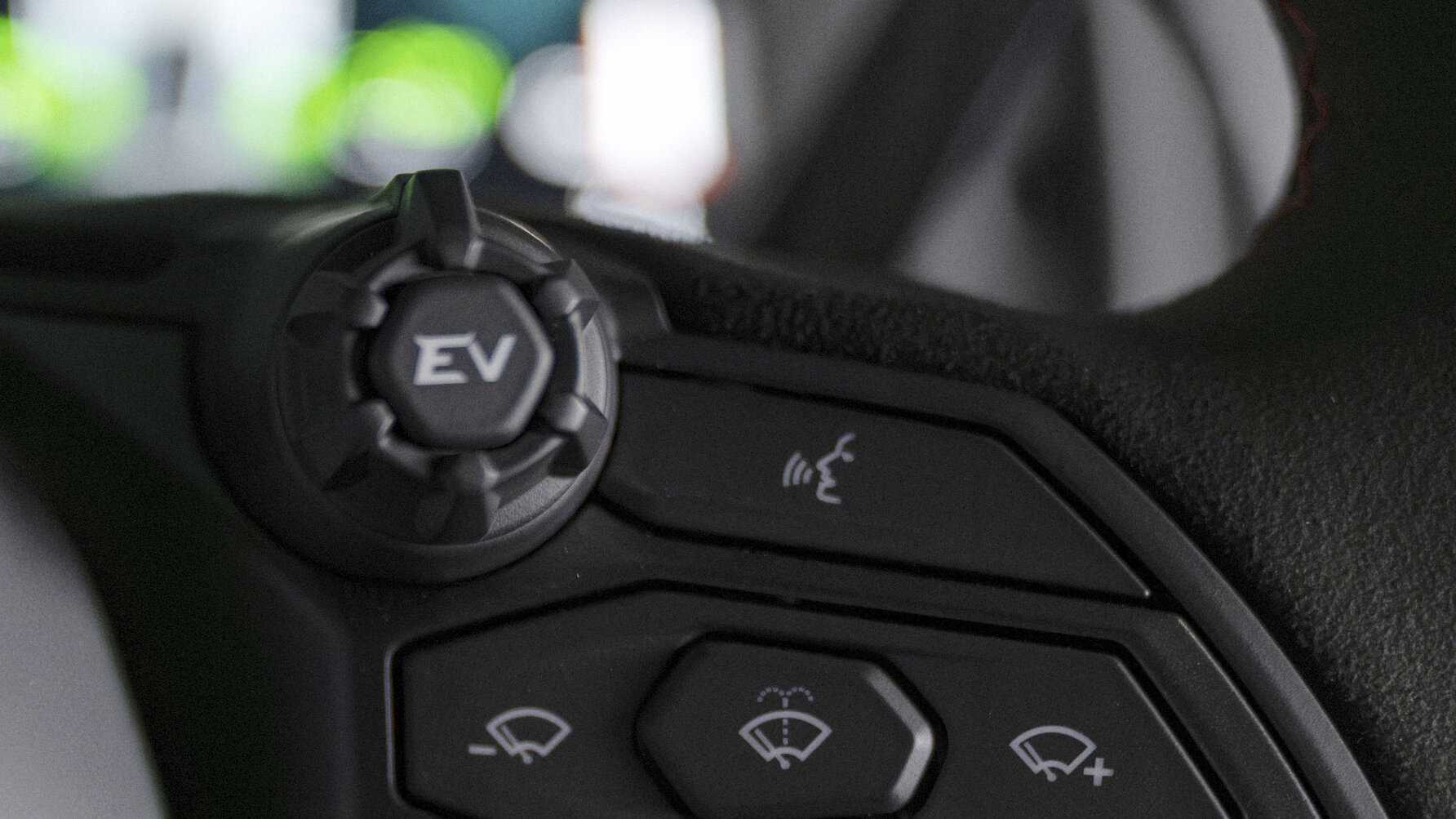
The sensor system integrates lateral, longitudinal and vertical accelerations into the calculations that already include pitch, roll and yaw, tracking traction control and slippery bits during braking, apparently reducing braking distances by up to 10 per cent. Piloti mode is a five-stage traction control, accessed from a rotary dial on the steering wheel, which allows the driver to adapt the car’s dynamics according to tyre wear, kerb hopping, surface changes and the like.
Once you get confident, you can go all off and the SV... doesn’t fundamentally change character. It will slide more. It will not save you as much and won’t make you look as competent, but it’s not a different car with the babysitting electronics switched off. That’s a naturally good setup.
Honestly? It’s just fun. Once you have a handle on it, the seconds become irrational, gape between the wrong measure of distance. This isn’t just fast, it’ll both strike you dumb and then drag laughter from your belly. A fairground ride with a steering wheel.
Honestly? It’s just fun
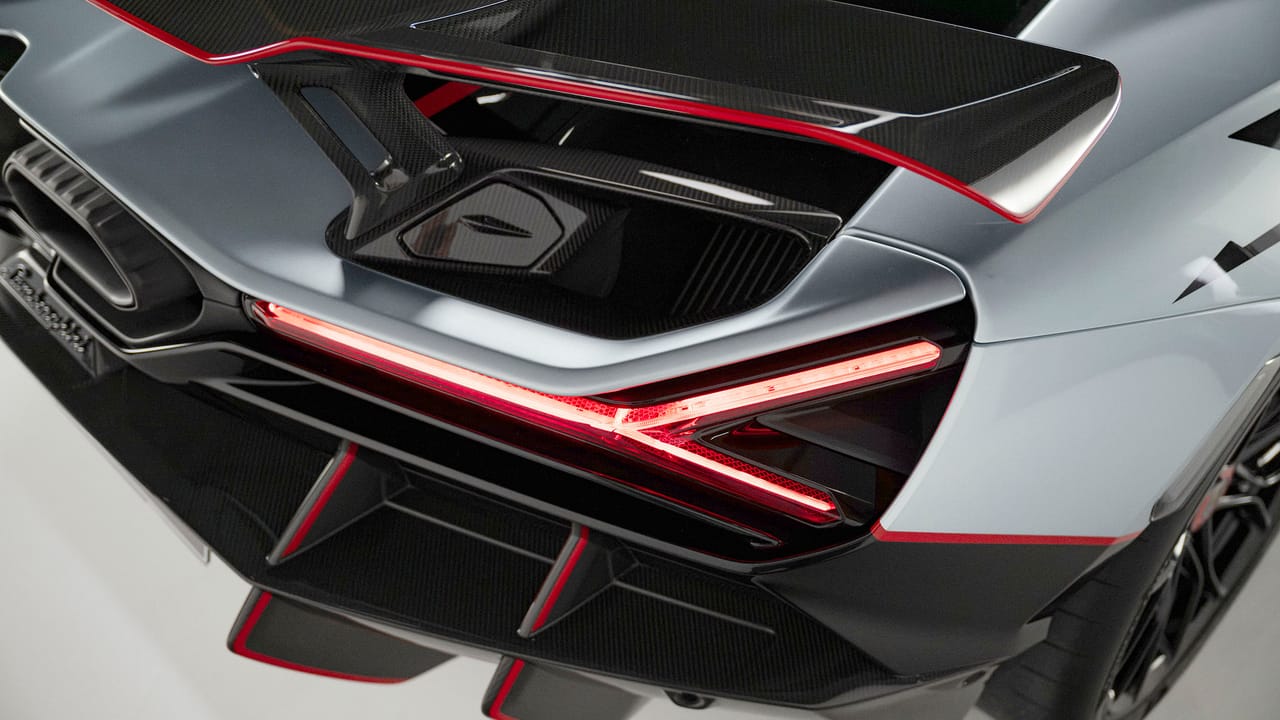
It looks good, too. We may have been driving a camo car, but a finished version was there to paw at, much of it carbon fibre. First up, the double plane of a fixed rear wing. Elevated outer sections for maximum downforce, a lower central section for high speed stability, with a gurney flap system on the rear bonnet that both increases downforce and creates a vortex of suction that pulls air from the around the engine bay.
The lower section of the car is the widest Venturi ever fitted to a proper production Lamborghini (ignoring specials like the Fenomeno), and the underbody aero is apparently much more extreme – there are vanes and planes and nowhere for a mechanic to poke a spanner into. The sides have big intakes, and the front gets a more aggressive frown, with a bigger splitter and vanes that push air around the front wheels and into the intakes on the rear haunches. It’s not insane looking, just very Lamborghini, but it produces around 80 per cent more total downforce than a standard Revuelto and 10 per cent more than the Aventador SVJ of 2018.
Applicable only at racetrack speeds, but I do know that whatever’s going on with the invisible aero farming, a long sweeping left-hander at – ahem – more than 130mph felt reliable and stable. It swoops and digs at corners, shapes Nardo’s distance like clay, pulling one place towards another in a fluid swipe of not quite violence. Which is exactly what you want.
The interior is pretty much what you expect, but no worse for that. Carbon fibre everywhere – door cards, tunnel trim, paddles, binnacle.
There are carbon-backed seats in either manually adjustable comfort or fixed-back race versions (the latter are lighter), a multifunction wheel with that Piloti switch, a central touchscreen with custom graphics in the middle. It’s all suitably exotic, and if you apply Lamborghini’s ‘Ad Personam’ bespokery, you can annoy the taste police to your heart’s content.
And there are nice touches; you can option smaller ‘SV’ decals for the rear haunch, or go fully graphic and option a two-foot high version (like the SVJ) that uses the rear wheelarch inlet as the second vector of the ‘V’. Childishly, it looks excellent – though not shy.
That's to be expected; theatrical Lamborghini at its best
But that’s all to be expected; theatrical Lamborghini at its best. The most impressive thing about the SV is that it doesn’t feel completely different to a Revuelto, itself an astonishing car. But where you’d be happy to daily the adaptively damped one, the SV is probably more of a high days and holidays kind of experience. Especially if those included a trackside hotel.
This is a Revuelto that’s been pushed further towards the edge of the envelope without losing the character; it’s 20 per cent better in every dynamic direction, though one suspects more committed on a road and therefore probably a bit less comfortable. And that, to me at least, is exactly what a Super Veloce should be. So I stand by that first reaction. And still want more laps.
Trending this week
- Car Review
BMW i3
- Car Review
Audi Nuvolari