



USA
Top Gear
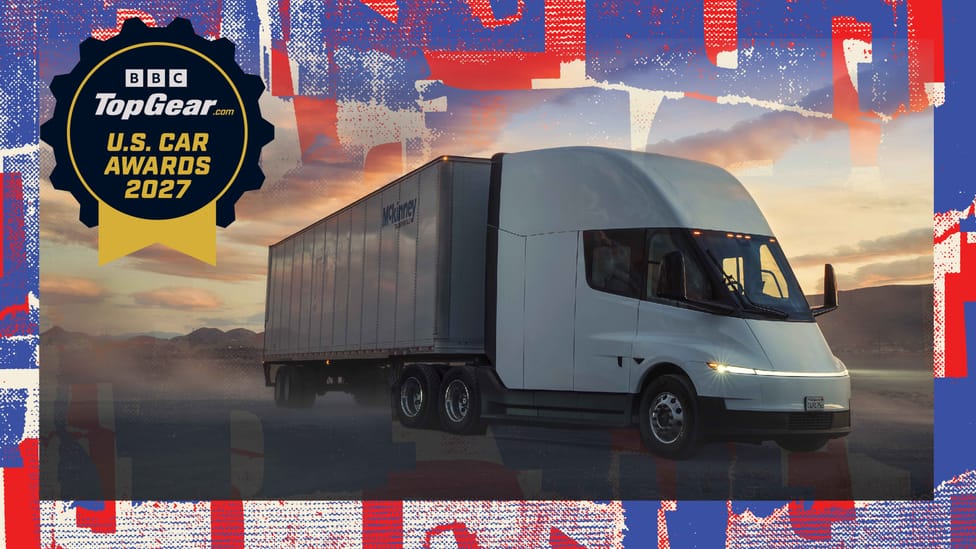
The US Tech Award goes to the Tesla Semi (not the flying Roadster) and here’s why…
Of all Tesla’s swings, the Semi might be the biggest – can it change the truck industry as we know it?
We already knew Elon’s semi was seriously capable – his 14 known children are proof of that. But what about his electric truck? Apologies, US readers – silly English joke. Don’t google it.
The truth of the matter is we fully expected to come away feeling a little underwhelmed when we visited Tesla’s finally finished Semi Gigafactory in Nevada earlier this year, to experience the production version of the heavy-duty hauler that first broke cover way back in 2017. Surely the world had moved on? Surely the Semi had missed the opportunity to have a Model S moment and transform its industry overnight, like Tesla’s first production car before it? Not so, as it turns out.
Advertisement - Page continues below
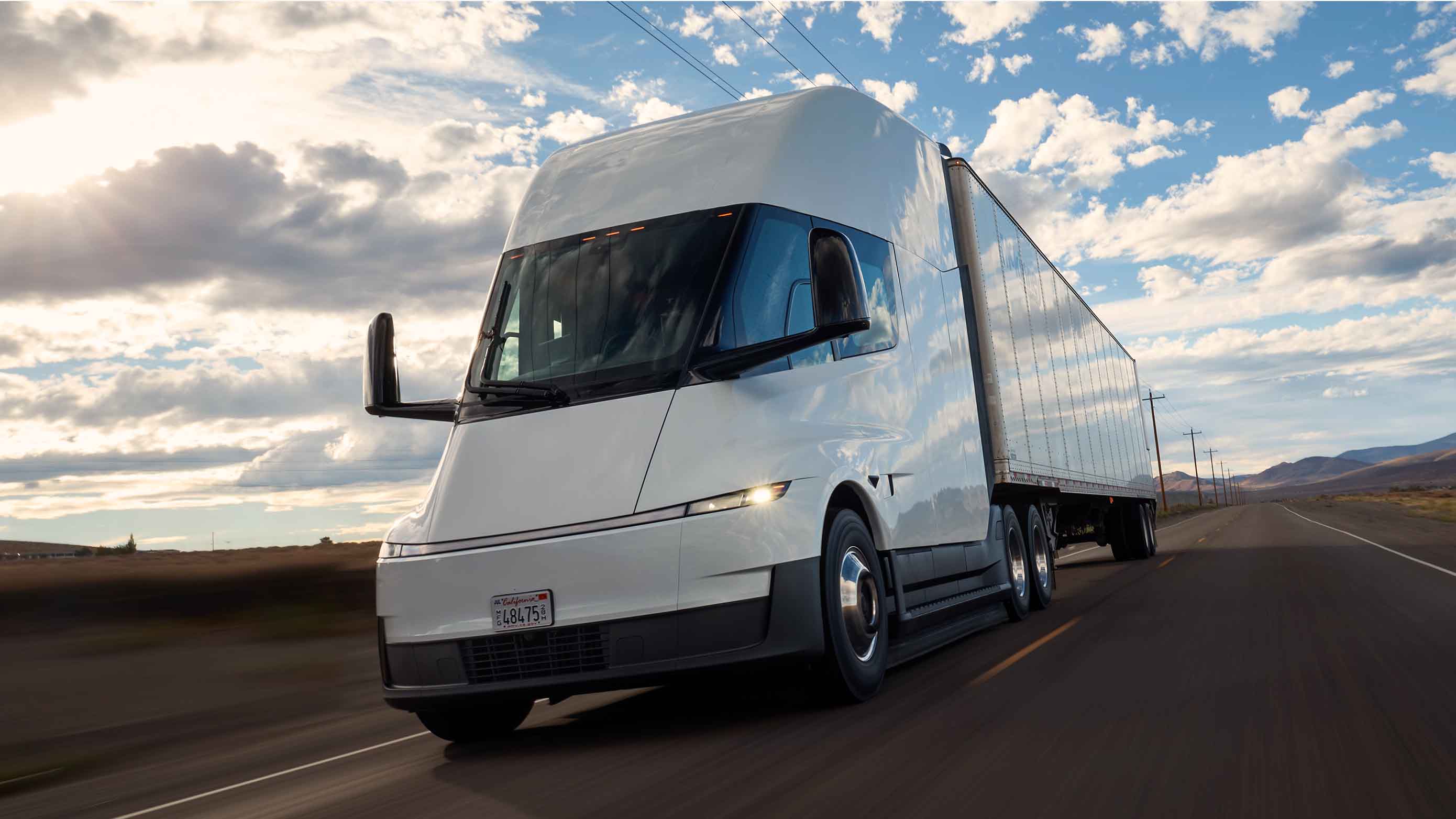
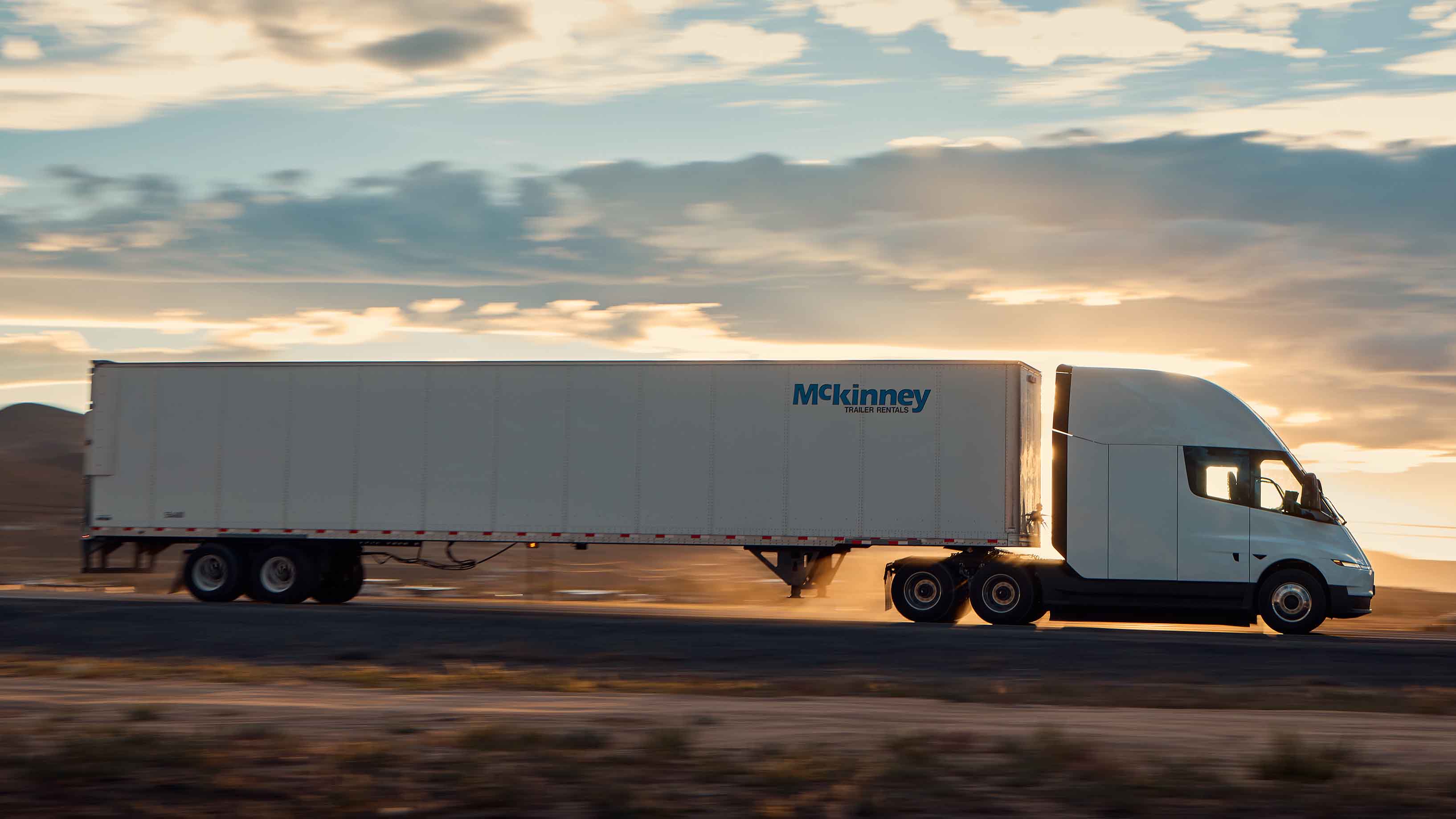
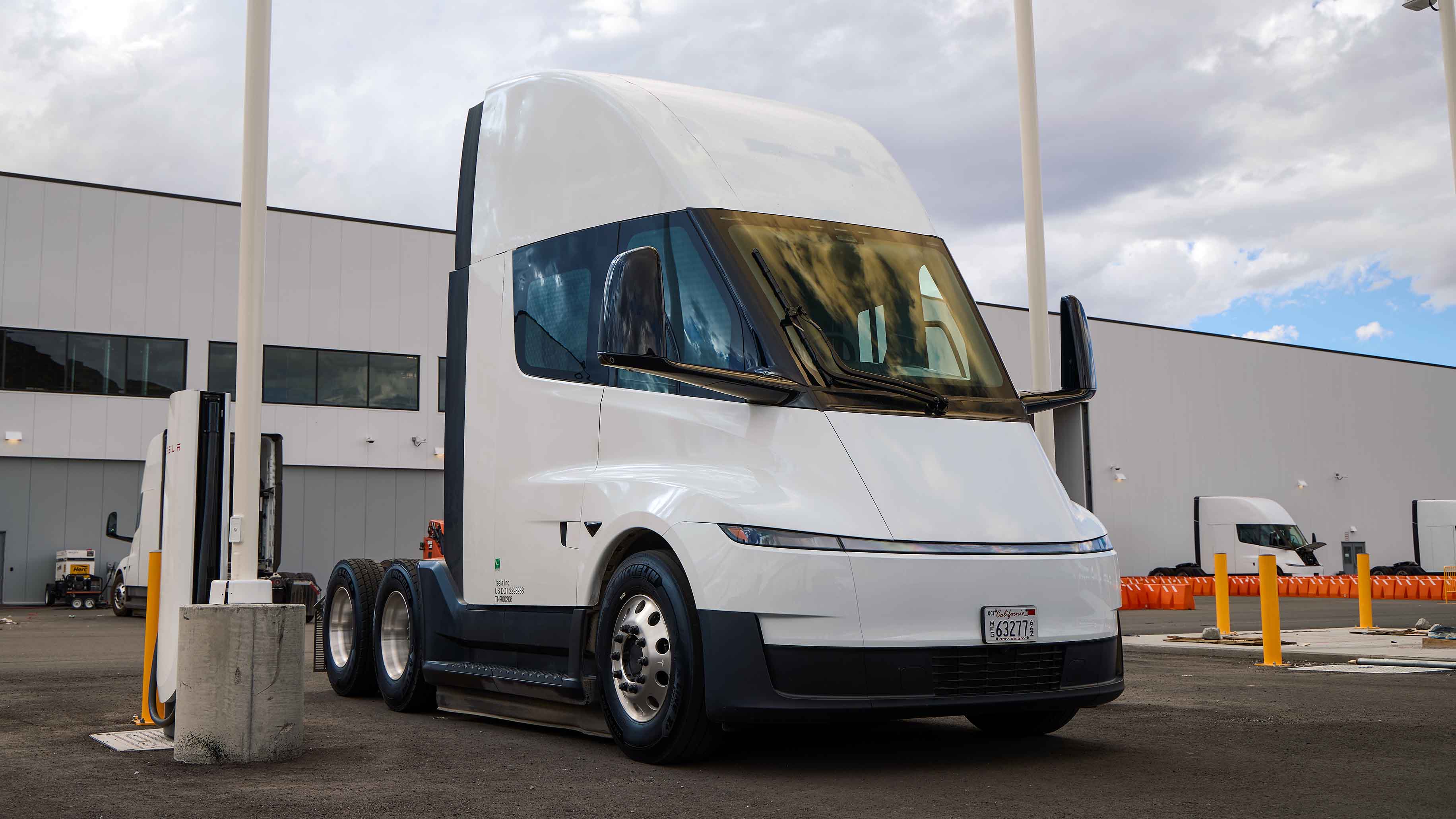
The Tesla Semi is defined by one thing: efficiency. Electric trucks can’t have giant batteries – they’re too heavy and deplete your maximum cargo load. Nor however can they have poor range – a truck that requires lengthy additional refuel stops is one that bleeds cash. So, Tesla has invented a third way: squeeze every last mile out of a modest battery and minimise weight while maximising range. Without a trailer hitched, the Semi’s swooping cab boasts a lower drag coefficient than a Bugatti Chiron.
Photography: Mark Riccioni


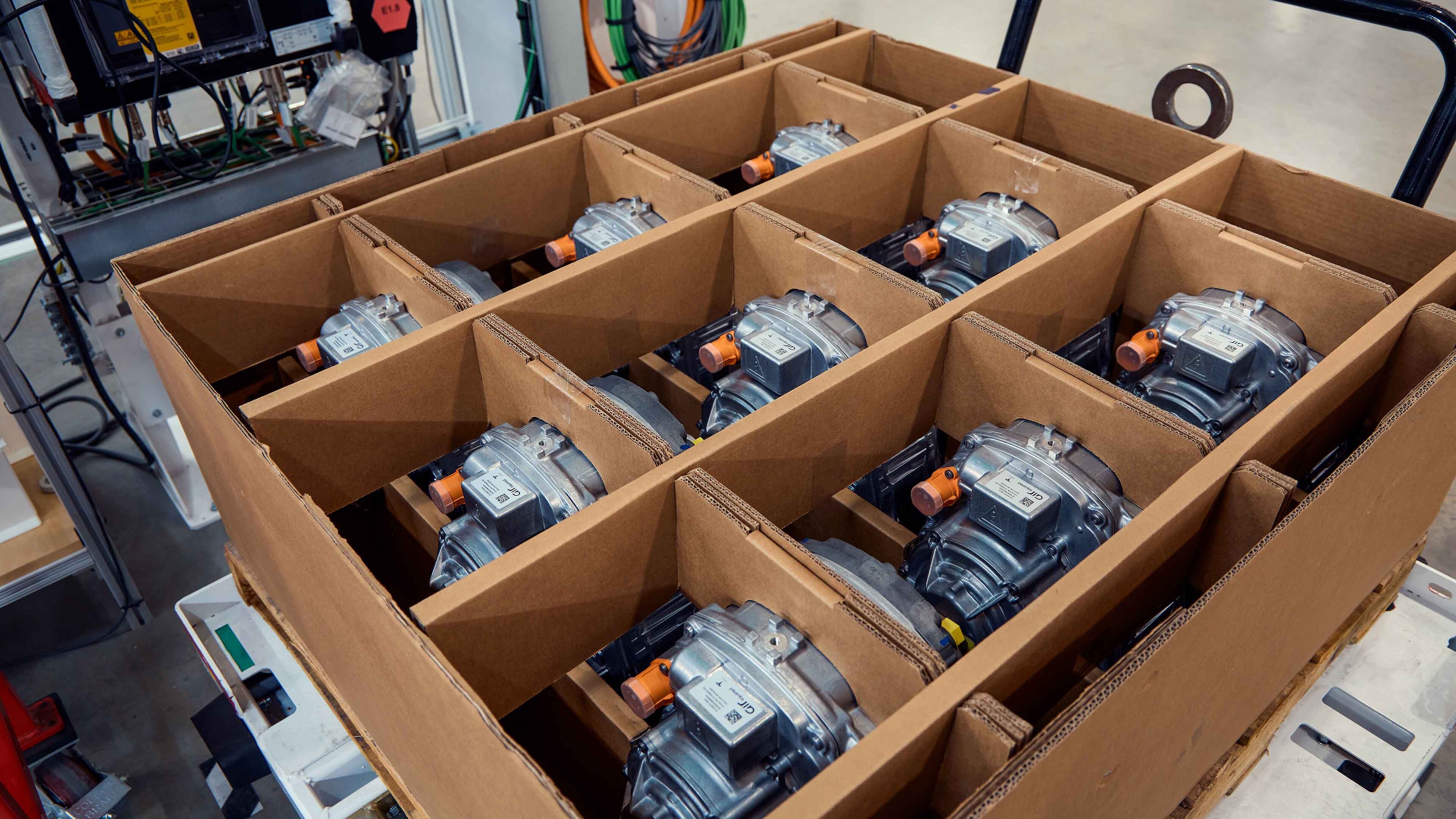
The first of its two rear axles, sporting two punchy electric motors, only steps in to help with steep hills and hard acceleration but decouples entirely whenever possible, leaving the second axle’s single motor to waft you along frugally. Even the central driving position is an efficiency-informed choice, enabling the Cab to dramatically taper at the top, and contributing to that Bugatti-busting 0.34Cd. The production truck, which shares just five per cent of its parts with the pilot vehicles, is 1,000lb now lighter.
Advertisement - Page continues below
The bottom line of all this pathological efficiency farming? A fully laden 1.7kWh per mile. Sounds rubbish, is in fact astounding. That equates to a third of the energy consumption of a diesel hauler doing 10mpg, or seven times the energy consumption of a Model Y – in a vehicle 20 times heavier. The resulting range figures – 325 miles for the SR and 500 for the LR – more than cover off the typical driving stints of European and US truckers respectively. Combined with the ability to add 60 per cent of charge in 30 minutes, this is the first electric truck that – Tesla says – can match the uptime of its diesel counterparts.
The Tesla Semi’s success will ultimately hinge on a single issue: its ability to deliver on price
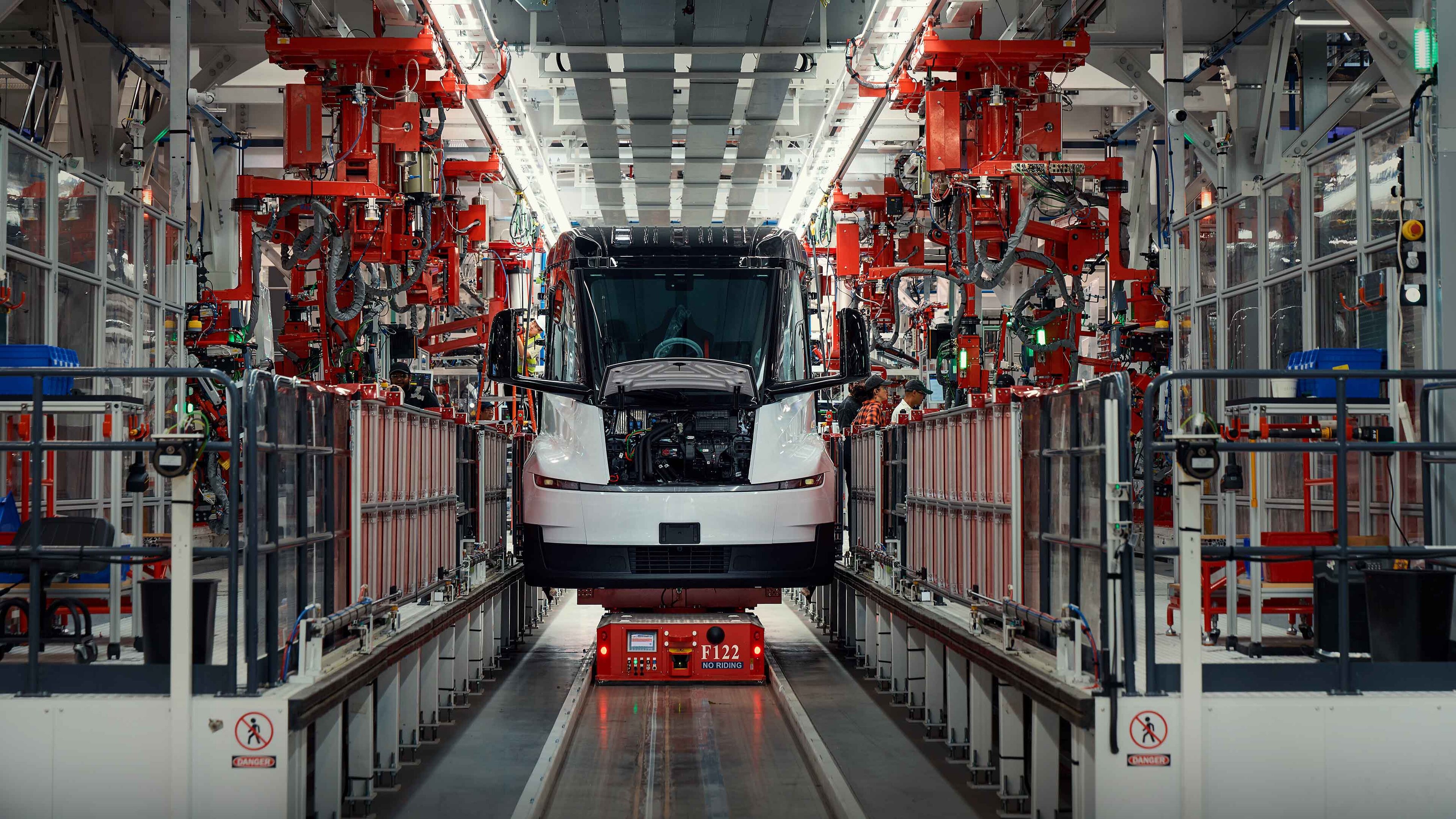
Mind boggling stuff, and yet it’s the factory tour that slams home just how deeply this mantra of efficiency runs through the Semi project. Here, efficiency isn’t just about maximising range – it’s about designing for reliability and ease of maintenance. It’s about creating a product that can be built quickly and easily while minimising production costs to enable a price point which undercuts every existing electric class 8 lorry. The Semi and its Gigafactory are two halves of a singular design and engineering project, created in tandem to serve each other – you guessed it – as efficiently as possible.
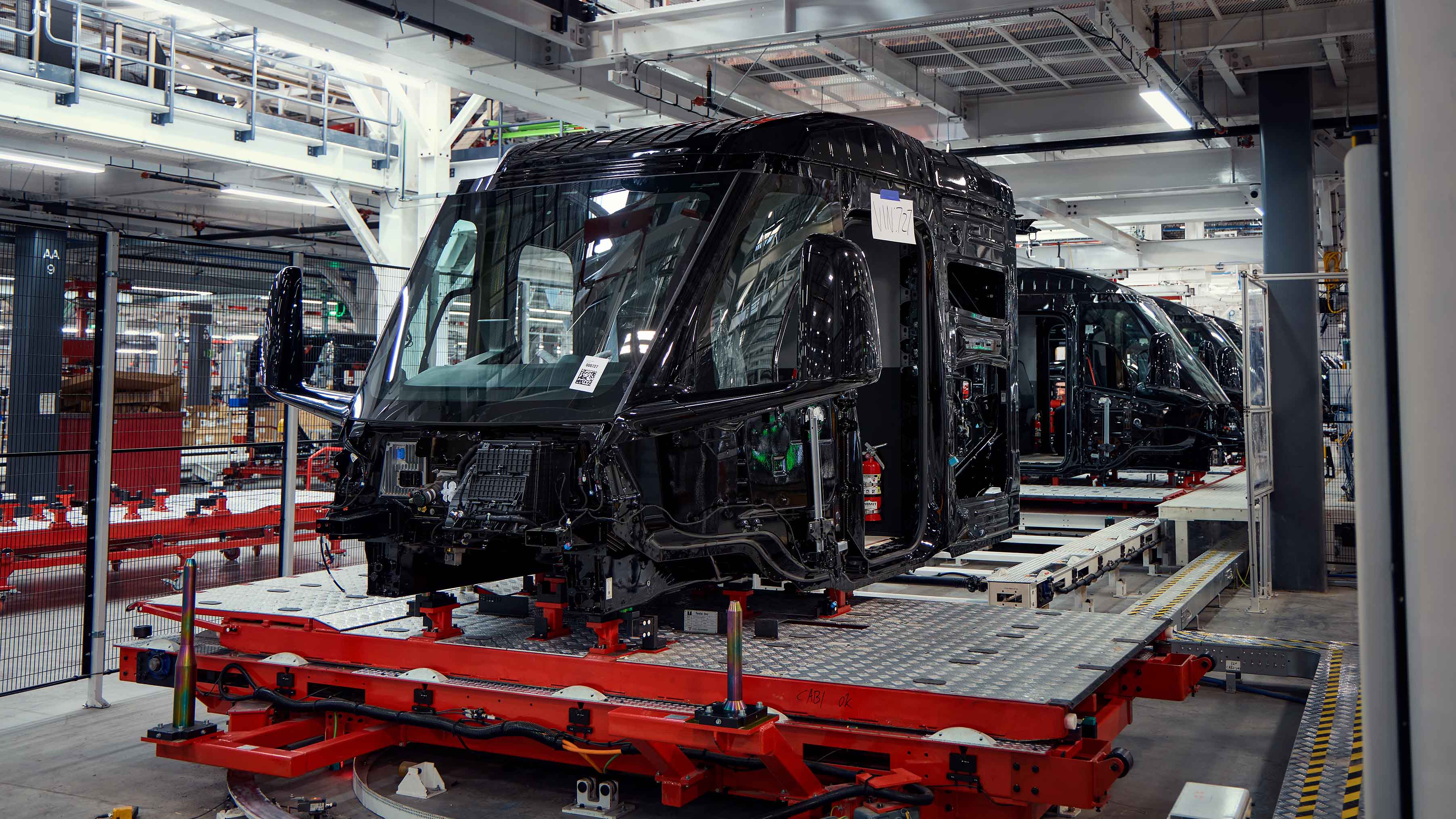
Once you know what to look for, you see this dark art at play everywhere on the factory floor. We see a naked cab having its internals fitted. While it appears freshly painted, we learn it is in fact powder coated, and that there is no paint shop in the Semi Gigafactory. That saves time, money, space and quite a lot of water. We see workers fitting the cab with its internals, but instead of cramming cumbersome components through the door or windscreen opening as is typical, they are strolling in through a massive hole where the rear wall should be – that panel goes on last to speed up assembly.
Looking for more from the USA?
Top Gear
Newsletter
Get all the latest news, reviews and exclusives, direct to your inbox.
We are shown the new electric steering system, borrowed heavily from Cybertruck, and infinitely less complex than the pilot vehicle’s hydraulic system. The new front bumper, meanwhile, is now split into three pieces, so that you don’t need to replace it entirely if you ding a lamppost exiting a tight space. The one thing that perhaps sums it all up best is the Semi factory’s bespoke wheel gun, which affixes all ten lug nuts at once, shaving perhaps 40 seconds off production time. Efficiency is a key tenet in every factory, but here it is a religion.
For all its clever engineering, the Tesla Semi’s success will ultimately hinge on a single issue: its ability to deliver on price. It promises to offer a significantly lower cost of ownership than existing diesel haulers, without affecting uptime – if it achieves this, it will be a game changer. If it doesn’t, it will flop. We’ll soon know which.
Regardless, one thing is for sure: this is the version of Tesla we want to see. The version focused on making important vehicles that serve normal people brilliantly. Amid all the recent noise, it’s become all too easy to forget what this company is capable of at its brilliant best. The Semi is a potent reminder. That’s why it’s our TG Tech award winner.
Trending this week
- Car Review
Hyundai Ioniq 3