




Big Reads
Bugatti's design boss on the F.K.P Hommage: "it’s got to be done with dignity"
Frank Heyl had already penned much of the F.K.P Hommage’s design long before it was born. We sit down with Bugatti’s director of design to hear the story
Top Gear: We heard that many years ago you had sketched a ‘Veyron facelift’ that never came to be. Is that true? Tell us the story.
Frank Heyl: Yes, there was an inbetween stage. We were working on the [Veyron] Super Sport with 1,200hp, this is now 2008, 2009. But the engineering team had another thing up their sleeves: a ‘megawatt’ engine, so 1,360hp. The plan was to do another variant, or actually an update, of the Veyron. It was known as the Megawatt Veyron... until a certain Mr Ferdinand Piëch walked through the door with a set of charts.
He’s an engineer, so he drew the charts himself: power versus drag, and he said: “If we have 1,500hp, I’ve calculated we can go 450kph [280mph], gentlemen.” So guess what? We’re not doing a megawatt, we’re doing 1,500. And boom, the whole thing, back to the drawing board for the engineers, time to find some bigger turbochargers. Just putting 1,500hp in an ‘updated’ Veyron wouldn’t have worked. To hit 450kph, you need the cut off rear end that we then implemented in the Chiron, much bigger intakes in the front etc.
Advertisement - Page continues below
Photography: Mark Fagelson
TG: And there you were with your sketches, you’d done all the hard work, and you had to throw them in the bin?
FH: It was fine, because Mr Piëch always had a saying: if it was impossible, the moment just wasn’t right. He would never say it was cancelled, he would say “at the next opportunity”. So 20 years on, here’s our next opportunity.
TG: How did this F.K.P Hommage project come about? Did a customer approach you?
FH: You have to imagine our circle of customers is a very small, integrated family, and we’re always talking. So it was kind of natural. We decided the Veyron’s 20 year anniversary had to be celebrated... adequately, so why not do it with the Solitaire programme.
TG: And you said, “Aha, I have just the thing!”
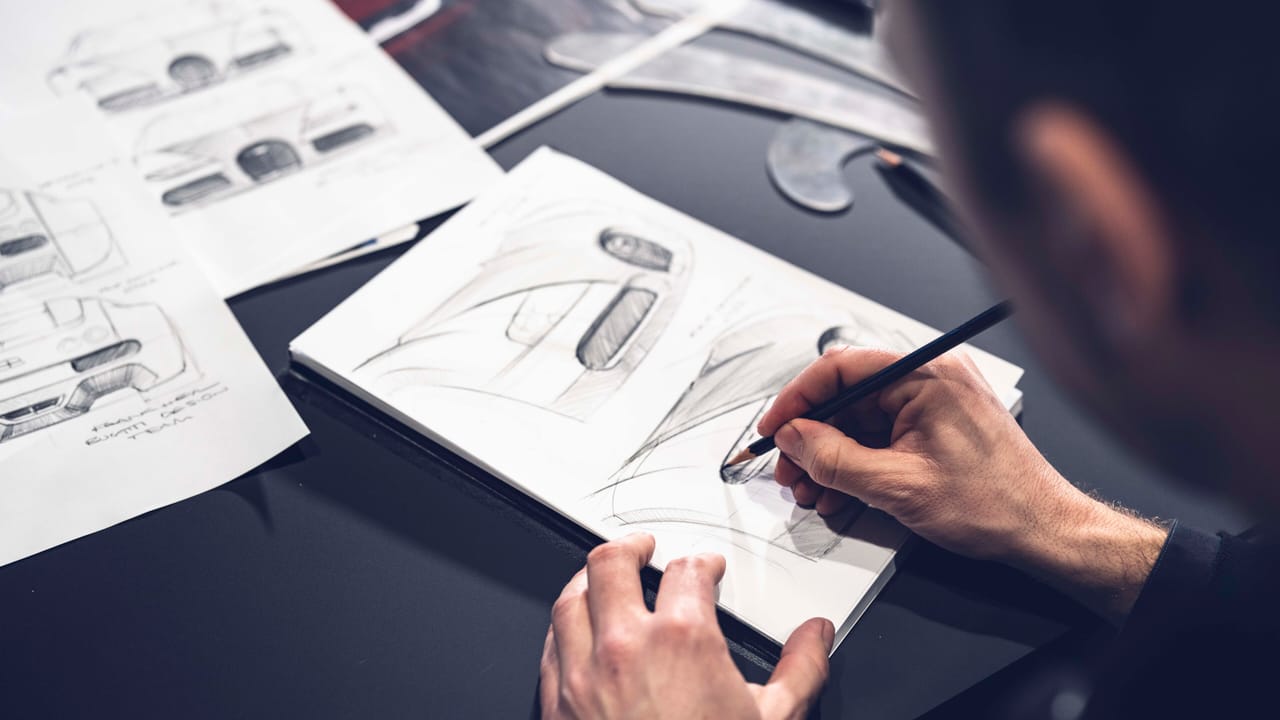
FH: There were definitely a few ideas there that we could use. We decided to use some of the original design team members and some of the themes that we were sketching back in the day. Like the L-shaped front running light signature, but also the taillights. I actually still have an original drawing of those taillights, and there’s even a photo of us showing them to Mr Piëch back in the day.
Advertisement - Page continues below
TG: How do you approach a retro project like this? Do you feel a weight of responsibility to the original Veyron design?
FH: It’s got to be done with dignity, and there’s a lot of respect that goes into this. But I always loved the Veyron and how unconventional it was. You have to imagine back in the late 1990s, early 2000s, what did supercars look like? They were still inspired by the ’70s, Gandini’s Countach, wedge forward, triangular kind of shapes. Lancia Stratos Zero comes to mind, Ferrari Modulo comes to mind.
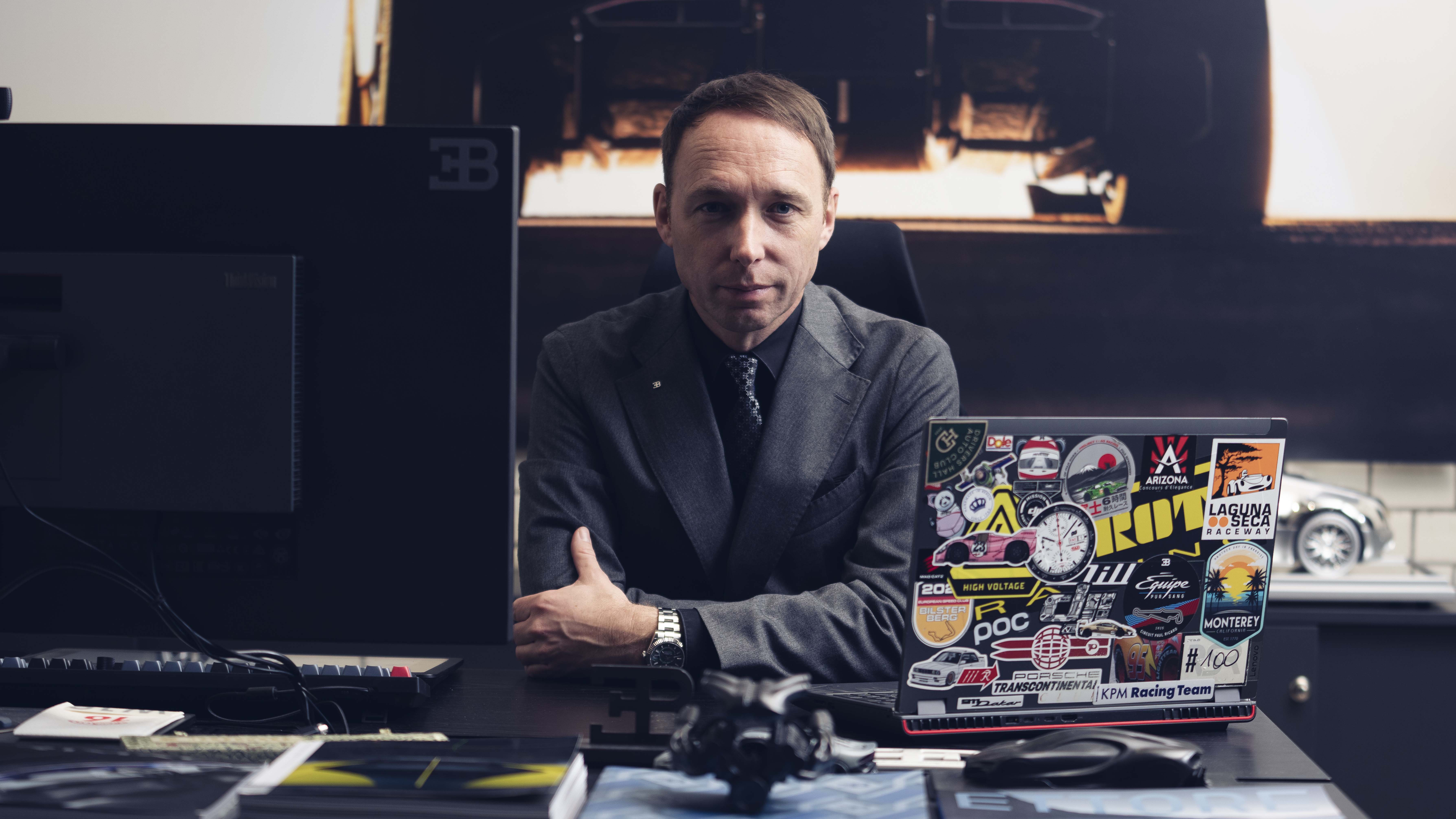
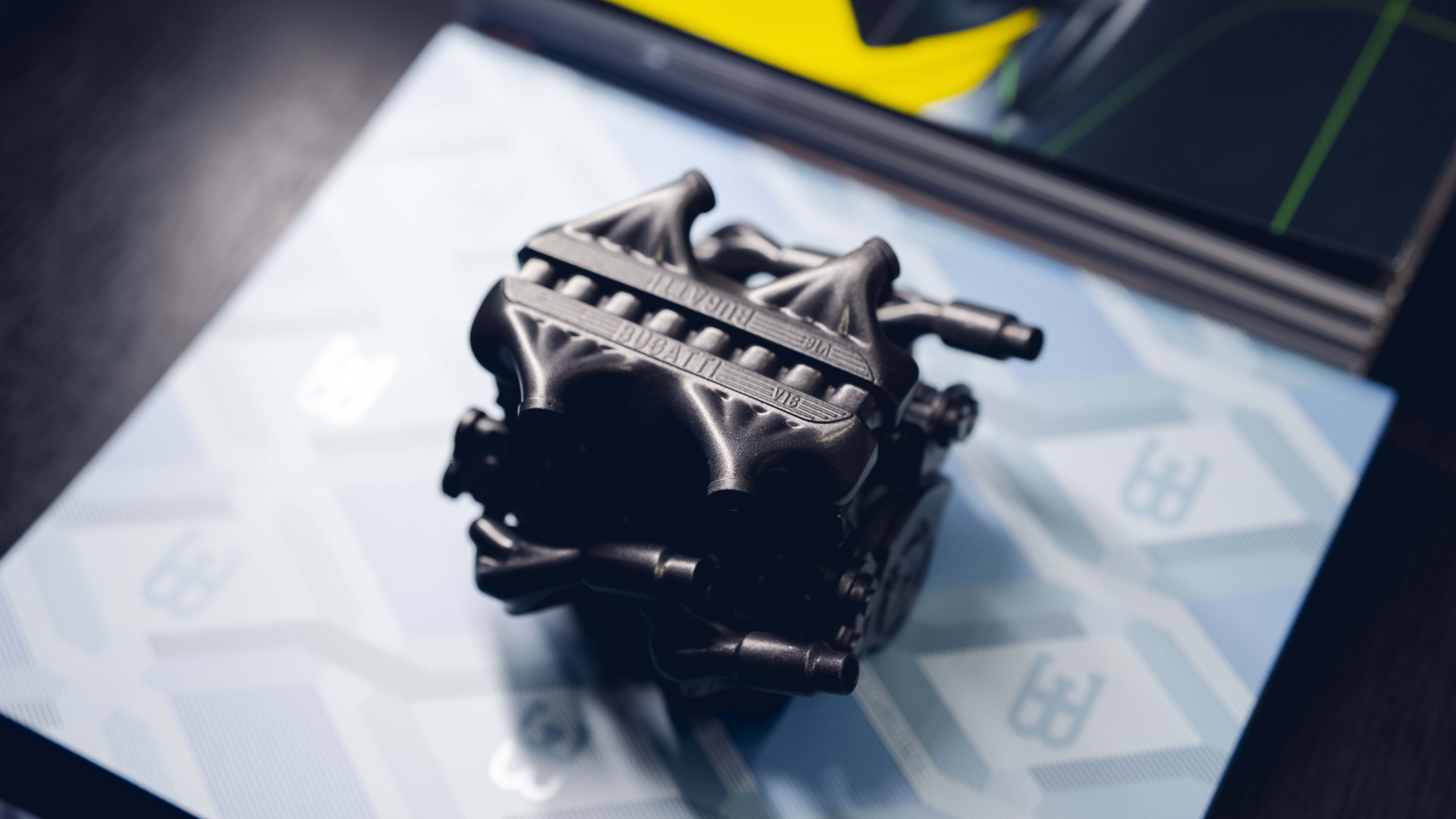
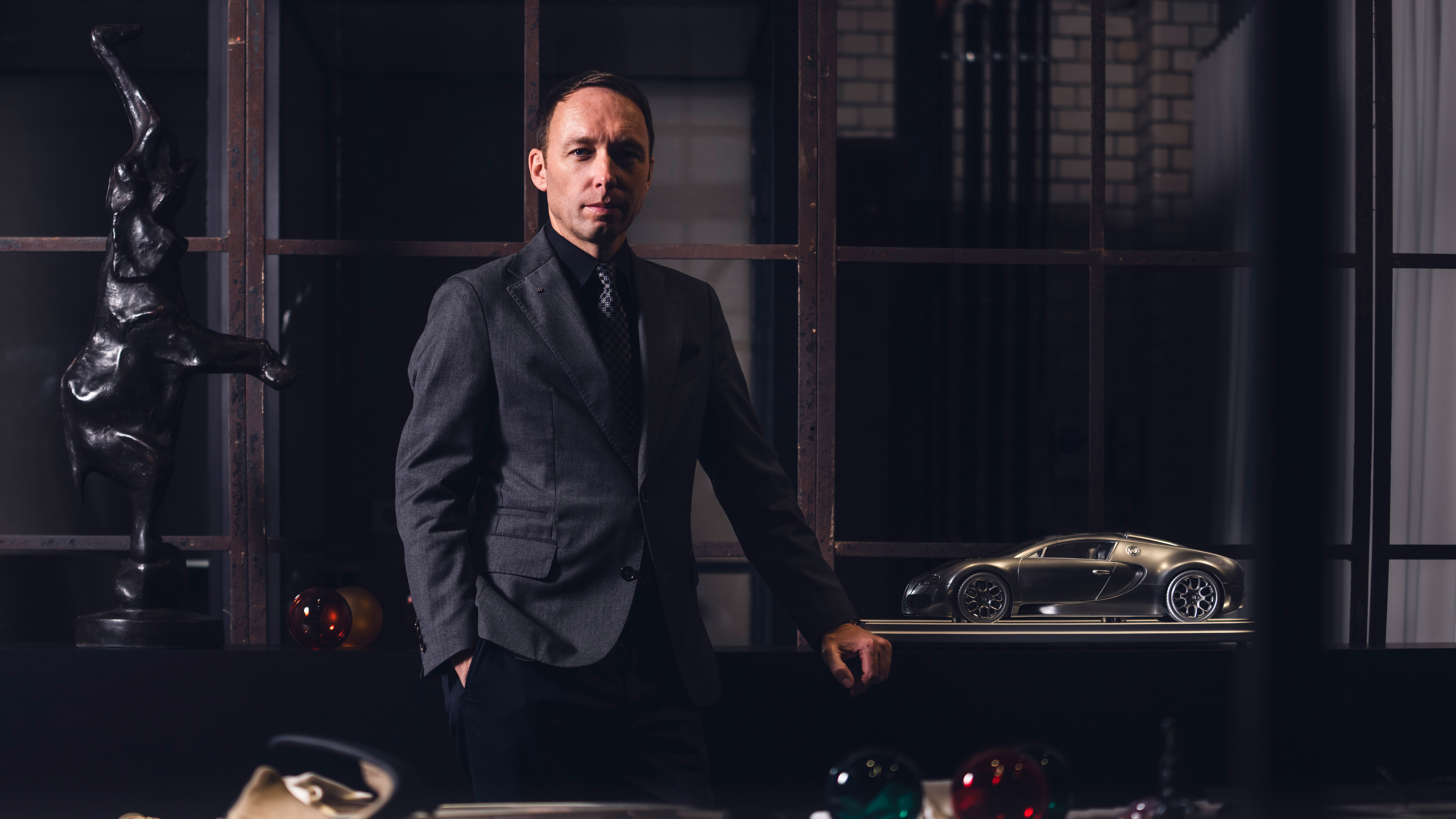
The Veyron was the first supercar doing the exact opposite. It had a leaning back gesture, highly unusual. Then it had these big blocky shapes, almost like bullion intersections of big volumes. So you have all these elements to reinterpret, but there were a few things we wanted to do, that we never got to do. For instance, the way the front bonnet sits and the way that the horseshoe is basically a two dimensional thing put on the bonnet.
TG: These days you’re working on the Tourbillon, a car that’s more extreme in every way than the Veyron. More power, lighter, more downforce... is the development and design process smoother these days because you went through so much pain with the Veyron, and now your evolutionary path is set?
FH: If anything, I’d say it’s more complex. With Tourbillon, the level of complexity is incredible, but also technology has moved on. So that’s what enables us to be so ambitious, plus all the experience that we’ve gained: 20 years doing these high speed programmes teaches you a lot. For instance, this whole idea of keeping the rear wing undeployed, instead making the underside of the car so aerodynamically efficient that it has aero balance at top speed without deploying a wing.
TG: What does the Veyron mean to you?
FH: I remember when I joined Bugatti in 2008, my first project there was to work on the Veyron Super Sport, and our target was 430kph [267mph]. We had the car running at Ehra-Lessien, down the eight kilometre straight, and back then you could still stand at the guardrail. Forget it now, it’s all fenced off, you have to stand 10 metres back.
Pierre-Henri Raphanel would be driving in the centre lane, and I was one lane off, he would be ploughing past at 330kph [205mph], and my trousers were flapping around in the car’s wake. I remember thinking, “Oh yeah, this is what I want to be doing as long as I can.”
Top Gear
Newsletter
Get all the latest news, reviews and exclusives, direct to your inbox.
Trending this week
- Car Review
Mercedes-Benz C-Class Electric