



25
Jeep Wrangler Rubicon
1995cc
268.2bhp
As the handle of the green pump labelled Benzinna clacked shut, I glanced at the tally and immediately felt a little sick. 180 Euros. Yeesh. Turns out a continental cruise during an oil crisis in a Wrangler that drinks like a rugby tour might be a really, really stupid idea. Then again, idiocy has always been the surest route to a half-decent story and a proper longtermer goodbye. And I’m over halfway, so must press on.
But to understand how we got here, first we must rewind four expensive tanks of fuel to the UK, where I was scratching my head, thinking of how to wave the Wrangler goodbye. I’ve lived with the Wrangler for nearly a year, and it didn’t so much arrive as sneeze its lime green hue into my life.
Over the last 12 months it’s been jacked up, widened and winch-equipped by Storm Jeeps, thrashed by Stig against its biggest, hardest competitors, done the daily commute, towed an apocalypse caravan, delivered 100 rubber ducks and not so much taken me around the whole of the UK, but through it. It has also been cleaned precisely once, and not by us.
Over the year I’ve learnt that the Wrangler is not really a car in the modern sense. It is more like a rolling manifesto. It believes in proper door handles, exposed hinges, visible bolts, a transfer lever you move with your hand, and body control that is, at best, a loose suggestion. It believes aerodynamics are for the weak and fuel economy is a concern for other households. It is one of the last things on sale that still feels gloriously, stubbornly mechanical. And that meant it deserved a proper send-off. So we pointed it at Italy.
Why? Partly because the Dolomites offer some of the best driving roads in Europe, but mostly because it felt like the right symbolic destination. To many, the Wrangler is as American as they come – flat-sided, square-jawed, and apparently designed with a ruler and a grudge – but Jeep’s more recent European life has had plenty of Italian fingerprints on it, with its design centre based in Turin. Which was as vague a reason as I needed.
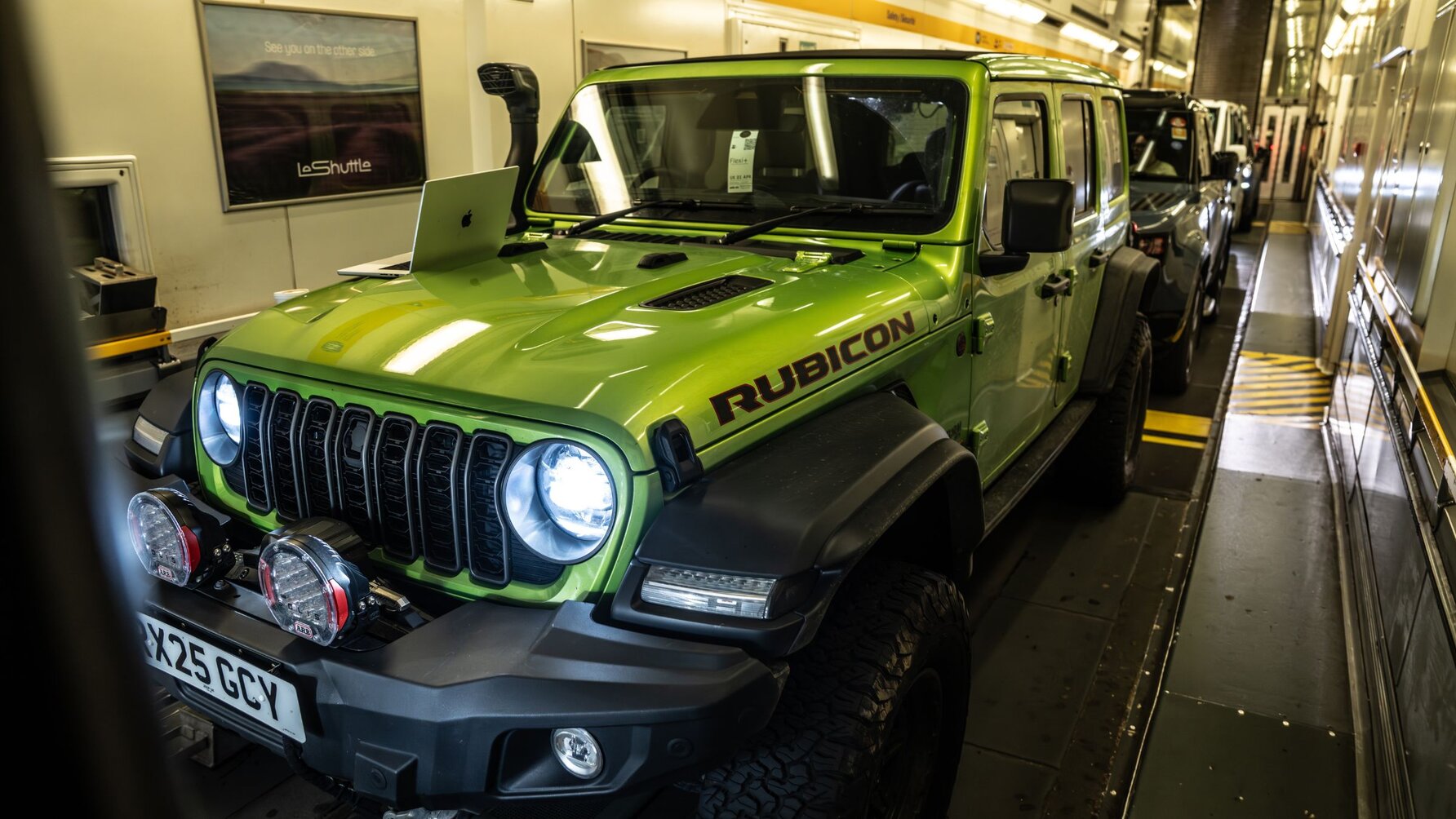
So at 7am I was swallowed by the Eurotunnel, that great mechanical snake that burrows beneath the Channel. As the train shunted away, I opened the laptop on the bonnet – perfect standing-desk height – and watched the soft Jeep wobble gently on its springs while I plotted the route. The plan was Andermatt by nightfall, then Como and Lake Garda, then Bolzano and the Dolomites, with enough hairpins, scenery and a few off-road detours around the Sella Ronda to justify the whole absurd exercise.
The route south through France was the first reminder that running a modified Wrangler Rubicon is rather like hand-feeding a bonfire. On paper, its 2.0-litre turbo petrol sounds entirely capable: 272bhp, 295lb ft, enough mid-range shove to suggest a degree of usefulness. In reality it has the thankless task of dragging something tall, wide, heavy and aerodynamically indistinguishable from a garden shed through the atmosphere.
Add the snorkel – which gives it the aerodynamic grace of Andre The Giant permanently hanging his arm out of the window – and fuel economy stops being a statistic and becomes a financial assault. At proper continental speeds it was drinking at around 13mpg. That is not a typo. Thirteen.
And yet, perversely, the Wrangler’s thirst is part of its character. It is not efficient, but it is honest. You can feel where the fuel is going. The engine is always busy, always dragging this tall metal shed through the air. The eight-speed auto does its best, but motorway driving reveals a gearbox with a slightly argumentative personality. There is definitely an eighth ratio in there somewhere, designed for calm long-distance running, but the Jeep often seemed happier bickering between sixth and seventh, particularly on inclines or into a headwind. The whole powertrain feels as though it is constantly working for its supper.
But the Wrangler has a talent no polished modern SUV can replicate: it turns travel into an event. The softness, the jiggle, the exposed hinges, the upright glass, the view over that billiard-table bonnet. In traffic, in rain, in the long grey drag through France, it never disappeared beneath you. It was always there, asking for input, reminding you that this was not transport but progress in the old sense of the word.
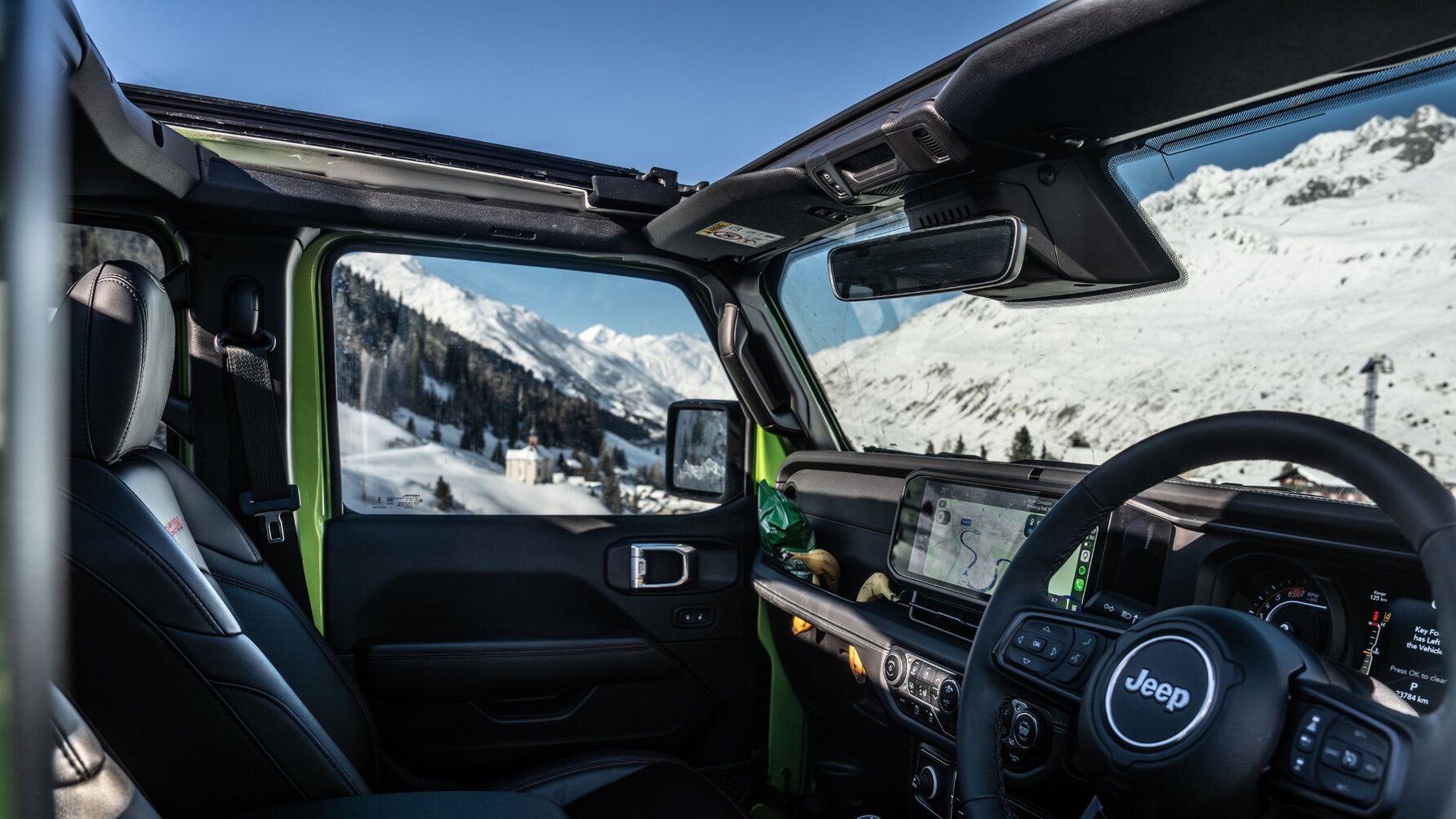
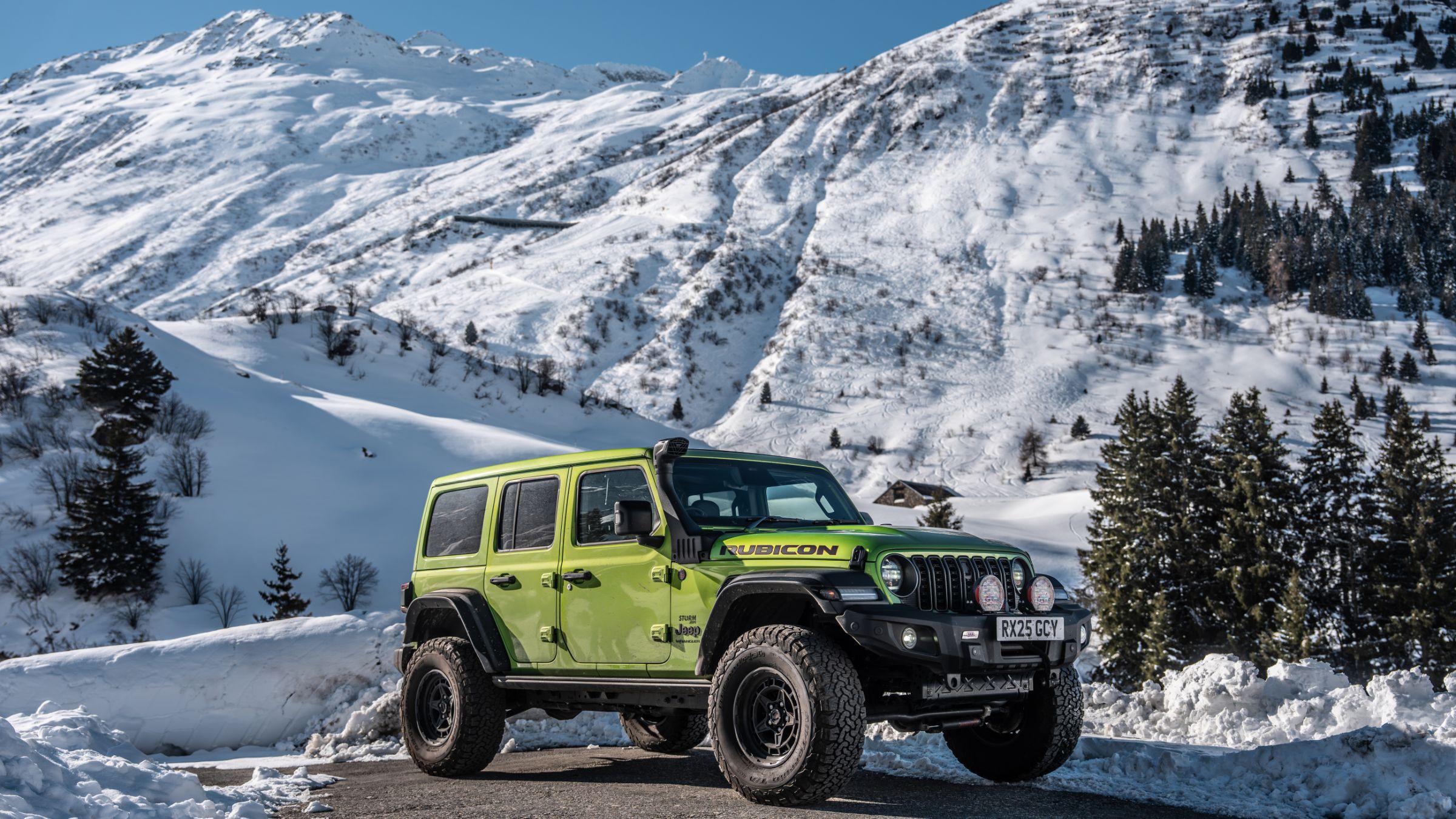
I went to bed and woke in the crisp air of Andermatt. I cracked the roof back – still the Jeep’s best trick – warmed the seat and steering wheel, put some music on, and suddenly remembered what the Wrangler does better than almost anything else: exposure. The cold mountain air comes in properly. You hear the engine working, hear the snorkel breathing at low revs, hear gravel crack under the tyres when you pull onto a lay-by. It feels almost motorbike-like, but without the requirement to dress up in leather and faff around with gloves.
Continuing via THAT ruinous petrol stop, there was Como, by contrast, in all its impossible beauty and cultivated nonchalance. Cypresses, polished hotel launches, stone facades and expensive people wearing sunglasses with intent. I stopped for a sandwich by the lake, and it was the kind of lunch stop that makes you briefly imagine a different life, one involving linen and inherited property. Then I looked back at the Wrangler, sunroof open, tyres humming, engine ticking and bugs layered across the headlights and thought I am happy as I am.
Garda was more generous, with tunnels, vineyards and little harbours that seem to have evolved purely to sell you an aperitivo and keep you there until dark. In all three places the Wrangler looked faintly ridiculous and somehow exactly right. Like turning up to a black-tie dinner in walking boots and getting away with it because they are proper boots, not fashionable ones.
I spent the night in Bolzano, eating Tyrolean treats at Wirtshaus Vögele while dropping pins into Google Maps between courses. The next day’s plan was a greatest-hits tour of the Dolomites, which is exactly what it turned out to be: all killer, no filler.
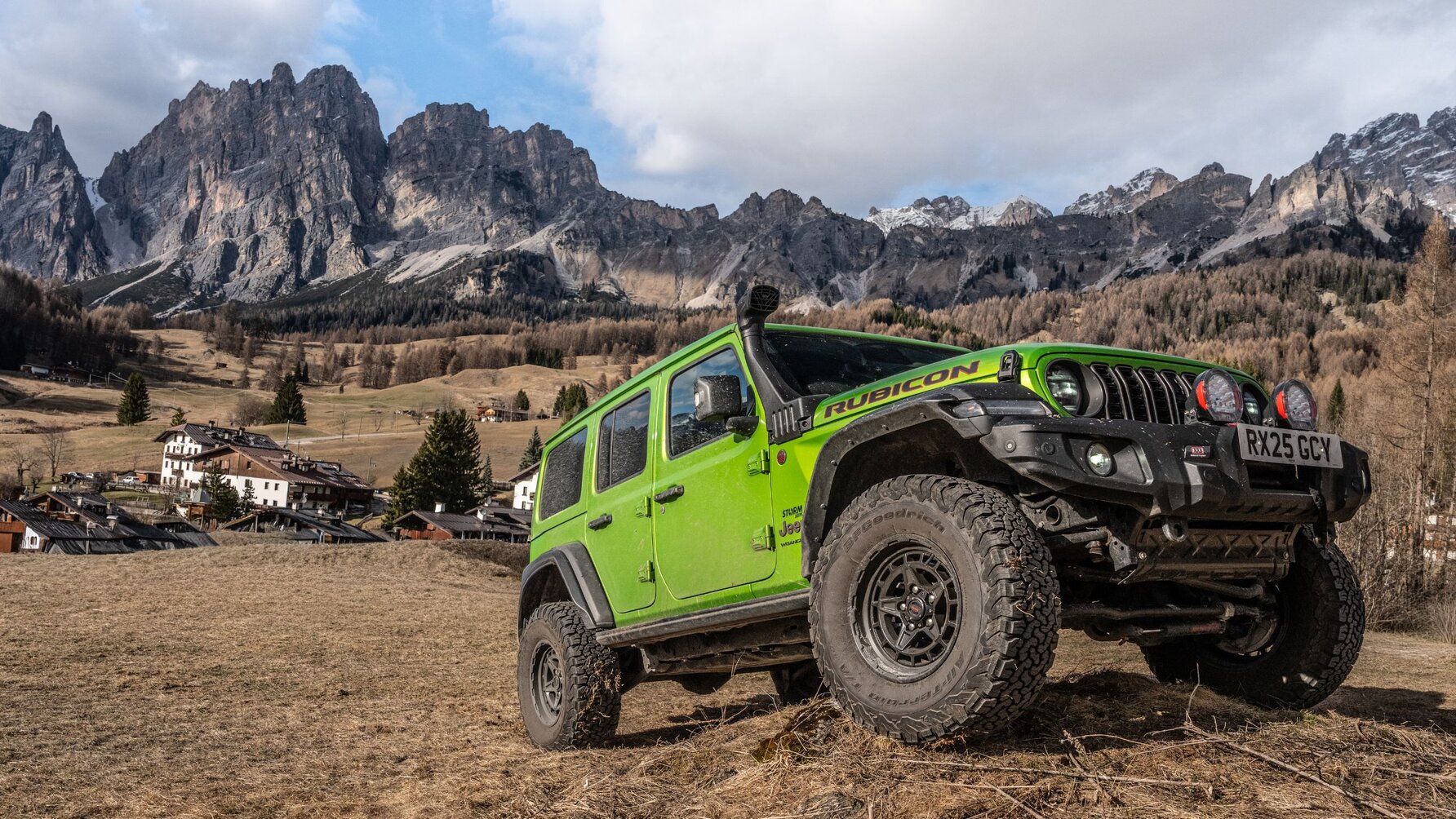
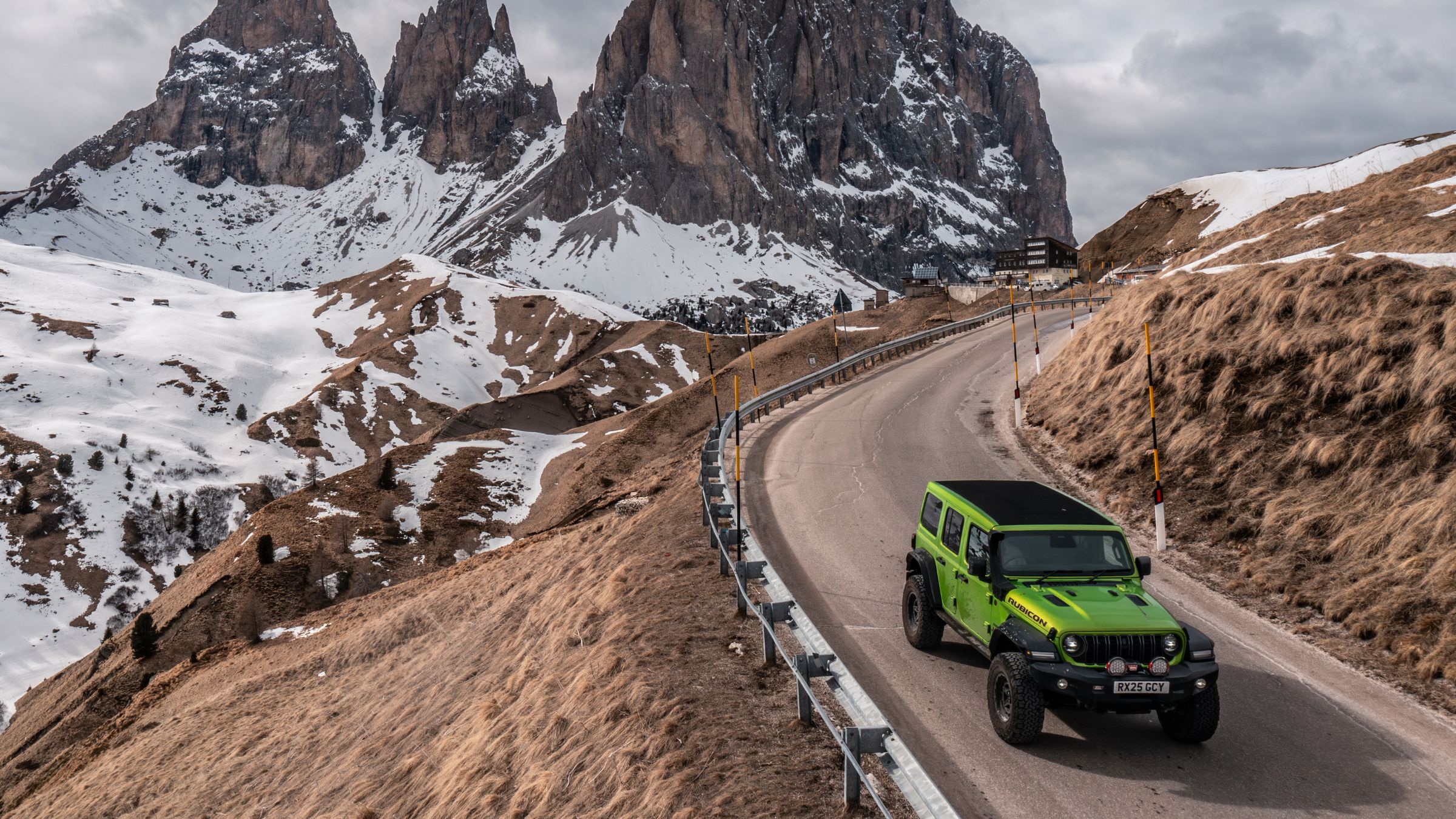
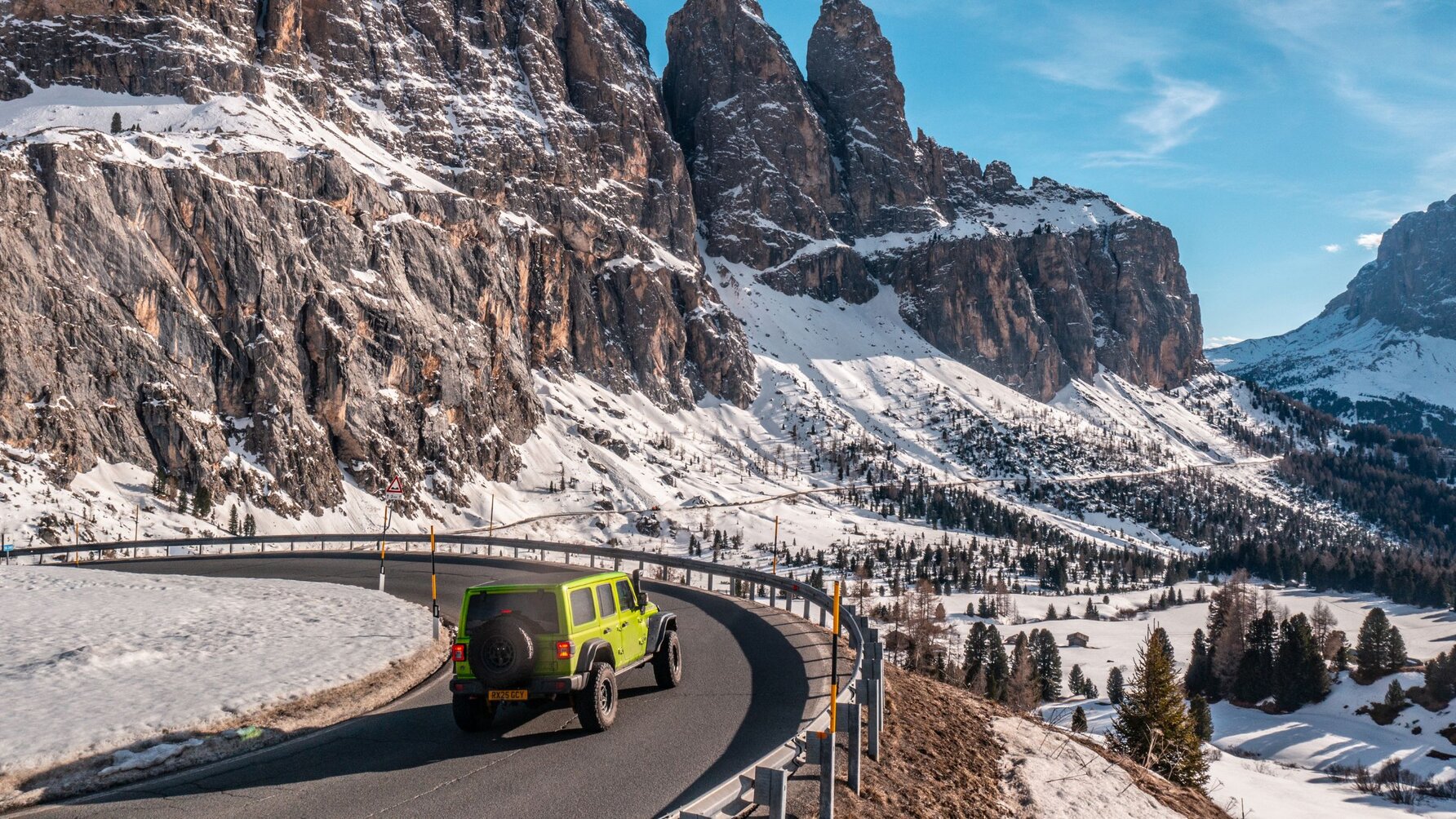
Out of Bolzano early, then through Val di Fassa and up towards Canazei. After that it was pass after pass, each one more theatrical than the last: the wriggle around the Sella group, the broad, open views near Corvara and San Cassiano, the military grandeur of Falzarego, the pale savagery of Giau above Cortina. Hairpins stacked like dropped ribbon.
Between the skiing and hiking seasons the roads were almost empty, which meant I could enjoy the ridiculousness of it properly: a bluff, over-tyred off-roader hustling out of alpine switchbacks with all the delicacy of a Friday night fight in Wetherspoons. I felt like @Powerslidelover, just in a very different wildly inappropriate car, as the inside wheel one tyre fired its way out of every hairpin.
The odd thing about the Dolomites is that photographs lie. They make them look pretty. They are not pretty. They are shocking. They rise out of the earth in pale, jagged walls as if somebody had frozen an explosion. Villages sit in the folds beneath them, speaking a three-language Alpine shorthand of Italian, German and Ladin, and everything feels both orderly and ancient. Timber balconies. Onion domes. Rifugi. Cable cars. There were also Jeep Renegades everywhere, too. Absolute swarms of them. The new Panda 4x4 of the mountains, I thought. Even the Carabinieri run them in that superb police livery.
And because the Wrangler encourages bad but entertaining decisions, I drove all the major passes and never once stopped finding it funny. The Rubicon is built around live axles, short gearing, serious off-road hardware and tyres whose first loyalty is to mud, rock and regrettable choices, not neatly surfaced mountain roads. It wriggles. It lurches. It understeers if you go in with too much ambition. The body leans, the tyres squirm, the suspension takes a moment to gather itself, and you end up learning that the steering wheel can be used as a supplementary braking device: ask enough of the front end and the stability control panics and starts helping.
Proper bucket seats would have been nice. So would brakes the size of serving platters and some sort of ventilation through the wheels, as coming back towards Cortina I could smell the discs slowly turning to fire. Then the pedal went long. Very long. That is not a sensation you want halfway up a mountain. So I slowed down – not that the Jeep can ever achieve genuine licence bothering speed – and started thinking.
See, the Wrangler is not a good car in the modern, sanitised sense. The build quality is robust in the bits that matter and gloriously slapdash in the bits in front of your face. It feels as though it will last for ever even while some of the trim appears to have been attached as an afterthought. There are hard plastics, exposed seals, visible fixings, unpainted panels. You sit next to what appears to be a curtain airbag housed in something from a municipal wheelie bin. But it has honesty. Mechanical honesty. Emotional honesty, too. It never pretends. And on a trip like this, that counts for a lot.
After 18,000 miles I know its habits. The way the steering pulls left. The odd wobble. The sense that the alignment had perhaps been knocked slightly off by a year of being itself. The click-click-click from the rear light cluster when you tap the brakes or indicate. The music cutting out when opening or closing the sunroof. The leaky draught around the side window when cold Alpine air hit motorway speed. None of these things are charming on their own. Together, somehow, they are.
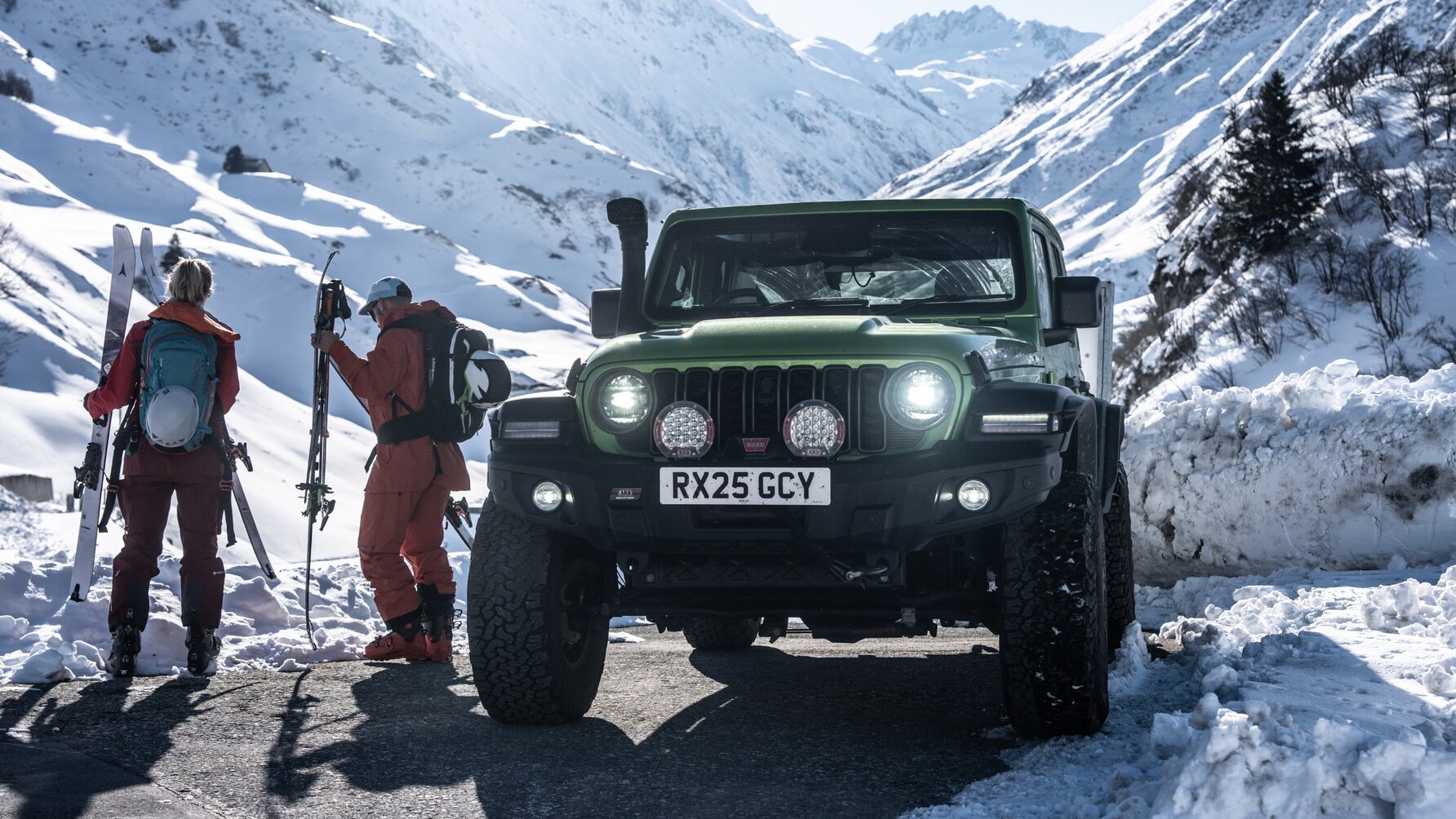
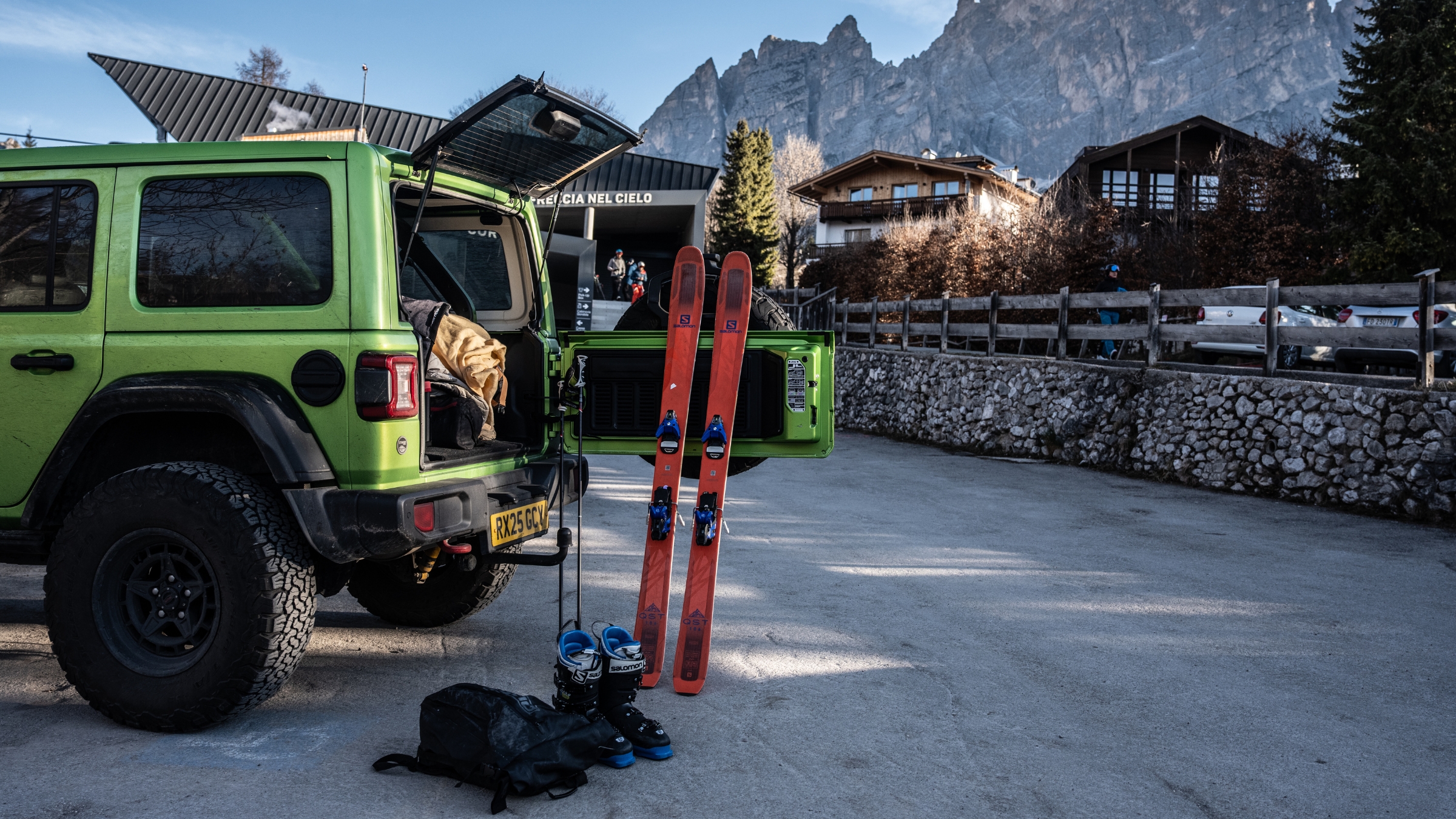
The next day I took the Wrangler exploring with skis in the back. Not mountain-goat fantasy stuff, but proper rough tracks: snowy forestry trails, loose climbs, muddy cut-throughs and narrow off-road routes that peel away from the postcard views into the working backside of the mountains. This is where the Jeep stops being cumbersome and starts being brilliant. On road, the steering is vague. Off road, vague becomes relaxed. You stop asking for precision and start valuing trust.
In 2H it is just a big, silly rear-driver. In 4H Auto it tidies up greasy mixed surfaces. Once things got loose I shifted into full four-wheel drive, and when it steepened or turned rocky, back came that splendidly agricultural transfer lever into 4L. Everything slows down. Throttle inputs lengthen. The Jeep stops lunging and starts clambering. Then, when the surface breaks into crossed ruts and rock shelves, you add the hardware one piece at a time: rear locker, then front, then the anti-roll bar disconnect so the axle can droop and keep the tyres pressing into whatever grip the mountain is willing to offer.
One of the Rubicon’s greatest pleasures is the complete absence of theatre in all this. No cartoon mountain graphics, no digital reassurance, no lifestyle software. Just a switch, a clunk from somewhere oily and expensive, a light on the dash, and the car getting on with it.
That is what this year with the Wrangler has really taught me. Modern SUVs tend to promise everything and specialise in nothing. The Jeep is the opposite. It is compromised, noisy, thirsty, often faintly ridiculous and nowhere near as polished as something costing nearly seventy grand ought to be.
The cabin plastics are hard and the fit and finish occasionally bordering into the comical. But the underlying thing – the bones of it – are honest and durable. It feels as though the important parts will outlive me, even if a few cosmetic bits fall off (the wheelarch extensions) and need cable ties on the way.
And by the end of this trip – 1,927 miles / 3,100 km, 557.65 L and a horrific average economy of 15.7mpg – I realised that was why I’d grown so fond of it. The Wrangler had not been a perfect companion. It had been an expensive, thirsty, draughty, slightly wandering, and always entertaining one. But nearly a year and 18,000 miles in, I understood it. I knew why the Willys icon lighting up with the cruise control still made me smile.
I knew why the crude mechanical lever for low range felt more satisfying than any touchscreen ever could. I knew why, even after a 180 Euro fuel stop and another long, booming autobahn slog home through Austria and Germany, I still climbed out of it in London with the windscreen looking like an insect war memorial, the engine screaming for fresh oil and a massive smile slapped across my face. Why? Because it’s got feeling.
Some long-term cars earn your respect by being excellent. The Wrangler earned mine by being itself, stubbornly and theatrically, all year long. In the Dolomites it was not the fastest thing, nor the sharpest, nor the most sensible. But roof open, heaters on, tyres scrabbling up a rough track under those impossible pale mountains, it felt more alive than almost anything else I could have taken. It is a trip and car I’ll remember forever.
Get all the latest news, reviews and exclusives, direct to your inbox.
