


Big Reads
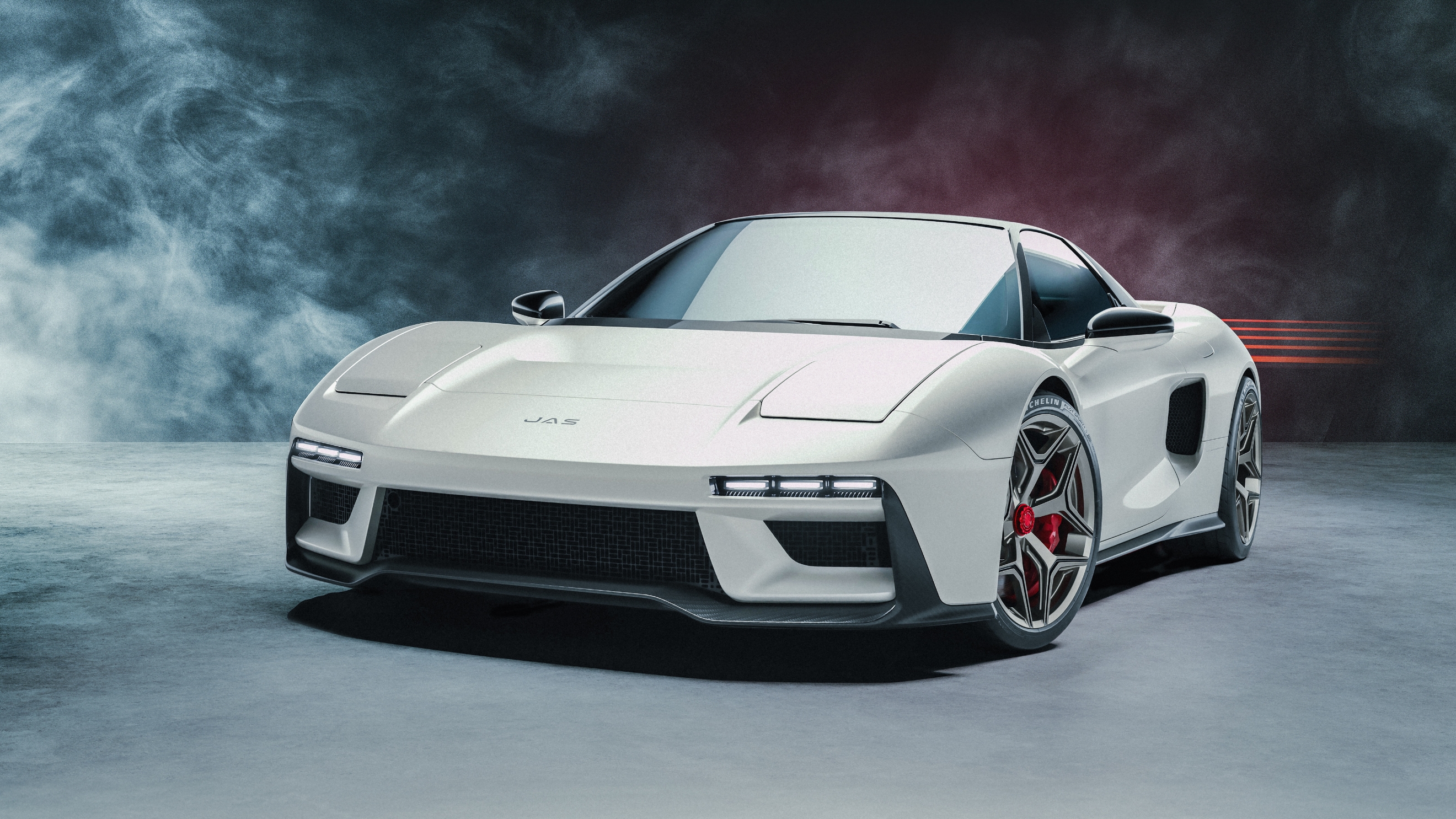
Welcome back, NSX: can Japan's greatest supercar carry off the restomod treatment?
Honda's mid-engined hero was hugely influential - now it's back as a resto
No need for ‘Reimagined’ or ‘Remastered’ here. Honda was perfectly happy for this to have been called a Honda NSX without any trademark-swerving coyness. But the reimaginer, remasterer, remaker, revamper, reinventer, redeveloper or reinvigorator in question wanted to highlight its own name.
So, JAS Tensei it is. But JAS’s boss Mads Fischer tells TopGear.com: “Honda said customers could put the Honda badge on themselves. One of their people said, ‘This is what we should be doing but can’t'.” Can’t because modern emissions and driver-assist regulations prevent a manufacturer building a new car like this. Whereas this car needs only meet Euro 1. It’s a restomod, not a new car.
Advertisement - Page continues below
Look at what JAS is and what it’s done and you can see why Honda is relaxed. For five seasons from 2012, JAS Motorsport developed and ran the works Civic for the Honda Castrol WTCC team, and it’s also run second-generation NSXs as GT3 cars, and now runs Civics in the British TCR. It has been an official Honda partner for three decades.
Obviously JAS wouldn’t want to sour that relationship by bringing out a lazily spiffed up NSX-mod that besmirched the honourable heritage of Japan’s first and – surely we agree – greatest mid-engined supercar. It needs to be a committed effort.
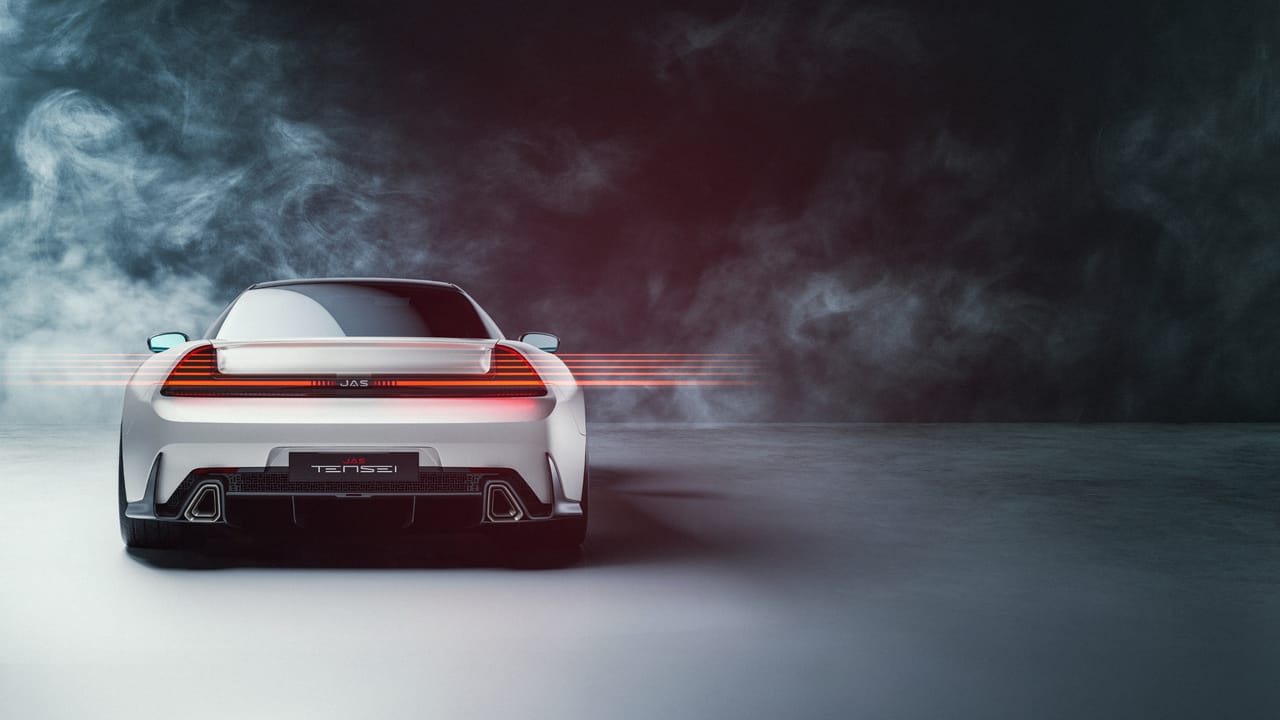
So Milan-based JAS took proposals from most of the leading Italian design houses, and chose Pininfarina. The engine is the work of Judd. Big names. The result is a car with the vibe of the original NSX, but 420bhp at 8,500rpm, and carbon fibre panels over the original aluminium structure.
It’s got useful modern features including adaptive dampers, nose lift, automatic parking brake and CarPlay. But none of the modern hindrances. And of course pop-up headlights. They’re just brighter.
Advertisement - Page continues below
Back in 1991, the original NSX had a startling effect on the supercar world. Honda could do anything in those days, but it always chose its own path. So it wanted to build a rival to the Ferrari V8s of the day, but didn’t see the need for a V8 or a steel body. Too heavy.
Instead it designed a little VTEC V6 – just 3.0-litres at launch – bolted into the world’s first pressed-aluminium monocoque. The suspension was also ultra-light. The whole thing was 1,370kg, which is why the V6, revving to a then-staggering 8,000, was enough. And that lightness wasn’t about starkness. It had power seats, Bose hi-fi, climate control. Its clutch was as light as a Civic’s, its boot was useful, its ergonomics peerless.
In a way, that was its problem. It was too accessible for many critics, at a time when supercars were meant to be ornery. It even had traction control; if you turned that off you might have needed Senna-like skills to catch it, because yes, in an era when Honda dominated F1, Senna had driven and approved of the NSX before production started.
Gordon Murray owned one, and told me: “For the McLaren F1, for ride versus handling, we used the NSX as the benchmark. The Ferraris of that period were really bad.”
Anyway I drove the NSX when it was new in 1991 and its character, engine aside, did feel oddly reserved for a car of its performance. Yet driving it again at the end of its life in 2005, it was obvious exactly how it had influenced Ferrari. Perhaps that’s why, as with the Lexus LFA, few get modified. It’s not like a Supra or a GT-R. It’s almost a sacred object.
Until now.
As a race team JAS can use all the right software for suspension and aero design. The software needed input: a full digital 3D model of the car. But that isn’t how cars were made back then – Alfa SZ was perhaps the first, a year later – so Honda couldn’t help. JAS had to scan an original car’s body. With that in place it could design and engineer the whole car in the digital realm.
Top Gear
Newsletter
Get all the latest news, reviews and exclusives, direct to your inbox.
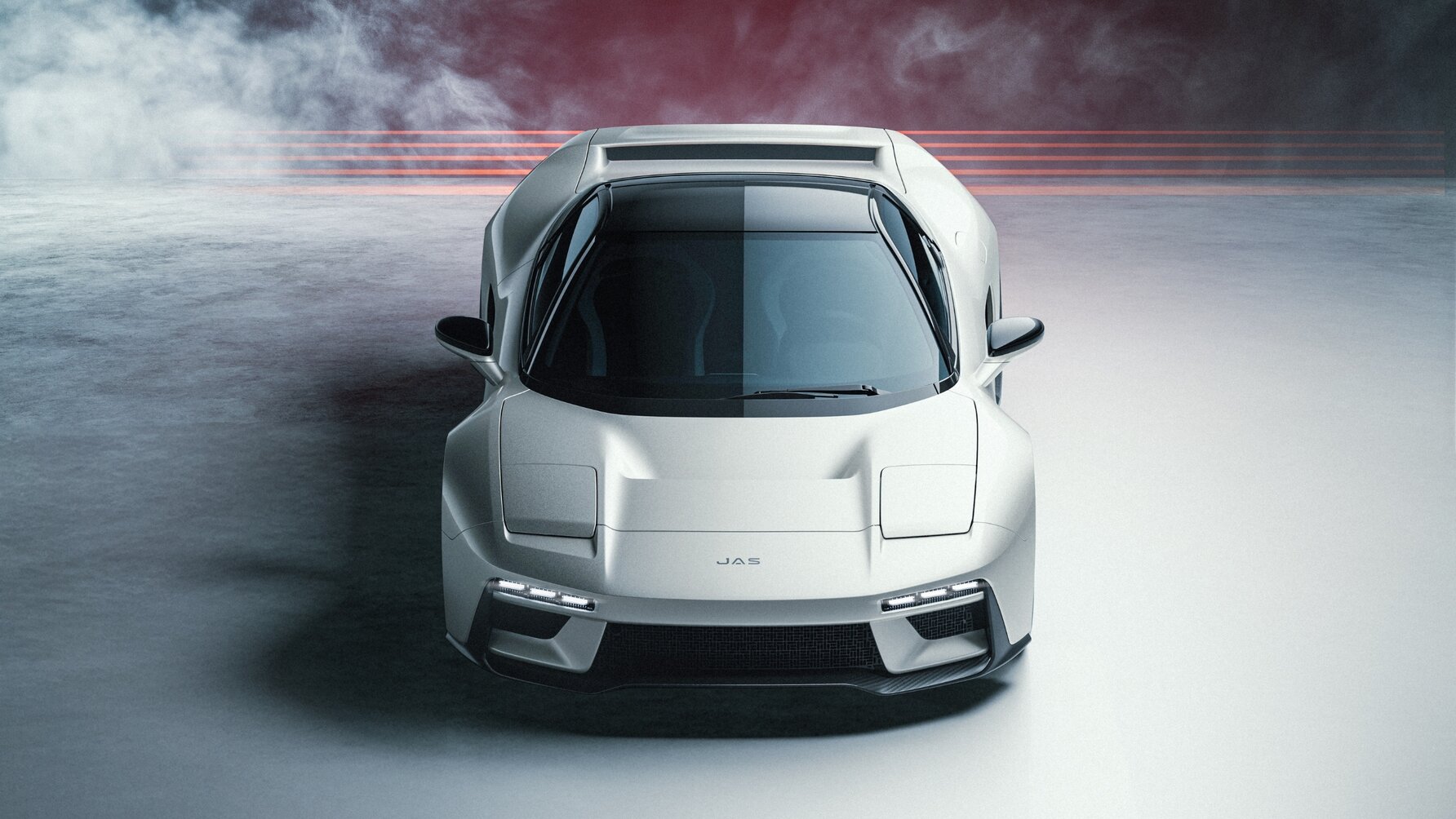
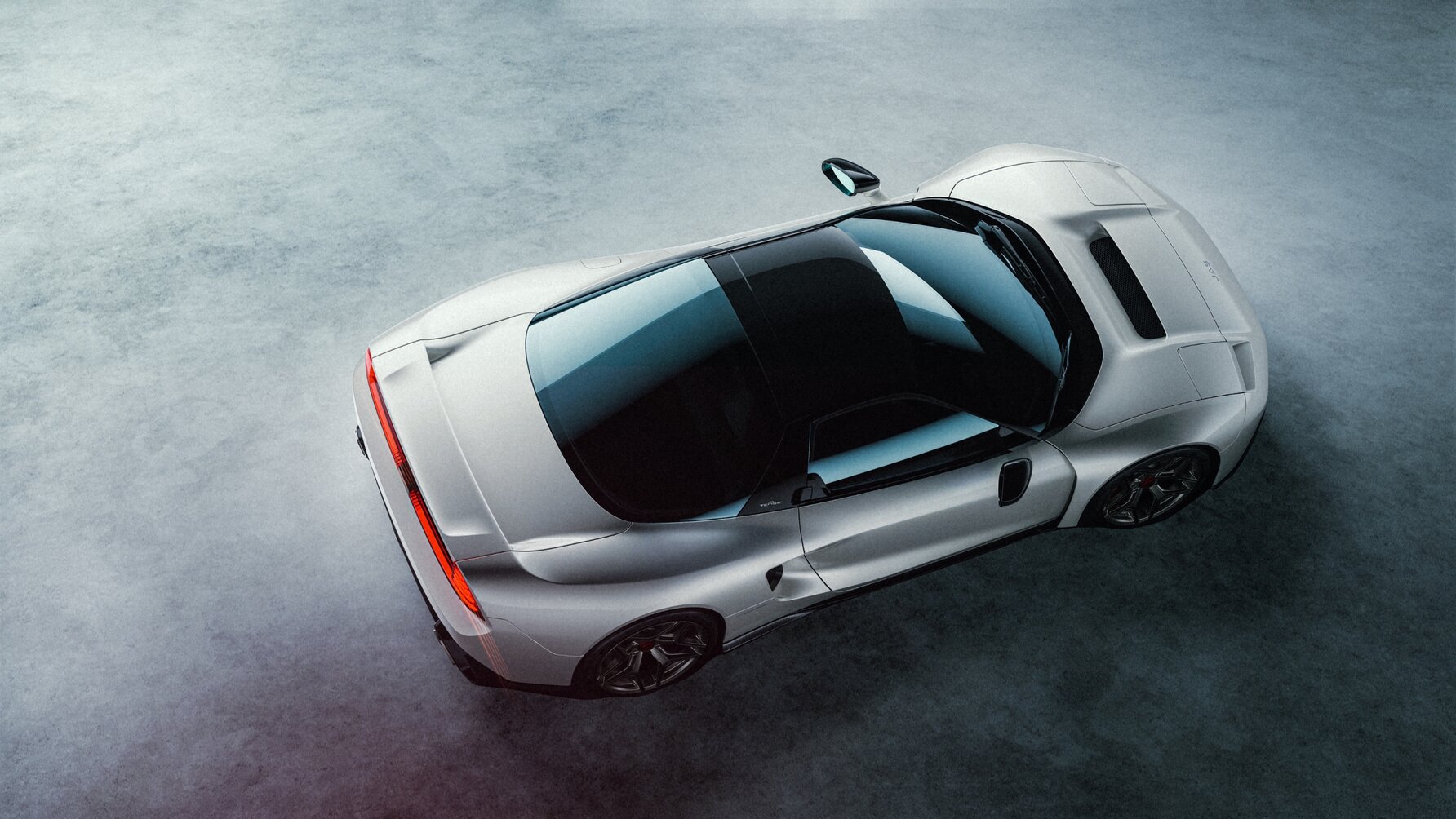
“We didn’t want a Fast and Furious car, didn’t want to destroy the heritage,” says Fischer. So there were a fair few back-and-forth sessions with Pininfarina until JAS was happy with the balance of aggression and elegance, modernity and respect to the original. Non-negotiable, he says, were pop-up headlights, that hoop rear wing and rear lights, and the side inlets. But they’re all more effective now, and the lights will be internationally homologated too.
We didn’t want a Fast and Furious car, didn’t want to destroy the heritage
That original NSX was, in my memory, timeless. Of course in truth it wasn’t: look now and it has dated. Only, not much. Pininfarina’s design appears drawn from my memory. The sides are more sheer and muscular than the original’s, the wings draping over wider tyres, and creases erased from the doors. The upper body is pretty much unchanged. Except for the rear glass. The original looked a bit unbalanced, too long in the tail. The shallower rear glass angle tweaks that. Front and rear wheels are shifted backward a little, which gives extra cabin room to tall drivers. New seats also create more space.
After all this time, and perhaps a high mileage, an NSX shell will have softened. To make it rigid again, carbon fibre sheets are bonded in strategic places. The original suspension mounts are used, but to meet them JAS has designed new suspension arms – front wishbones, rear multi-link – and uprights for both ends of the car. The originals were only just strong enough, apparently, and this new version has far more power and bigger brakes, meaning roughly double the loads into the suspension. Safety trumps originality. They have racer-type ball joints at the outboard end for precision, bushes inboard for comfort. The steering is electro-hydraulic assisted.
Springs are progressive-rate, acted on by electrically adjustable dampers by KW. Those dampers are also used under a Porsche 911 GT3 RS, except when delivered in the Tensei they’ll be menu-adjustable in stages, not fully adaptive. The car is fitted with all the accelerometers it needs, so after a bit more development the adaptive program will get downloaded to each car.
On the far end of that suspension, a choice of wheels and brakes. Wheels are either a bespoke forged OZ with Y spokes, or – by popular demand – a set with radial spokes much like the NSX Type-R had. “Doing a restomod, you don’t follow your own opinion, you listen to your customers,” says Fischer. Brakes, by Brembo, are steel or carbon fibre to choice.
Full CFD simulation on the aero has drawn extra downforce from a subtly resectioned rear wing, and lower diffuser. The side intakes work better because front air curtains draw air from the front quarters, channel it past the wheel and keep it adhered to the door surfaces.
The engine begins with Honda’s block, but that’s about it. Judd has done a deep-dive job. It’s now 3.5 litres, not the original 3.0 (later 3.2), and revs to 8,500rpm, by which time it’s making 420bhp – up 140-odd on the original. The signature VTEC system has gone, sadly. It wouldn’t have been reliable at those frantic crank speeds. New crank, rods, and pistons complete the short block. The intake system has a new plenum and six throttle bodies. The ECU is new. The manual gearbox has six speeds, not the early 3.0 car’s five. It’s all-new actually: casing by JAS, with proprietary internals.
I ask about weight. Fisher lets out half-laugh half-snort. “I knew you’d ask. The NSX engineers made it ridiculously light by looking at every part.” The Tensei has bigger tyres, brake and wheels, offset by the carbon fibre skin. I suspect it’ll end up just under 1,400kg.
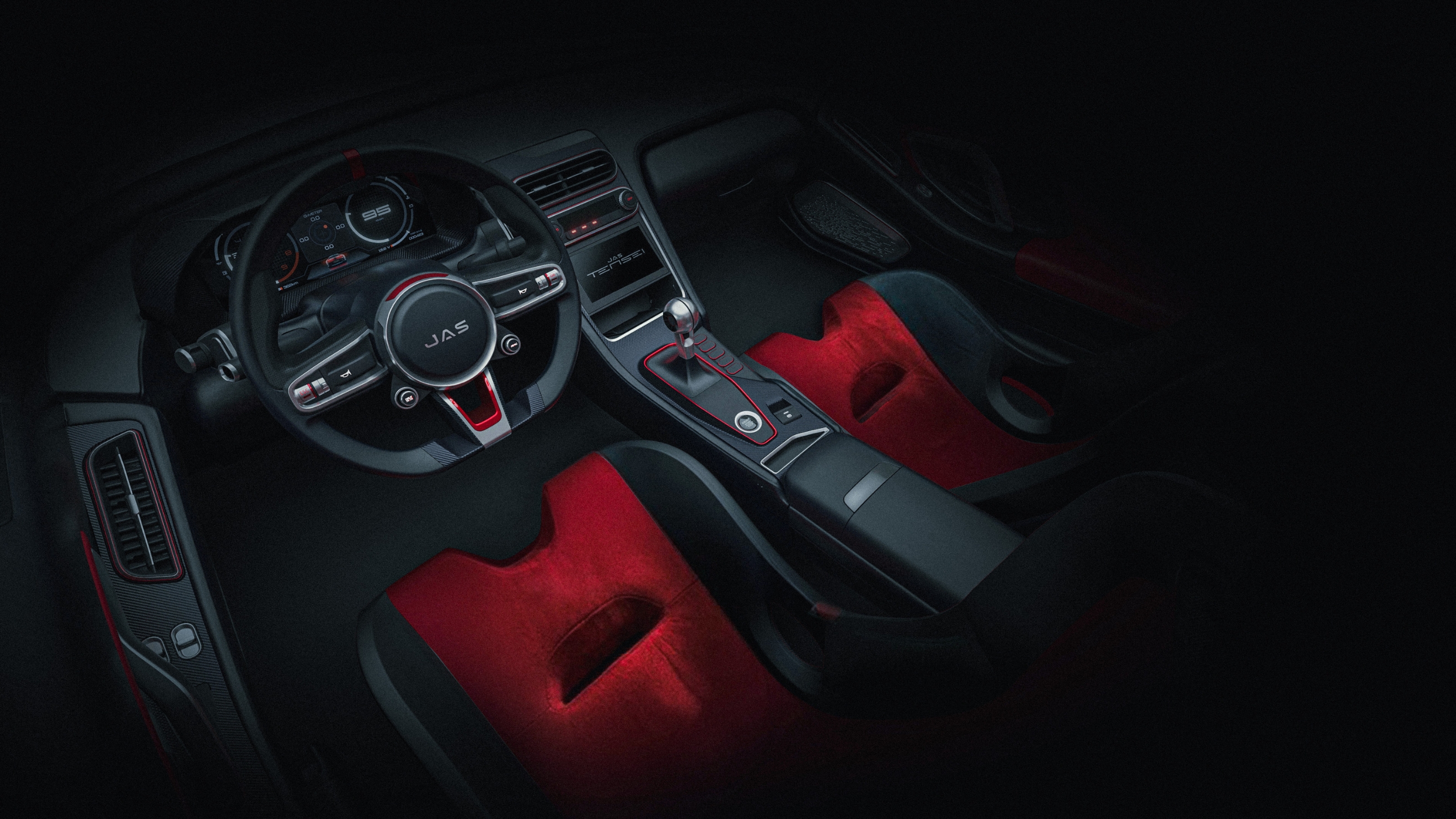
The original NSX threw supercars into a new era with its interior. You can see why Encor and Eccentrica designed new interiors for their restomodded Esprit and Diablo. Those originals were borderline uninhabitable. So the Tensei keeps almost all the original dash, binnacle and console surfaces, and the door cards with their brilliant integrated air vents. They’re reupholstered, and accented with aluminium collars for the details. The wonderful NSX column-mounted switch pods for lights and wipers stay too.
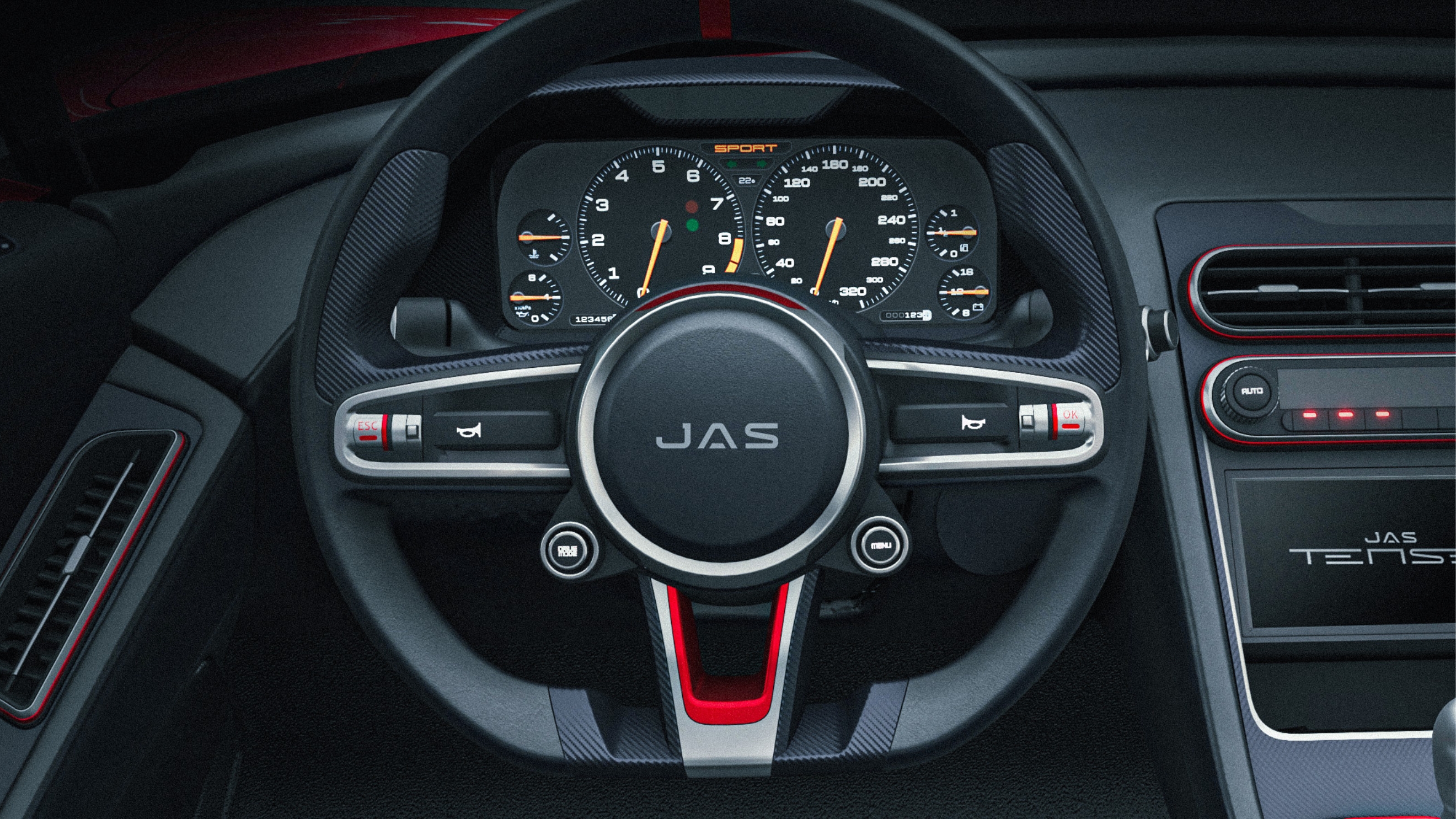
Within that binnacle, Pininfarina designed a semi-digital display to accommodate the modern menus for damping and so on. But prospective customers wanted something more old-school, so they can switch to a near-exact rendering of the old, and wonderfully clear, six-dial yellow-needle layout. With menus that pop up when you need them.
A car like this doesn’t just emerge out of nowhere. What was the Tensei’s origin story? Fischer explains that because the race business has peaks and troughs, around three years ago they looked at doing a road car. But starting from scratch, building a brand and meeting all the current regulations, would have been slow and impossibly expensive.
“If you make a £1.5m car, customers are limited and there’s no business. We knew there is a big market for restomods, Porsches and others. We wondered what car to do and it was 100 per cent an NSX. It has never been done. But we have a relationship with Honda and doing this could have been positive or negative. We’ve worked 30 years with them and wouldn’t do anything to harm their brand.”
Next job, work out how many to do. “Ten, 50, 100? What’s the golden number? We went around the world and met collectors and opinion leaders. People liked it. It had to be exotic but not too expensive. So we decided to do 30. Then someone said it’s the 35th anniversary of the NSX, so we’re doing 35.” Buyers bring a car – of the 18,000 made – and pay €880,000 (£770,000) plus tax.
After JAS decided to put its own brand on the car, it needed more. Says Fischer: “Then one of our designers, Alessandro Prada, came up with Tensei. It’s Japanese for reincarnation.” So even if the lawyers didn’t insist on a re-prefix, it kinda got one anyway.
Price: £770,000 (+ donor car, + VAT)
Powertrain: 3.5-litre nat-asp V6, 420bhp, n/a lb ft
Transmission: 6spd man, RWD
Performance: 0–62mph in n/a secs, n/a mph
Weight: 1,400kg (est)