



Formula One
Top Gear
"One of the hardest things we've ever done": Ford boss Jim Farley on the Red Bull F1 engine
The Blue Oval's going racing in F1 with Red Bull, with a furiously complex new set of regs...
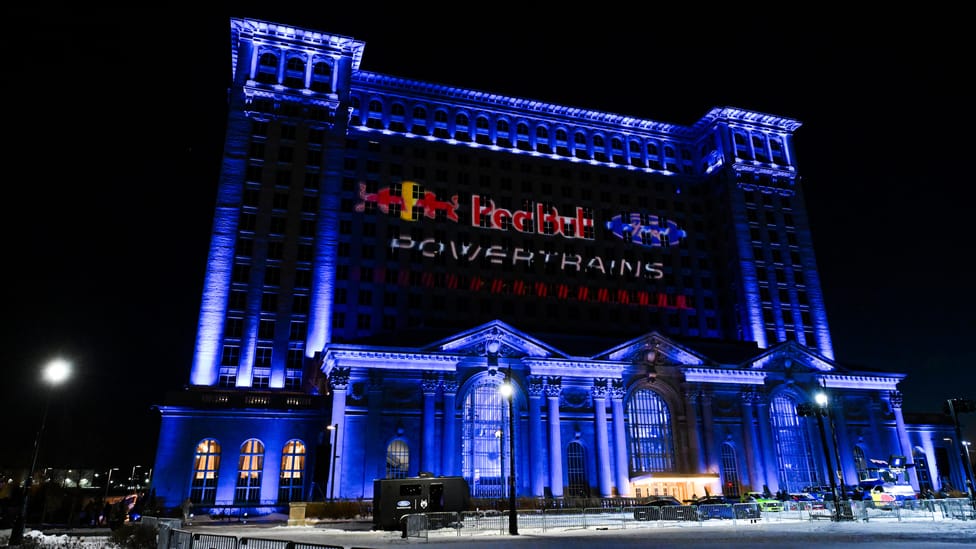
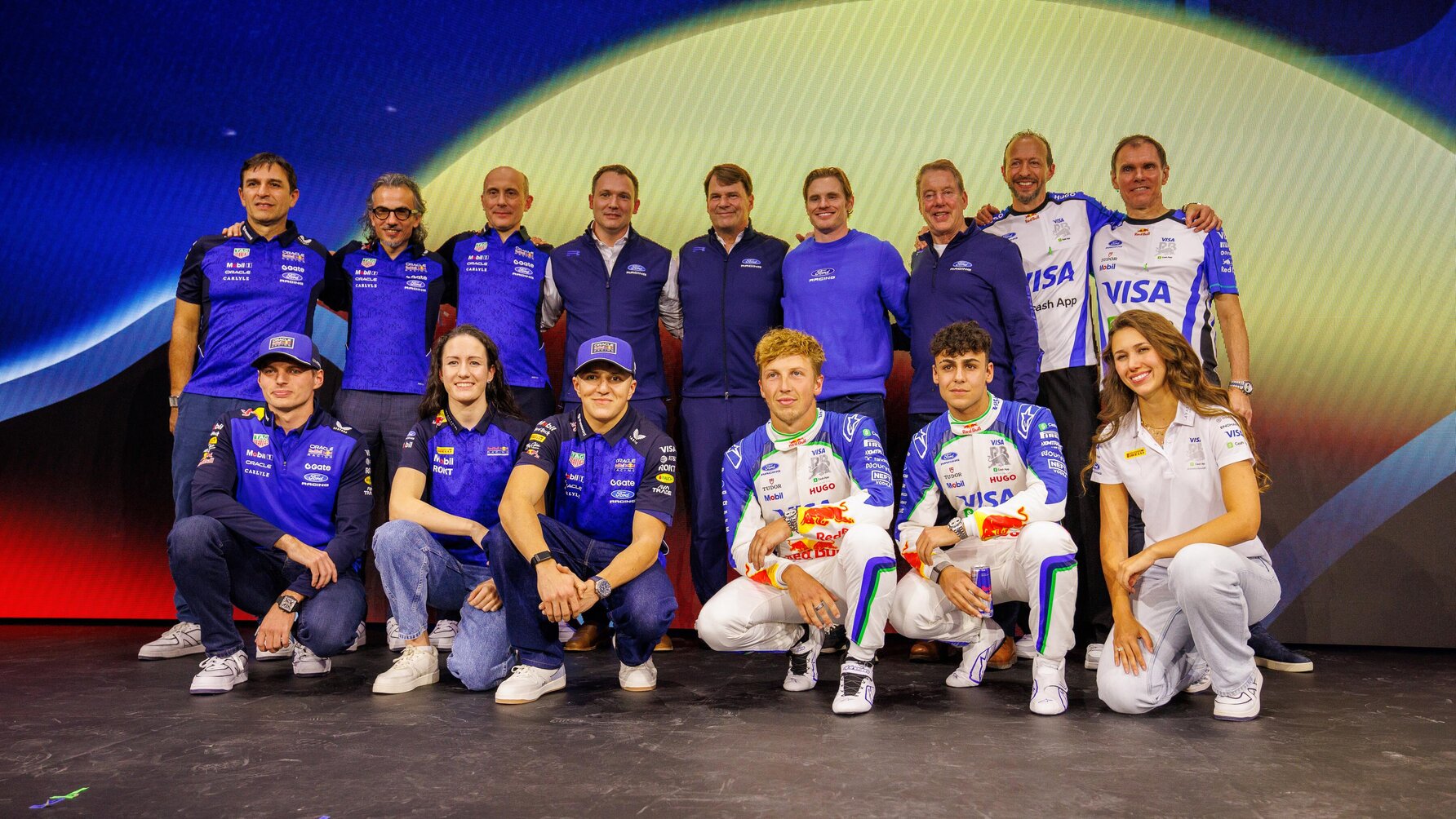
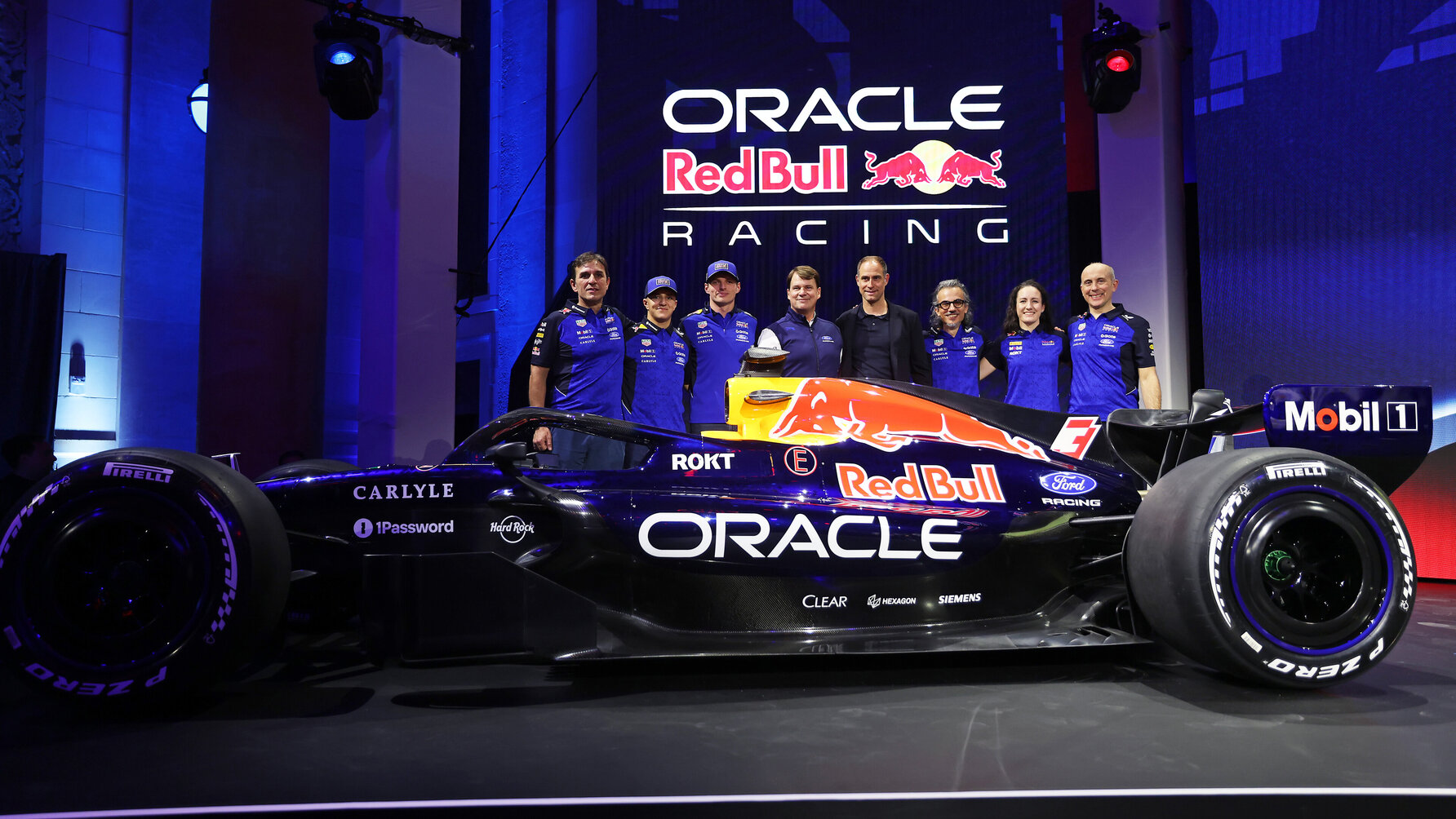
Ford has spent £550m renovating Michigan’s Central Station. One of the most visible symbols of this great city’s precipitous decline, it’s now a testament to its resurgence. It sits at the heart of a mixed-use innovation district, and proved a suitably grand venue for the (livery) launch of the Red Bull RB22 – and the newly emboldened Ford Racing sub-brand.
“People thought I was mad doing it,” Bill Ford tells TopGear.com, “but I’m hugely proud of what we’ve achieved and how the building has turned out.”
Advertisement - Page continues below
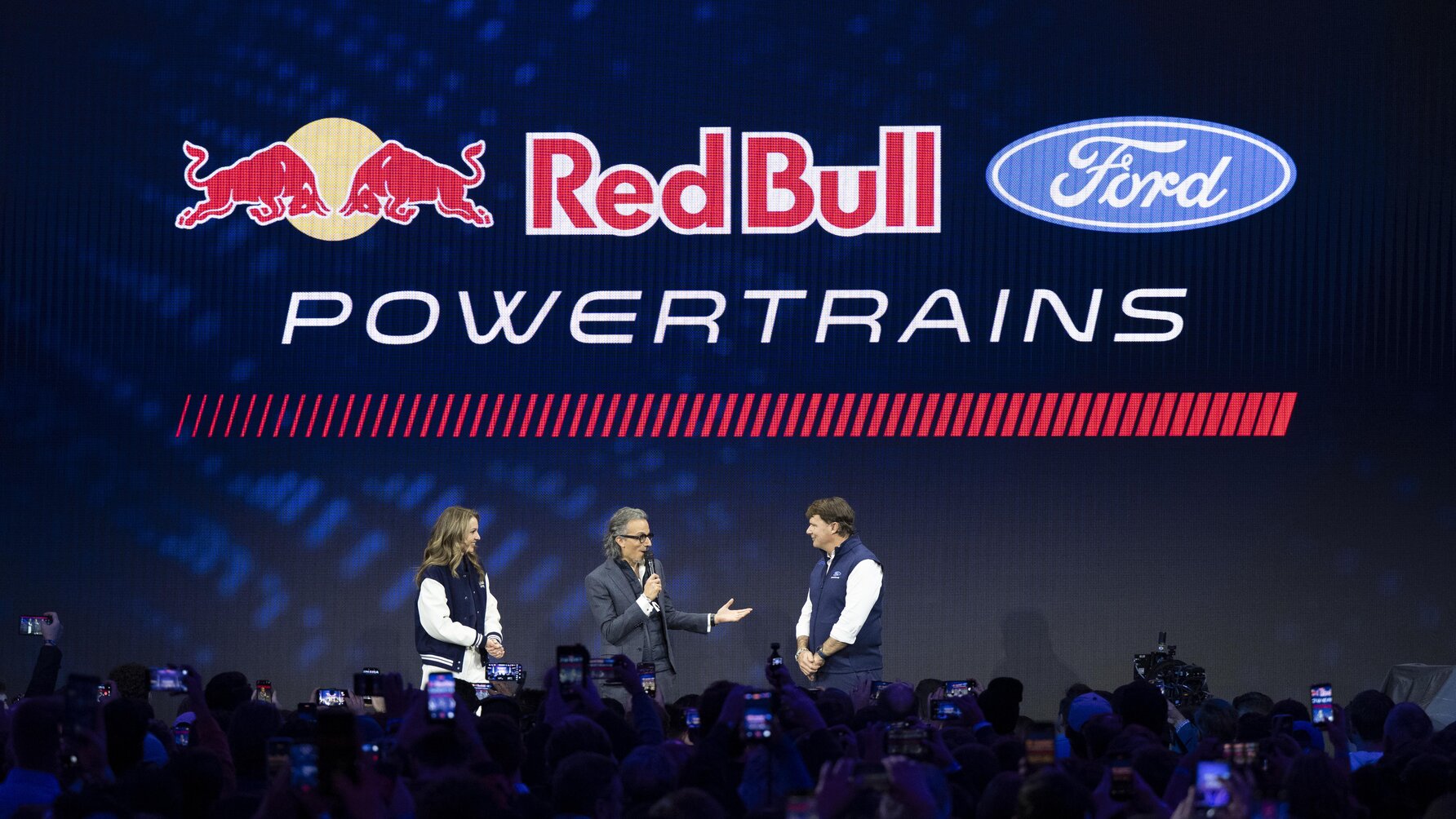
The event itself was a bombastic ode to the Blue Oval’s across-the-board commitment to motorsport – from Rally Raid to WEC hypercar and all points in between – and close to 2,000 fans and locals were in the house to make some noise in the way that only Americans can.
But it’s the partnership with the Oracle Red Bull Racing Formula One team that hogs the headlines – and might rival a giant building project when it comes to untrammeled ambition. Our big takeway from 48 hours in Detroit? That F1 in 2026 is going to test everyone involved to the absolute limit. “Man I gotta tell you, but this PU…” Ford CEO Jim Farley tells us, “…it’s one of the hardest things we’ve ever done. We’ve been out of [F1] for a while, and when we were last in it, it was a whole different game.”
“It’s a massive, massive change,” Phil Prew, the technical operations director of Red Bull Powertrains, tells us. “Chassis, aero, tyres, less downforce, the electronics are different, it’ll be fascinating – from a sporting point of view and an engineering one. I’ve been in Formula One a long time and we’ve never had a set of regulations like this.”
For Red Bull, the challenge is greater still. Rewind a decade and you’ll remember former Red Bull team principal Christian Horner’s intense frustration with then engine partner, Renault. Things obviously improved during the Honda era, but it was Red Bull co-founder, the late Dietrich Mateschitz, who backed the idea of the company building its own powertrain. The result is codenamed DM01 in tribute to him. Ferrari and Mercedes are the only other F1 teams that build their own engine and chassis. The former has had 76 years of practice and clearly doesn’t always get it right. So while there was a triumphal note to some of the messaging, Red Bull’s senior engineers sounded a more pragmatic note. This has been a monumental challenge.
Advertisement - Page continues below
“We had almost nothing to begin with,” Phil Prew continues. “We had no factory, no team and no designs. When we opened the CAD station, it was blank. And in the four years we’ve been going, we’ve had to create, design, manufacture, assemble and test everything that we’ll show you today.”
The 2026 cars are shorter, narrower and lighter, they ride higher and a shorter wheelbase should mean they’re more agile. The nimble car concept, it’s called. Active aero should give the driver more control, and the move away from ground effect should accommodate a wider variety of driving styles and set-ups. Everything is new but it’s the powertrain that will likely dominate the conversation – and cause the biggest headaches. The combustion engine is good for around 536bhp, the ERS side of things adding three times more than previously for a maximum of around 470bhp. If you crave a return to naturally aspirated engines that can rev to 19,000rpm, this new era might not be for you. This stuff is complicated with a capital C.
“You’re only allowed to harvest 8.5 megajoules per lap [twice as much as in the previous gen cars]. Where you deploy that energy is crucial to the lap time, you can burn 8.5 megajoules very quickly,” Prew explains. “In an overtake scenario that goes up by half a megajoule. But it’s circuit critical. On circuits with fewer corners it’s really hard, and the FIA has recognised that and modified the energy usage accordingly. We’ll have a numerical solution which will suggest an optimal usage, but I’m sure drivers will be giving plenty of feedback.”
Will there be chaos to begin with, TopGear.com wonders? This is far too abstract a concept for an engineer like Prew, who is the very definition of a problem solver.
Top Gear
Newsletter
Get all the latest news, reviews and exclusives, direct to your inbox.
“Our job and the driver’s job is to react and adapt, and we’re very good at doing that quickly. Winter testing will give us a really good indication of what’s going on, and we’ll get to the optimum solution very quickly – although testing won’t tell us much about what the actual racing will be like.
"But I don’t think it’ll be chaos. The drivers will adapt, some faster than others. [pause] Max will adapt very, very quickly.”
When TopGear.com spent time with Verstappen 18 months ago – while he learned to drift with Red Bull’s ‘Mad’ Mike Whiddett – he was typically vocal about the shift to the 50/50 powertrain. And the prospect of increasingly complex energy management. In Detroit, the four-time F1 world champion confirms that 2026 will be a year of rapid and constant learning. “The gaps will be bigger in the beginning,” he says. “When you have a new regulation, there will be one team or two teams that hit the ground running way better than others. Especially with these rules, they seem quite complicated, so it’s not going to be easy for everyone to get on top of this.”
As to the challenge of designing and building an all-new power unit, Prew admits that it has tested the 600-strong development team. Not that he’s nostalgic for an old-school V8 or V10. “We’ve all learned that it’s a different discipline building an engine. It is very complicated but I like the relevance to the road car industry. We achieve great efficiency through the hybridisation. Give me a set of regulations and I’ll design an engine for it. I’m still driven by a lap time and figuring out where I can achieve that lap time. Having also worked on the aero side, I’m in the privileged position of being able to understand both sides of the coin.”
How deep the Ford connection goes is a matter of debate. CEO Jim Farley insists that this is way more than an opportunistic sticker exercise. Ford has four engineers embedded in Red Bull’s Milton Keynes HQ, but the number will vary as time goes on. Christian Hertrich, powertrain chief engineer at Ford Racing, tells TopGear.com about how and where Ford can help Red Bull – and vice versa.
“The 2026 regulations level the playing field, we’re not coming in mid-cycle. We have the same opportunity as everyone else,” he says. “We’re a big behemoth with lots of methodical process. They have creativity, innovation and speed. We have manufacturing expertise and deep resources across the globe, where they’re starting from nothing. But we both have winning DNA, and we want to win together.
“In order to be competitive you need to iterate and do things quickly. F1 is rapid prototyping, but it’s rapid prototyping to perfection. You’re creating the part but you’re also creating the process to actually make the part.
"We’re very good at 3D metal printing, and use a process called DMLS – direct metal laser sintering - to make steel, aluminium and titanium components. In terms of the race PU, we’re delivering 12 individual parts across multiple sub-systems, including one of the major components in the turbo, and throughout the ERS.
“Another example is in engine modelling. Red Bull has no legacy here and Ford has modelled everything under the sun. One of our guys has a tool that’s able to run 1,000 times faster than real time, it’s used in the Red Bull simulator and can predict how the powertrain will behave.”
Ford also has tremendous knowledge in durability and performance testing. “We use Model Predictive Control for energy optimisation,” Hertrich says. “We can write code that learns lap to lap. The software that controls the energy in and out of each of the cells is incredibly important.”
Hertrich is a man who looks like he’s had an interesting few years. “It’s tough. We’ve got a lot going on and this project has pushed us. We thought we were good at what we do, in GT3, lots of sports car stuff, NASCAR, we do a lot of things and we are good at it. We joke about the tolerances, and when I give [the part] to Red Bull, it’s ‘nope, scrap it, redo it'.
"This is absolutely not a sticker exercise. Sometimes I wish it was, so I could go home and not worry about it. But believe me, that’s not the case.”
F1’s winter testing begins on 26 January, at the Circuit de Catalunya, with two further televised tests in Bahrain from 11 February. Expect many furrowed brows.