




GamingTop Gear
Assassin’s Creed Black Flag Resynced review: the series’ best, made a bit better
A simple and at times reductive take on the remastering process that makes space for more swashbuckling
At a certain point during the 2010s, Ubisoft realised why people actually liked the Assassin’s Creed games. It was much simpler than the multi-layered storyline involving people in the present day reliving memories in a dream machine and all the blending in with the crowd stuff. They were just great historical action-RPGs. The ancient war between assassins and templars, the Abstergo subplot – all these things were secondary to just being a powerful warrior in a well-realised period setting.
To commemorate this realisation, Ubisoft made Assassin’s Creed IV: Black Flag in 2012, and it’s long been held on high as the best game in the series. The tedious modern-day diversions and long-winded stealthy bits were still present, but they’d been pushed to the sidelines by a great core fantasy about a chancer named Edward Kenway who’d stumbled into this whole assassins versus templars lark and really just fancied making some coin.
Advertisement - Page continues below
And then in 2026, Ubisoft remade it, because those are the rules now. Liked that game from your youth, did you? Well, buy it again. We’ve changed it a bit, promise.
Ubisoft Singapore has changed it a bit, actually. It’s clear that the guiding principle to Assassin’s Creed Black Flag Resynced was ‘keep the bits people liked, delete the rest’. It really does feel that simple at times.


Case in point: those aforementioned Abstergo sections. In the original release, your sunkissed pirate fantasy was regularly interrupted by interludes that reminded you that this is all a memory, and you’re really a guy called Desmond in a sinister corporation’s offices dreaming of being a pirate. Much traipsing around a corporate facility with an iPad ensued.
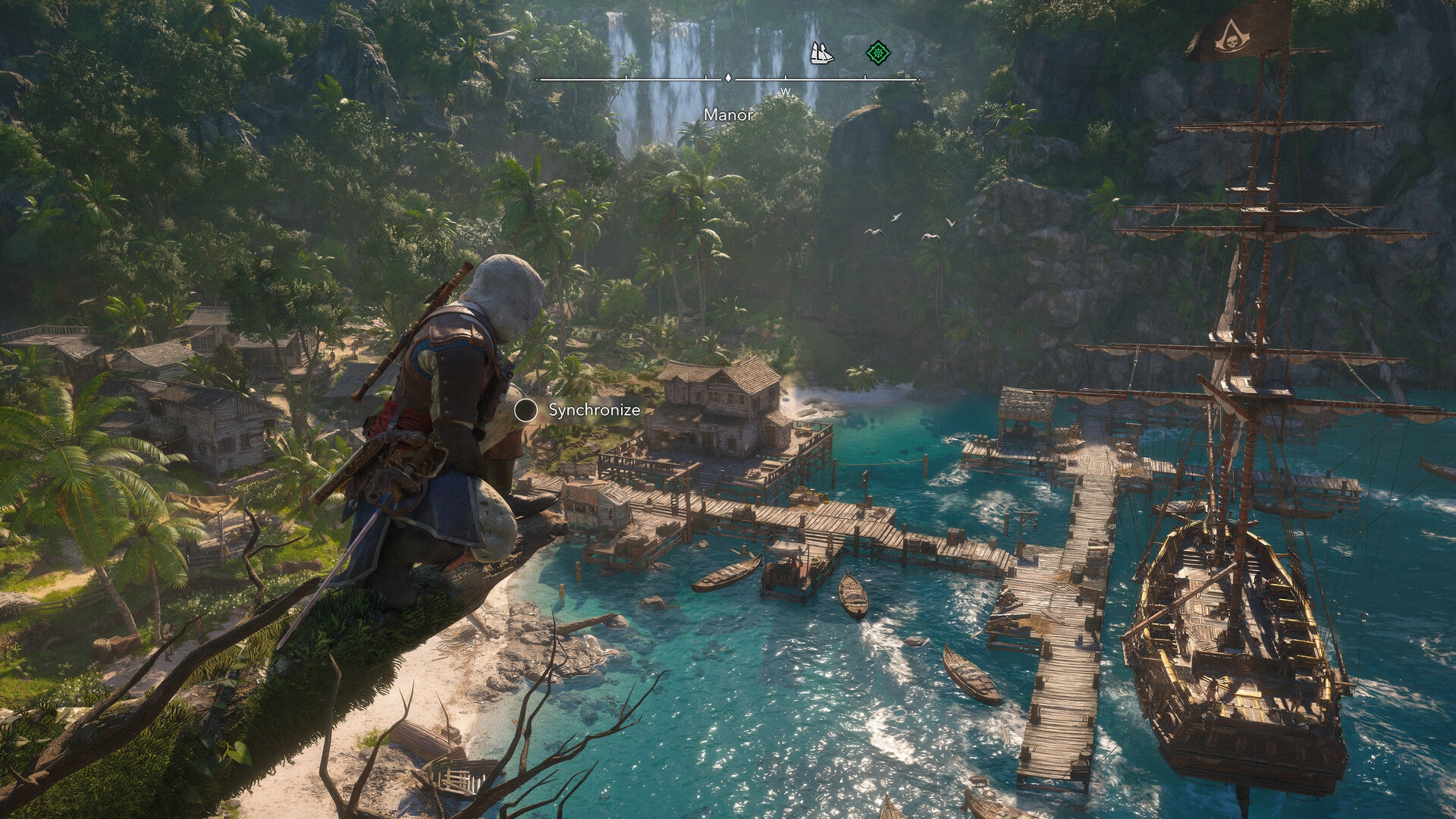
Resynced’s solution to the effect these interludes had on the pacing of the game is to get rid of them. They’re gone. The Abstergo story exists instead as data entries that you pick up as icons in the world and then read in a menu. And, weirdly, as a set of limited-time missions which reward you with in-game currency that you can use to buy outfits and sails for your ship and suchlike. Way to nail the whole corporate greed angle, Resynced. Very meta.
Advertisement - Page continues below
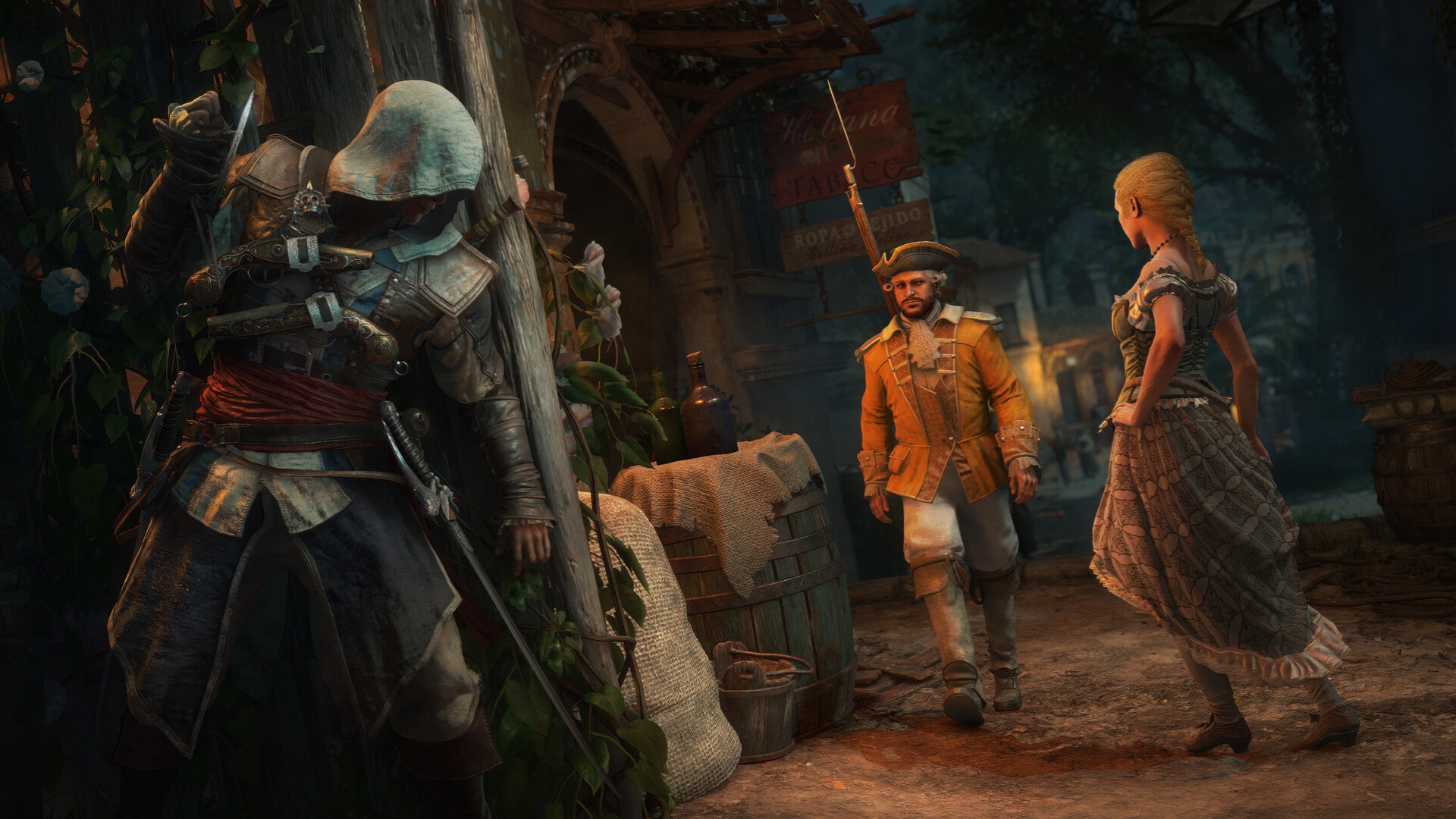
The same goes for the infamous tailing missions that had you tracking your target at a distance for ages before swooping down to assassinate them. It wasn’t the concept of these missions that was flawed before, but the execution. The stealth mechanics felt inconsistent and didn’t allow you much experimentation, and that meant you felt like you were actually just playing a scripted sequence very slowly with no agency.
They’re gone too in this remake, replaced by… well, nothing actually. Nobody’s out with the candles giving a teary vigil for these missions, but it might have been more interesting to see them revisited with updated mechanics – remade, if you will – rather than simply sent to the recycling bin.
However, as route one as such creative decisions are, they do pay off rather well. Because the bits this remake has trimmed away give you much more space to do all the fun bits about being a pirate. And that was the point all along.
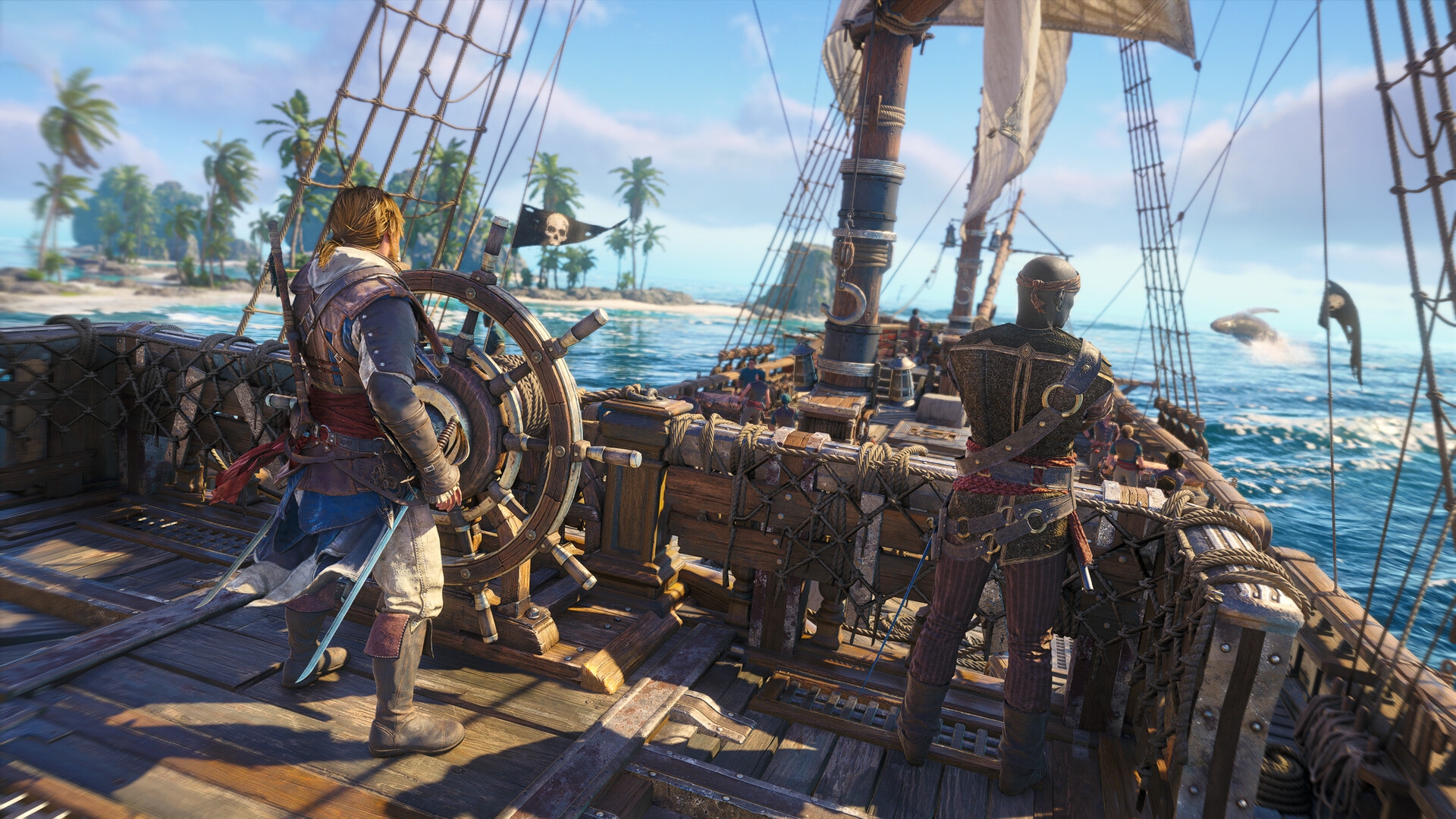
Setting sail in your trusty ship the Jackdaw and navigating the sizeable open world puts a feeling of freedom and adventure right in your heart, not just because the seas look that bit more dramatic, or the ship looks more detailed. It’s also the veritable jukebox of sea shanties that your crew sings on your command. These journeys between missions give you much needed downtime to soak in the Caribbean atmosphere and ponder your piratical existence.
Top Gear
Newsletter
Get all the latest news, reviews and exclusives, direct to your inbox.
The missions, too, have a swashbuckling feeling of player agency. You’ve got quite a few attack types in your arsenal in this reworked combat system, and whichever one you deploy, you feel a bit like Errol Flynn in a Hollywood classic, dancing your way around Spanish soldiers while preposterously outnumbered.
There’s a great degree of variety to them. Some take on an Uncharted dimension and have you clambering around ancient ruins and solving puzzles. More often you’re turning up somewhere to ‘liberate’ treasure or resources, marking enemies in the area and then going into the fight in the manner of your choosing. The narrative ticks along with an impressive number of levels – there’s Edward’s love back home, the templar plot he’s stumbled upon and is now trying to foil, the lives of his crewmates (expanded in Resynced via new missions that tell their origin stories) and the expansion of his own pirate empire, including a private island and a fleet of vessels he can send on missions without him.
That’s a lot of piracy, then. It may not be the most thoughtful way to update the game for 2026, but in the end it’s still a great success, and it’s testament to what a great game this was in the first place. Just don’t get ideas about remaking the whole franchise like this, Ubisoft – Assassin's Creed III does not warrant such attention.

Trending this week
- Car Review
Tesla Model Y
- Car Review
Renault 4