


USA
Top Gear
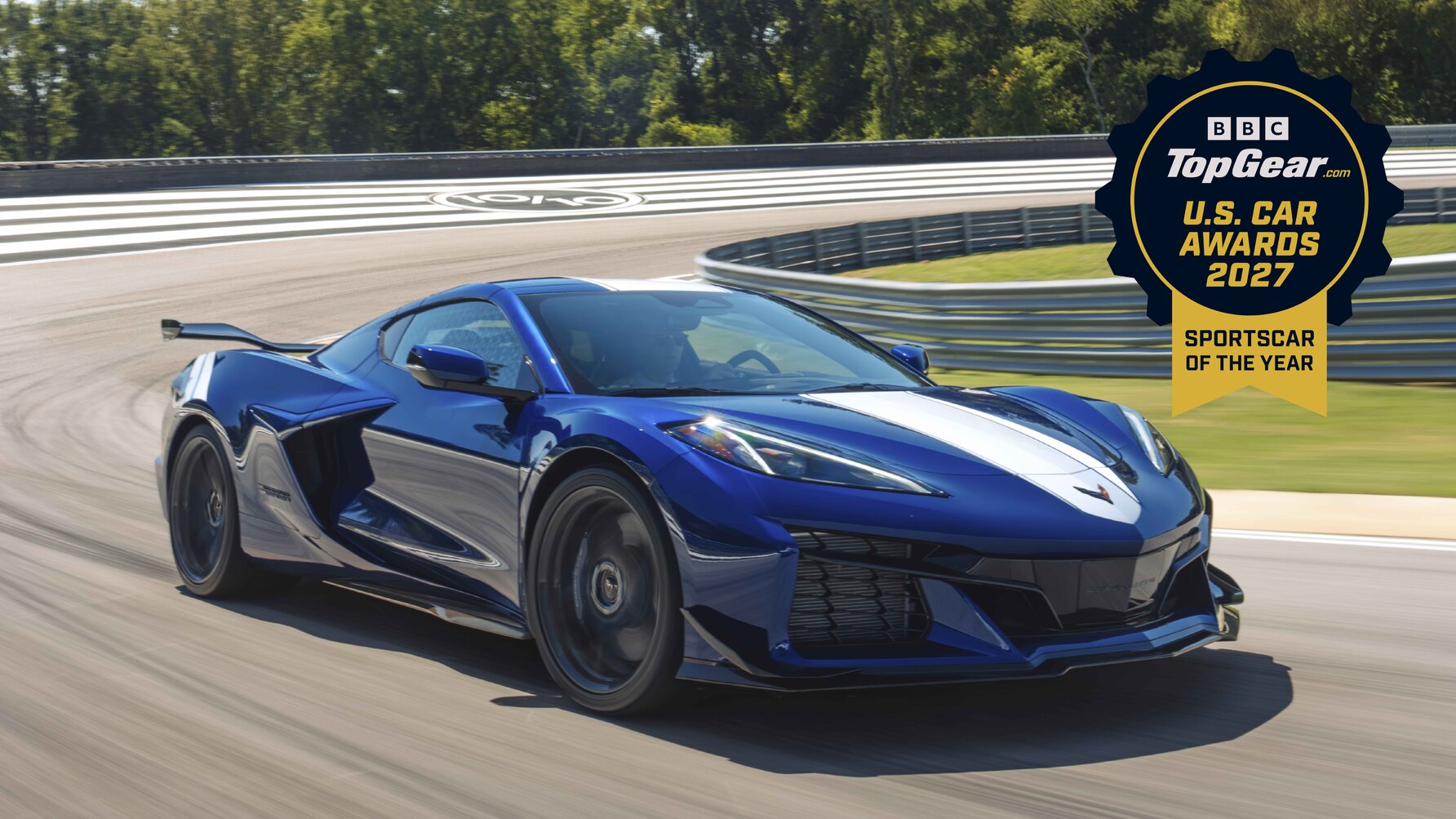
US Sports Car of the Year goes to… the budget-friendly Corvette
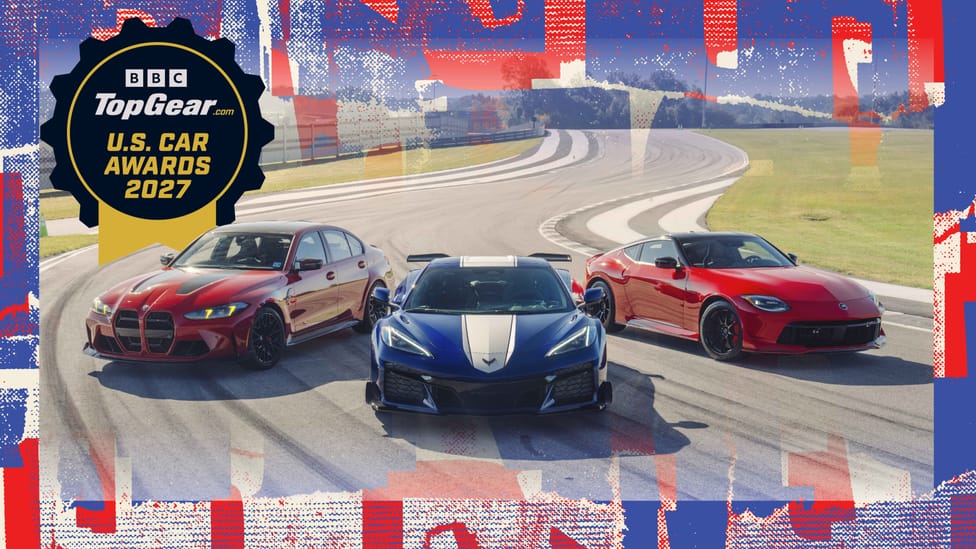
It’s Nissan Z Nismo vs BMW M3 manual vs Corvette Grand Sport... the definition of sports car has never been so varied
What a mess. The Nissan Z Nismo is a turbocharged, front-engined manual sports coupe. The Corvette Grand Sport is a naturally aspirated paddleshift mid-engined targa supercar. And the BMW M3 CS Handschalter is a twin-turbo stick-shift four-door saloon. That’s stretching the definition of ‘sports car’, isn’t it?
What knits these three together isn’t their silhouette, price, or even how quick they are. It’s their role – the noble art of making a driver’s day. A car you might well take out for a drive for the sheer heck of it – remember those? If cars like this don’t nag you to set an early alarm for a Sunday morning and head for the hills, they’ve failed.
Advertisement - Page continues below
So that’s what we’re looking for here – that egg-you-on factor that turns a fast car into a fun one. Obviously, the Nissan is by far the most affordable – at $67,000 it’s tens of thousands of dollars less than the other two. The $86k Corvette is the most powerful, the fastest, the most obviously exotic. And the $107k BMW is besides being the priciest, the most practical, with its rear seats and spacious 480-litre boot.
Photography: Mark Riccioni
Nissan Z Nismo
I’m drawn straight to the Zee / Zed precisely because it’s the archetypal sports car, a shape we’re utterly staved of in Europe. We no longer get the Toyota GR86 or Supra on this side of The Pond, and the Jaguar F-Type and BMW Z4 are dead. So this is a tonic. A pert, small, classically correct sports coupe. The Nismo looks absolutely terrific, characterful in the face, riding on surprisingly chunky tyres with just the right dollop of retro chutzpah about its rear.
Then I drop inside and it’s the wrong kind of retro throwback. Dearie me, is this the single most dated car interior on sale today? I might be Top Gear’s card-carrying touchscreen-phobe and an unashamed lover of buttons, but the Zed’s interior is a truly grim collection of future microplastics and cheap switchgear. Everything from the ringlet door handles to the armrest cubby and even the steering wheel controls has a ‘that’ll do’ feel.
Advertisement - Page continues below
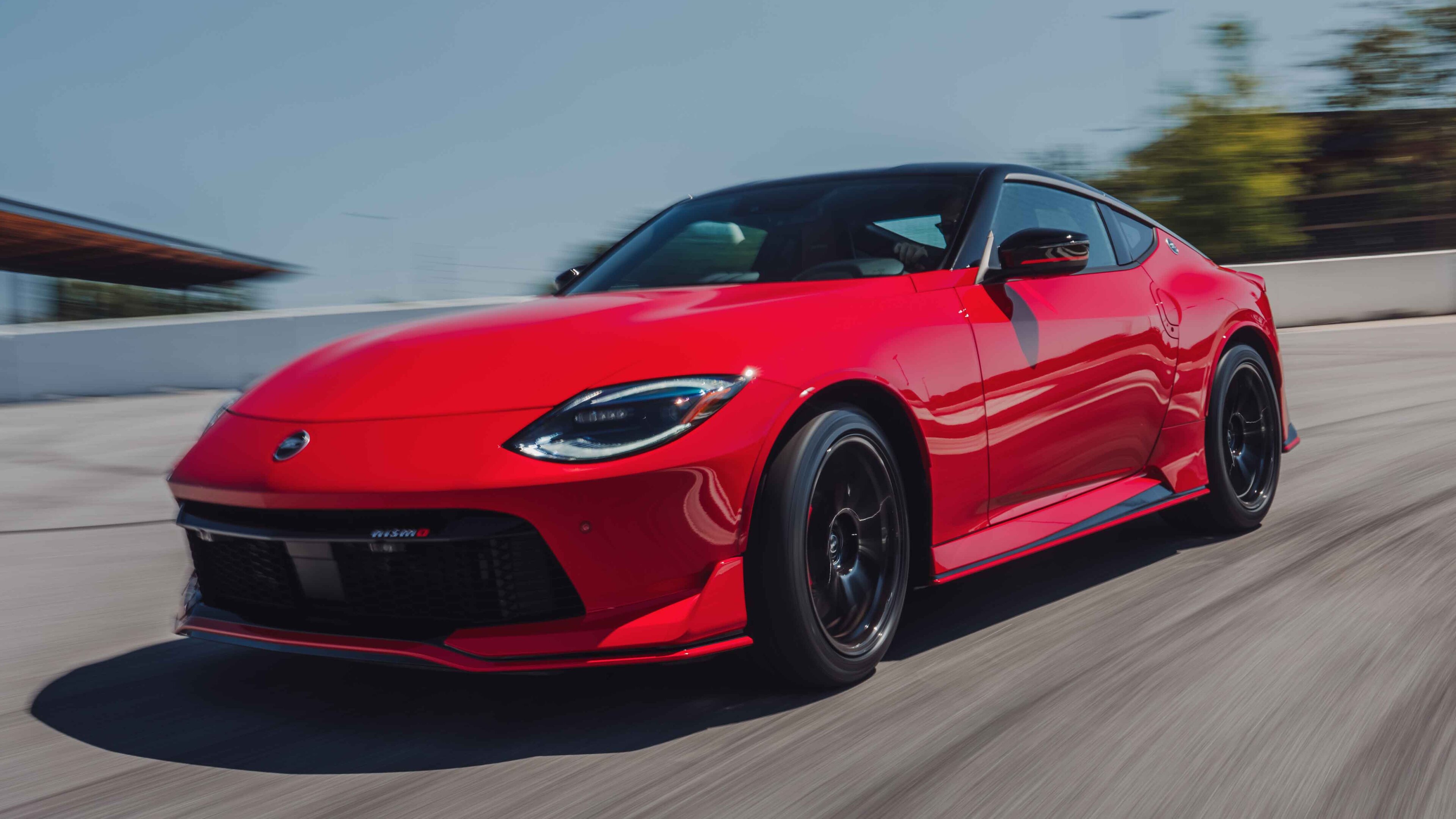
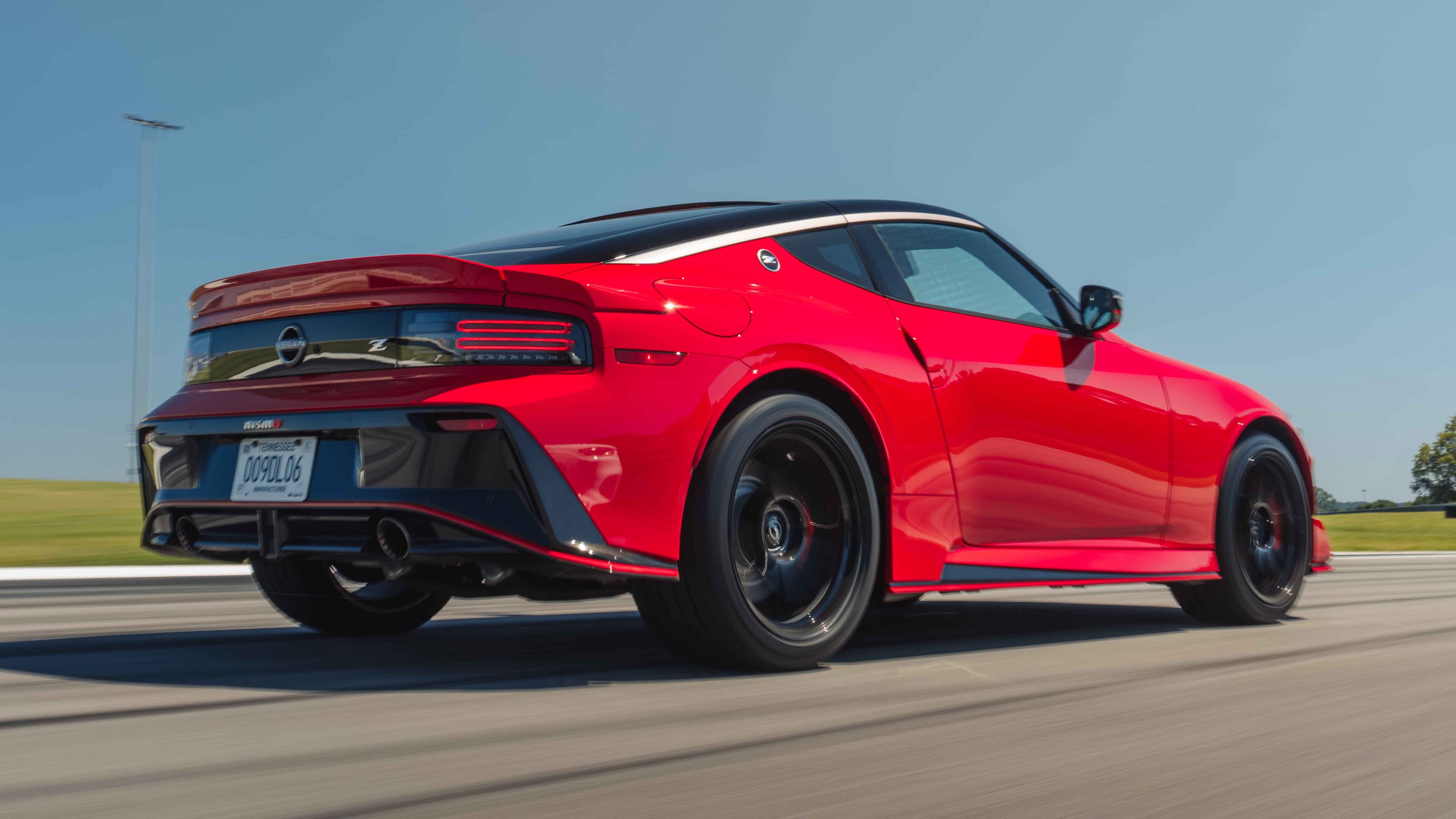
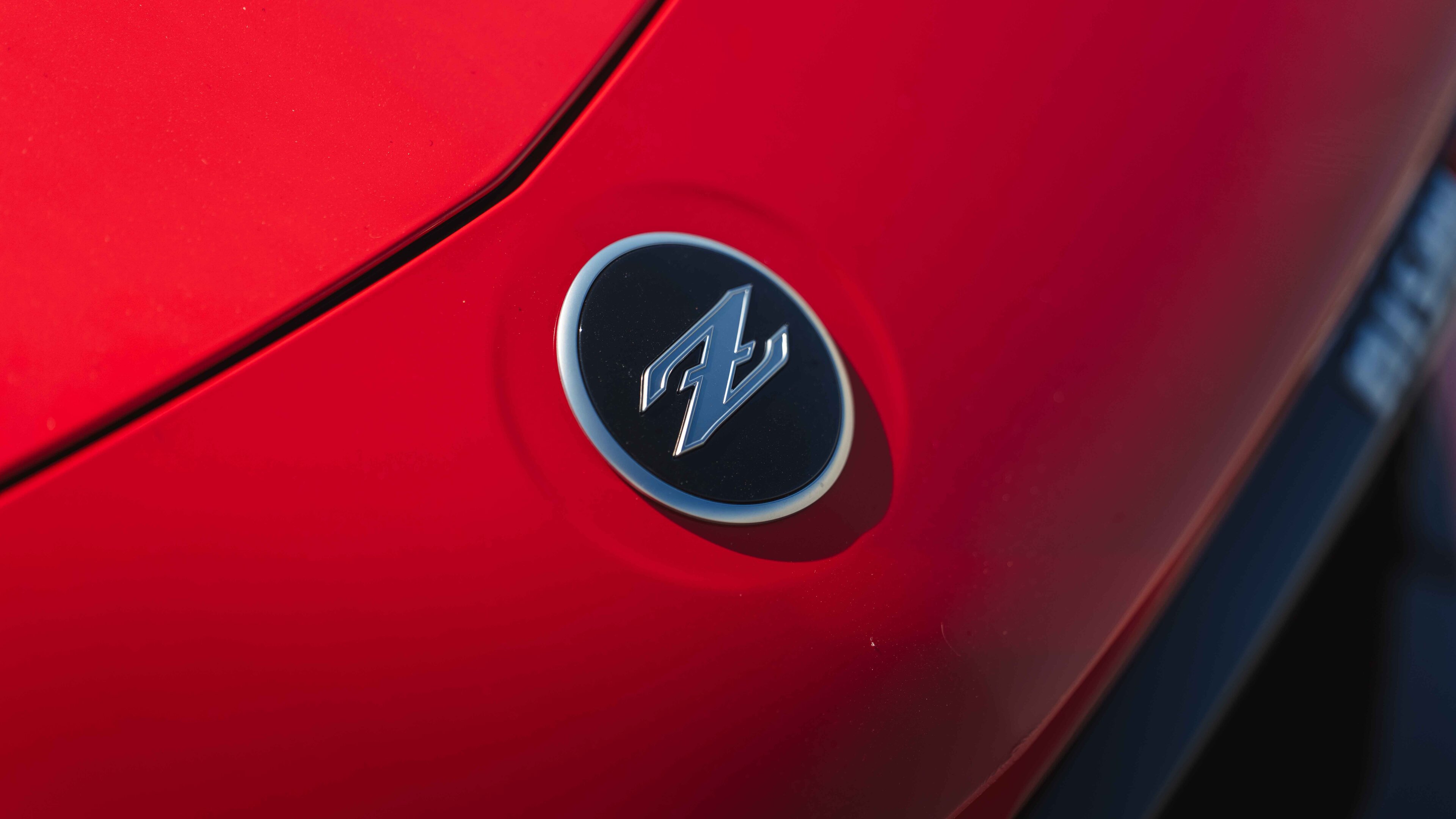
I console myself that it’s so far, so Zed – the 350 and 370 also looked cool and were utterly disposable inside. This time the barrel-chested V6 is twin-turbocharged and to the delight of diehard Zed fans, it’s finally available with a manual gearbox. For the keen novice, there’s even an auto-blip rev-match gadget to smooth out My First Heel-and-Toe downchanges. Foolproof.
On the road – and on the racetrack – that’s the Z’s personality. It’s bowling with the guardrails raised, wrestling in a novelty sumo suit. Yes, there’s turbo lag but the V6’s deep reserves of torque mean it’ll haul in any gear and still accelerate lustily. The grip on offer from the Dunlop SP Sport Max tyres is phenomenal, so it’ll tolerate all sorts of lift-off-throttle bad behaviour and never bite.
The upgraded brakes are well up to the task of arresting the Zed’s 3,624lb mass and even with the traction control switched all the way off, it’s like Tom Cruise in a prickly interview, smiling, unflinching, refusing to lose that winning composure. So as an entry-level sports car, the Z works, but that also means it lacks star quality. The noise is a bit flat, the all-important manual shift quality we’ve waited so long for doesn’t offer true mechanical precision and frankly, where’s the ‘Nismoness’? In isolation, this car’s character is normcore base model, not a range-topping love letter to the art of sports cars.
Looking for more from the USA?
Top Gear
Newsletter
Get all the latest news, reviews and exclusives, direct to your inbox.
BMW M3 CS Handschalter
At first the BMW appears to be the purist’s dream. Wilkommen to der Handschalter, a typically literal German tribute to ‘hand shifting’. Yes, it’s an M3 CS – the lighter, angrier version of the benchmark super saloon – with a six-speed manual as standard. And it’s a poignant moment too – because this M3 is on the way out. BMW has already revealed the new ‘Neue Klasse’ 3 Series, the i3 EV and a concept car showing what the electric M3 will look like. So ol’ big-nose here is ready for retirement.
It certainly doesn’t feel like a car waiting to be pensioned off. Not in the cabin, which is lavished with slabs of glossy carbon fibre and adorned with BMW’s most supportive bucket seats. Not in the sheer configurability – you can still choose from three engine maps, two levels of brake response, three suspension settings and ten stages of traction control. If you can’t find a set-up you’re happy with in the M3, you’re the problem, not the car.
Much of the M3 CS is like getting reacquainted with an old friend – the meaty steering which fires the car toward an apex but never feels computer-game overreactive. The bassy snarl of the 3.0-litre twin-turbo straight six. The stiffness of the shell, the way this quite large 3 Series (which occupies the same footprint as the old E39 M5) sheds its size once it’s underway.
But there are also confounding qualities about the M3 CS Handschalter. The first thing is that it’s a watered-down CS. Yes, it sheds 34kg thanks to forged wheels, carbon trim, a titanium exhaust backbox and token nonsense like deleting the armrest. But to enjoy the full diet, you need to spec ceramic brakes, which are a pricey option. You also lose power – to allow for the stick shift, BMW’s turned power down from 542bhp to 467bhp.
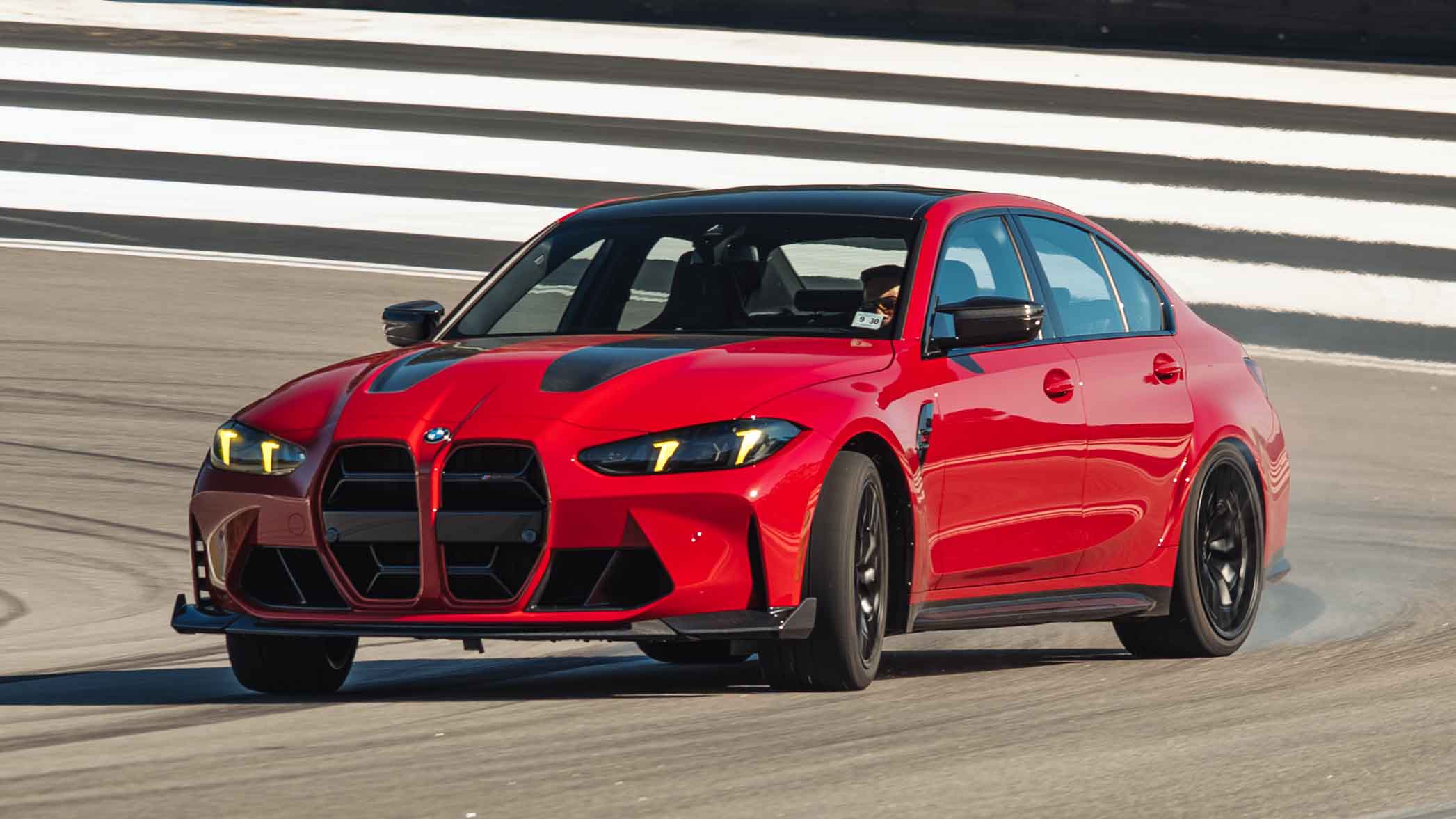
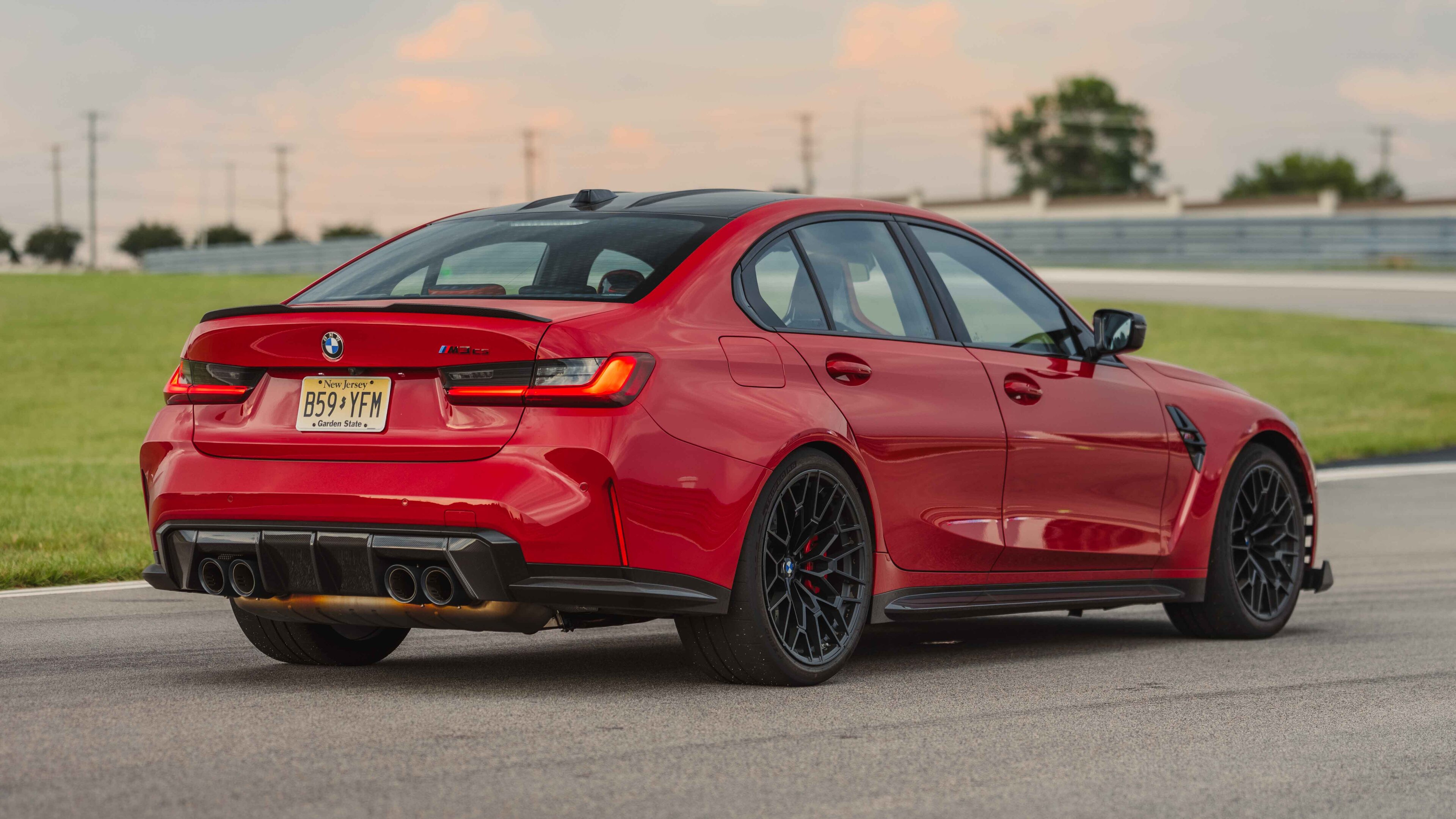
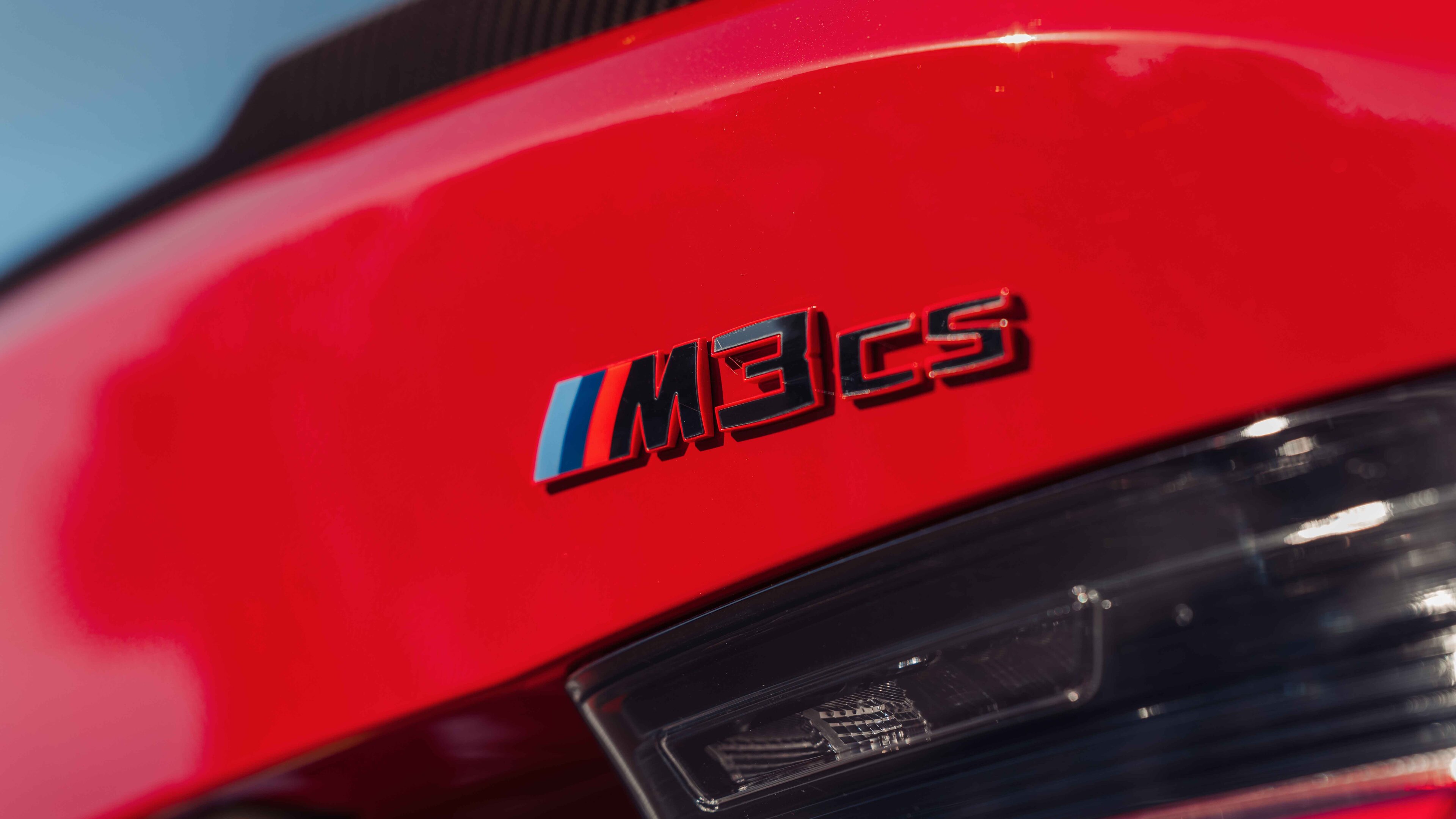
Now, 467 horsepower is still a big hit in a street car (even one which weighs over 1.7 tonnes) but 75 horses? Ouch. Sure, the price drops from $118k to $107k before options. But it almost feels like BMW is trying to make a buck out of what used to be the base M3 – least power, manual gearbox.
The other issue is the gearbox itself. It’s fine, but BMW has never made truly great gearshifts. Not compared to Porsche, or Honda. They’re fair-to-middling. If you want to delight in the mechanical joy of shifting cogs yourself, this one’s a bit rubbery. Like the Z, there’s an auto-blip function which doesn’t mind if you override it.
The best thing about the manual CS isn’t the gearshift itself, but the way it changes how you drive the M3. You’re more aware of turbo lag delays as the straight six swallows another lungful. You appreciate the deep reserves of torque. It’s a great package – a real sweet spot M3. It just feels a bit cheeky. Not that that’s stopped the entire limited run selling out. If you want a manual M3 – and who can blame you – you’re now limited to the regular, entry-level $80k base model. Get one while you still can.
So the Z is likeable but lacks ultimate edge and has an interior from the Nineties. The BMW is a welcome throwback but slightly cynical, and you have to concentrate extremely hard to notice the CS factor. And, we shouldn’t forget, it remains facially challenged – though American spec with no front numberplate is a blessing for the bucktooth.
Winner: Chevrolet Corvette Grand Sport
That leaves us with the Corvette Grand Sport. Normally, these come along late in a Corvette’s life cycle and sprinkle on a touch of racetrack ability on an ageing platform. But the C8’s Grand Sport moment has arrived immediately after the car’s had a facelift.
Gone is the nonsensical great wall of buttons inside. Gone is the old 6.2-litre pushrod V8. In comes a new V8 – all 6.7 litres of it – without a turbocharger or hybrid boost in sight. Unless you spec the Grand Sport X hybrid, which replaces the old ‘Vette e-Ray…
Now if you were being uncharitable you might argue that this ‘sweet spot’ treatment is no longer necessary in the Corvette line-up, which is on the sort of generational run that makes Robert Pattinson’s recent filmography look like a library of stinkers.
The mid-engined Corvette can’t miss: the standard Stingray is a bargain, the Z06 is inspired by Ferrari’s GOAT – the 458 Italia – and the ZR1 and ZR1X serve up four-figure horsepower and supersized slices of American hypercar performance for less money than Ferrari or Lamborghini can nail together a bog-standard supercar.
So where does that leave the Grand Sport? At $86,000 base, it’ll cost you $15k more than a base Stringray with the same new engine, but a chunky $35k less than the Z06. Except it won’t, because the Corvette begs to be optioned. Our test car enjoyed goodies like the Z52 Track Pack, adding the attractive central quad-exit pipes, ceramic brakes, and semi-slick tyres which a British policeman would lock you up for a thousand years for pointing in the direction of a public road.
With carbon wheels added, bucket seats and even extra outlay on the classic Grand Sport combo of Admiral Blue with a central stripe, the total price added up to $131,135. But we suspect you could get away with spending a whole lot less and still enjoying the heck out of the Grand Sport experience.
Why? Because the fundamentals are terrific. Central, quite literally, to its appeal is the hugely characterful engine, which is torquey and tractable but feels like it’d happily rev higher than its 6,600rpm redline. Perhaps it’s been deliberately nerfed to stop it encroaching on the zingy Z06.
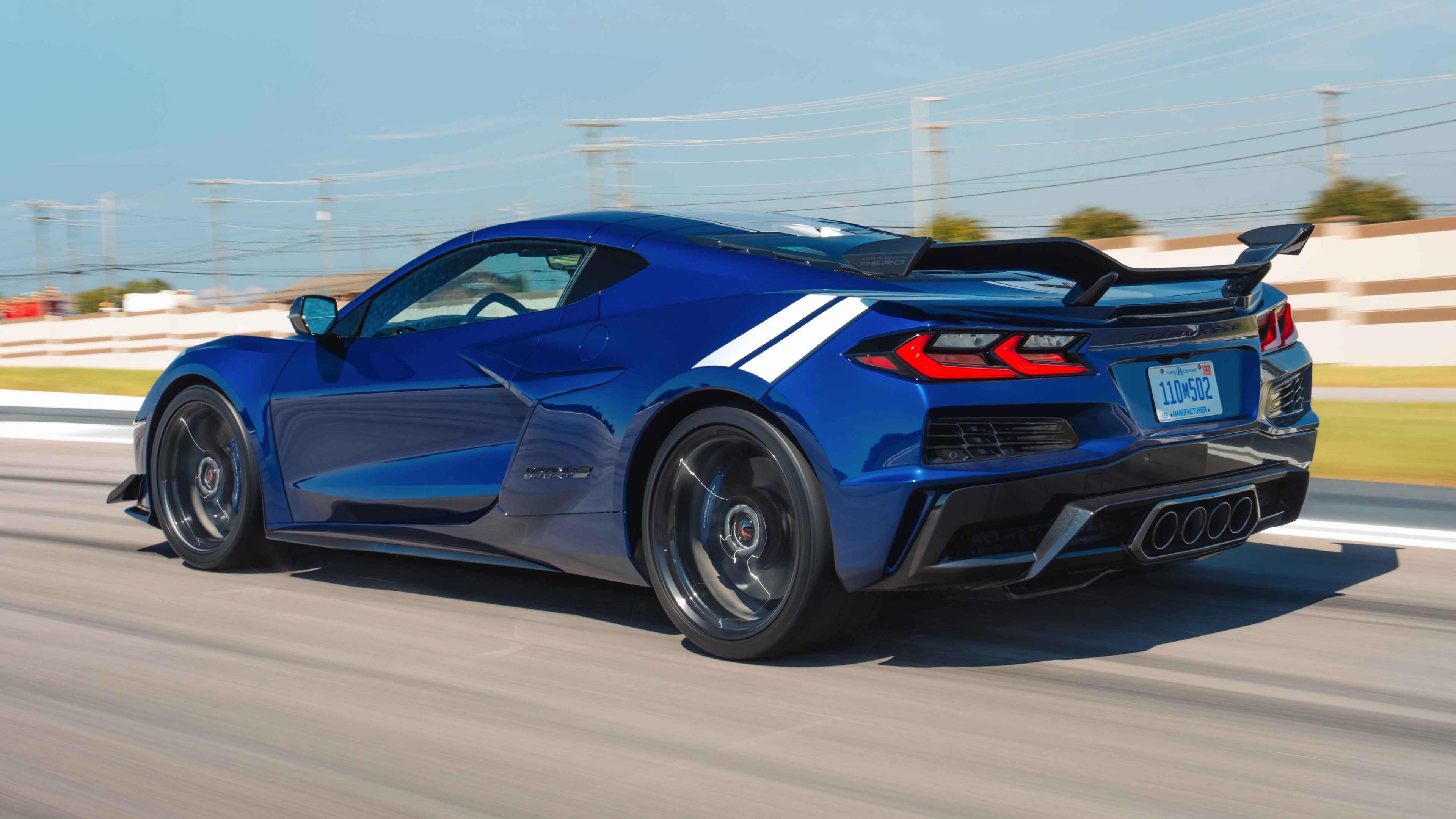
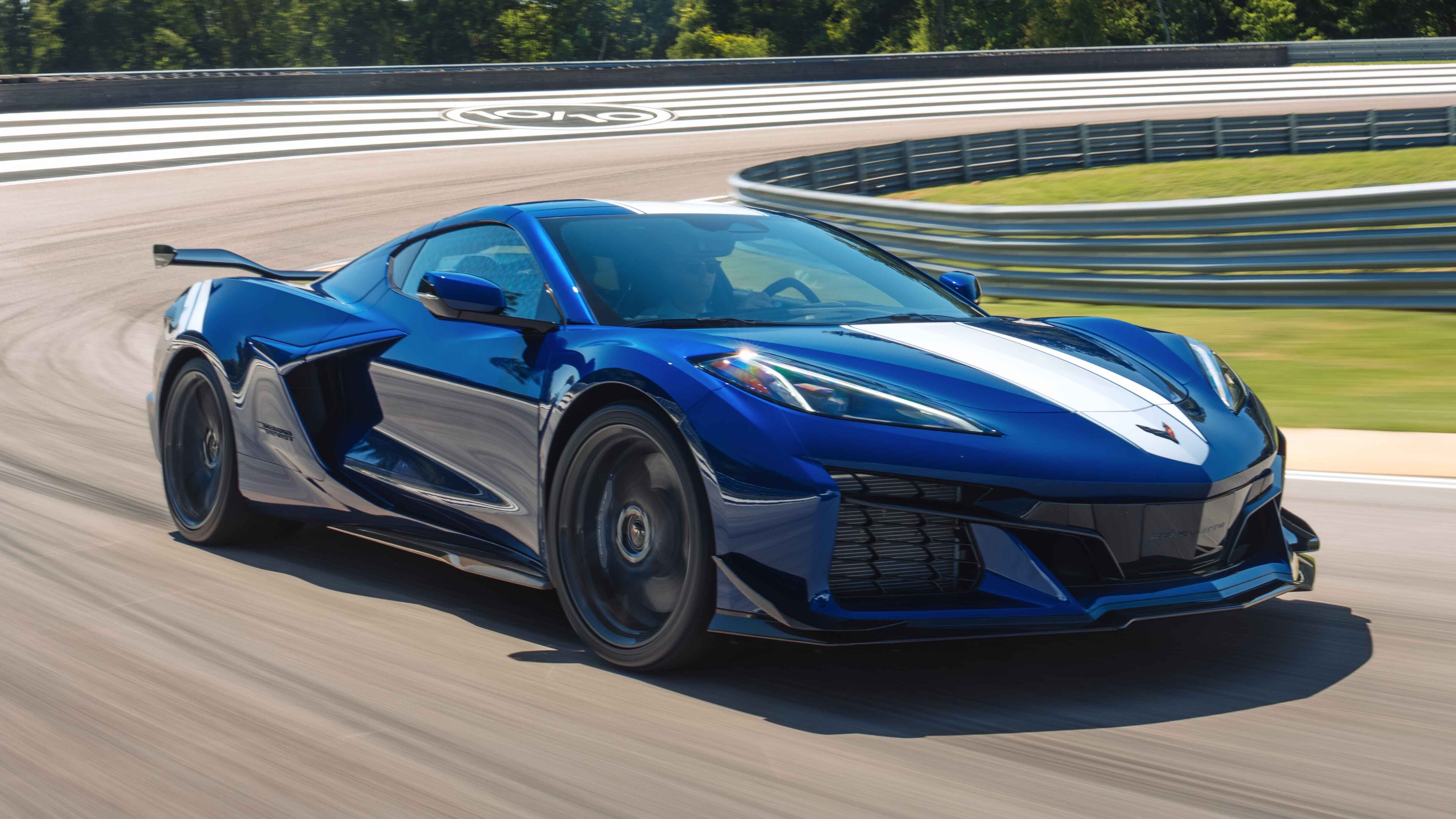
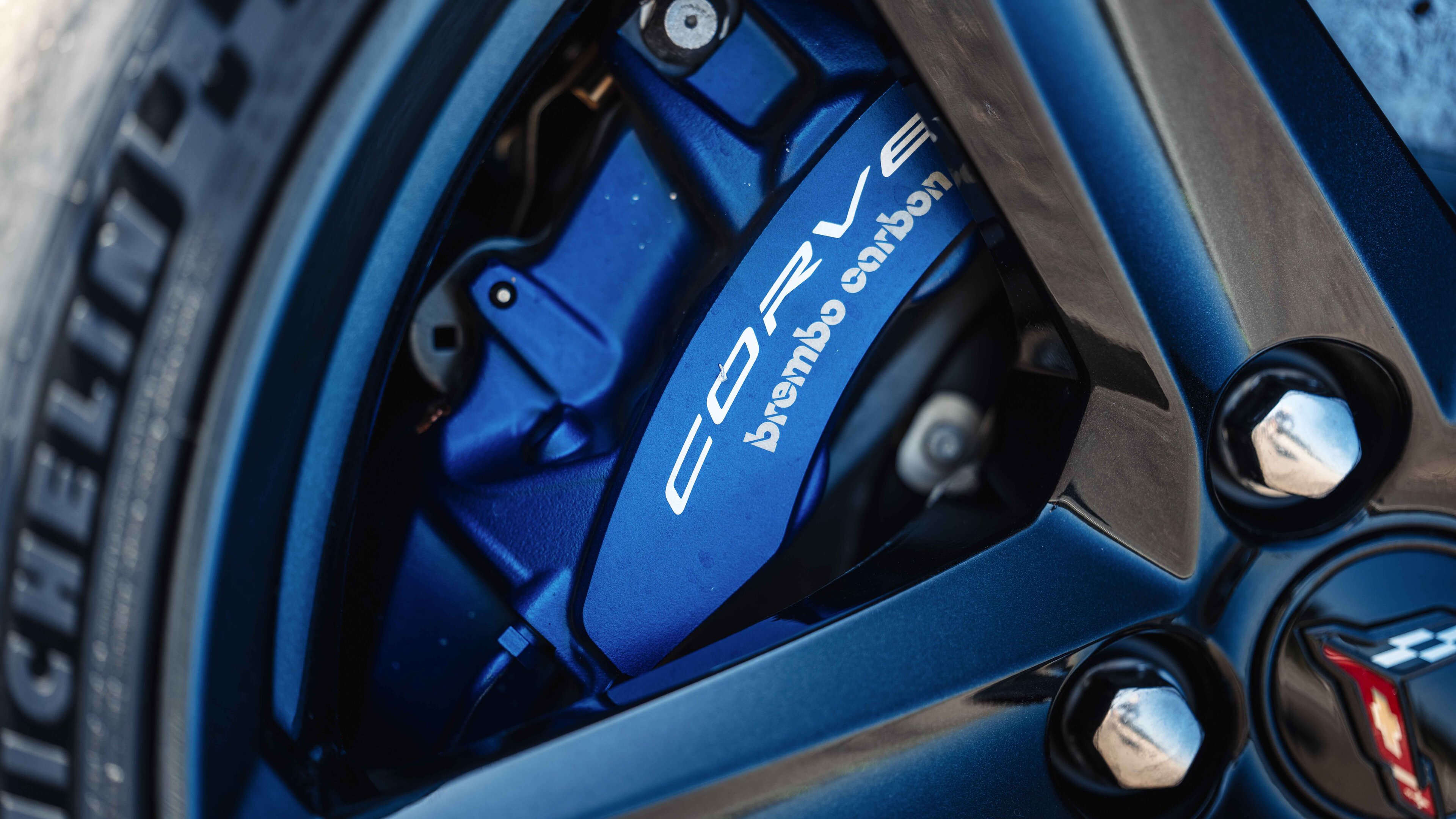
What can’t be denied is the noise – a sonorous, big-hearted burble that envelops the cabin in stereo. It’s a much more appealing, more American soundtrack than the flat-plane crank Corvettes and unsullied by turbos, it’s a tonic. Is there a better sounding series production supercar than this? Now Ferrari, Lamborghini, McLaren, Aston Martin and Maserati have given into turbos, they’ve lost this crispness, this rawness, this vim and vigour. Truly, the engine is life-affirming.
Many American cars have seduced with throaty motors, though. What makes the Grand Sport so special is that it keeps on delivering in other departments. The eight-speed twin-clutch gearbox is terrific, speedy on upshifts and only denying the occasional downshift on track. Left in auto it’s luxury car smooth and the metal paddles feel expensive on your fingertips.
On the street the Grand Sport is docile and perfectly dailyable. It cruises on the motorway without making your ears bleed once. No, the steering isn’t Porsche-textured in feel and we’d like even the optional bucket seats to drop maybe an inch lower. The overkill driving mode proliferation with their many configuration permutations could be simplified, but frankly I was satisfied with customising the steering wheel-shortcut Z-mode with angry engine, comfy suspension and leaving well alone.
As a track car, the Grand Sport is hugely grippy and encouragingly playful. As a street car it feels special enough to be exciting but useable enough to not wear you down. Instead of feeling overawed by its more exotic Corvette stablemates, it’s found a terrific niche in a talented range. And at a price $40,000 less than a base Porsche 911 Carrera – for GT3-sized wallop – you can’t argue with the value. I like a Porsche 911, but I love a bargain.
Right around the time so many (European) fast cars are suffering a tech-obsessed identity crisis, the Corvette GS has nailed the entry level supercar recipe. It’s not just good for a Corvette, or for an American car. It’s good for a supercar, full stop. Or ‘period’, as the winner would say.
Trending this week
- Car Review
Hyundai Ioniq 3