

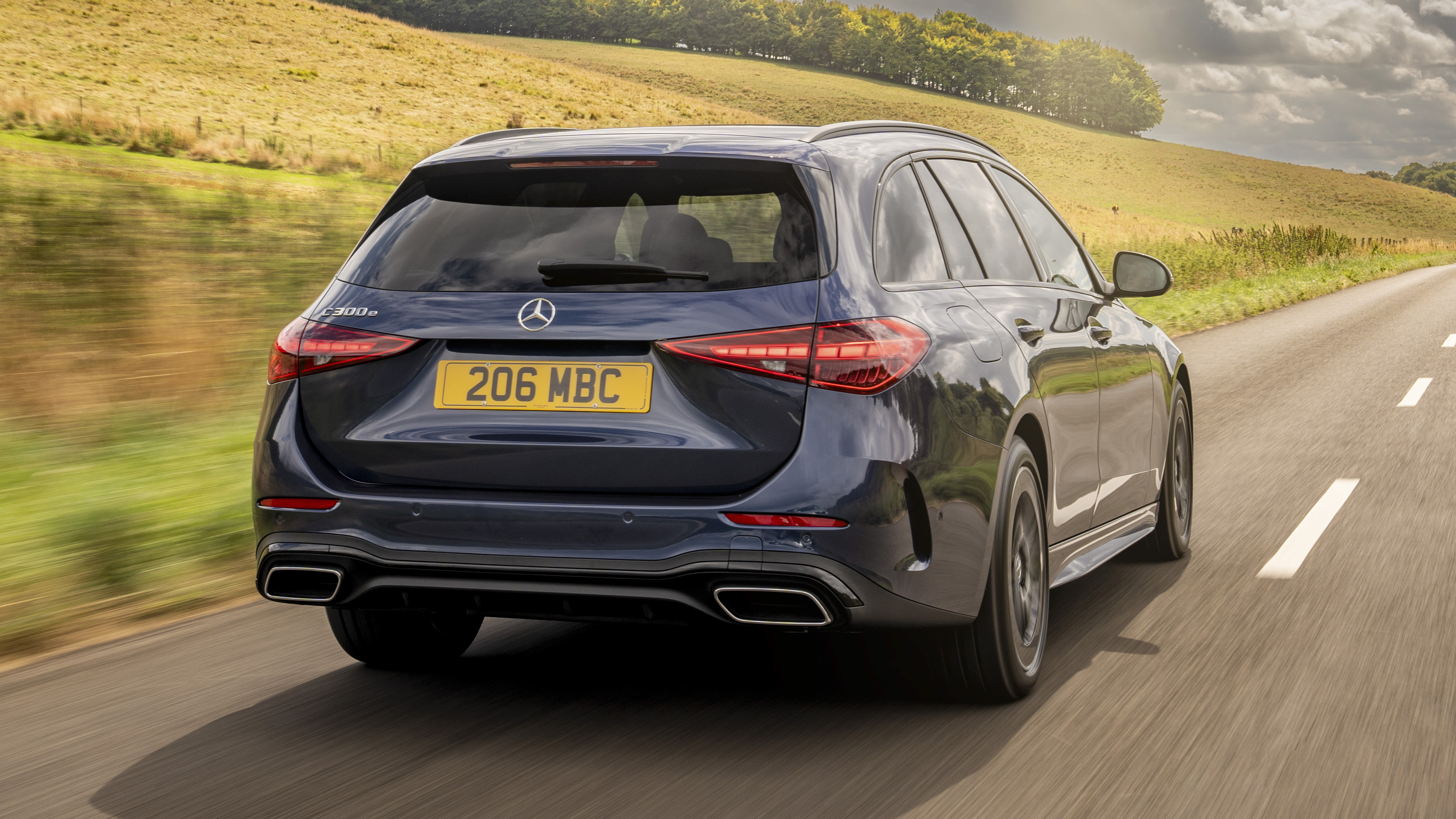
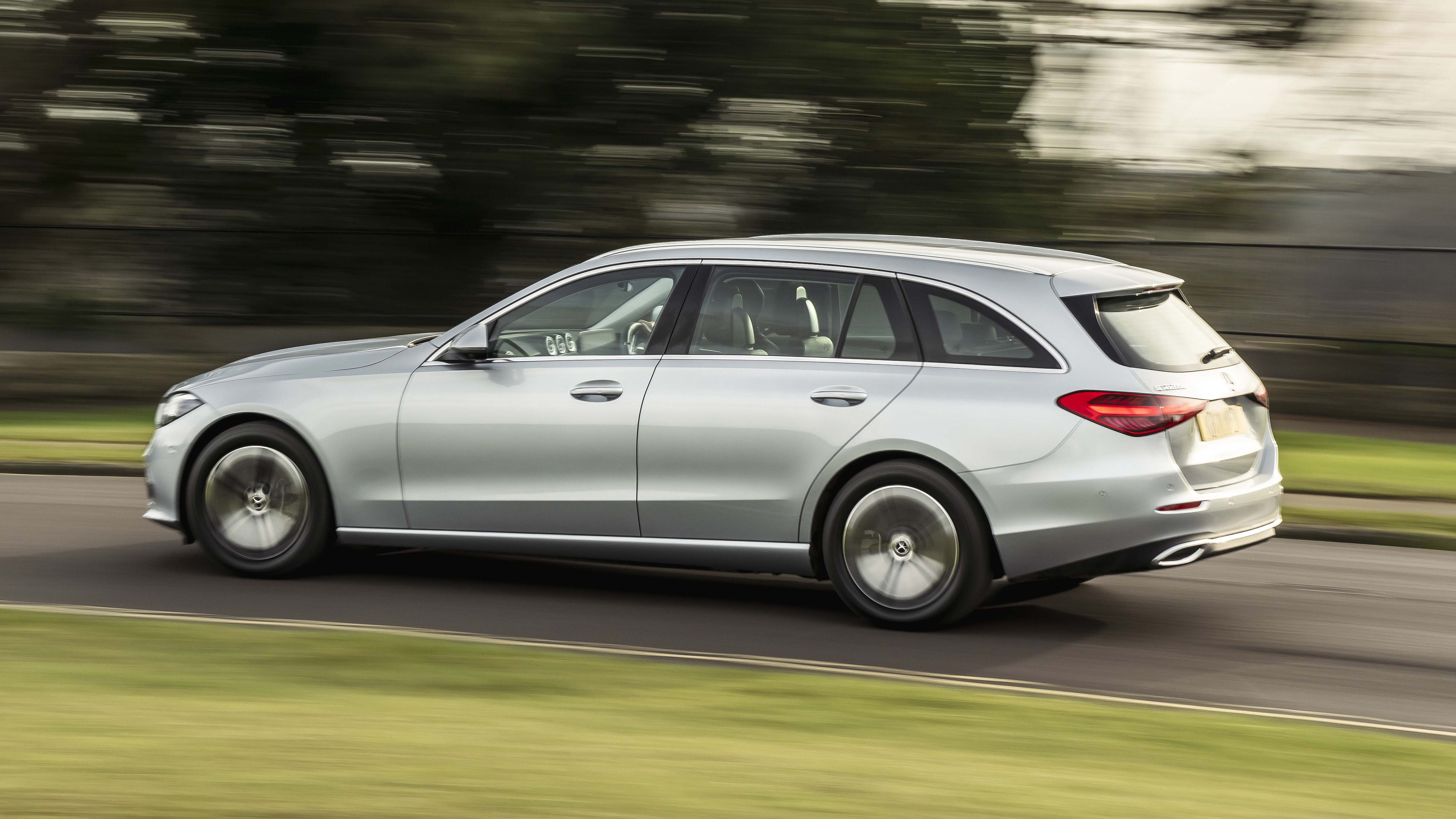
MERCEDES-BENZ
C300d AMG Line 5dr 9G-Tronic
£50,685
As relaxing as they come, loaded with tech, great diesel engine
Not the most rewarding to drive, boot hump in the PHEV is laughable
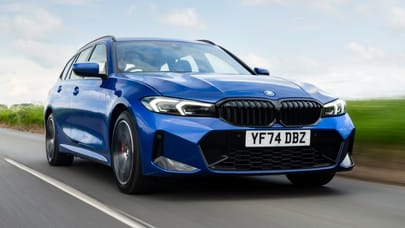
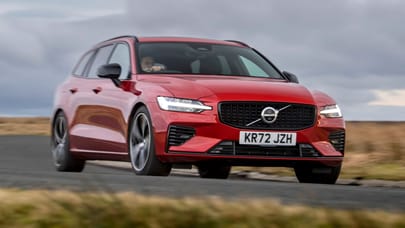
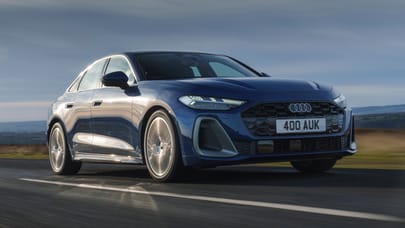
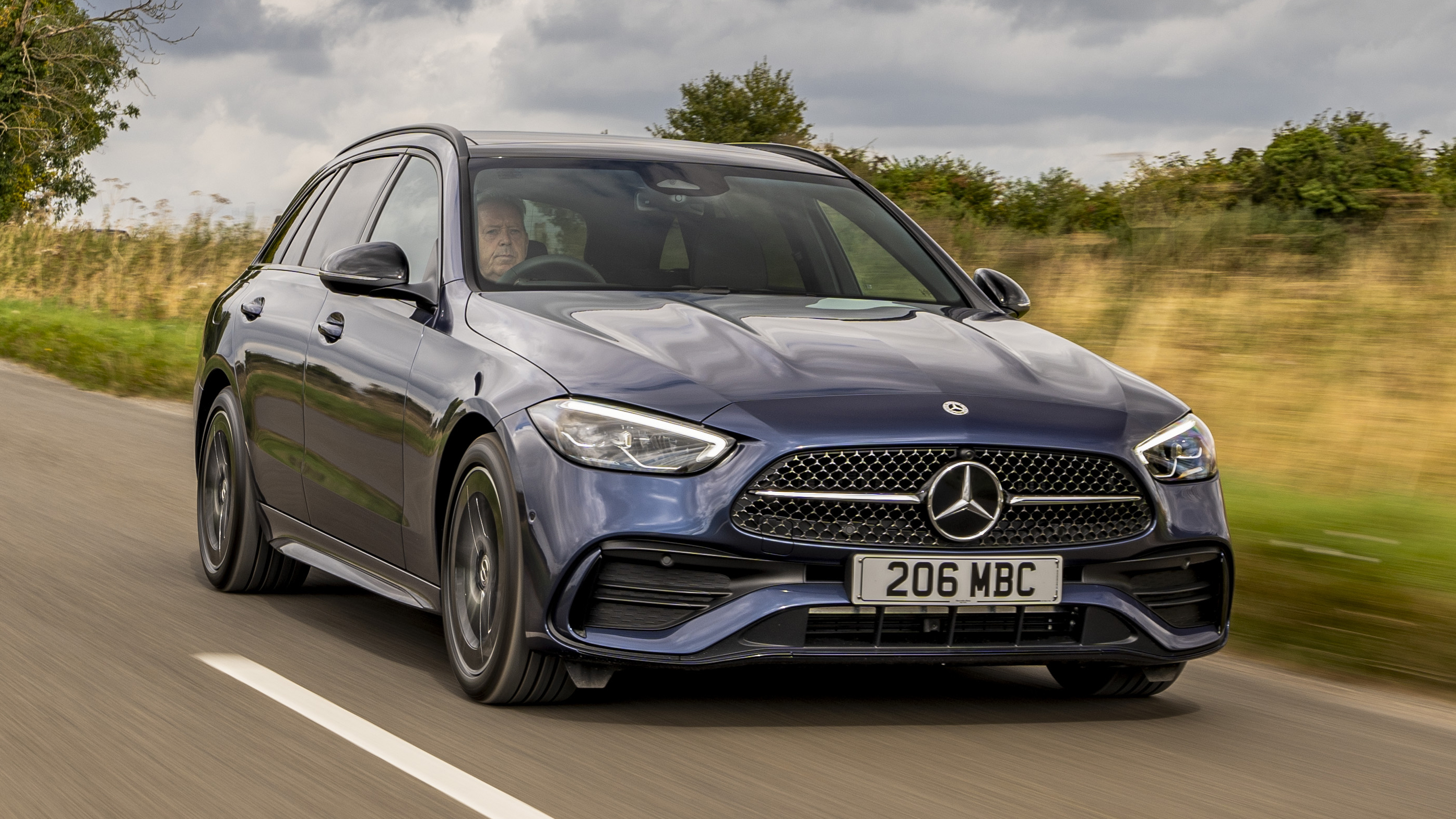
The Mercedes-Benz C-Class Estate doesn’t take much explaining – it’s a small, ‘premium’ wagon aimed squarely at the likes of the Audi A5 Avant and BMW 3 Series Touring, and to a lesser extent the Skoda Superb Estate, Volvo V60 and VW Passat.
Based on a heavily reworked version of the outgoing car’s rear-drive platform, inside it borrows much tech (and most of its design) from the current-gen S-Class. Other headlines include electrified combustion engines including a plug-in hybrid promising nearly 70 miles of e-running. And, predictably, more space than its predecessor.
Your conventional options consist of 1.5- and 2.0-litre petrols, and two 2.0-litre diesels – respectively the C200, C300, C220d and C300d. All are rear-wheel drive (4Matic all-wheel drive is an option elsewhere in the world), have a nine-speed automatic gearbox and benefit from a 48-volt mild-hybrid system that’s supposed to make them more responsive and efficient.
Above those you’ve got the choice of petrol or diesel plug-in hybrids - why is it only Mercedes who does those? Called the C300e and C300de, both combine a 2.0-litre engine with a 127bhp electric motor and 19.5kWh battery for just shy of 70 miles claimed electric running.
One up from that is the AMG C43, a four-cylinder mild hybrid but with AWD and 416bhp. Top of the tree is the C63, which Merc claims to be the world’s most powerful production four cylinder (with 469bhp) paired with an electric motor for peak outputs of 671bhp and 752lb ft. There’s enough going on there to warrant its own review, which you can read by clicking these blue words.
A lot – the C-Class Estate is physically bigger than its predecessor in every way bar height, so it’s more spacious inside. You get 490 litres of space with the rear seats upright or 1,510 litres (360/1,375 litres in the PHEVs) with them folded.
That’s more than an Audi A5 Avant, about the same as a BMW 3 Series Touring, but less than a Volvo V60. The rear seats fold 40/20/40 via toggle switches in the boot, and Merc says the boot lip is now lower to make loading and unloading easier.
Well enough. Sure, it’s not as capable as a 3 Series Touring or as assured an A5 Avant, but it's clearly set up to prioritise comfort. It’s a smooth, confident, capable car to drive – a bit woolly when pushed, but good at the stuff that actually matters in this class. Your family will like it.
Worth noting that all the mild hybrids in the UK come in some variation of AMG Line trim with sports suspension that’s 15mm lower than standard (we don’t get the adaptive dampers of our European counterparts). The plug-in hybrids get a comfort suspension setup, but weighing in at 2.2 tonnes they need it.
Prices kick off at £47,295 for the petrol mild hybrid, and steadily tick upwards (and then violently escalate) towards the C63 for £102k. Yikes. Click on the Buying tab of this review for a full summary on prices.
The C-Class Estate is around five grand more than a BMW 3 Series Touring like-for-like, and three ish grand dearer than an Audi A5 Avant. A Skoda Superb Estate is a budget option, cheaper to the tune of £10k.
The C-Class Estate makes a fairly good impression with its S-Class grade tech and comfy cabin. It also handles well, rides reasonably tidily, and scores highly on practicality too – it’s more spacious than its predecessor, and about as big as its main rivals (though if space is a concern, more is available elsewhere).
On the flipside, it’s not the most rewarding to drive, there’s some questionable material quality in the cabin and the boot hump in the PHEV is ridiculous. It’s an appealing option for the e-range and BiK rate, but otherwise the more conventional 2.0-litre diesel suits the car’s character much better.
Thank you for subscribing to our newsletter. Look out for your regular round-up of news, reviews and offers in your inbox.
Get all the latest news, reviews and exclusives, direct to your inbox.