



25
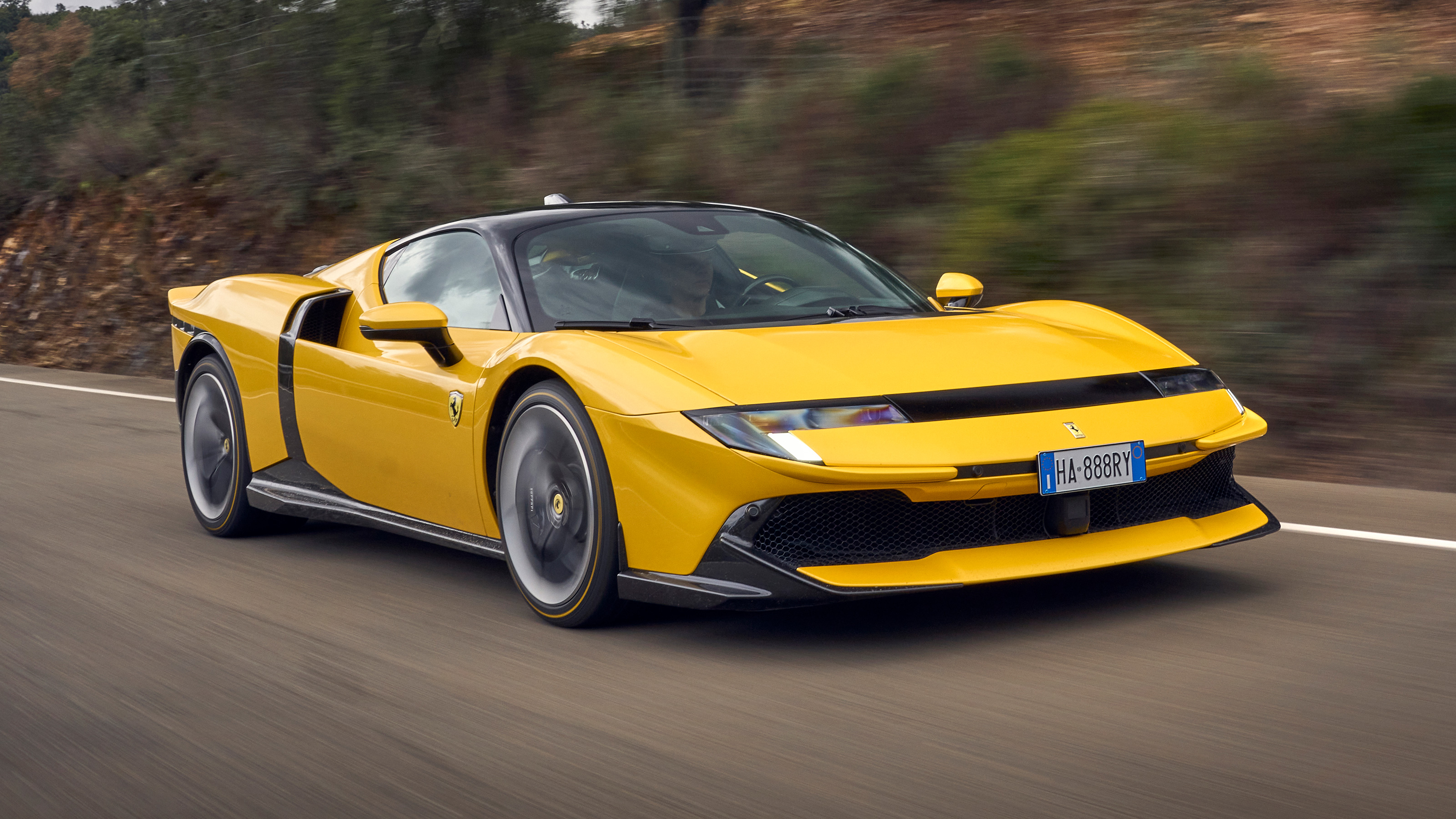
Only when you start trying to play with the car with super-aggressive turn-in to induce bigger slides does the front axle start to counteract your intentions and pull the car straight. The Revuelto feels even more rear-driven. Purer, if you like. However, the Testarossa’s blend of supreme stability and fine adjustability is very impressive. It’s much lighter than the big V12-powered Lambo, too. Ferrari claims 1,570kg dry with lightweight options, around 200kg less than the Revuelto.
The gearbox is stunning. The shifts are ferocious but feel engineered rather than pre-programmed for ‘emotion’ and really add to the sense that the Testarossa is absolutely focussed on delivering its maximum at all times. The whole car just feels ‘on it’ and performs really consistently, too.
Huge new ceramic brakes (410mm front, 372mm rear) ensure it can lap for extended periods without showing signs of fatigue despite the huge speeds achieved on the straights. Pedal feel is great, too. There isn’t the instant top-of-the-pedal response of a Porsche 911 GT3, but the slightly longer travel is great for left-foot braking.
As with other Ferrari hybrid models there’s a Manettino that selects pre-programmed driving modes for traction and stability control, e-diff, dampers (for cars with the standard MagneRide suspension) throttle response and gearbox, plus another eManettino to control the powertrain. Here you can choose between eDrive, Hybrid, Performance and Qualifying. For our track sessions they suggested Qualifying, which lasts around five-to-six laps of Fiorano or one full lap of the ‘Ring before depleting the battery.
Again, this sounds rather intimidating but in practice you quickly find your preferred settings and it feels very natural. The Manettino cycles through Wet, Sport, Race, CT Off and ESC Off modes and is incredibly adept at gradually releasing more and more of the Testarossa’s potential.
On the circuit, it’s perhaps just a shade too restrictive in Race mode but feels superb in CT Off – indulging with small, neat slides on corner exit, but still trimming away to prevent any huge, scary moments. So rather than removing you from the experience, the various modes actually allow you to access perhaps more performance than you’d ever dare all on your own.
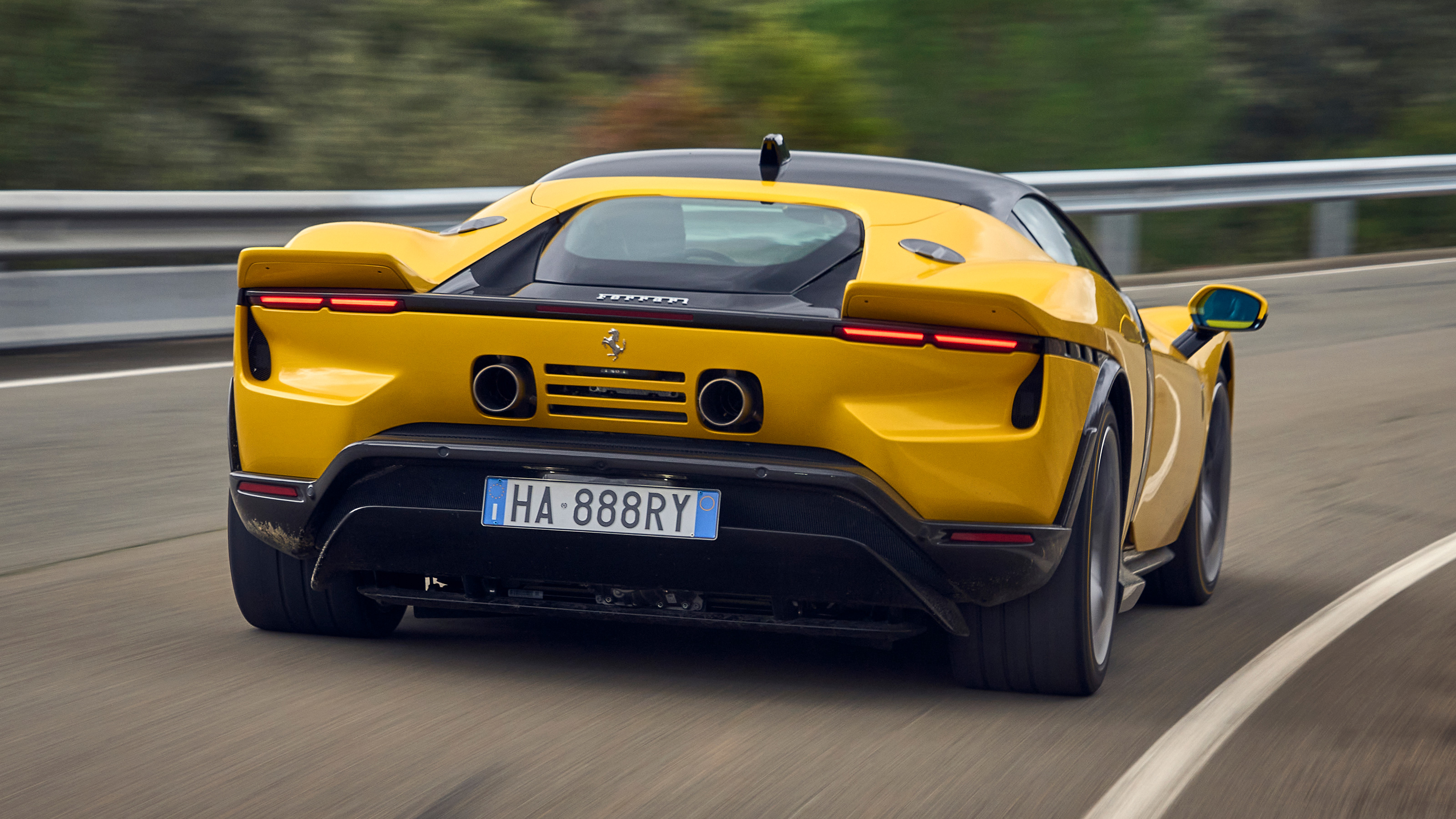
‘Need’ is not a word often associated with a supercar packing 1,036bhp, but we guess once you’re spending over £400,000 what’s another £42,115 if it unleashes even more performance and character? Especially as now you can get all the weight savings and funky aero upgrades of this package but request the standard MagneRide suspension with its ‘Bumpy Road’ mode and nose lift. Previously, this package necessitated the more hardcore fixed rate Multimatic dampers.
Other benefits include lightweight seats, carbon fibre wheels, the much-enhanced aero already discussed and the option of Michelin Cup 2R tyres for ultimate grip and response. Should you stick with the Multimatic option, it now features 35 per cent lighter titanium springs and reduces roll by a further 10 per cent.
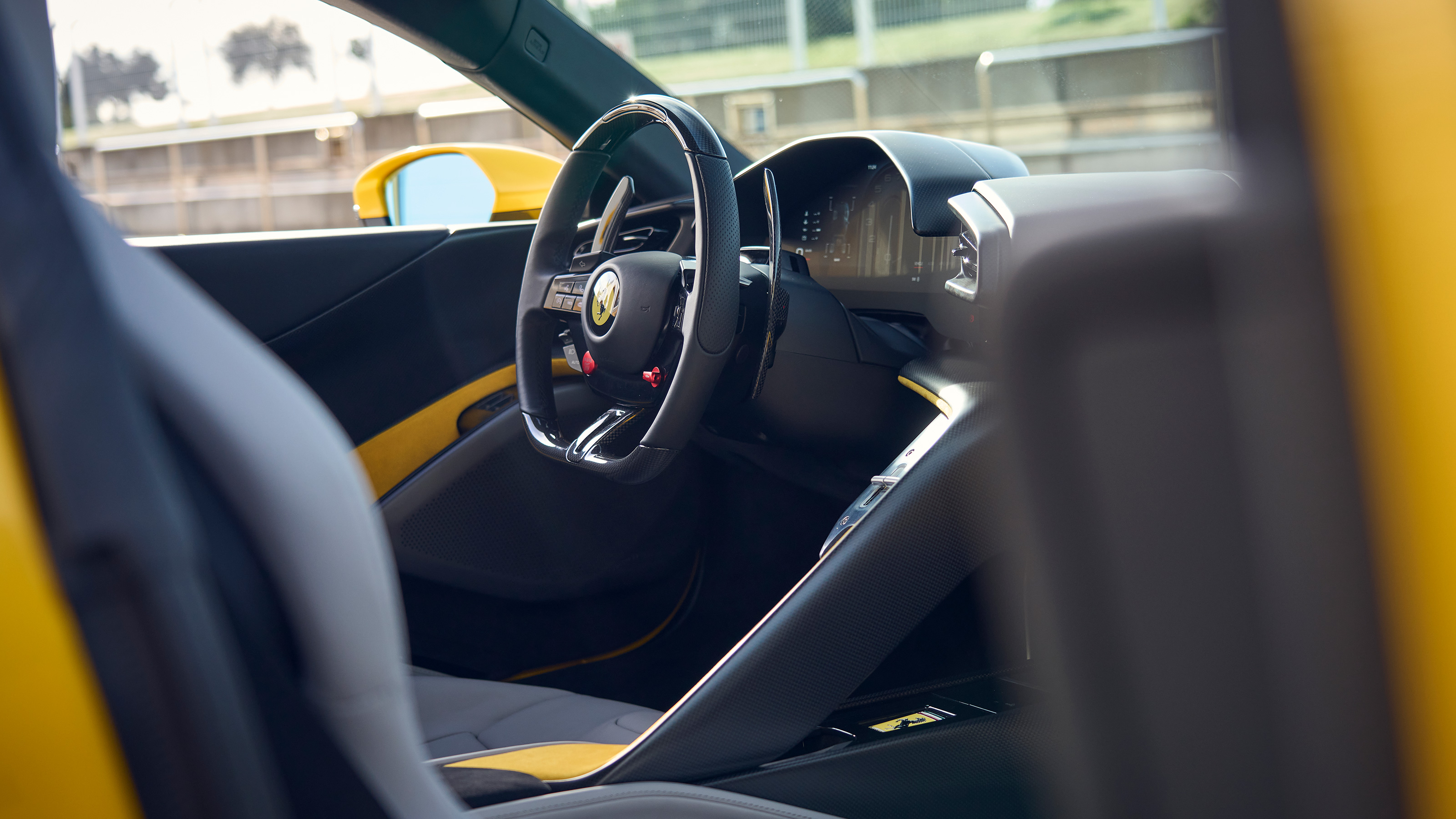
For the most part it’s more of the same: outrageous performance, clear and deliciously satisfying tactile feedback and a remarkable blend of agility and control. However, it also highlights the excellent ride quality, amplifies the breathless response of the gearbox and allows you to appreciate the lovely, understated and inventive interior. You don’t sit quite so low or feel as enveloped as you might in a McLaren 750S or Revuelto, perhaps because of the aluminium structure rather than a carbon tub, but there’s not too much to complain about.
We’ve barely mentioned the 4.0-litre twin-turbocharged engine thus far. On track, where response and outright performance are everything, it’s pretty amazing. The performance is relentless.
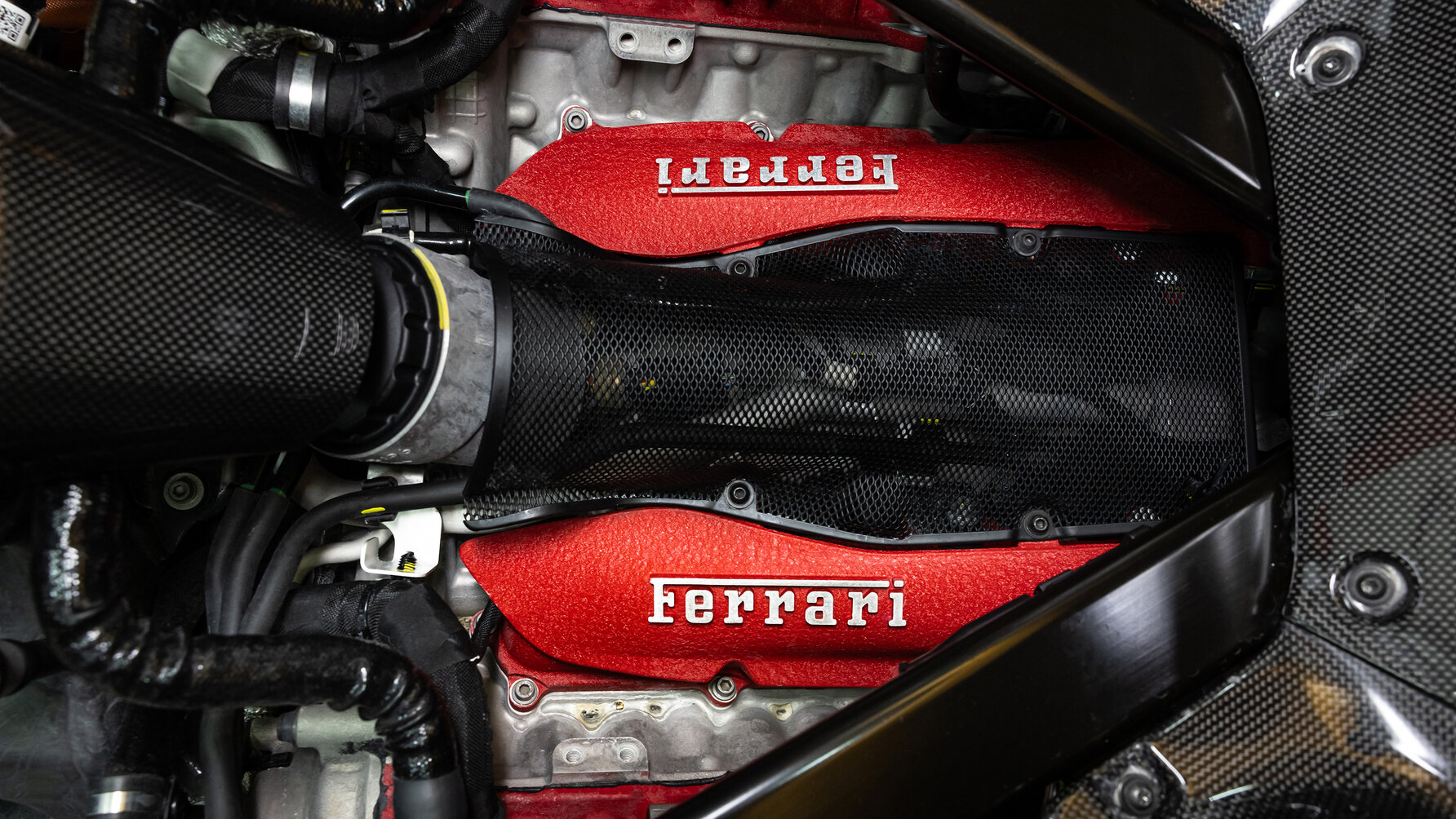
However, on the road a Ferrari engine needs more than just raw power and sharp response. It should be the heart and soul of the car. But the F154FC sounds harsh and tuneless at low and medium revs and it’s just not a joyous, memorable engine. It seems strange to say it, but the 3.0-litre twin turbocharged V6 in the 296 GTB and Speciale is much more exciting and gives you that tingle of anticipation even at walking pace. Compared to the Lamborghini Revuelto’s 6.5-litre V12? It’s not even close.
Get all the latest news, reviews and exclusives, direct to your inbox.
