




20
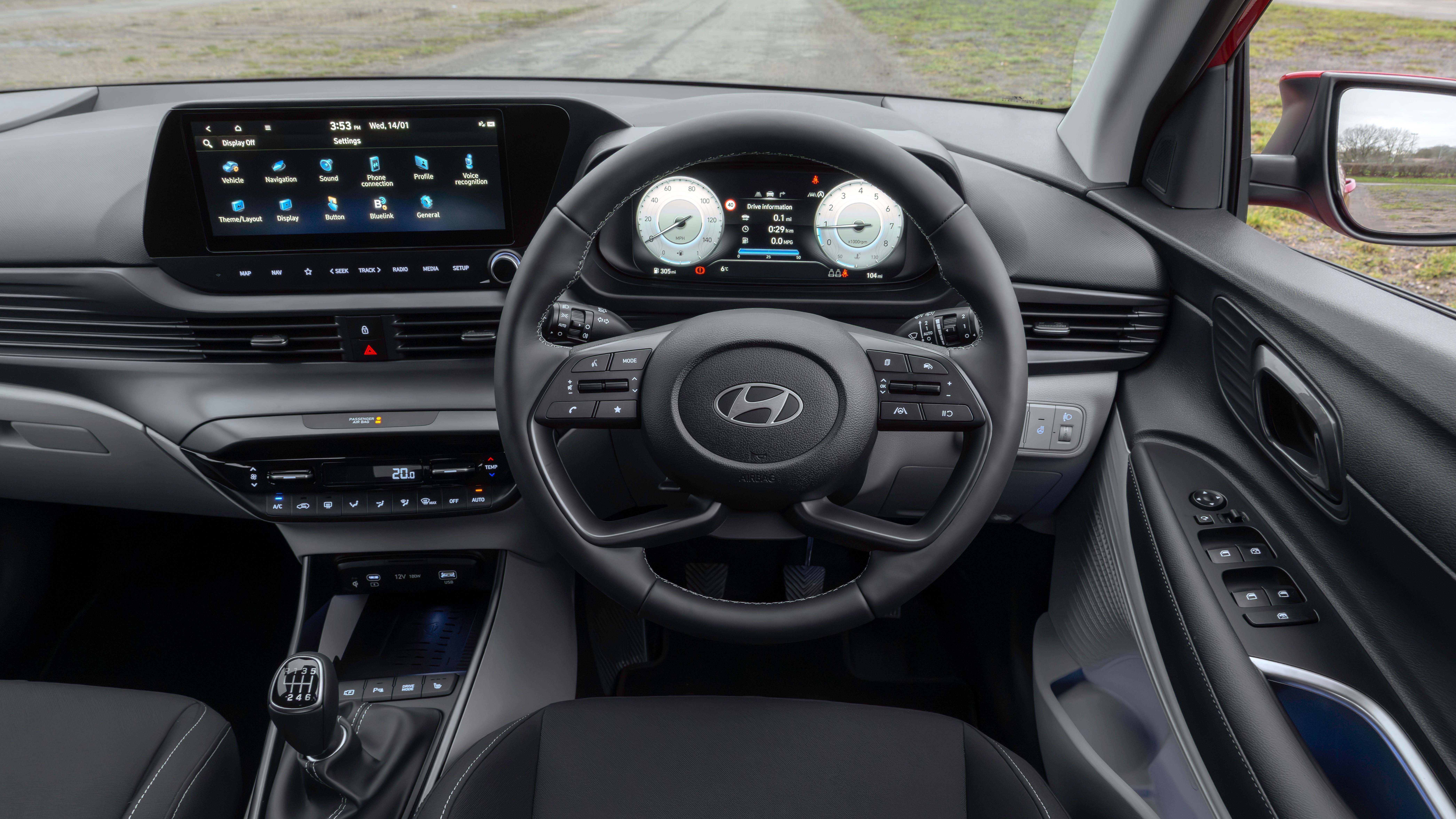
Base spec i20s get conventional dials and instruments and a 4.2in TFT LCD screen, all others feature a 10.25-inch display that encompasses the lot. It’s not the most configurable out there, but you can cycle through trip/navigation/media info easily enough using the buttons on the rather large leather-wrapped steering wheel. The design changes depending on which of the three drive modes you’re in.
It’s paired with a 10.25-inch touchscreen, now fitted as standard to all i20s. It’s not the most exciting to look at but it’s easy enough to prod, pinch and swipe your way through the menu system. And all cars get Hyundai’s clever “Bluelink” suite of connected services, which allows you to check fuel levels, send routes to the satnav and more via the Hyundai app.
Up close the cabin is done precisely no favours by Hyundai’s choice of materials. The smooth plastic across the bottom of the dashboard looks and feels cheap. The textured stuff elsewhere is better and the overall construction feels solid and hard-wearing, but the i20 just doesn’t feel as upmarket inside as many of the cars it competes with.
There’s enough space in the back for a couple of adults to sit comfortably (there’s even a USB port back there for convenient charging) without their knees jammed hard-up against the backs of the front seats – though they might not want to be there for too long.
You get 352 litres of space with the rear seats up, and 1,165 litres with the rear seats folded down. That’s more than you get in a Peugeot 208, Suzuki Swift, Vauxhall Corsa or used Ford Fiesta. Not bad at all.
In fact it’s on par with the Seat Ibiza, VW Polo, and only trumped by the Skoda Fabia. So if this doesn't do it for you, you really need the next size up. Cue a handy link to our i30 review.
Get all the latest news, reviews and exclusives, direct to your inbox.
