



25
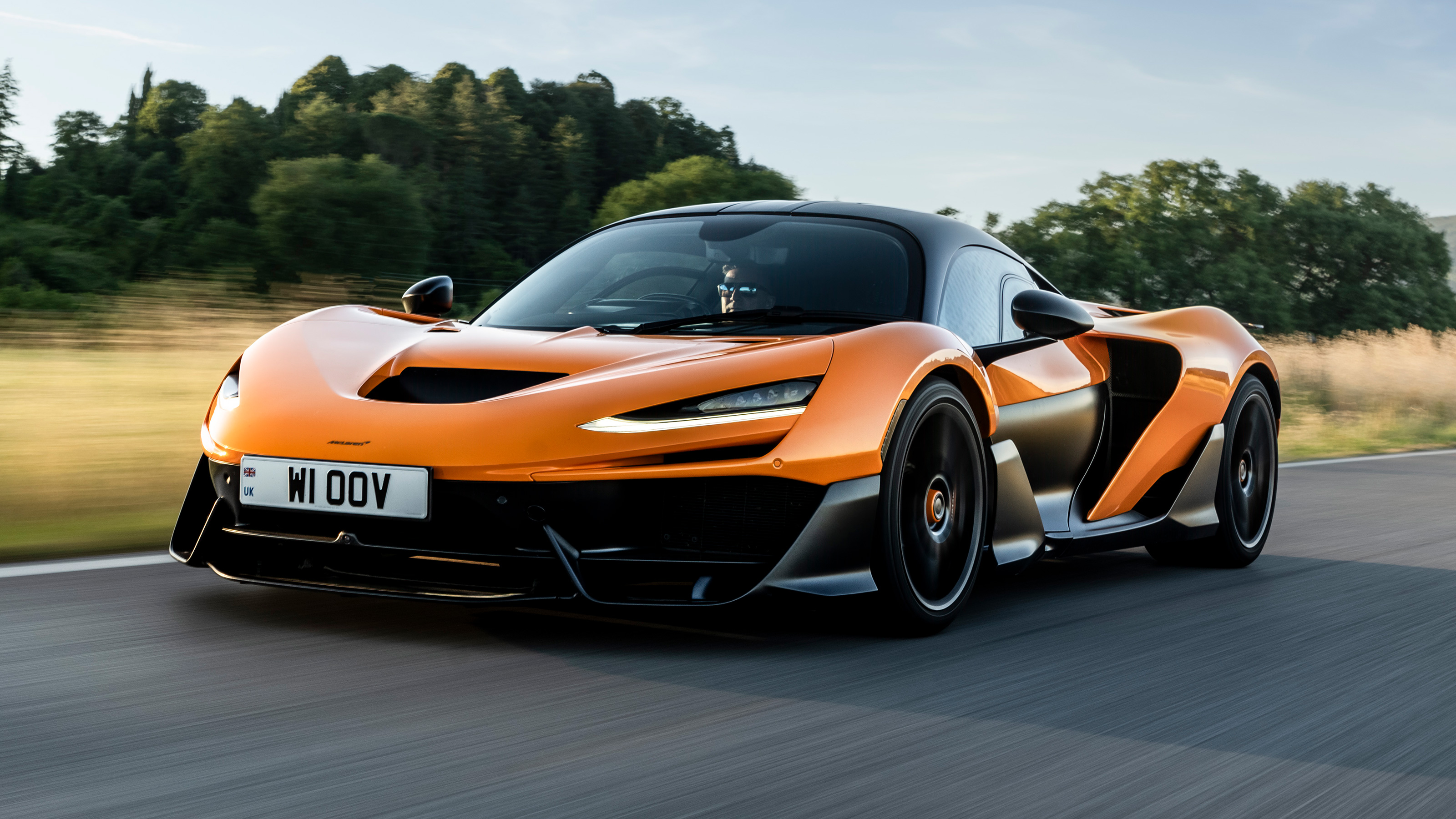
We’re at Mugello, a track nestled in Tuscan countryside. As well as uncommonly beautiful, it’s also a very senior circuit, whose FIA grade one status means it can hold an F1 race (and indeed did, back in 2020), as well as Moto GP and lots besides. It’s owned by Ferrari, so there’s some brinkmanship going on here. Mugello has elevation changes, blind crests and a long main straight into a tight right at turn one that poses a big challenge for driver and machine. The W1 needs a joint like this to do its best work, and the word is that the W1 can pull numbers round here that are F1-adjacent. TG.com is also told that McLaren Automotive’s amiable chief development driver, Dani Marcos, saw an indicated 205mph on one run. The GPS correlation suggests a touch less, but even so, that’s bonkers.
We’re not going to lie, we’re feeling it. We have two 20-minute sessions on the track followed by time on the road. Although TG.com has been round here a few times, including some (very) hot passenger laps in a Ferrari 488 GT2, this is not somewhere you jump into a car with 1,258bhp and simply point it at the horizon. McLaren driver coach, the brilliant (and brave) Charlie Hollings is alongside for a reason. He’s taught a few F1 drivers in his time.
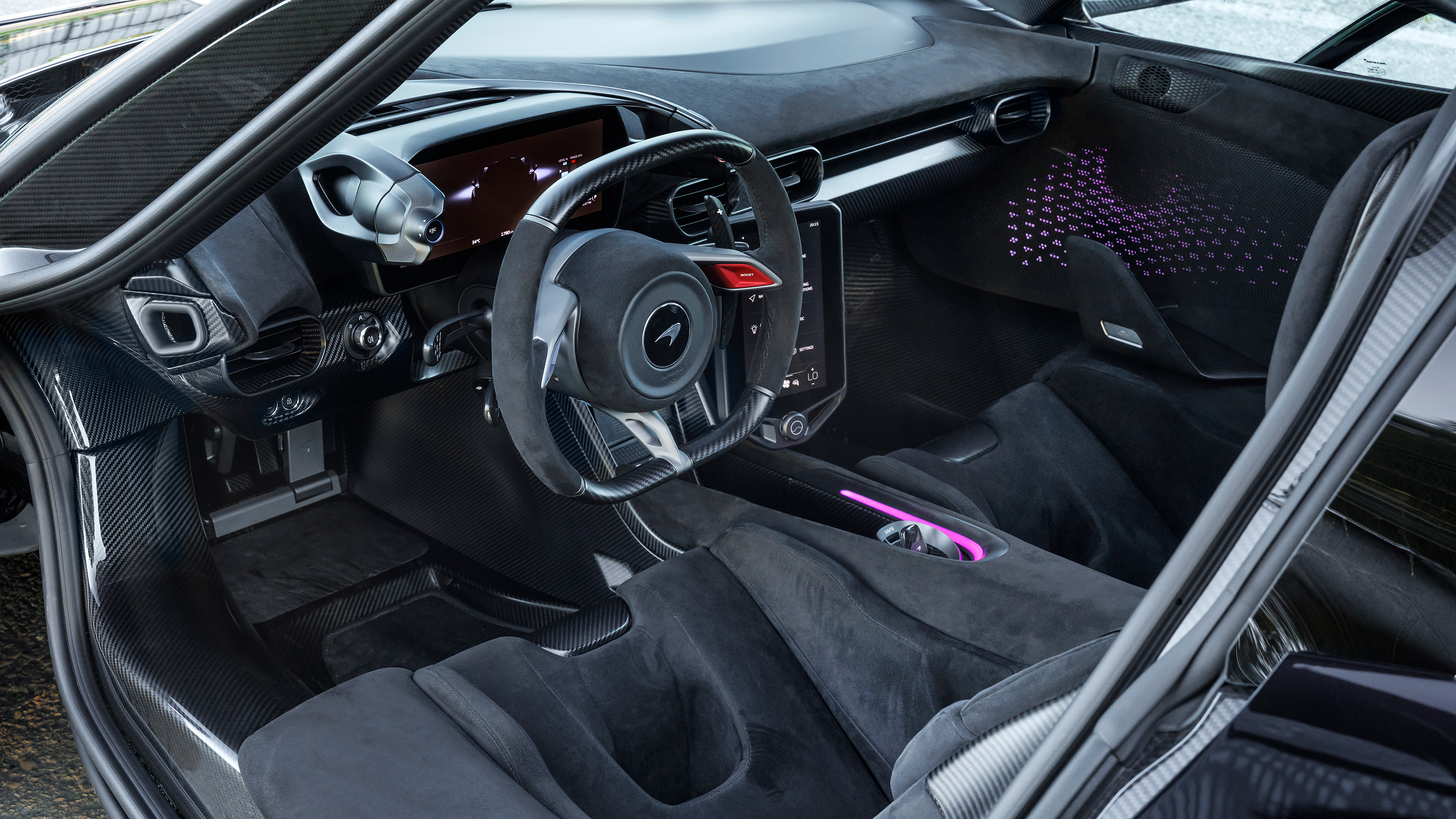
If you’ve ever driven a properly sorted track machine or racing car, you’ll recognise the absence of inertia, the appetite to turn in, and appreciate the way the W1 squirms a little as it hooks up on corner exits before thundering onto the next corner. It’s massively and addictively fast, and gathers momentum with a wonderfully mechanical ferocity and sensation that no fast EV can ever hope to touch. It’s one of those cars, in fact, that reminds you that high performance – and driving – is about so much more than straight-line speed. The W1, like the very best cars, hardwires you into its very being. It becomes an extension of your thought processes and inputs. The boost function is fun, but the car’s hardly lacking in power. This is about grip, feel and clarity.
For the record, it’ll accelerate to 124mph in 5.8 seconds, and 186mph in less than 12.7s (three tenths faster than the F80). It’s also three seconds quicker than the aero-loony Senna round McLaren’s reference test track at Nardò.
But it somehow feels bulletproof and alive with detail at the same time. “You can smash the throttle and it’s actually quite impressive,” Dani says, with brilliant understatement. He also talks about the way the front end communicates what it’s doing through the driver’s forearms, and how the rear talks to you through your shoulders. It’s a great way of humanising the experience, but also pretty much what happens.
The W1 is physical, and you’re aware of the forces being exerted on your body, but there’s nuance and detail, too. The engineers have played with the torsion bar on the hydraulic steering for even more feel compared to the 750S. That’s the current benchmark, and the W1 surpasses it.
On track in Dynamic mode, you can rotate the car meaningfully if you want to, and feel it load and unload as you really start working the tyres. There’s also variable drift control, which gives you the option of 15 different levels of ESP intervention. Dani insists that it all feels natural and progressive, despite the presence of 1,258bhp and the fact that the rear wheels are exclusively in charge. It certainly feels more approachable and less knife-edgy than the 765 LT, and really does invite you to get properly stuck in. McLaren would shudder if we described it as old-school, but the W1 is as analogue as ultra hi-tech gets.
There’s a lot to absorb as you hammer round Mugello, taking more kerb through the chicane, braking later and later. It’s a car that you can monster, and you can feel the air being hustled into action. By the end of the allotted track time, we’re seeing 193mph at the end of the straight, powering on over the little crest even as the brain recommends significantly earlier intervention. The stability under maximum braking is, in every sense, breathtaking.
The brakes use the McLaren Carbon Ceramic-Racing+ set-up, with 390mm discs front and rear that feature an extra ceramic layer, with six-piston calipers on the front and four-piston ones on the rear (note also the F1-style cooling ducts). The harder you use them, the better they get; the W1 takes 29m to stop from 62mph, 100m to stop from 124mph. Hypercars are usually all about the go. The W1 makes the stopping just as heroic.
The area around Mugello includes some of the most famous roads in Italy, including the Raticosa and Futa passes, witnesses to numerous great Mille Miglia drives way back in the day. There are unpredictable camber changes and corners that come seemingly out of nowhere, and then tighten up just when you think you have their measure. Yet the W1 somehow finds extra dimensions in this demanding context, allowing you to brake deep into corners with maximum confidence and change direction in a heartbeat.
It’ll also sit in eighth gear quite happily, and though the cabin thrums and buzzes a bit, it’s the right sort of thrum and buzz. Let’s call it highly engineered NVH. Holding a conversation would be no problem. The engine may not be especially musical, but it is magnificent, rousing itself in any gear or rev increment as the car piles on speed relentlessly. The F80, despite being down two cylinders, has the edge sonically. But otherwise, it’s too close to call.
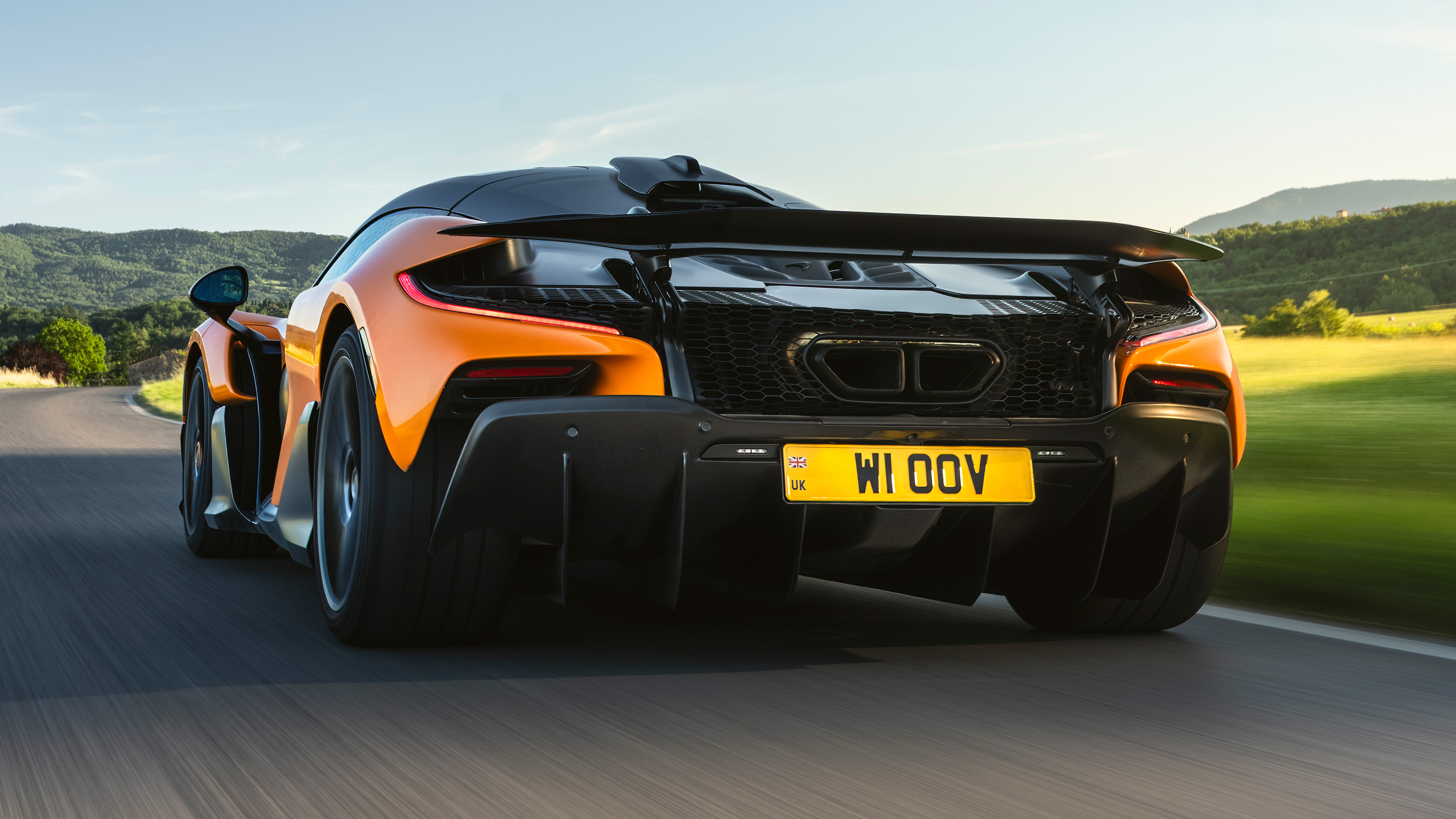
We end up on the autostrada, and take in some of the amazing tunnels the Italians are so good at engineering. The W1 rips along, exhaust wailing, and you can feel the displaced air oscillating behind you. Few if any cars could possibly be faster in this mixed terrain than the W1, and as you get to grips with it, it’s apparent just how well sorted it is. Rather than high-speed downforce, now it’s all about suspension kinematics and body control.
We stay in Comfort mode up here, and the W1 is no more difficult to live with or be around than, well, an Artura certainly. The aero ensures everything is tied down superbly at high speed, but in regular conditions there’s a suppleness and compliance that shames some high-end saloons we could name. What an amazing achievement it is.
Get all the latest news, reviews and exclusives, direct to your inbox.
