

the fastest
GLC 400 4M 360kW Premier Edition 94kWh 5dr Auto
- 0-624.3s
- CO20
- BHP482.8
- MPG
- Price£73,285
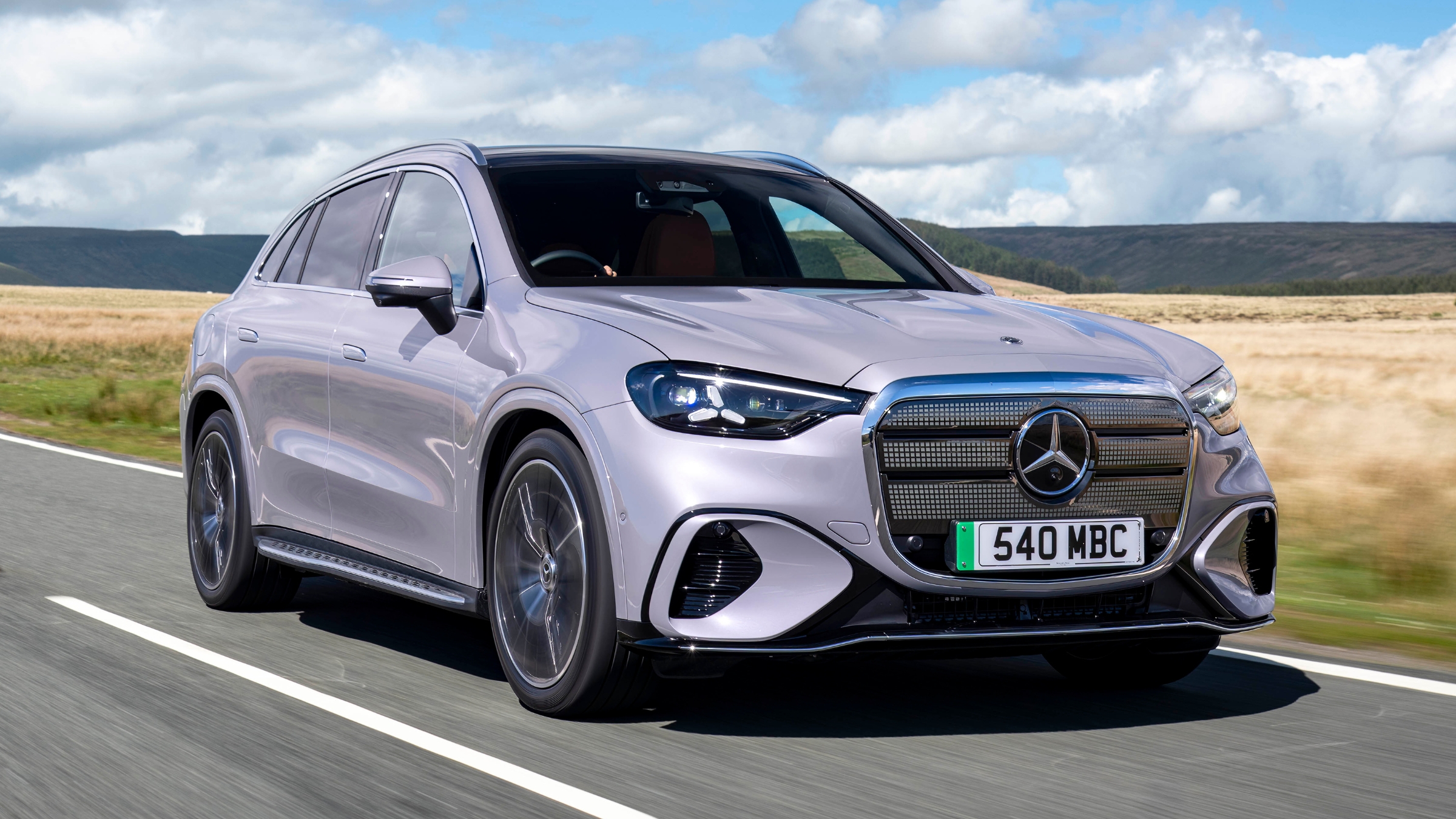
Extremely pleasant. EVs obviously lend themselves towards elevated refinement, and Mercedes has leaned into that with air suspension (as part of the £2.5k 'Refinement Package' that also brings rear steering) that feels supple even when you venture out of comfort mode and into sport. Wind rustle, road noise, squeaks, rattle, bumps all are as good as absent – though we did find the ride marginally more comfortable on the 20in wheels, with the minimal tyre sidewall of the 21s a little less accommodating on our broken roads.
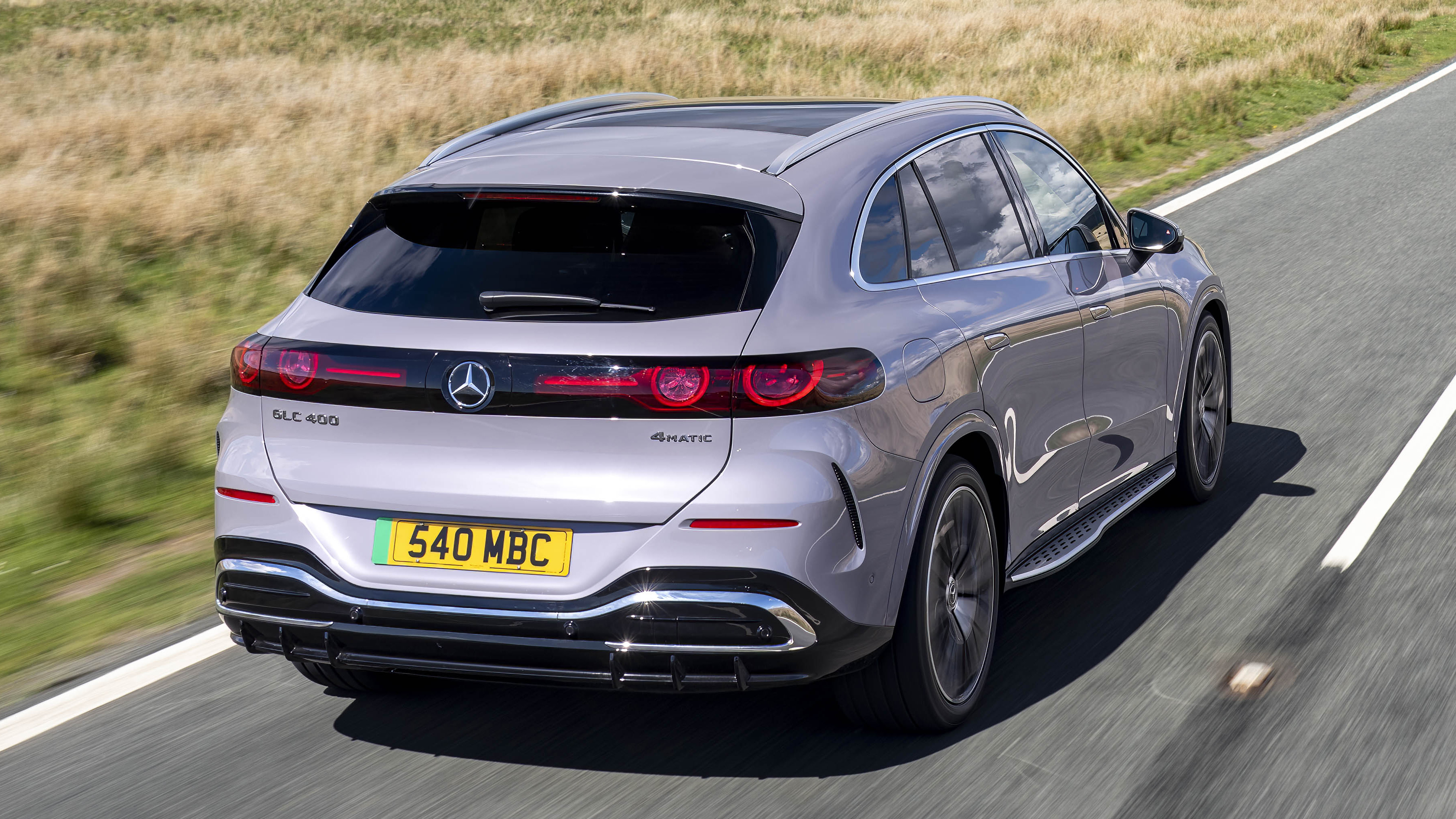
The end result is a near-silent bubble… that happens to have 483bhp. Launch it from a standstill and it won’t peel your eyelids back but it’s faster than you’ll ever need a family SUV to be. Keep your toe in and you feel the two-speed gearbox shifting up at around 75mph which serves a double benefit – it keeps the surge of acceleration coming, unlike one-speeders where it tails off – and (alongside the GLC’s impressively low drag coefficient of 0.26Cd) it improves efficiency at motorway speeds, which has long been the EV’s weak point. We wouldn’t be surprised if we start to see similar two-speed transmissions becoming commonplace.
That depends on which of the four regen modes you choose: D- (maximum recuperation), D (standard), D+ (no braking effect at all) and D Auto (intelligent recuperation). Mercedes claims that energy can be scavenged from up to 99 per cent of all ‘braking events’ and these can recharge the batteries at a rate of up to 300kW... which is a lot. In fact, it’s the strongest deceleration we’ve experienced yet in one-pedal mode, probably too jarring and abrupt for most.
D Auto should be the perfect solution, no inputs required to achieve max regen at slower speeds and then coasting for max efficiency on the motorway, but it ends up feeling confused because you never know what braking force is coming when you lift off the throttle. Far better to have consistent reactions, so you can drive smoothly and predictably. Paddles behind the steering wheel allow you to quickly adjust between the various levels – handy for switching between maximum regen when you’re sat crawling in traffic and none when you’re coasting at motorway speeds, for example.
The four-wheel steering system (optional as mentioned above) turns the rear tyres by up to 4.5 degrees and cuts the turning circle by 0.9m to 11.2m. It’s extremely noticeable around town, where you feel the rear scooting around behind you in bends. Once you’ve recalibrated though, it’s a godsend, making this 4.85m long, 2,535kg SUV feel much smaller and nimbler than it frankly has any right to.
The steering is light, smooth and precise, the body control and roll resistance is tight without the suspension feeling too wooden and the performance is… substantial. The quoted 0-62mph in 4.3 seconds time (we’re told that’s fairly conservative too) is a full half a second quicker than a Ferrari 355, and yet it’s not the most remarkable thing about the GLC, it’s merely par for the course.
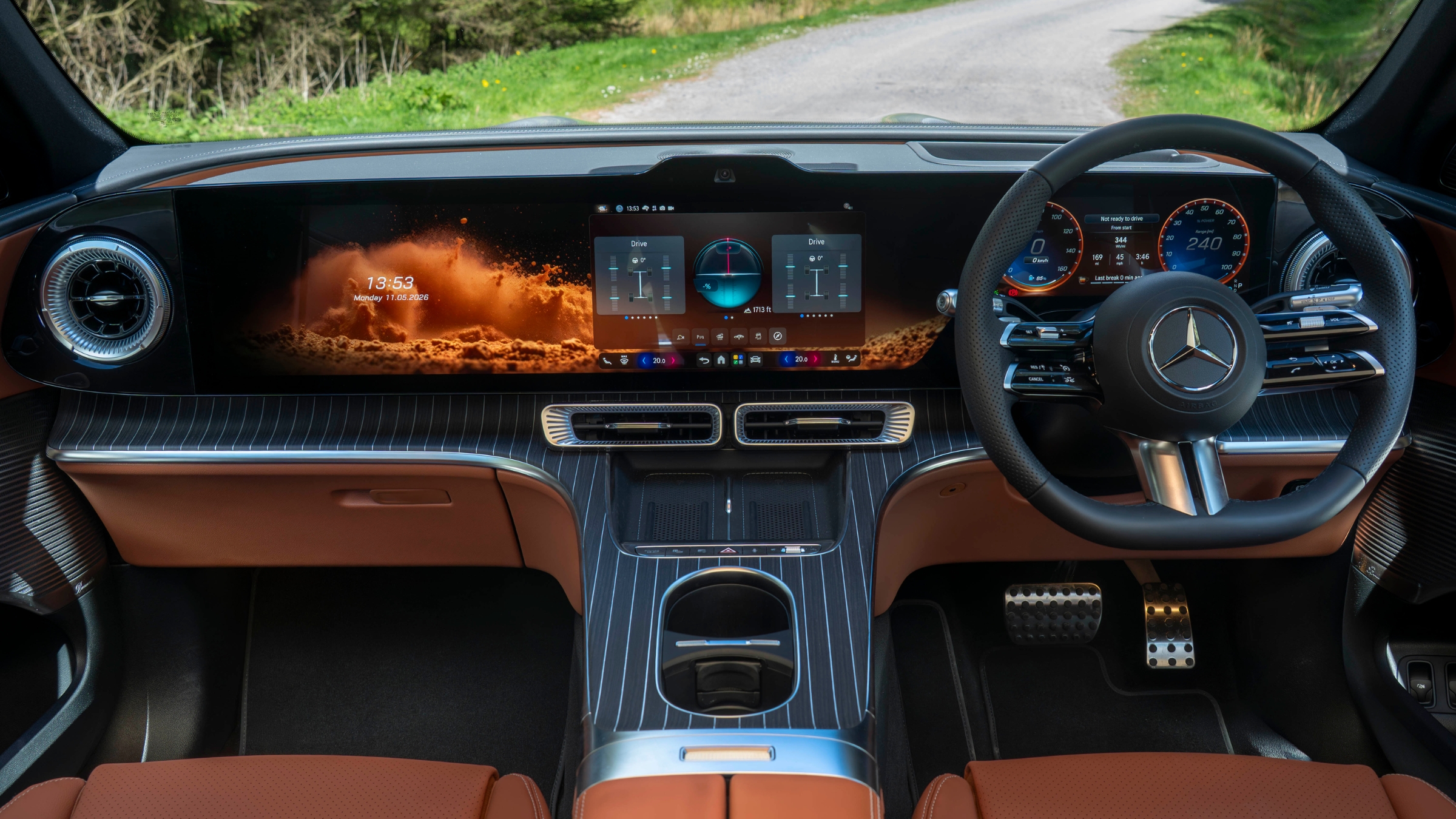
It’s hard to describe the GLC as fun in the traditional sense, but that’s not to diminish the experience of driving one. There’s theatre in the sheer audacity of the interior HMI, there’s reassurance in being able to seat five and a load of stuff, and there’s medicine in driving a car as calming as this. Particularly when the speed limit warning bonger can be turned off with one screen tap – though you do have to do it every time you switch between Park and Drive (no on/off button here).
Still, even range anxiety melts away when you realise how incredibly accurate the range read out is (it takes into account the route, the weather, the topography, the traffic conditions and your driving style – we saw 3.8 mi/kWh, equivalent to 360 ish miles of range), how slippery and efficient the car is and then how quickly you can top up if you’re caught short. It’s got all the bases covered.
Get all the latest news, reviews and exclusives, direct to your inbox.