



25
Polestar 4 Long Range Dual Motor
367 miles
1cc
536.4bhp
3.8s
I'm writing this on the aft deck of the Santander to Plymouth ferry, mid-way on its northbound crossing of the Bay of Biscay. Millpond sea, beautiful sunset, a lovely night. But nothing on yesterday.
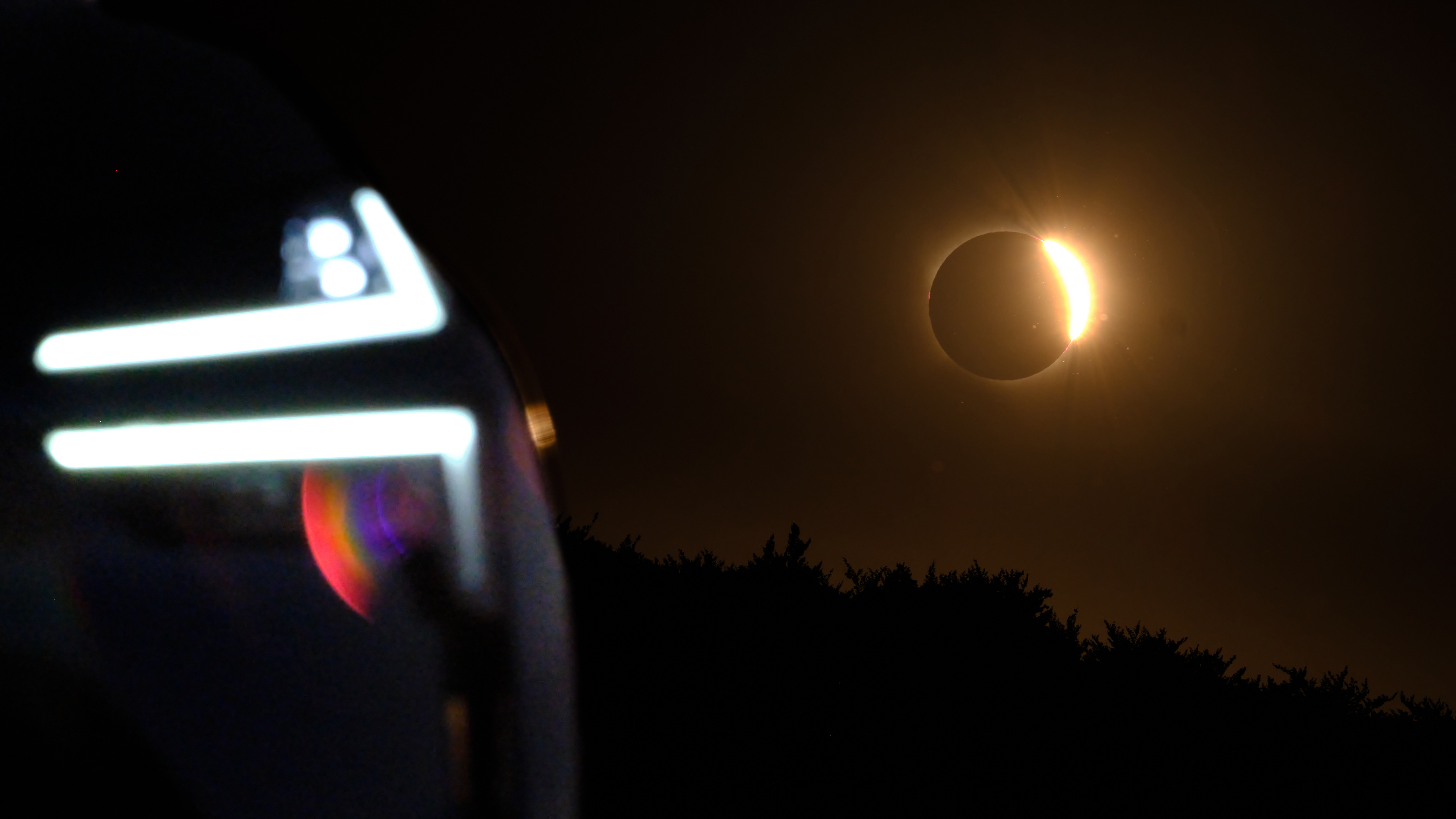
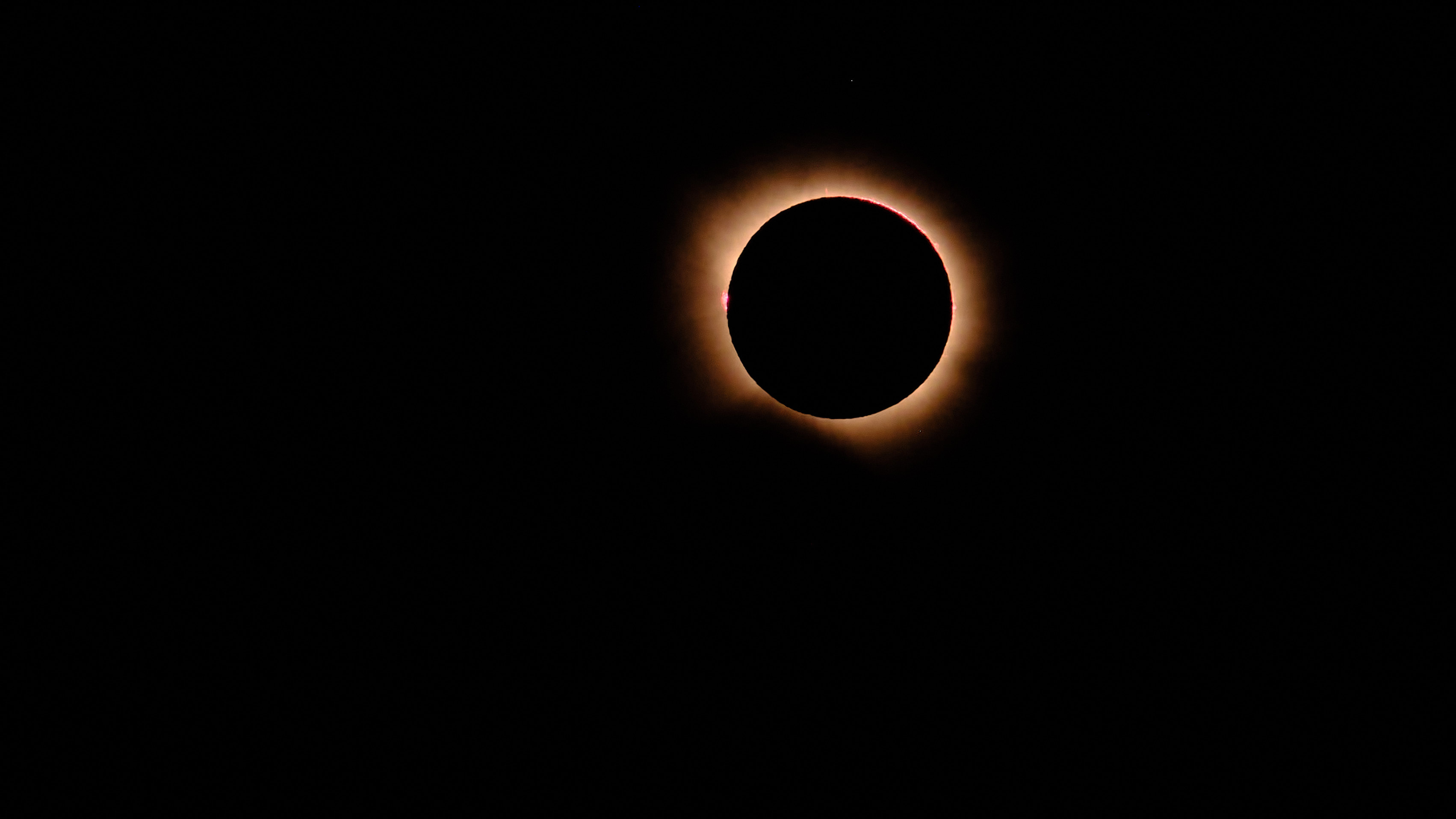
Yesterday I drove the Polestar 4 up an empty hillside in a sparsely populated part of Spain, WSW of Pamplona. It was a good-as-perfect spot to witness the total eclipse, a fleeting event that involuntarily drained our lungs of air. It ended with the final one of Bailey's beads, the 'diamond ring', a zinging flash as the sun peeps out from behind a lunar crater.
Afterward the receding half of the partial eclipse, from our vantage point, coincided with the sun's setting, dressing up in saturated reds and oranges and flaming out the nascent puffy clouds on its way to a longing kiss with the horizon.
Even that wasn't the end of the show. We lay on our backs and watched the sky as it filled itself, while slowly blackening, first with planets, then with stars, then with satellites, all to the sounds of owls and cicadas. And at length the Perseid meteors began shooting – and I mean shooting – across the sky, the best of them leaving a tail whole constellations long. Not the 'meteor shower' that common parlance implies, but coming at wide and random enough intervals that each one jolted and entranced us anew.
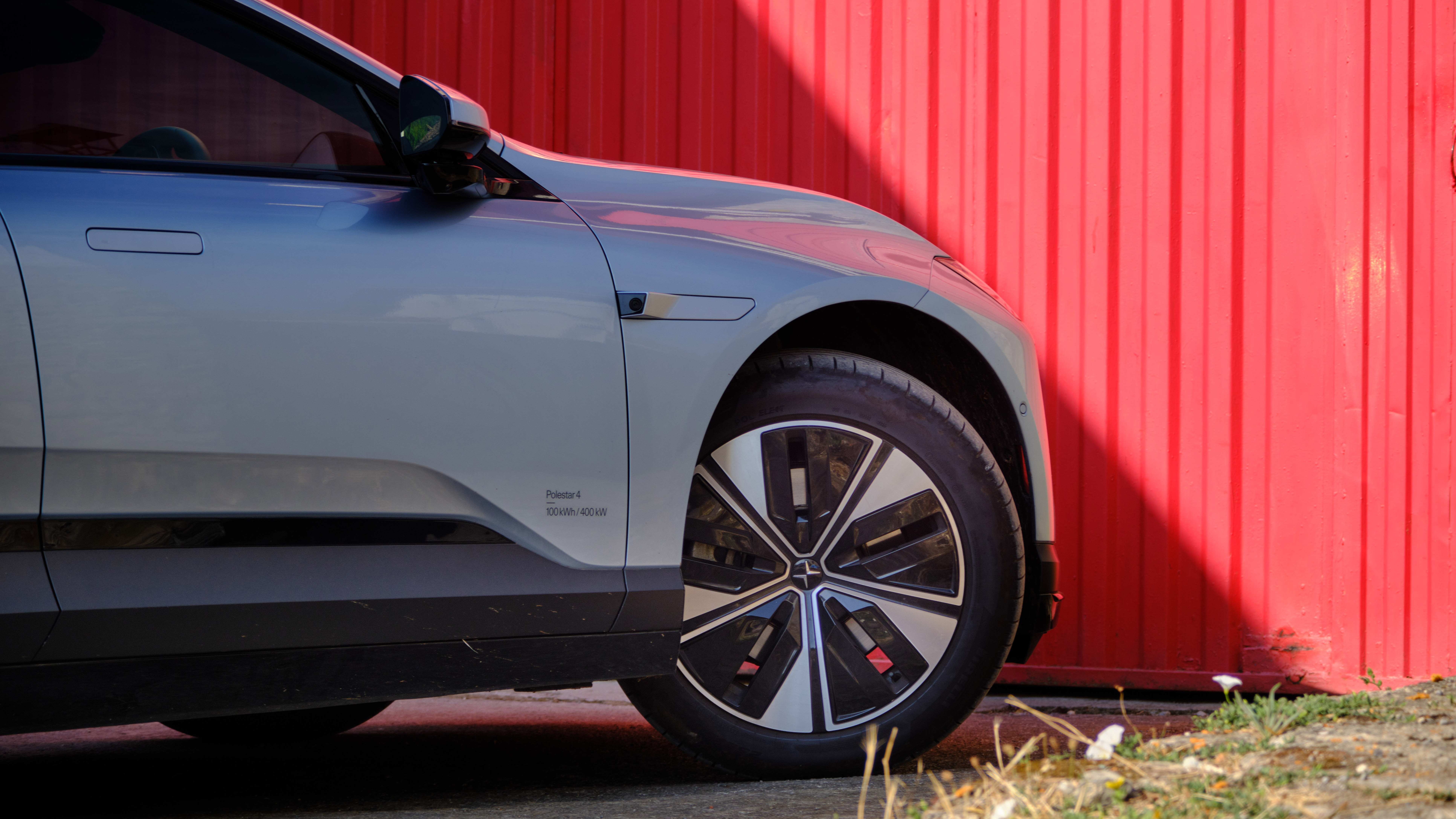
Definitely a night worth travelling for. This car is just the thing, and not just because it mandates a multitude of eggy celestial-themed puns – sun moon Polestar. It's big, fast, comfy and capable of nonchalantly swallowing whole countries with a sparse demand for charging stops. In all, a fine way to end its stint at Top Gear.
After the Portsmouth to Caen ferry a couple of days earlier, we'd stopped for the night well south of the Loire. Rather than hauling down the autoroute, we'd taken in some French small-town atmosphere by driving a fair proportion on N-roads. I had plenty of battery to spare and a night charge was pretty straightforward.
Next morning it was onward past Poitiers and Angoulême to Bordeaux. There'd have been a massive detour at this point a couple of weeks ago, on account of the wildfires closing the autoroute for days on end. Going through that still-acrid region in a CO2-belching 500bhp petrol vehicle would have felt pretty crass.
The Polestar just whispered onward, crossing after a lunch-stop recharge into Spain and the exaggerated curves and gradients of an autopista that beats its effortful way through the coastal mountain ranges. No apparent effort from the car mind. I've always liked the way it smoothly answers to requests to gain or hold or lose speed whatever the topography, and over a distance this is wonderfully relaxing. Its steering tracks long open bends with aplomb.
Off the trunk roads the adaptive suspension is really nicely calibrated, holding the body under control but absorbing any brutality in the surface. It sneakily enjoys tighter bends and hairpins too, and you feel a part of that action.
The bounteous air con does all it needs to in 35 degree heat, without ever wanting to be switched beyond its eco setting. The stereo is brilliantly precise and spacious. The sat nav knows what chargers are en route, their power and live availability, and plans to suit. The seats' lengthy embrace is as easygoing as an old friend's. That special night, I needed to carry some extra drivers home from the hill because they'd quite understandably elected to party up the perseids with a couple of cans of beer. The Polestar's wide rear sofa, with its huge legroom, flat floor, independent climate control and electrically reclining backrests, gave the second-row trio a palatial ride.
Have I needed such a grand car over the past six months? Silly question; who does. Candidly, I tend to prefer driving a slow car to the best of its ability, over driving a fast car restrained. So I've seldom used the 544bhp, though it's nice to have it in reserve for passing trucks. And as a one-shot joke to shock passengers.
Same goes for the Polestar's size – I don't usually need all that width. It's a hindrance in my city's congested narrow streets, and on B-roads too. Obviously, less width would mean a physically smaller battery. But it'd also mean less overall drag, so better efficiency to offset that reduction in available kWh. Still, it has good all-around cameras to help squeeze through width restrictors. And as I say, when you need rear space, there's acres.
On this whole trip the 4WD was deployed only for a few yards to get onto the top of a smooth but dusty stone knoll. That was enough to transform the car/eclipse juxtaposition photo you see here. So no, that's not a Photoshop composite or AI. An atypical use-case for dual-motor traction, admittedly.
Where you're taking advantage of the 130km/h (and a bit) on a clear autoroute, efficiency is 2.7m/kWh. But it's vanishingly unlikely you'll do that for a whole battery. There'll be traffic or roadworks or the slower orbital autoroutes around cities. So we did better than that, especially when we were on the N roads. Overall the trip was 3.4m/kWh. Better than I had expected.
That's a real range of 320 miles. And if its charge rate isn't as fast as the latest generation of 800V cars, well it was still easy to pick up 250 miles of real range in 35 minutes, because it held 200kW for much of the charging event and 100kW+ even passing 80 per cent. Doing that at a minimum driving interval of three hours is no imposition.
And the six-month numbers are in. Across 7,633 miles of winter to summer, the Polestar 4 averaged 3.06m/kWh as declared by its trip computer. That's verifiable by the total battery percentage used, multiplied by the net battery capacity of 94kWh. That number is battery-to-wheel, and a basis for comparison as it's the figure every road tester quotes. For the Polestar it means a real range of 288 miles, versus the WLTP range of 367 miles. The official test is absurdly generous, for EVs as well as most petrols.
But of course there are losses in the wallbox and charger, so you pay for more electricity. It's the same with any EV. I put in 2,837kWh in all, making my grid-to-wheel average 2.69m/kWh. WLTP consumption (also measured grid-to-wheel) is 3.34m/kWh.
At its launch Polestar called the 4 'a new breed of SUV coupe'. Actually it appeals to me because it's not an SUV, coupe or otherwise. OK, it's a little bit tall because of the slab of cells under its floor, but it's a car folks. And one that, despite some irritations I've listed in previous reports, does what it means to do very well. And did what I asked of it this week supremely well.
Get all the latest news, reviews and exclusives, direct to your inbox.
