



Supercars
McLaren W1 vs Mugello: 'one of the greatest cars we've ever tested'
Physics, prepare to be pulverised... the McLaren F1 and P1 successor is here, and it doesn’t do compromise
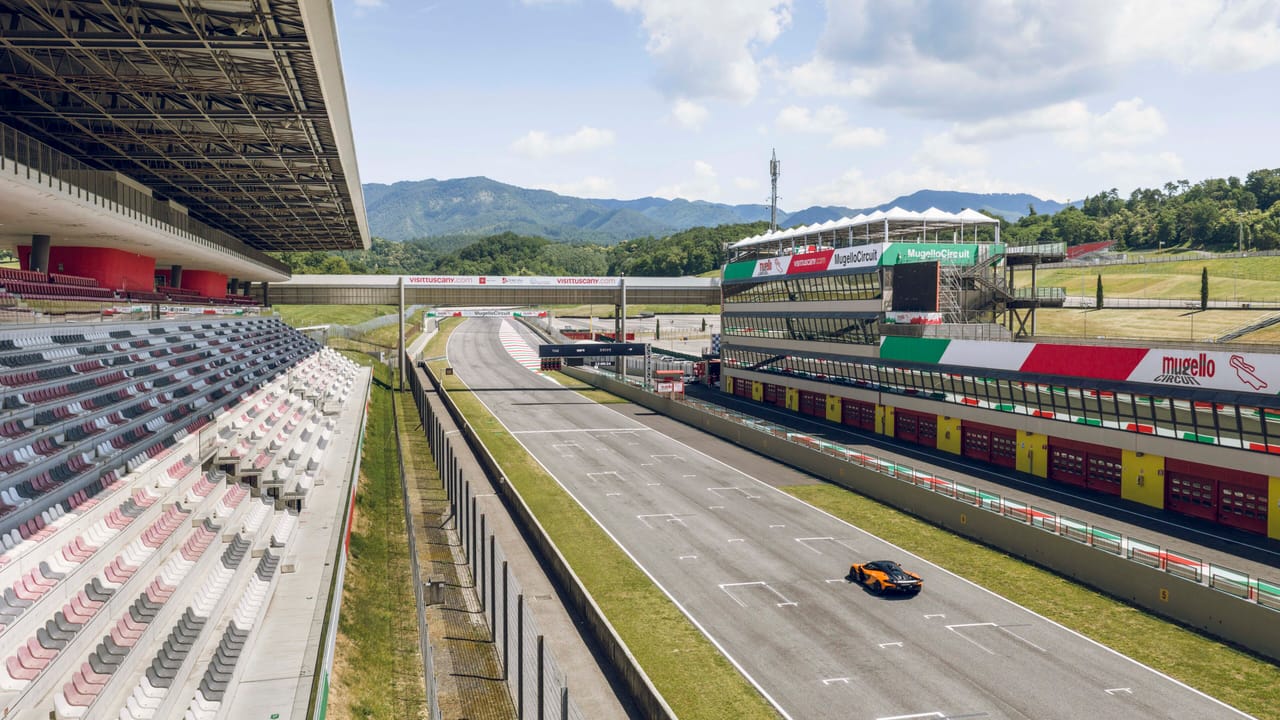
McLaren has parked its new tank on Ferrari’s lawn. Metaphorically speaking. Although Mugello is nestled in crazy beautiful Tuscan countryside, our W1 is currently cooling its heels in the pitlane, and if we end up on the grass round here, something will have gone badly wrong. Amusingly, some opera strikes up at high volume outside as the tech presentation begins, the ghost of Enzo manifesting as we learn about the W1’s dampers and downforce. Maranello is only 90 minutes up the autostrada.
Why Mugello? McLaren CEO Nick Collins admits to a certain mischief, but mostly it’s because a car with this sort of intergalactic pace and mighty aero performance needs a track to strut its stuff. McLaren is currently undergoing a reset under the new boss, but the W1 is a reminder of its core engineering monomania. It also has a distinct philosophy when it comes to delivering our old friend, driving fun. It’s rear-drive only and although there’s a powerful electric motor, it shuns torque vectoring and software wizardry in favour of pure driving feel.
Advertisement - Page continues below
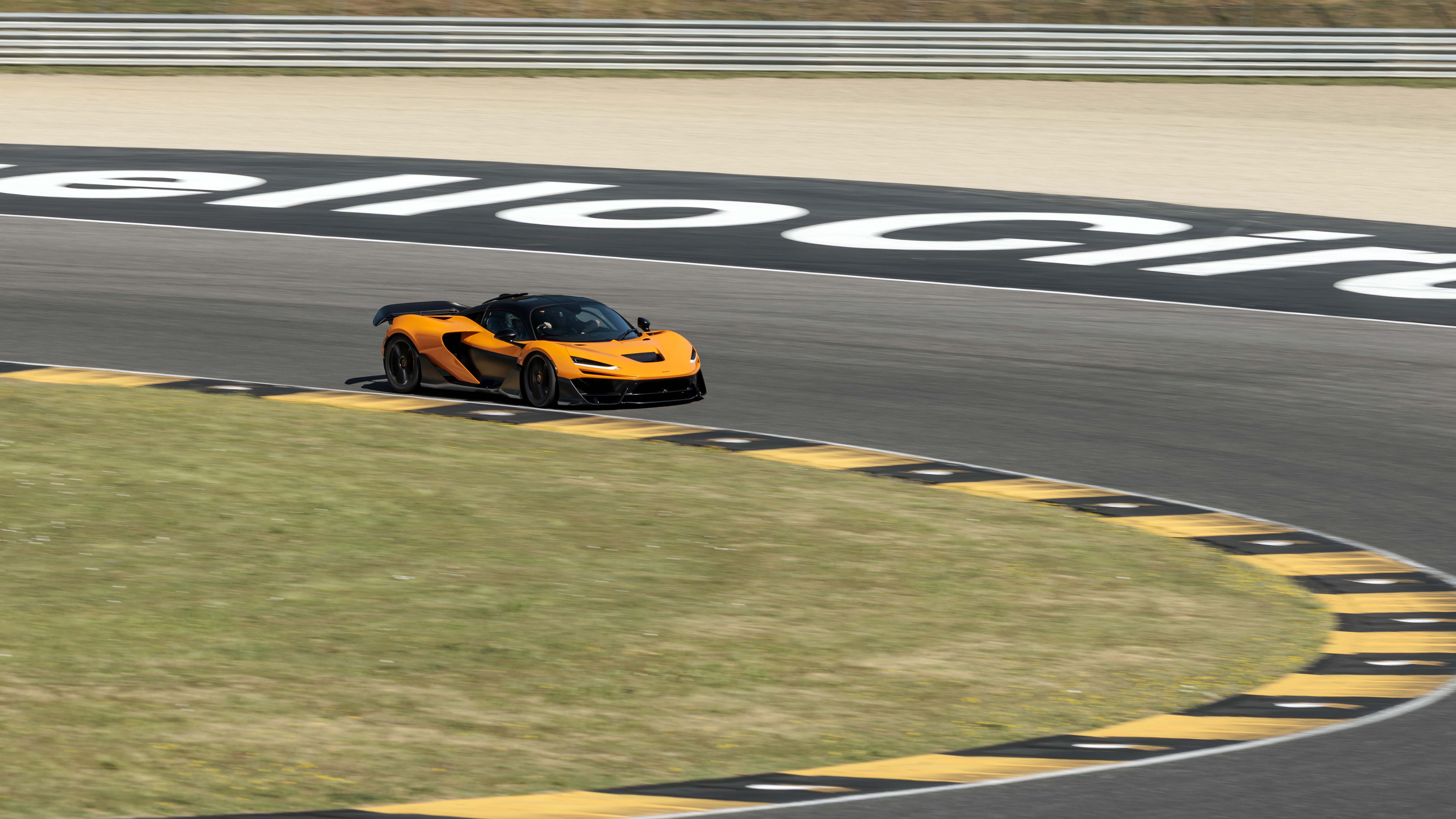
Spoiler alert: the result is one of the greatest cars we've ever tested... but we’re getting ahead of ourselves. Mugello has elevation changes, blind crests and a long main straight into a tight right at turn one that poses a big challenge for driver and machine. The word is that the W1 can pull numbers round here that are F1-adjacent. I’m also told that McLaren Automotive’s amiable chief development driver, Dani Marcos, saw an indicated 205mph on one run. The GPS correlation suggests a touch less, but even so, that’s bonkers.
Photography: Mark Fagelson
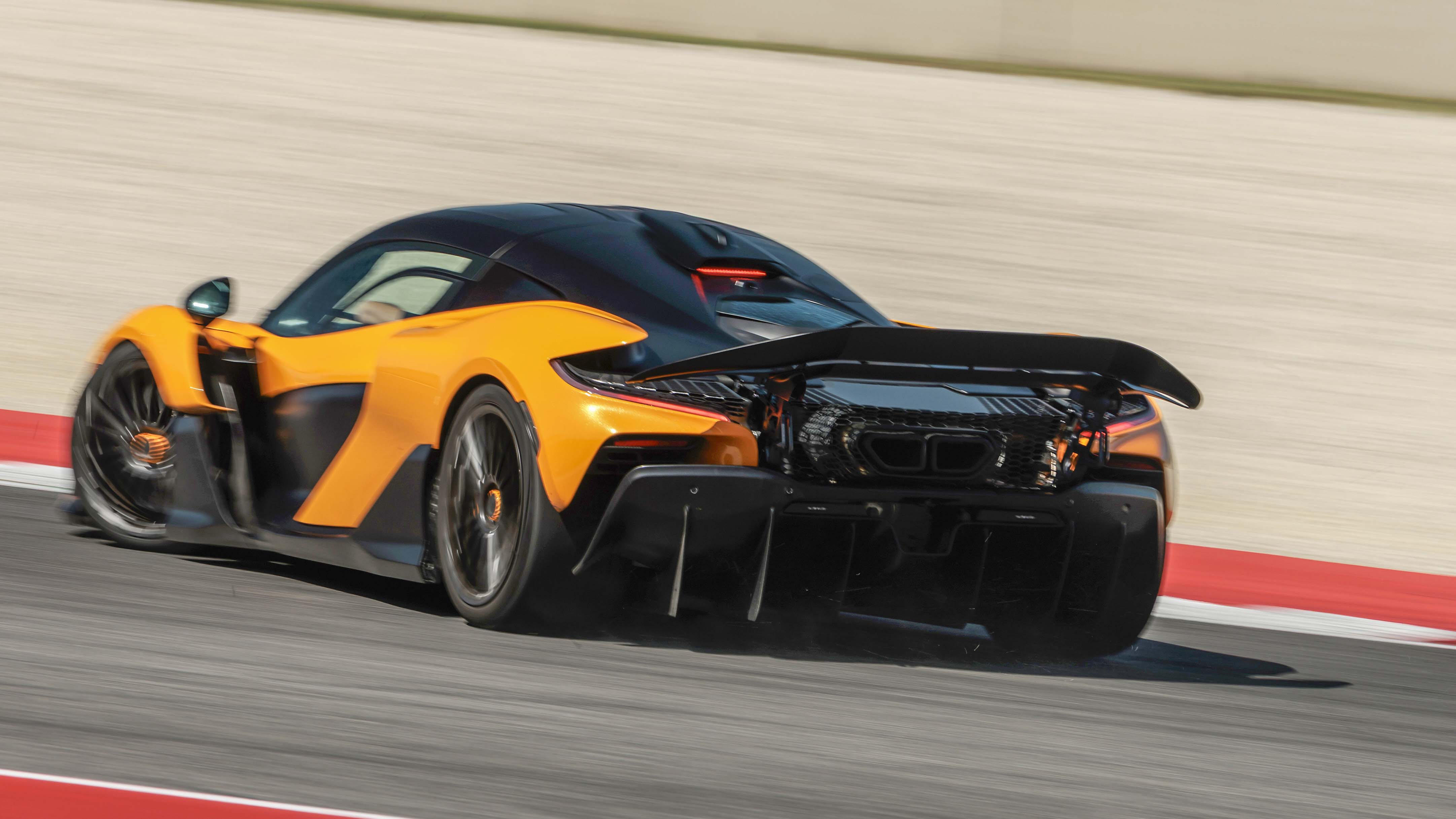
Many factors are at work here, but in order to achieve this you need as stable a platform as possible and almost surreally good brakes. The W1 aces both. McLaren says the aero is the most advanced the company has ever developed for a road car. It uses full ground effect which makes the W1 only the second road-legal car to do so, the other being the Aston Martin Valkyrie.
McLaren describes the W1 as an “everything” car, designed to work as effectively on the road as it does on the track. M’learned colleague, Paul Horrell, gets very exercised by this subject, and insists that this means unavoidable compromise. You can be one or the other, but not both, and would be better off buying a decommissioned GT racecar for your track fun, and a Range Rover in which to get there. Trust me, we’ve had the arguments. On the Valkyrie, I tend to agree.
Advertisement - Page continues below
It’s a moonshot machine, with a $64m visual execution. But it’s a complicated pain in the arse to drive on the road. The W1’s bandwidth, though, is truly mind-boggling. Let’s start with the simple act of getting into it. And simple it is. It has anhedral – gullwing – doors, so even a big unit like me can more or less just step on board. Their shape assists the airflow from the front wheelarches into the high temperature radiators and provides an extra 100mm of cooling space. So the radiators don’t need to be as large.
Attaching the cushions to the carbon tub saves weight, but also deepens the sensation that you’re part of the car. A fiddly little lever beneath moves the pedal box fore and aft; the steering wheel and instrument panel are electrically adjustable. The brake pedal is slightly more than vertical when you’re at full retardation, but only just. It’s an example of how every detail has been sweated, and the ergonomics are peerless. You wear this car like Noah Lyles wears his Adidas running shoes.
It gets better. The (optional) InnoKnit trim sweeps across the sills and cockpit like a fabric wave, a sustainable and technical-feeling alternative to leather or Alcantara. There’s a cantilevered door fin blade designed to maximise interior space, and carbon fibre sun visors that are just 3mm thick. The little window panel in the door/roof section above your head is a neat touch. The wheel is flat topped and bottomed, which actually feels appropriate in here. It has two buttons – one for a Boost function, the other to adjust the aero – but is otherwise pleasingly simple. As on other McLarens, the chassis and powertrain modes can be adjusted via rocker switches on the top side of the instrument binnacle. Its shape acts as a flow diverter to direct cool or warm air to the driver. The aircon works brilliantly.
The W1 has the narrowest A-pillars on any McLaren. The sense of theatre is amplified by placing the ‘start’ button in an overhead panel on the roof, close to the rear-view camera mirror. You’ll also find the window switches, ‘D’, ‘R’ and ‘N’ buttons, plus the ‘Race’ mode one. Everything is beautifully constructed, with lots of exposed carbon fibre. There are cupholders, and the headrests fold down so you can access a 118-litre space behind the seats. The W1 is clever and useable. It starts on the button, although there’s a pause before it fires up. It settles into a gruff, almost industrial sounding idle, compelling rather than easy on the ear. McLaren spent four years developing the engine, and designed it to operate as the heart of an electrified powertrain.
We have two 20 minute sessions on the track followed by time on the road. I’ve driven round Mugello before (in a Ferrari Monza SP1), and been driven round it (in a Ferrari 488 GT2), so familiarisation is the order of the day to begin with. But I have a coach beside me, the brilliant (and brave) Charlie Hollings, and we’re on it pretty quickly. Well, I say that. The W1 is an aero car, which means – to be reductive – that it gets better the faster you go. So the challenge is primarily one of self belief, of pushing yourself to match the car’s massive capability, although you can’t help wondering how the bespoke Pirelli Trofeo RS tyres can cope with the vast loads being put through them. Whatever you do, the W1 can do more. And then more again.
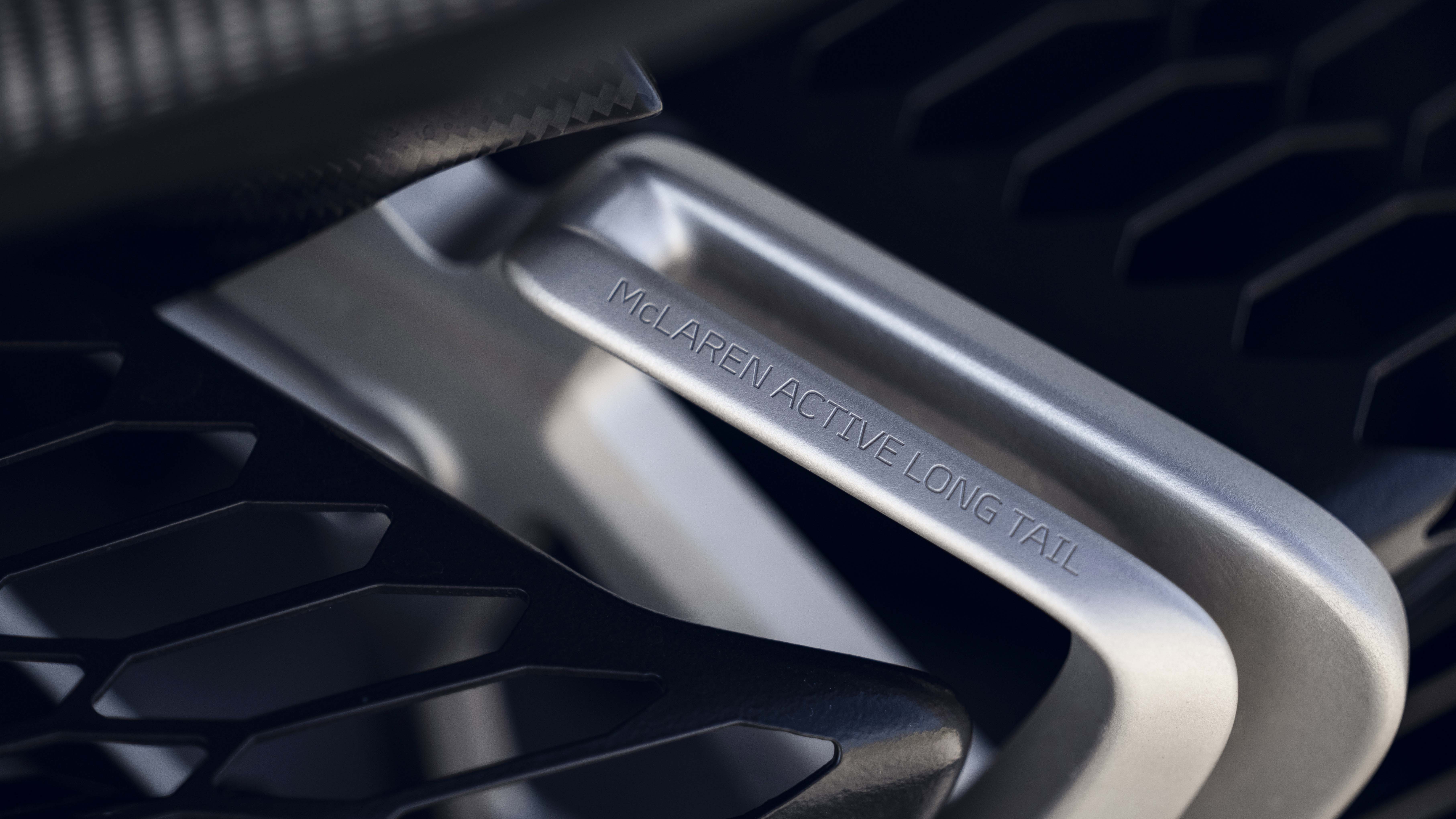
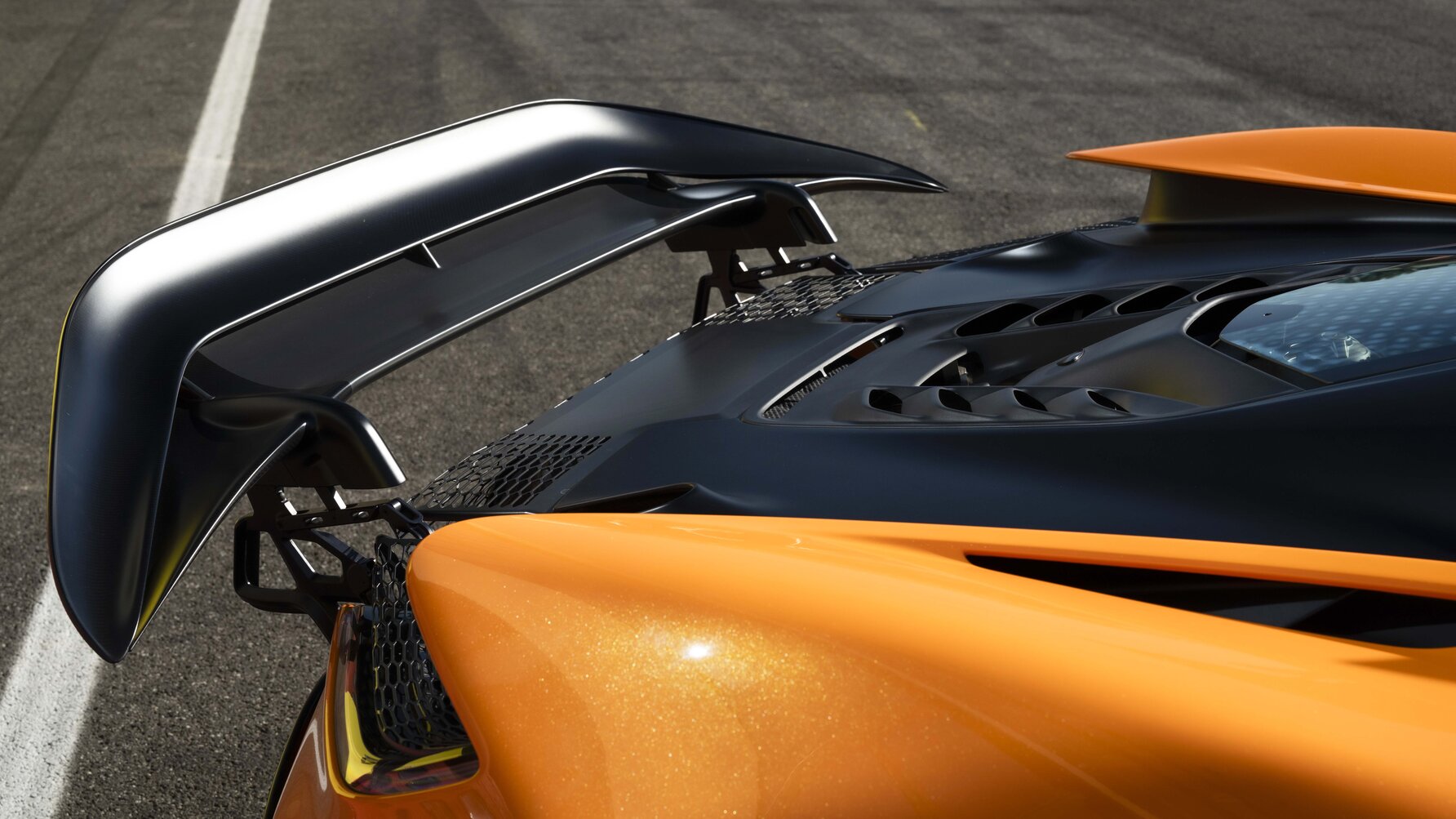
In Race mode, the ride height drops by 37mm at the front and 17mm at the rear, hunkering the car down and giving it even more visual menace. Its active front wing delivers a level of performance that’s similar to the rear wing on most supercars. Then there’s the Active Long Tail, which extends rearwards by up to 300mm through a 180° arc, far beyond the edge of the W1’s body. Four e-motors move the wing up or down and alter its angle; it also works as a drag reduction system (DRS) and an airbrake. Already something of an angry Transformer design-wise, the W1 now looks absolutely furious. More importantly, it also pumps up the downforce, with close to 1,000kg available at 173mph. (For reference, the Ferrari F80 generates 1,050kg at 155mph.)
Writing all this down is one thing, but the way it feels and what it does on track is, well, genuinely eye-popping. If you’ve ever driven a properly sorted track machine or racing car, you’ll recognise the absence of inertia, appreciate the way the W1 squirms a little as it hooks up on corner exits before thundering on to its next appointment. It’s massively and addictively fast, and gathers momentum with a mechanical ferocity and sensation that no fast EV can ever hope to touch. For the record, it’ll accelerate to 124mph in 5.8 seconds, 186mph in less than 12.7 (three tenths faster than the F80). It’s also three seconds quicker than the aero-loony Senna round McLaren’s reference test track.
Top Gear
Newsletter
Get all the latest news, reviews and exclusives, direct to your inbox.
But it somehow feels bulletproof and alive with detail at the same time. “You can smash the throttle and it’s actually quite impressive,” Dani says, with brilliant understatement. He also talks about the way the front end communicates what it’s doing through the driver’s forearms, and how the rear talks to you through your shoulders. It’s a great way of humanising the experience, but also pretty much what happens. The W1 is physical, and you’re aware of the forces being exerted on your body, but there’s delicious nuance, too.
The engineers have played with the torsion bar on the hydraulic steering for even more feel compared to the 750S. That’s the current benchmark, and the W1 surpasses it. On track in Dynamic mode, you can rotate the car meaningfully if you want to, and feel it load and unload as you really start working its tyres. There’s also variable drift control, which gives you the option of 15 different levels of ESP intervention. “It’s quite natural. We’ve achieved a great balance between grip and power, even with the ESP off. It’s not snappy, the rear end doesn’t want to overtake you all the time,” Dani says.
It would take more than two sessions at Mugello to get confident enough to fully explore all that, but rarely has 1,258bhp felt so exploitable. McLaren would shudder if I described it as old school, but the W1 is as analogue as ultra high-tech gets. The transmission is an all new eight speed dual-clutch with a much higher torque capacity than on previous McLarens. It’s sensational to use, the full-size paddleshifters working with a satisfyingly mechanical click. There’s also an all new hydraulic E-differential. Powertrain options in Race mode include a GP setting for consistency on longer runs, or Sprint for the full enchilada. Hit the boost button and you get all the electric oomph for warp factor seven acceleration. The Aero button triggers the DRS.
Rarely has 1,258bhp felt so exploitable
There’s a lot to absorb as you hammer round Mugello, taking more kerb through the chicane, braking later and later. It’s a car you can monster, and you can feel the air being hustled into action. By the end of the allotted track time, I’m seeing 195mph at the end of the straight, powering on over the little crest even as my brain is recommending much earlier intervention. The stability under maximum braking is, in every sense, breathtaking. The brakes use the McLaren Carbon Ceramic-Racing+ set up, with 390mm discs front and rear that feature an extra ceramic layer, with six-piston calipers on the front and four-piston ones on the rear. (Note also the F1-style cooling ducts.) The harder you use them, the better they get. Hypercars are usually all about the go. The W1 makes the stopping just as heroic.
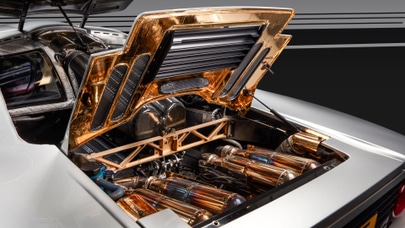
Back in the pit garage, there’s an exposed car to gawp at. The W1 gets a new Aerocell monocoque, made from pre-preg carbon fibre, the sort usually reserved for high-end motorsport or very low volume cars. It has a torsional rigidity of 51,000 Nm/degree, so it’s tier one endurance racer stiff. The tub has aero surfaces that were only possible by raising the floor, which in turn has elevated the footwell position. Airflow under the car meets a structural rear diffuser, which shrinkwraps around the powertrain. It’s made of a material called Intermediate Modulus Carbon Fibre (IMCF), an even higher strength and more heat resistant composite. There’s no need for a strut brace which in turn means the diffuser can be bigger. It also acts as a rear crash structure.
There’s a P1 and F1 for us to look at, too, confirming the W1’s amazing bloodline. The P1 still looks like a spaceship, the F1 a packaging marvel as much as anything else, but with matchless rear stance and proportions. The new car has visible carbon fibre aero structures and exposed suspension components, its side pods’ intakes and ducts soldiers in the battle between art and science. Actually, the science has become art here, when you really start poking around. I’m not sure the last time any of these cars were beautiful in the simplest sense of the word, but the W1’s complexity is seductive. With those doors open, the structure looks positively sculptural, and of course MSO exists to personalise the hell out of the car. One of the test cars had fetching stripes on the front wings.
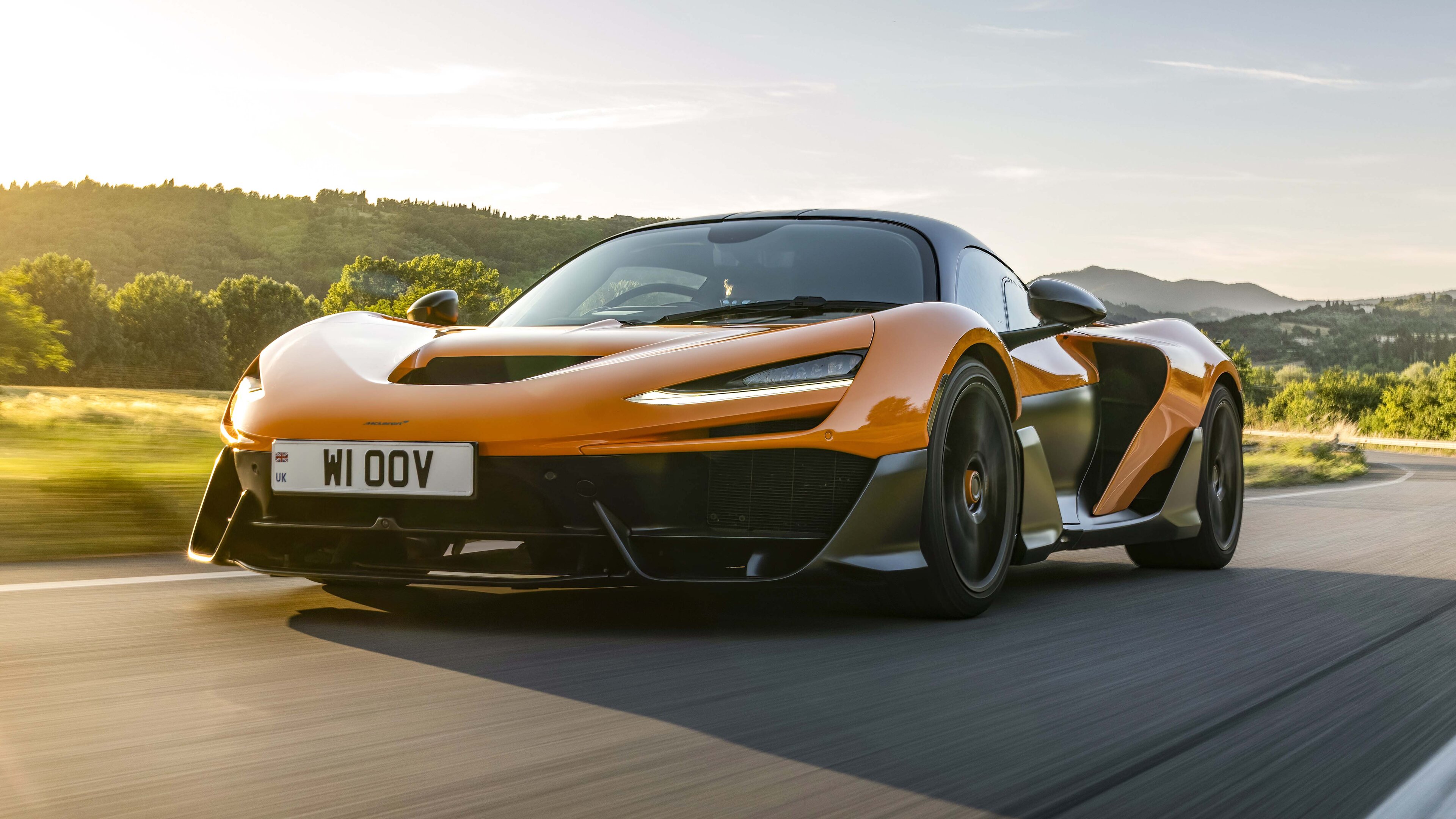
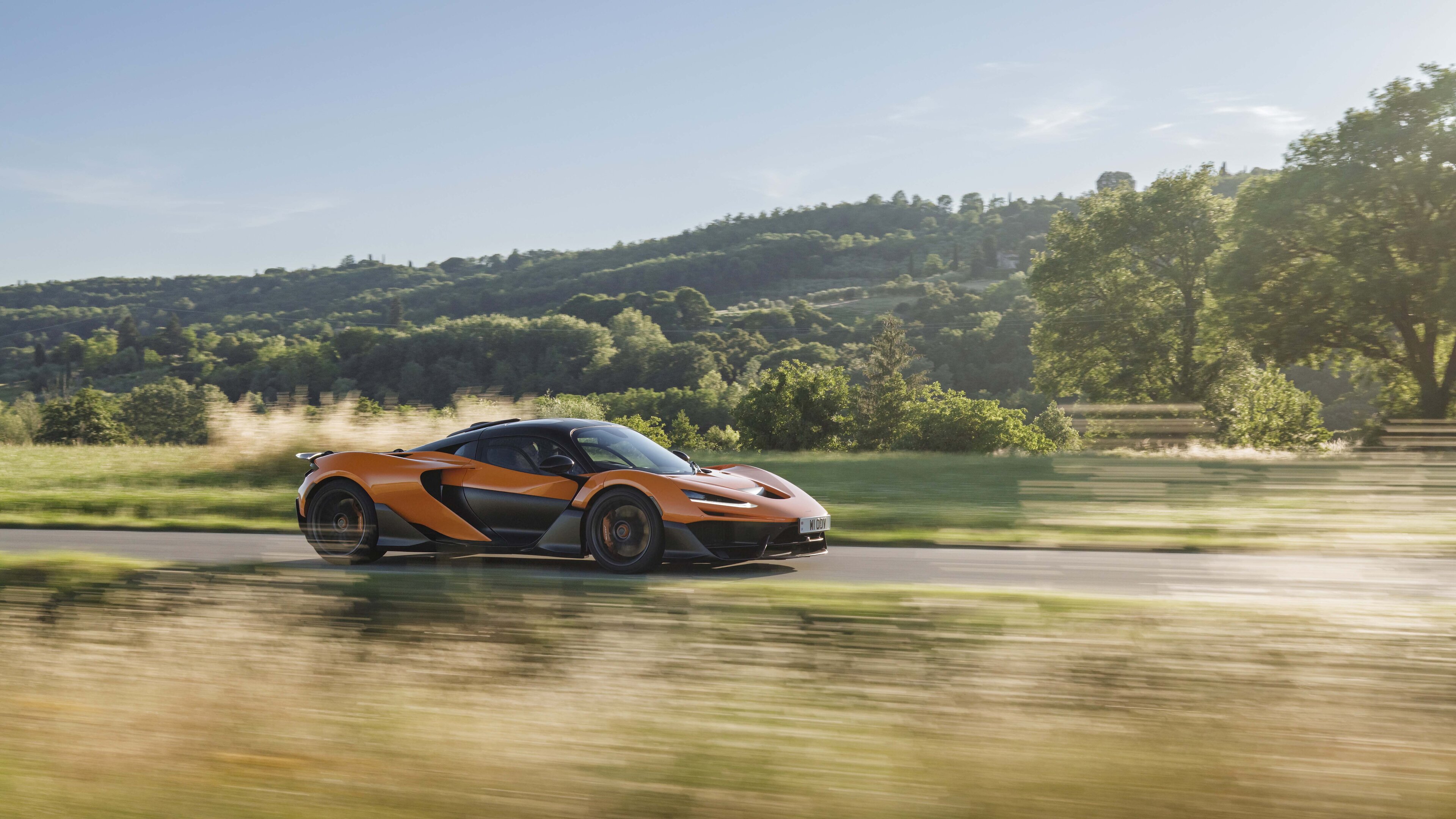
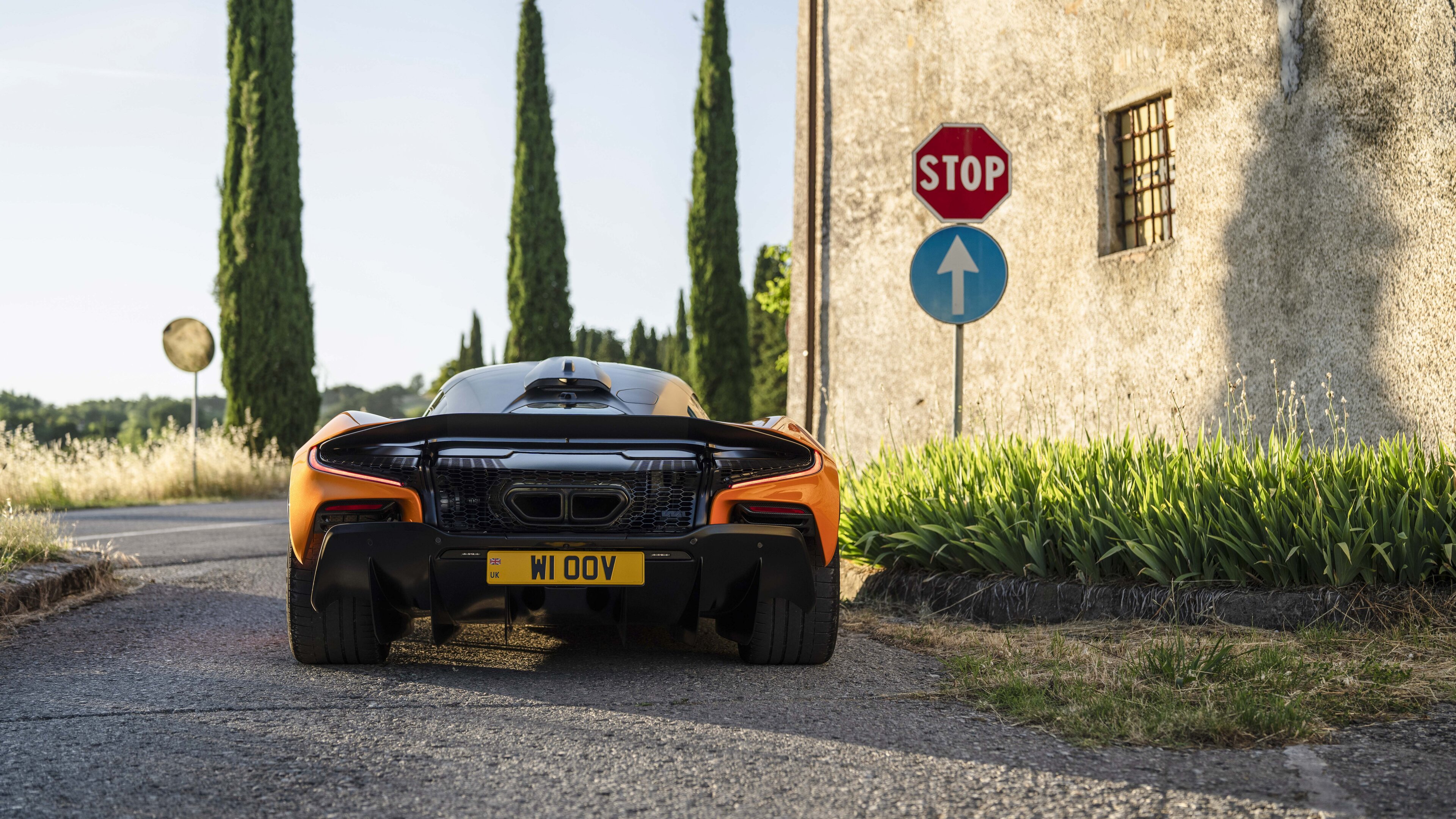
Head still swimming, temples throbbing, it’s time to head away from the track. I know the area well, with its aromatic Cypress trees and rolling hills, criss-crossed with challenging, unpredictable roads. It’s more Fiat Panda 4x4 territory, to be honest, but as the traffic thins out, the W1 just finds extra dimensions. It’ll sit in eighth gear quite happily, and has what you might call an acceptable amount of NVH. It’s amazingly comfortable and easy to use. There is no passenger with me, but if there was, conversation would be no problem. The engine may not be especially musical, but it is magnificent, rousing itself in any gear or rev increment as the car piles on speed relentlessly. We end up on the autostrada, and take in some of the amazing tunnels the Italians are so good at engineering. The W1 rips along, exhaust wailing, and you can feel the displaced air oscillating behind you.
I improvise my way onto the Futa pass, famous from the Mille Miglia, and a fabulous stretch that conjures up more ghosts. Few if any cars could possibly be faster along here than the W1, and you’d think twice about throwing, say, a Pagani Utopia at it. That feels more like driving a Renaissance bronze. Italy gets its share of earthquakes and the landscape can undulate in ways you don’t notice until you’re right in the middle of it. There are peculiar camber changes and lumpy surfaces. Rather than high speed downforce, now it’s all about suspension kinematics and body control. We stay in Comfort mode up here.
The W1 is simply incredible, harmonising its component parts in a way that makes me wonder which is the best bit. The steering, perhaps, surely the best fitted to any road car, a redefinition of linearity and feel. Or maybe the way the car just scythes across the landscape, utterly unbothered by whatever’s thrown at it. Not once does its chassis run out of answers, or do we hear the graunch of expensive carbon fibre interfacing with road. Which is a relief on a £2m motor car. Then you knock it down a few gears and give it as much as you dare, not chasing that moment where you find yourself right in the zone, but there constantly. McLaren is right – the W1 truly is the ‘everything’ car.