





BusinessTop Gear
Here's how the Renault Group's big new plan could make its future cars cheaper
Renault's on a mission: 36 new cars, more tech and AI robots. Here's what it all means
The Renault Group has outlined its strategy for the next five years or so. In short, more new cars, with more focus on what the brands – Renault, Dacia, Alpine – mean to buyers. Plus more use of new tech in the cars themselves, and in their design and production.
This plan comes nine months into the leadership of Francois Provost as CEO. He replaced Luca de Meo who left the car industry having revolutionised the car range, cut costs, and helped the image. Provost is less flamboyant but as head of purchasing was integral in the past five year's success.
Advertisement - Page continues below
When I spoke to Provost a while ago he admitted there have been times in the past when Renault has suffered a drought of new metal, and was adamant the pace of new car launches can't slacken. He's far from just a scorched-earth cost-cutter.
Sure enough the new plan calls for 36 new cars across the brands by 2030, which is even more than we've seen since 2020. In Europe the busy schedule calls for 12 new Renaults, several Dacias including one below the Sandero and one priced above the Bigster, with four full EVs in the Dacia range. Plus of course the new Alpine A110 and a hypercar too.
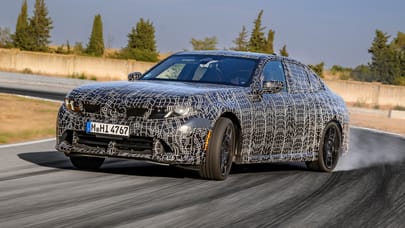
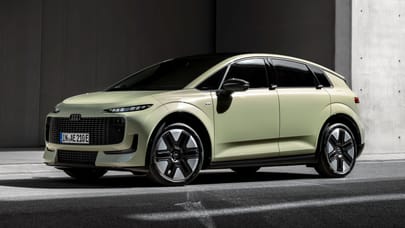
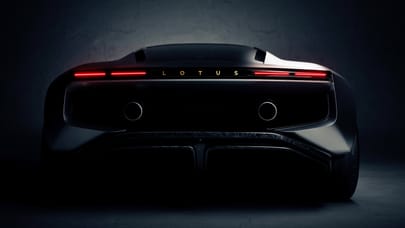
India, Latin America and South Korea – increasingly important to the Group – get their own phalanxes of launches.
The Group is now effectively operating separately from Nissan. It will launch a completely new EV platform, more high-tech than the Megane/Scenic/A390 design. They're calling it RGEV2.0. It will run at 800V and use a cell-to-body battery to cut weight and complexity and get 10-minute rapid charging.
Advertisement - Page continues below
This modular platform will accommodate a wide range of models from the B+ to D segments. It will also have the versatility to accommodate all body styles: saloon, SUV and even MPV, Renault says. It adds that the platform can accommodate a range-extender generator for 900-odd miles of combined petrol and electric reach.
However, for lower-cost cars Renault will continue to develop its existing EV platforms, using 400V systems and cheaper LPP chemistry. Renault is developing a new 275bhp motor, an EESM (all-coil) type as it has used ever since the Zoe, which will improve motorway efficiency yet cost 20 per cent less than before. In-wheel motors will be used in other cars beyond the R5 Turbo 3E.
Renault's unique hybrid system will also be developed, in addition to the range extenders from Horse, a powertrain company it co-owns with Geely.
That's the car stuff. The plan also indicates improvements in the way the company itself runs. That includes getting development times down to two years. That has been key in the success of Chinese carmakers: it means cars cost less to develop and are more modern when they launch. The factories will use humanoid robots. And AI (everyone says that). The number of parts in the cars will be reduced by 30 per cent on average, making them cheaper to build and more reliable.
Top Gear
Newsletter
Get all the latest news, reviews and exclusives, direct to your inbox.
Assuming all those changes come good, Renault calculates each car model's fixed cost will be cut by 40 per cent thanks to simplified development and tooling. And cuts in material and build complexity will mean each individual car's variable cost will drop by £350.
Renault's break-even costs will fall for another reason. It's going to be building cars for Nissan (Micra), Mitsubishi, Ford (electric small car and crossover) and Geely. It sees the trust placed in it by those companies as a key demonstration of its expertise.
Trending this week
- Car Review
Mazda CX-6e
- Top Gear Advice
Here are 17 cars that’ll (probably) do 300,000 miles or more