




Electric
Top Gear
The most efficient Audi of all time: meet the new A2
Audi resurrects the name of its game-changing eco-champ as a modern-day 'logical' EV
Fitness for purpose. Is there really a more important metric by which to judge a car? Not when it comes to something like the new Audi A2, which has multiple mission statements, but aims to be USEFUL above all.
Firstly, it’s the company’s entry-level car, and replaces the A1 and Q2. Secondly, it’s electric but Audi insists that it should be all the car a family needs. (So not just a runaround with a Q7 next to it on the driveway for those weekends in the Cotswolds.) And thirdly, the name self-evidently echoes its early Noughties aluminium-rich and now beloved cult classic forebear.
Advertisement - Page continues below
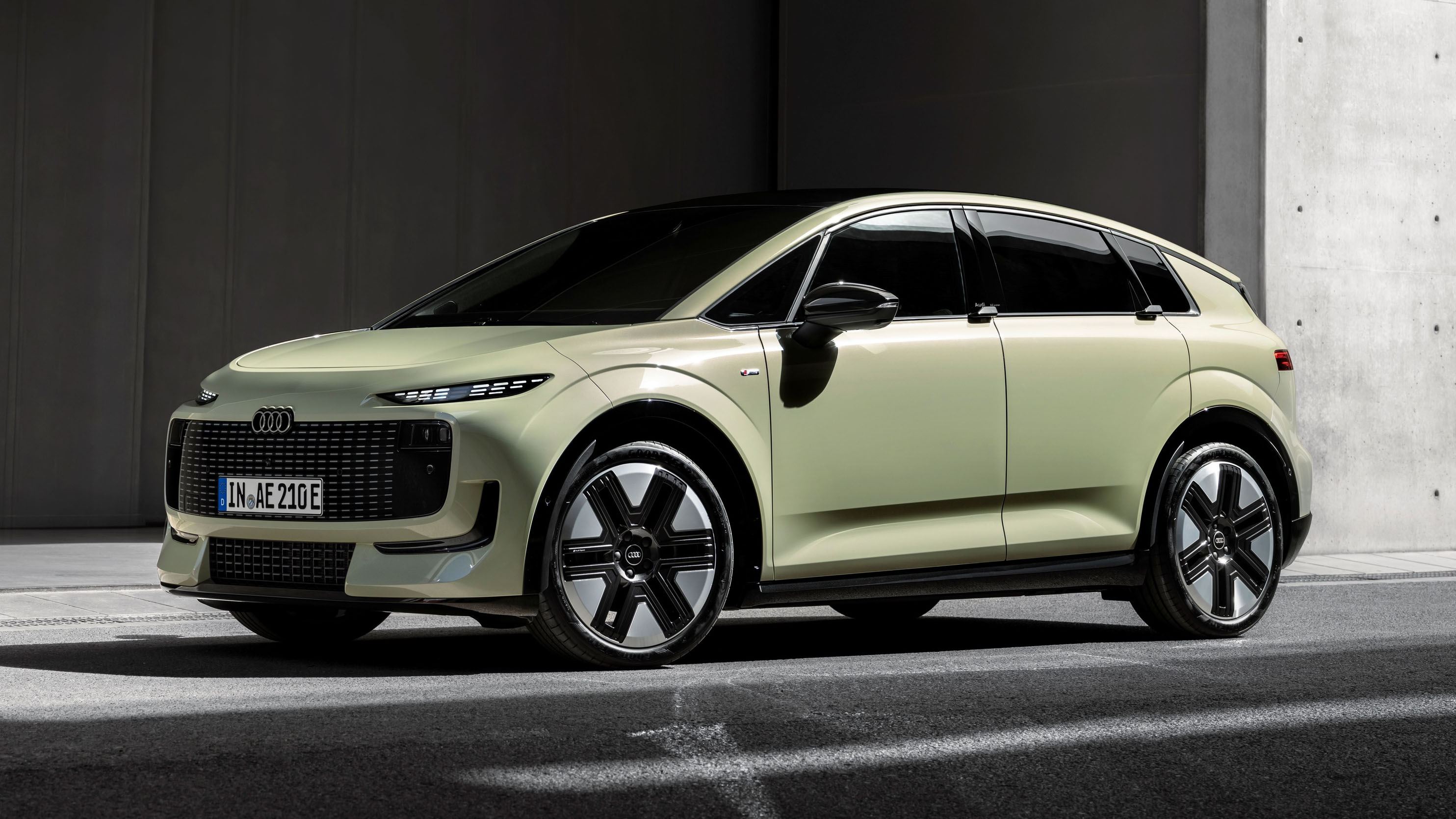
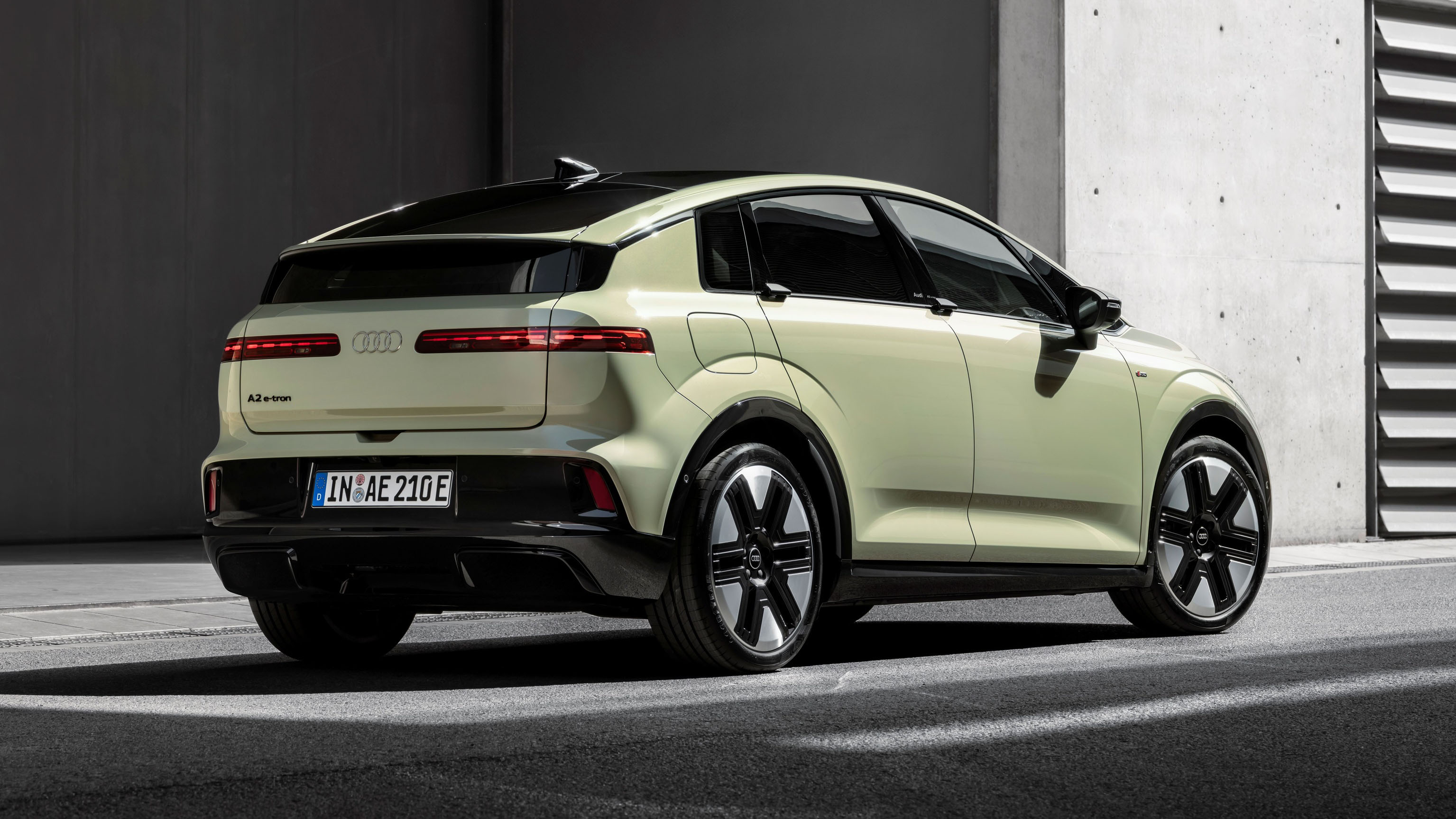
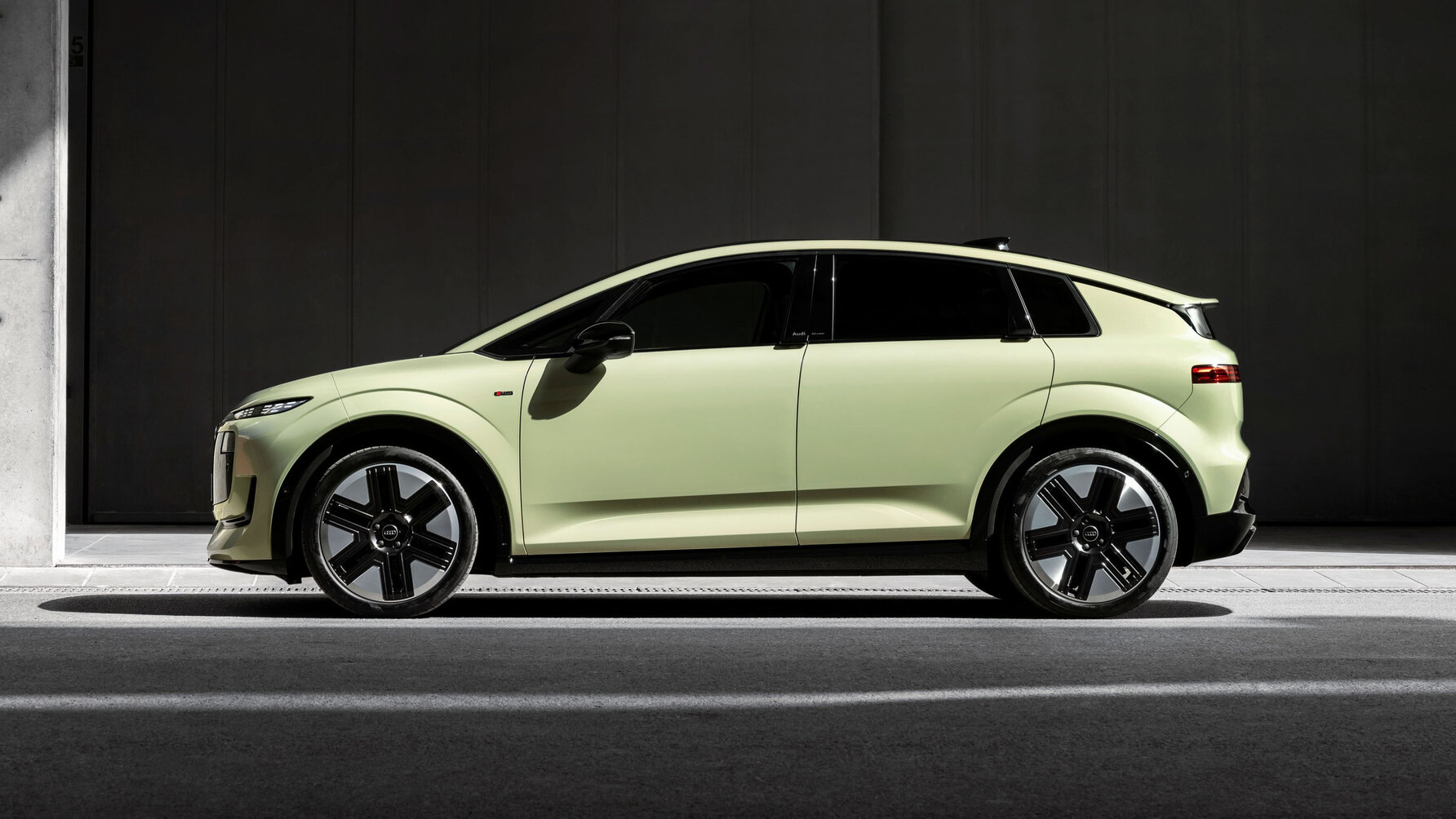
The name and the silhouette. Except that the new A2 is not mining the same retro vibes as the next TT. TG.com is in a studio in Germany inspecting it for clues, and yes, there are definite call-backs. But when you set out to maximise aero and range in a compact but roomy EV form, this is what you end up with: appealingly short front and rear overhangs, a lozenge-y shape, and a split rear window. Point of fact, when the design team began work on it the name hadn’t even been decided. Design lead Jakob Hirzel tells us more.
“An overly aero-oriented car usually has a teardrop shape but the A2 has edges, solid sculpted surfaces, and a proud volume at the front. It has its own character, and we were really pushing for that. The black panel in the nose absorbs all the sensors and clutter we have to package now. It gives the car a distinct face. The rectangle is an extrusion of the whole car, and you can see that it in the body sides and at the rear.”
In other words, the A2 looks more grown-up and less Pixar-y than Audi’s OG city car. It’s a feeling underlined by the fat wheelarches, shallow DLO (glass area), and the speedy rake of the windscreen. Those clean body sides are welcome, too, with little wing-tip electric door-handles playing their part there. And rather than monochromatic and machined-looking colours, Audi favours strident blues and a Pistachio green for the A2.
It’s all in the aid of dialling up the car’s personality, although the 0.24 drag co-efficient anchors the science. As do smooth underfloor aero transitions and the ‘gap reducers’ between the wheel and the wheel arches. The wheels themselves are available in 18- to 20in diameter, carefully aero-optimised in the expected EV idiom, but wrapped in stockier 225 to 235mm rubber. They’re optimised for rolling resistance, though, and run higher than normal pressures.
Advertisement - Page continues below
More vibrant motors should also help differentiate it from the other VW Group cars that ride on the MEB platform. That’s been Audi-fied here. The A2 uses the latest generation of permanent-magnet synchronous motors, depending on the power level. Here’s proof that the EV world is one of constant iterative improvement. The new motors – known as APP350 and 550 – feature a variety of mods to enhance overall efficiency, including the use of low-viscosity oil, highly polished gearbox spurs, and more advanced stator and rotor components. Expensively engineered marginal gains means more range, and everyone values that.
There are four power levels ranging from 167 to 322bhp, though even the most potent A2 remains rear-drive only. There will be no quattro badge here; it’ll do 62mph in 5.7 seconds which is plenty fast enough. Audi claims 4.5 mi/kWh for the entry level car, 4.3 for the pokiest iteration. The 187bhp version fitted with the optional efficiency package claims 4.8 mi/kWH WLTP, which makes it the most efficient Audi of all time. That’s impressive, and TG.com’s drive in a prototype suggests five-plus is doable.
Three battery configurations are available, of 52, 61 and 84kWh gross capacity. The two smaller set-ups use LFP (lithium-ion phosphate) chemistry, while the biggest one is an NMC battery (nickel manganese cobalt). The latter has higher energy density and delivers superior range, but is happier charging between 20 to 80 per cent and will degrade if regularly charged beyond that. LFPs are cheaper to produce and don’t use cobalt, but they’re slower to charge in cold weather. The 228bhp A2 is the range champion; Audi claims ‘up to 401 miles’, and the more powerful versions can charge at up to 183kW.
Uprated suspension is optional on the 228bhp car, standard on the most powerful model. But it’s not a sports car. ‘Comfort’, ‘Balanced’, ‘Efficiency’ and ‘Dynamic’ drive modes are as per the Audi norm, and the level of braking regen can be altered via steering wheel paddles. One-pedal driving is also available. Audi says that “linear steering comes as standard”, which is good to know because non-linear sounds problematic, but you get a variable ratio set-up if you spring for the Tech Plus package. Details of what that encompasses, and indeed which versions and trim levels are coming to the UK, will be confirmed later.
Top Gear
Newsletter
Get all the latest news, reviews and exclusives, direct to your inbox.
All the latest driver assist systems are naturally part of the deal; adaptive cruise assist combines cruise control with active lane guidance at speeds up to 130mph, and it’ll stop at automatically at a red light. Park assist is also available. Or you could, you know, actually drive the thing yourself, and learn how to park it. It’s not that big.
Now back to the fitness for purpose idea. Audi’s CEO Gernot Döllner, instigated a new ‘strive for clarity’ philosophy when he unveiled the Concept C a year ago. He also admitted to me that the idea was seeded partly when he discovered that the company offered “more than 100” different variations of steering wheel. Madness. The A2 comes with a choice of two, neither of which I particularly like, but the rest of the interior has some clever thinking. It’s not all predicated on outsized multimedia screens and an obsession with connectivity, either. There’s an emphasis on tactility and utility here.
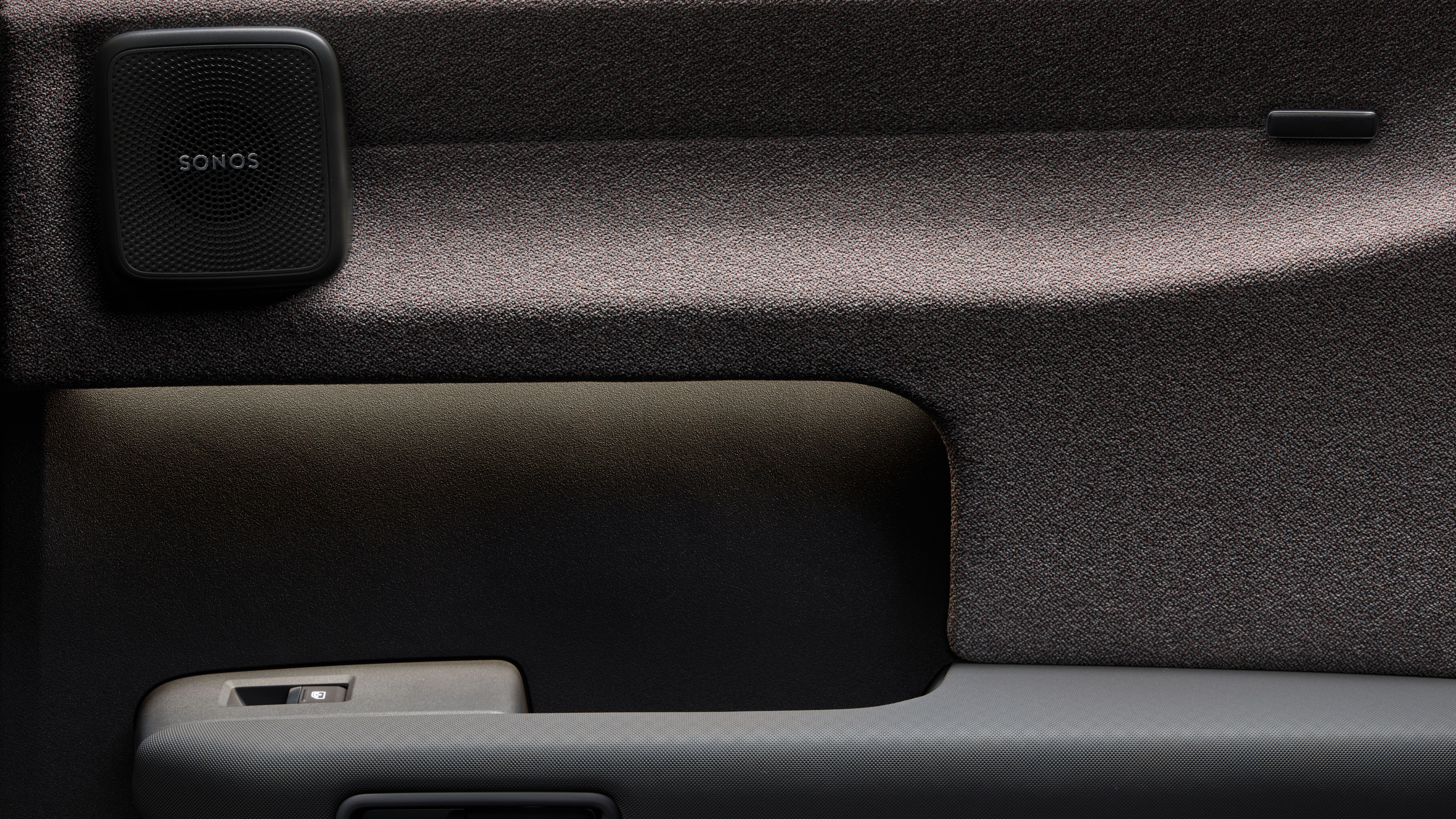
Central to the former is the use of something called Softwrap, a recycled (or ‘post-consumer’) fabric that sweeps across the dashboard, door panels, and into the rear, terminating at the edge of the window ledge. The area in front of the passenger is nicely hollowed out, and the dash is abutted at either end by vertical air vents. Little oblong inserts are sprinkled about and nod to furniture. The material feels nice enough, although the plastics get less premium the further south you go. The doorbins are spacious. We’re not sure how high quality the electric door release feels, but like the fact that the door lock/unlock buttons are actually on the door. Logical.
With the drive selector on top of the steering column, the real estate freed up on the centre console houses a floating binnacle with a phone tray that has space for two smartphones to be charged wirelessly at the same time – at up to 25 watts. That means a significantly reduced charging time, and it’s cooled so your phone doesn’t get fried. Magnets stop them from sliding around.
There’s an emphasis on tactility and utility here
The A2 is also the first car to use Fidlock, a German fastening system that combines a mechanical lock and magnet to hold cupholders and bags securely in place. Fidlock has migrated from the cycling world, it’s an expanding eco-system, and it seems to work. We tried to break it but couldn’t. Five buttons sit at the end of the binnacle: for drive mode select, the ADAS quick key (hurrah!), hazard warning, cameras, and traction control. More logic.
Audi’s panoramic MMI combines the 11.9in main instrument display and the 12.8in curved touchscreen. It has all the usual connectivity, including the Audi assistant voice activation, AI functionality, and the ability to run Microsoft Outlook and Teams onboard. Truly, there is no escape. The top tier Sonos audio system has 14 speakers, a subwoofer and 660 watt output. If you want silence, clever aero-acoustics mean that the A2 is impressively quiet inside. (A tailgate seal suppresses wind noise around the antenna, where airflow tends to get busy.) It’s also roomy, front and back, with decent headroom despite the tapered roofline. Boot capacity is 396 litres, 1,336 litres with the rear seats folded.
The A2 supports bi-directional charging and Vehicle-to-Load, so it can power electrical devices or feed surplus energy into your house (though not in the UK, yet).
Speaking of which, prices will start at £32,200. That’s competitive. The new A2 may not be the design and materials pioneer that its predecessor was, but as a gateway drug to Audi’s ever-improving e-tron ecosystem, it’s very promising.
Trending this week
- Car Review
Lucid Gravity (US)