



25
130 miles
30kWh
111.3bhp
10.4s
0g/km
78Mph
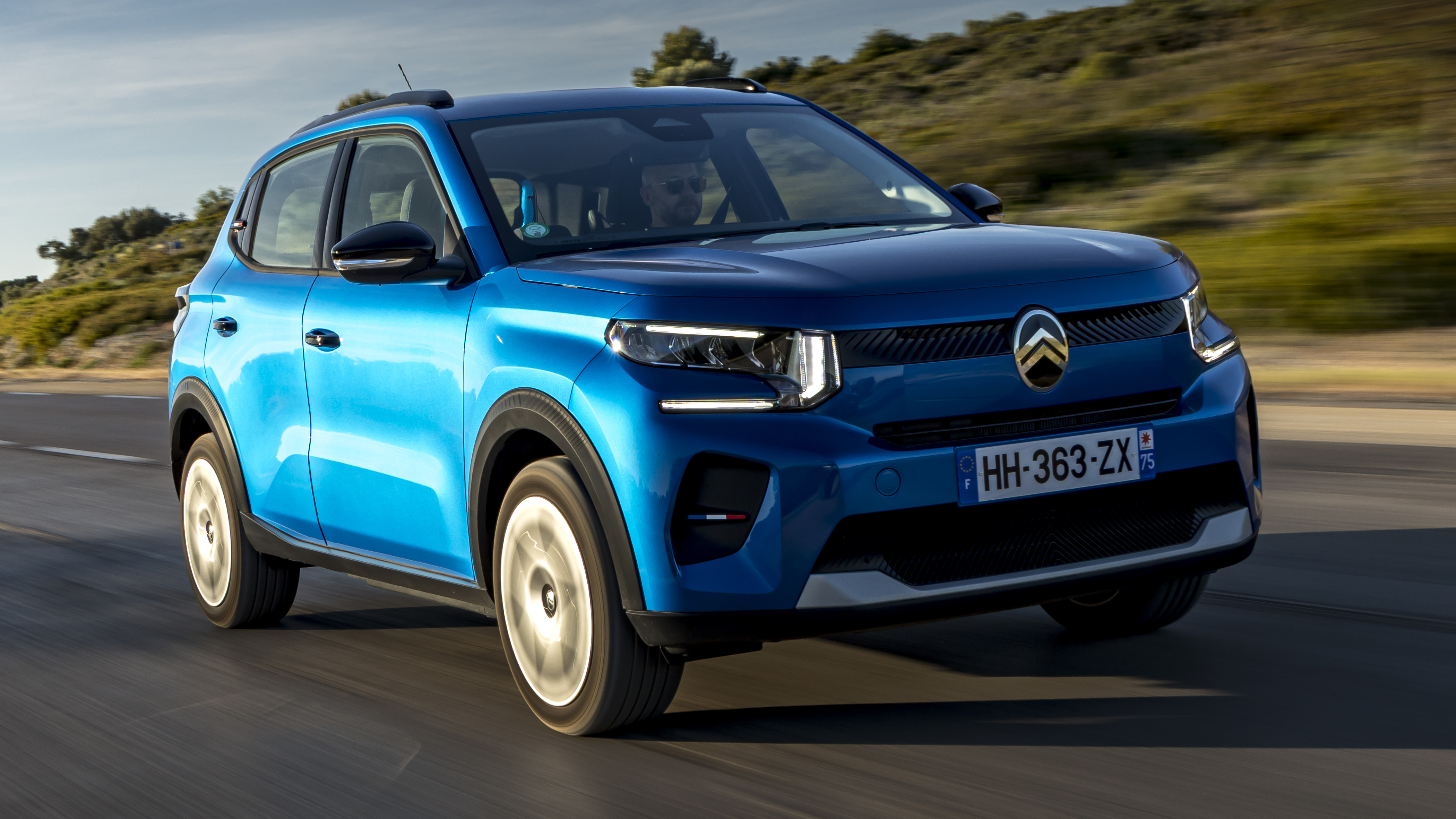
No. But yes. But also no. This generation of the Citroen C3 landed a couple of years ago, with funky looks inspired by the Oli concept and, for the first time in the developed world, an electric powertrain.
The e-C3 paired 111bhp electric motor with a 44kWh battery for a range of up to 199 miles, priced from an appealing £22k. Notably good value compared to stuff like the Fiat 500, Mini Cooper Electric, Peugeot e-208 and Vauxhall Corsa Electric. And way comfier than any of them, I might add.
This is the e-C3 Urban Range. It gets the same 111bhp front driven electric motor, but a much smaller, 30kWh battery for a reduced range of 130 miles WLTP.
That's fewer cells than you get in a plug-in hybrid GLC, and goes against the grain in the small BEV world of late. Which makes it Officially Interesting.
Well kinda, but that’s not the point – the clue’s in the name. This e-C3 Urban Range is solely squared at city and suburban folk, whose idea of a long drive involves a minor diversion between the school drop-off and Lidl.
According to Citroen, if you stick within city limits it has a range of up to 186 miles WLTP – schlepping up and down the motorway is very much not on the agenda here.
Cost, mainly. This e-C3 Urban Range starts at £19,995, though the Government's Electric Car Grant eligibility means you can immediately knock £1,500 off that – bringing the price down to £18,495.
The only electric cars currently cheaper than that are the Leapmotor T03 (£14,495/165 miles/37.3kWh battery) and Dacia Spring (£15,990/140 miles/26.8kWh), but this feels in a different league compared to those two.
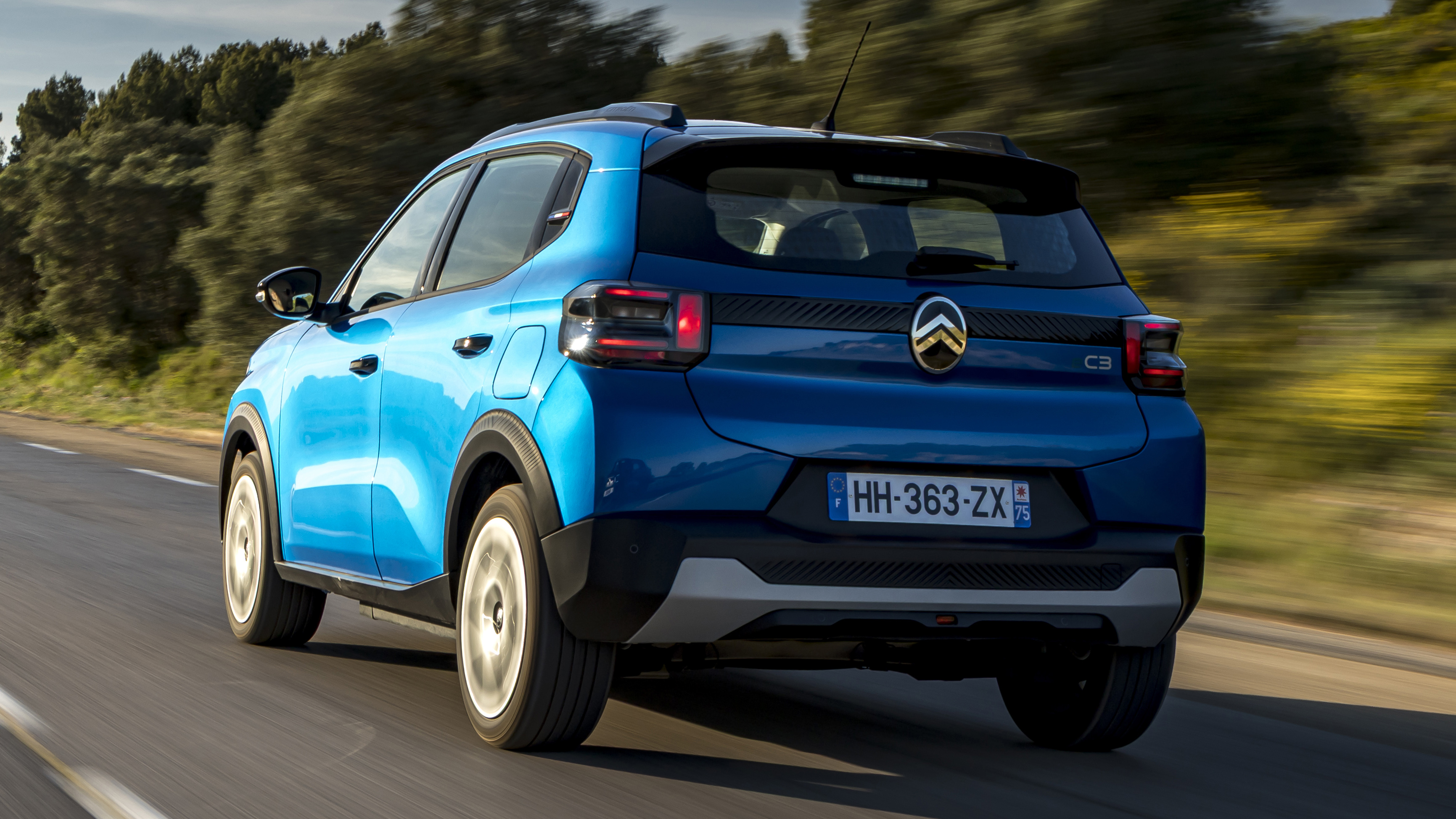
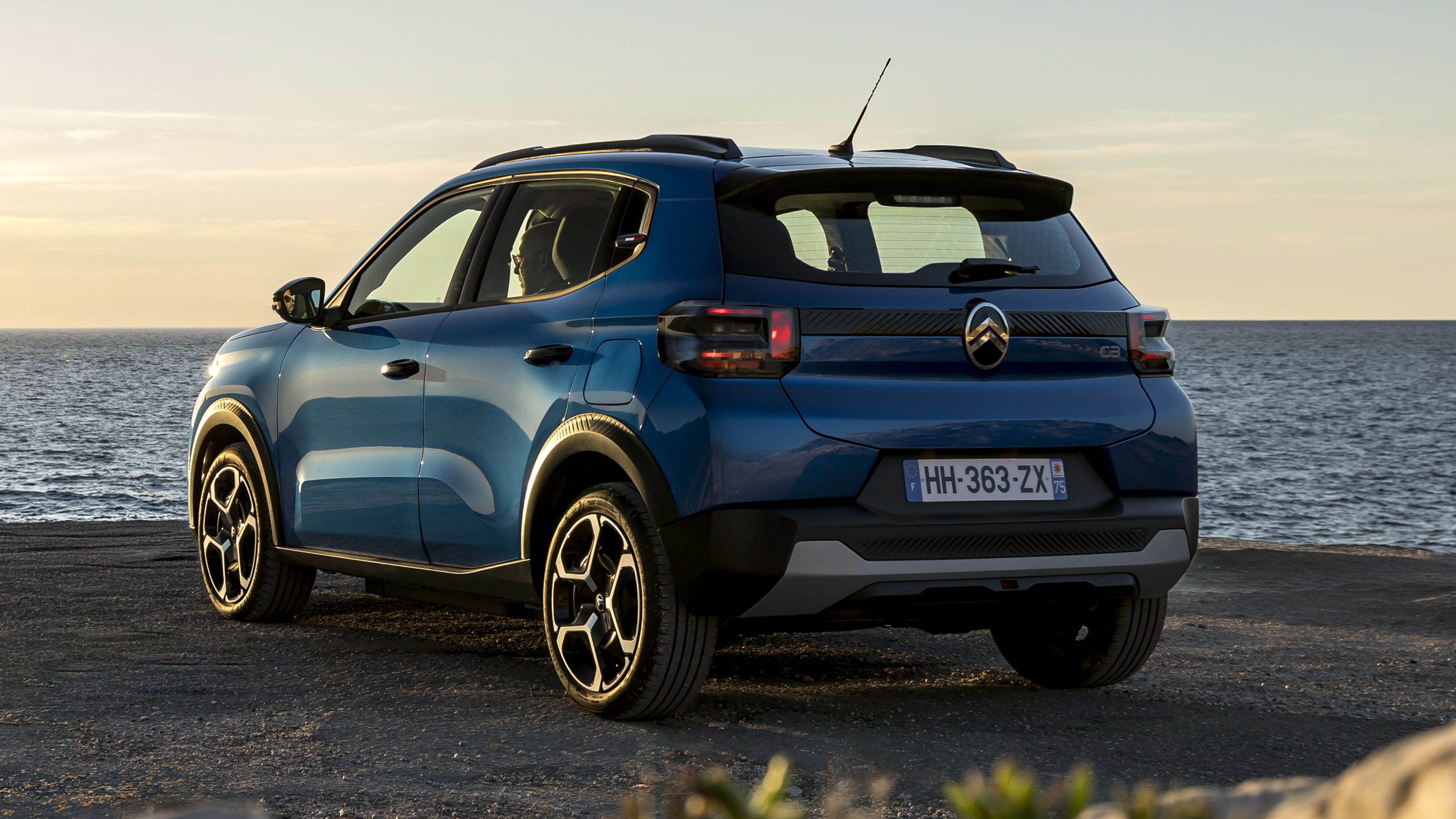
Primarily because it’s otherwise the same as your regular e-C3 (now called e-C3 Standard Range). It’s indistinguishable both inside and out, and shares the same ‘Plus’ trim level (though you don’t get the next up ‘Max’ version here). So you still get 17in alloy wheels, LED headlights, black two-tone paint, roof rails, a 10.25in colour touchscreen with smartphone mirroring, cruise control, rear parking sensors… and much more.
Including, of course, Citroen’s party piece: Advanced Comfort Seats and Suspension. The former essentially means armchairs that are kinder to your bum, the latter a fancy suspension setup with hydraulic bump stops to cushion out any lumps and bumps in our pockmarked roads – as you find in the French carmaker’s more expensive models. Ahh.
Get all the latest news, reviews and exclusives, direct to your inbox.
Much like the standard e-C3. This is a good thing, because it’s a car we like at Top Gear. Our test route took us through the centre of Marseille where the diddy Citroen felt very much at home, with its miniature steering wheel (similar to Peugeot’s i-Cockpit setup) making it feel lithe and nimble. The 10.6-metre turning circle backs that up.
It’s not short of space inside either – you could feasibly fit four adults (or two adults, three kids) in here.
Acceleration is perky until it isn’t, 0-62mph taking 10.4 seconds – perfectly adequate when you’re barely moving above walking pace, but tailing off noticeably once you get beyond that.
And if you do go further afield it’s far from a fish out of water, coping admirably on French B-roads and autoroutes where the likes of the Spring and T03 feel completely out of their depth. Not so here.
Er, no. Over our 60-mile mixed route I managed 3.3 mi/kWh – or a real world range of 100 miles. That’s with the aircon on (it was 25 degrees, give me a break) and, as mentioned, a fair chunk of French autoroute. Just because it can do faster roads doesn't mean it should.
Particularly as there’s no shortage of electric superminis that will go further for not much more cash. The Renault 5 starts from £21,495 and we've dragged 3.5 mi/kWh out of that for 140 miles of range; the Nissan Micra has the same pricetag, same WLTP stats (it's basically the same car)... and we've gleaned 4.8 mi/kWh (190 miles ish) from it. The Spring too is a veritable efficiency monster.
Here's the real kicker. Fast charging is only supported up to 30kW, down massively on the 100kW DC of the Standard Range. And even then you have to fork out £440 to unlock it, or else you'll have to survive with 7.4kW max on AC power. Yikes.
Surely that's an investment you'll want to make, even if you never intend to take the Urban Range beyond the parish. At 30kW it'll rejuice from 20 to 80 per cent in 36 minutes at a service station, otherwise you're facing charge times of several hours. Fine on the driveway, not so fine if you fancy a day trip to the beach. Better check the train timetable...
No more so than in the regular e-C3. Modern day anachronisms include a manual handbrake, wind-up rear windows, and physically having to turn the key in the ignition. What is it, 2003 now?
We’re big fans of the head-up display instrument cluster, but the touchscreen feels cheap and limited in functionality – though you do at least get proper physical aircon controls.
The piano-black plastic around the centre console also really lets the otherwise quirky interior down (complete with the clothes labels on the door that say ‘have fun’, ‘be happy’, ‘feel good’, ‘be cool’). The fabric-lined dash is very nice but it can't hide the sheer volume of nuclear-proof plastics about the cabin.
Definitely. The Urban Range is aimed at a very specific type of person with a narrow band of needs – realistically, who is going to opt for something so inflexible when you can keep your options open for not much more money?
The Standard Range also qualifies for the Electric Car Grant, so is just £2,100 more than the Urban Range. Through Citroen finance, that works out at around £10 a month more over two years – a small price to pay for the extra range and higher charging speed. And not having to get the train, obvs.
Get all the latest news, reviews and exclusives, direct to your inbox.
