the fastest
108kW Advance 42kWh 5dr Auto
- 0-628.8s
- CO20
- BHP144.8
- MPG
- Price£22,180
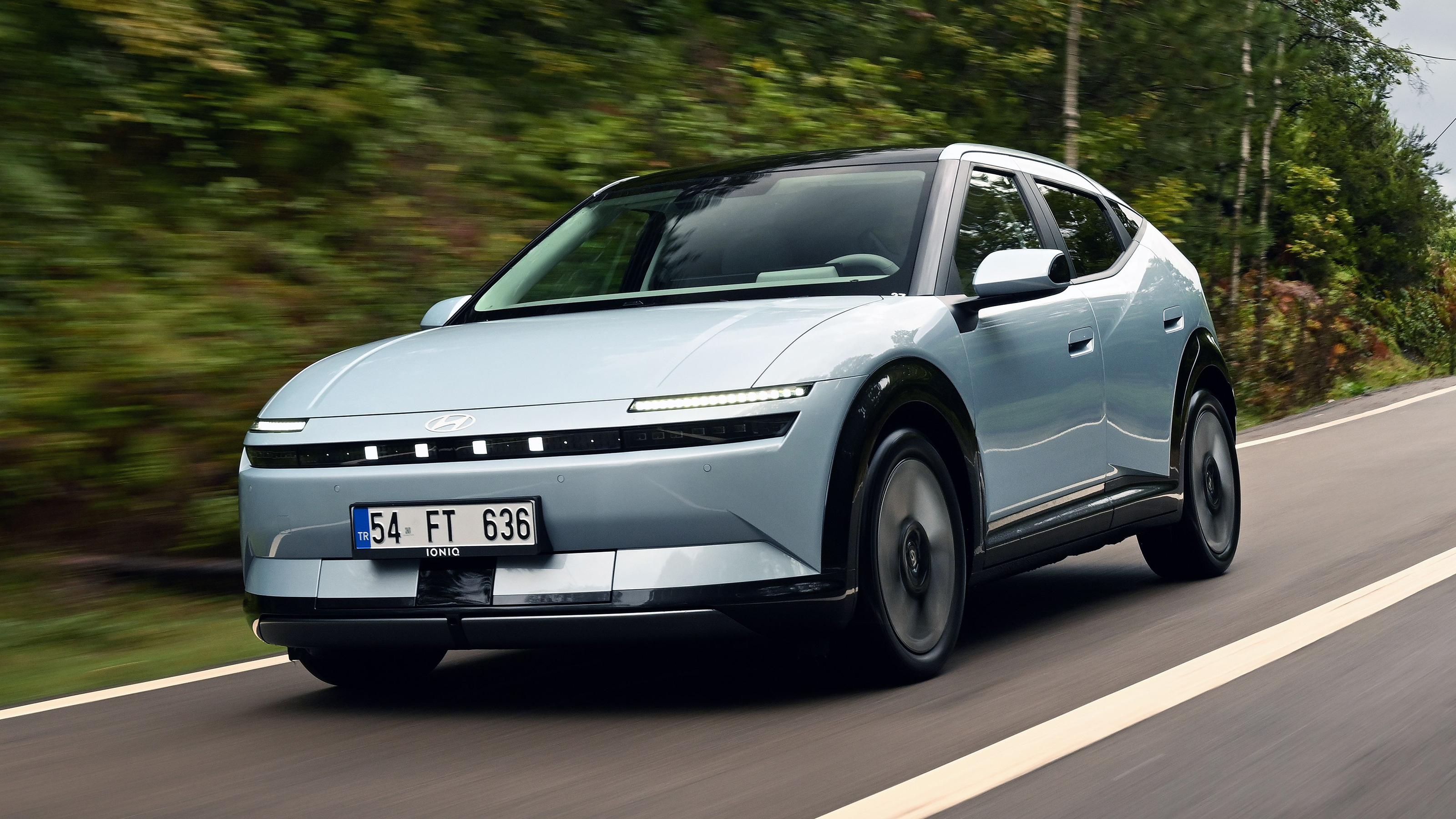
It’s the best dynamically set-up Hyundai EV we’ve driven. Well, providing we ignore the hot Ioniq N ones. However, this isn’t saying that much. The Inster is softly bobbly, the Ioniq 5 is lardy with numb steering and the Ioniq 6 was a slight, but not massive improvement. But with the Ioniq 3 Hyundai has found its range.
Er, it hasn’t found its range in that direction. This is not a zesty, hot hatch-esque machine (we rather hope one of those will be along in due course). But it is a mature, well rounded car that hits the markers that the class requires very accurately.
Firstly it’s quiet on the road. Yes, there’s a rustle of wind noise from the kink that the designers must have insisted on at the top of the driver’s door. But that’s all there is to pick at. This is a calm cruiser with tidily damped movements and well insulated suspension, that’ll sit perfectly happily at a motorway cruise and feel like a car from the class above.
In part it’s the Ioniq 3’s size that gives it decent cruising ability. It is a little larger than most in the class, both in terms of width and length. And this does unstitch it very slightly around town. It feels that bit larger than a 5 or Raval and those rakishly sloping A-pillars do make forward visibility a little more challenging.
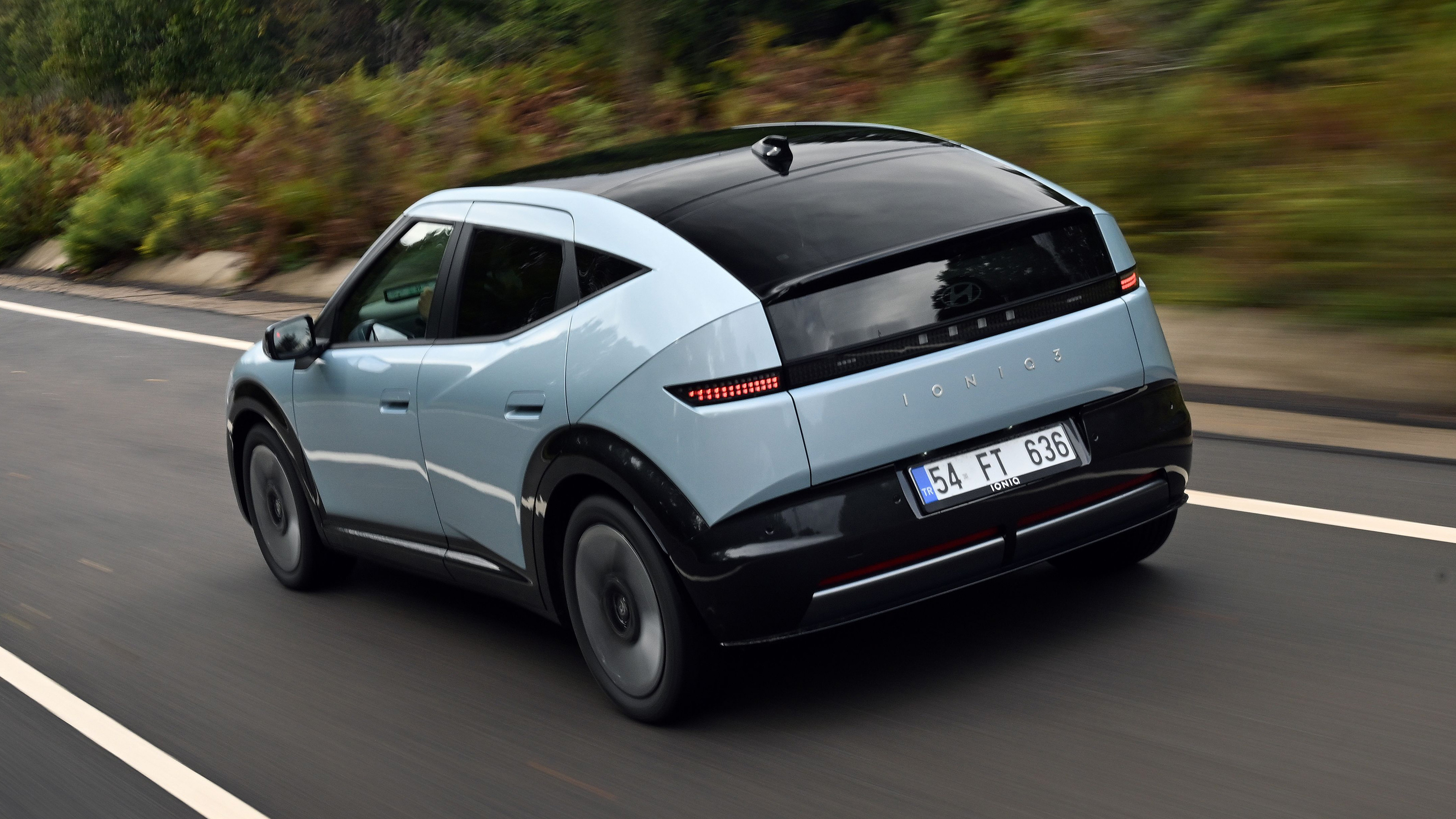
But still way better than rear visibility, which is bisected by the rear spoiler. Good for aero (a drag factor of 0.26Cd is very good), bad for seeing what’s behind you. If you’re a short driver you’re going to struggle to see anything.
On the flip side this is a very easy car to drive. We know, it’s electric, they all are. But it’s not that, it’s that the Ioniq 3 interprets your inputs promptly and accurately. In other words it does what you ask, when you ask. You get the response you expect from the pedals and steering, it doesn’t surge or brake oddly – provided you don’t mess around with the modes too much.
Just leave it in Normal. Sport is too eager, Eco too sluggish. There’s an option for one-pedal driving. Be wary. The regen braking, adjusted across four levels by the paddles, can be very strong.
None of the modes affects the suspension. If you want to soften the ride you’ll have to go for a base-spec model on 16-inch wheels, rather than the N Line’s 19s wearing 225-width tyres.
Probably not. This is a skilfully set-up car with a good balance between ride and handling. The common bugbear with EVs is that they don’t control their weight well enough, tending to heave over crests, loll and bounce around. That’s certainly been true of past Hyundais.
This one is different. The front and rear axles work in unison, the steering feels natural and inspires enough confidence in its weighting and accuracy that you don’t worry about the lack of feel. It’s not as much fun as the Renault, or agile as the Raval, but it’s smooth, competent and composed.
Sharp ridges such as expansion joints can catch it out, especially if they’re mid-corner. But otherwise we believe Hyundai’s claim that the Ioniq 3 was developed in Europe, for Europe. It’s built here as well, at the Izmit plant in Turkey that was the firm’s first ever plant outside Korea, first opened back in 1997.
Getting back on track it’s not especially quick, maxing out at just 105mph (102mph for the N Line, once again failing to live up to its name), but it can go a long way. 308 miles of range is plenty for a supermini and more than most rivals on paper, but it gains range at the expense of efficiency. The 3.5 to 4.0 mi/kWh we've extracted from it in cool autumn conditions in the UK – indicating 210-245 miles of real-world range – isn’t that impressive for a car this slippery through the air. Blame the 1,550kg kerbweight for denting that.
Good point. They probably won’t care that much about the 400v underpinnings that yield a 30 minute 10-80 per cent recharge either given this is likely to be a car charged at home on cheap off-peak electric. After all, why pay 70 pence per kilowatt-hour when you can pay seven?
Get all the latest news, reviews and exclusives, direct to your inbox.