


25
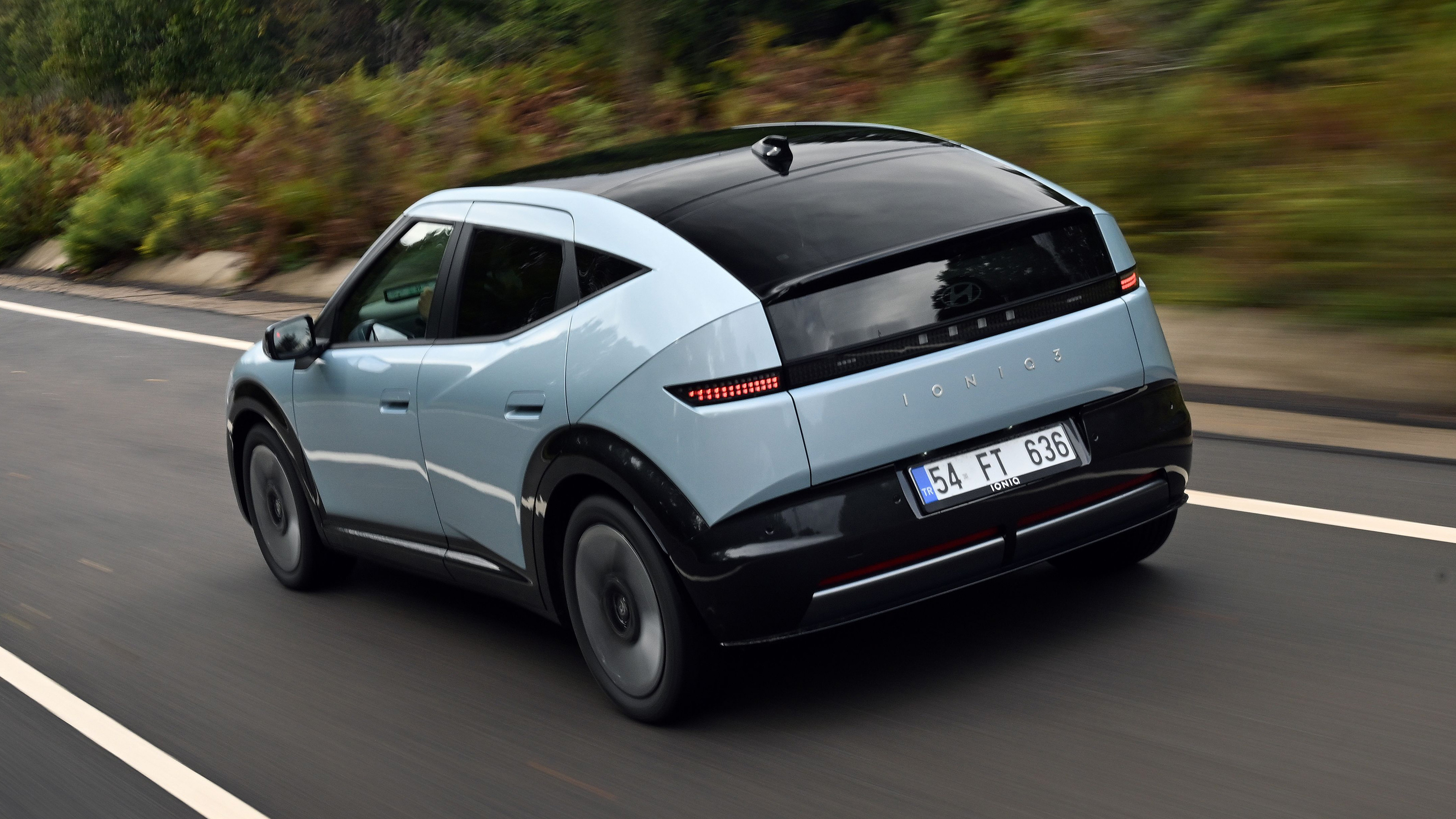
Dark, mainly. Especially in the back where small windows and the dipping roofline conspire to eradicate light. You can only get the panoramic (and aptly named) Vision Roof as a £1,500 option on the Ultimate and N Line trims. You'll want it.
Now, further issues while you try to feel your way around in the back. The dipping roofline meets a high floor. To create headroom the rear bench is low, but the high floor means your knees are round your ears. It’s not going to be comfy for the fully grown on long trips. Bet Hyundai is assuming the back seats are a kid-only zone.
Generous. This has 441 litres – 119 of them under the floor, a giant locker of dog-swallowing proportions. Metaphorically. Don’t call the RSPCA. That’s way more than you get in a Renault 5 or 4, and strangely exactly the same as the ID. Polo.
This is always a Hyundai strong point. The clever use of structure and shape helps disguise the cheap materials. You can still find scratchy plastics on the dash top, the centre console and door cards, but the design distracts you, convincing you the Ioniq 3 is built to a bigger budget than is probably the case.
So far we've only driven cars with every conceivable option – it would be interesting to look at an Ioniq 3 shorn of the large screen, upgraded seat trim, glass roof, wireless charging and so on. We suspect you’d spot the cost savings more readily.
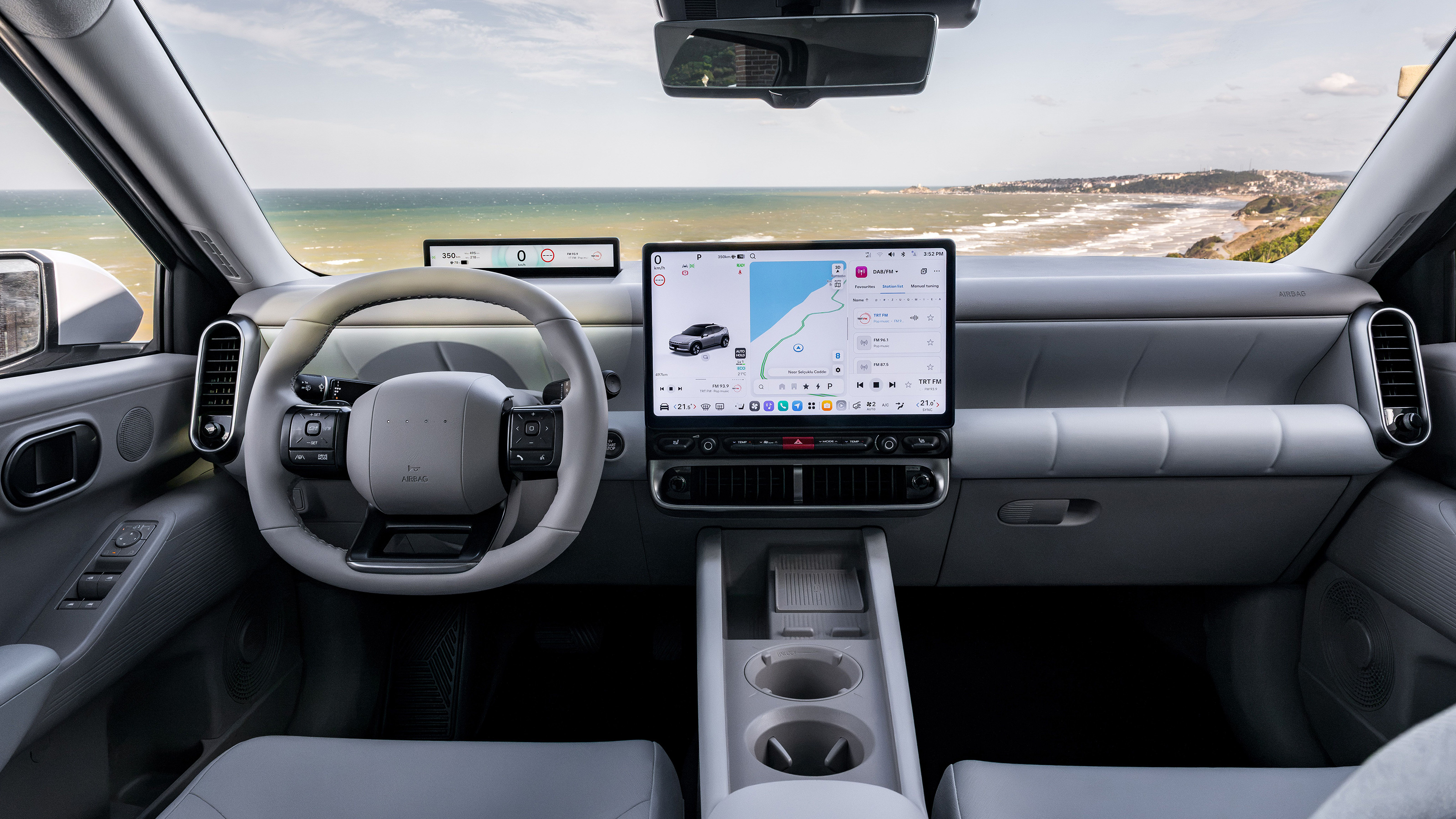
But it should still be useful. There’s a handy Defender-esque storage rail across the dash, large cupholders, the centre console has a big lower level. And those seats are comfortable. Well, apart from the headrests that push insistently into the back of your head.
Hyundai is better than some here. Certainly on the high spec models the centre screen is reasonably easy to navigate – barring issues with setting off the hazards while trying to keep your fingers steady – although we did feel that there was a little too much going pretty much all the time. Each icon is large and colourful, which is great for spotting the shortcut you need but not so pleasant on the eye.
It's also strange that if you pick a spec with the secondary driver display, you still have to give over half of the central screen to a second speedometer, your trip computer, details of what regen level you're in and a Tesla-like animation of the world around you. Why? We can see that out of the windows!
The buttons on the steering wheel are pretty well thought out though, allowing you to mute the beeps and enable/disable the lane keep and steering assist.
It’s not as radical in here as the Ioniq 5, and doesn’t have its loungey vibe either. But it does feel as if Hyundai has settled into a design sweet spot, where user-friendliness has started to bat back against the designers' whims.
Get all the latest news, reviews and exclusives, direct to your inbox.
