the fastest
GT 63 AWD 860kW Premium Plus 106kWh 4dr Auto
- 0-622.4s
- CO20
- BHP1153.3
- MPG
- Price£173,805
Fast. Let’s make that clear first. Because in today’s mad world of bajillion horsepower EVs, the GT’s continuous power output of 721bhp in the top-spec 63 might sound a touch pedestrian. Rest assured at no point while driving it did it ever feel even remotely short on poke – same goes for the 556bhp GT55. That’ll be thanks to the mountainous torque figure – either 1,364 or 1,475 lb ft – and the violent immediacy with which those electric motors deliver it.
And clever motors they are too. Developed by Mercedes-owned British startup YASA, the pancake shaped axial flux units represent a seismic leap forward for e-motor power density and efficiency. Each one is just 8cm thick, weighs 26kg, and is individually capable of up to 480bhp. Fun fact, YASA is already hard at work on the next gen model: those weigh 13kg and are good for 1,000 horsepower each. The future is scary.
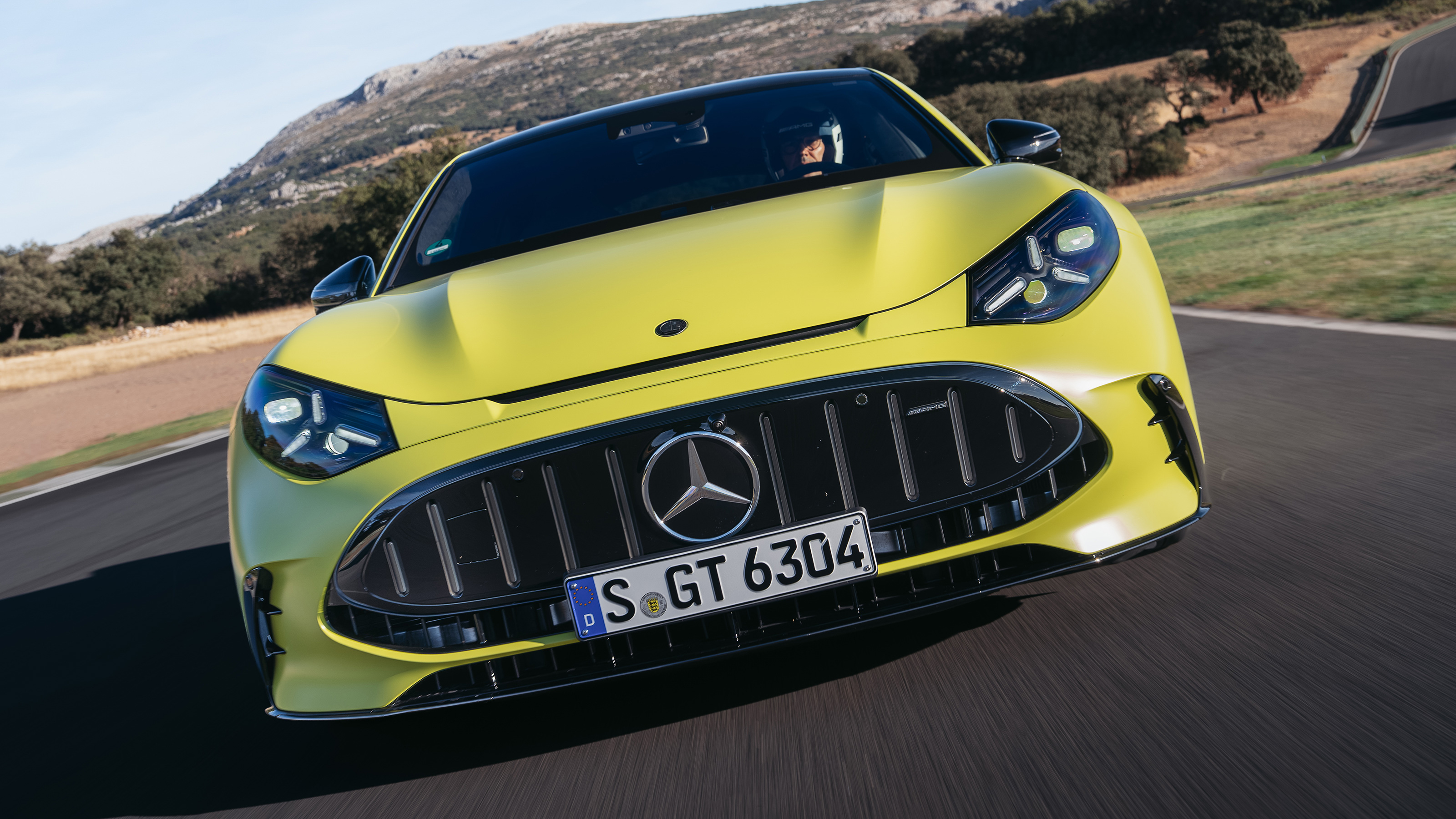
Boy does it. Press launches are inherently set up to flatter a car, so it’s always telling what sort of roads are selected for the test route. For the GT 4-Door Coupe, Mercedes chose the tight, twisting mountainous backroads of southern Spain. These are not immaculately paved surfaces, nor are they particularly wide in parts – in other words, they’re roads that you’d relish in a sorted hot hatch, but that might well make a big super-saloon feel cumbersome and intimidating. And the GT devoured them.
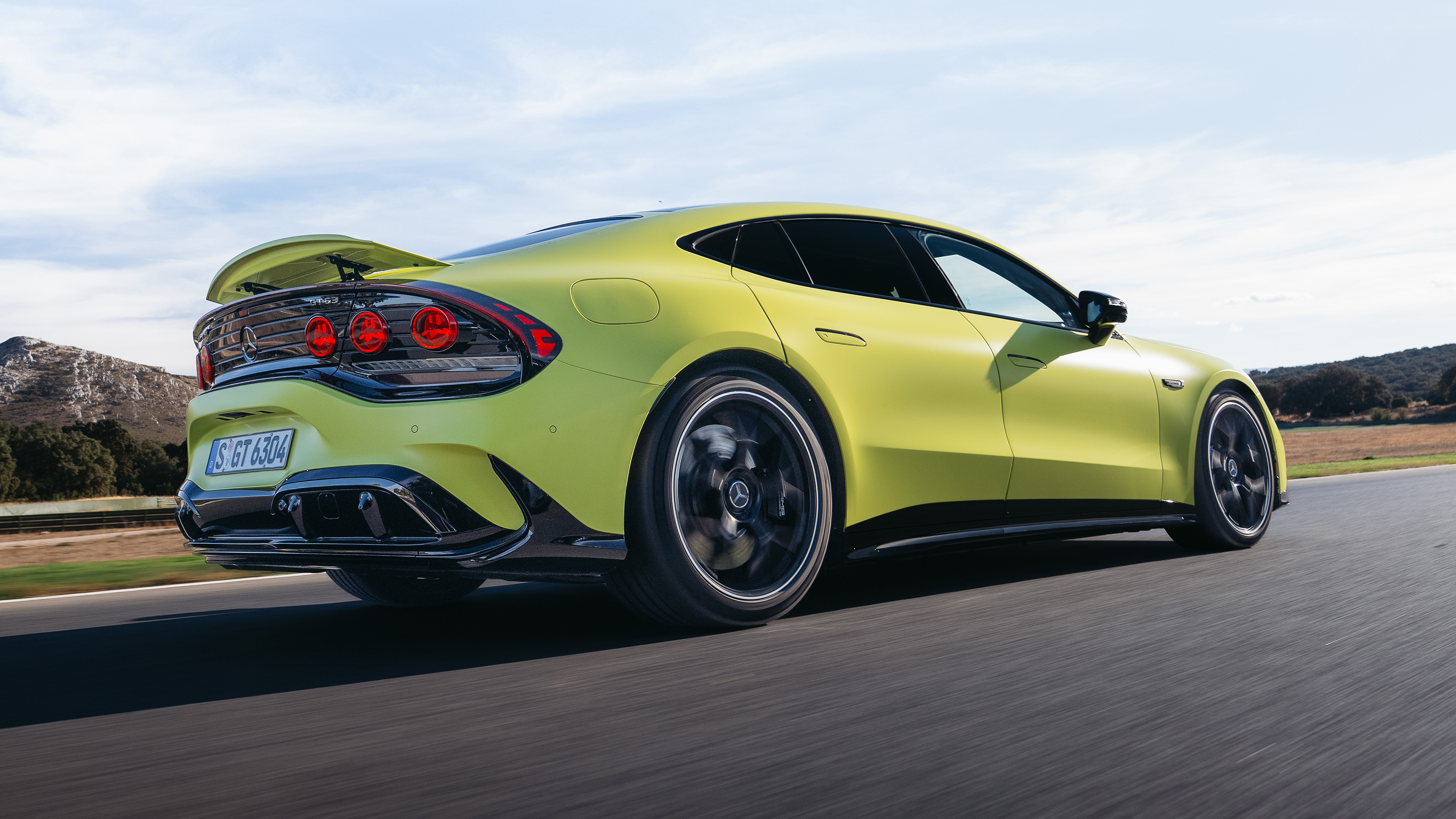
The star of the show here is the supple yet composed ride enabled by those trick dampers. Sensors monitoring a myriad of factors (driver inputs, traction, G force, what you had for breakfast that morning) inform thousands of micro-adjustments per second in the name of keeping all 2.5 tonnes bewilderingly flat through corners.
This, combined with torque vectoring capability, immense brakes and rear wheel steering (as standard), amounts to a hypercar-bothering super-saloon that disguises its size and weight with frightening conviction and feels properly usable, even when the going gets twisty. We’re optimistic about how it’ll perform when we eventually test it on Britain’s damp, craterous b-roads.
It does more than that. Like many new performance EVs the GT can, at the push of a button, simulate the experience of pulling gears and operating a combustion engine. Merc calls this feature AMGFORCE and it’s one of the very best deployments of the technology to date. True, you don’t get a fake hard limiter like in the Ioniq 6 N – hit the redline, leave your foot in and the car will simply shift up for you – but other than that it’s a faithful recreation of the ICE experience.
There are two especially excellent things about AMG’s interpretation of this tech: first, the quality of the sound. No spaceship whooshes here, Merc has captured audio of the AMG GT R supercar’s V8 via 16 strategically placed microphones and cleverly reassigned it (the GT53 gets fake 6cyl sounds instead). It’s loud, lairy and perfectly matched to the driver’s inputs.
But it’s the shakers that really elevate the experience. Merc has fitted electro-dynamic inducers into the seat, pedals and steering rack which vibrate to the exact frequency of your fake engine’s RPM (imagine saying that to someone from the 70s). The result? An imaginary engine that vibrates, tingles and makes the car feel alive. It may sound naff, but it’s incredibly convincing and is a big part of why this high performance EV is so enjoyable to drive at fairly normal speeds too.
Done misbehaving? Turn off all the fake noise, knock it into comfort mode and the GT drives… like a big electric Merc. An especially comfortable and quiet one, for that matter.
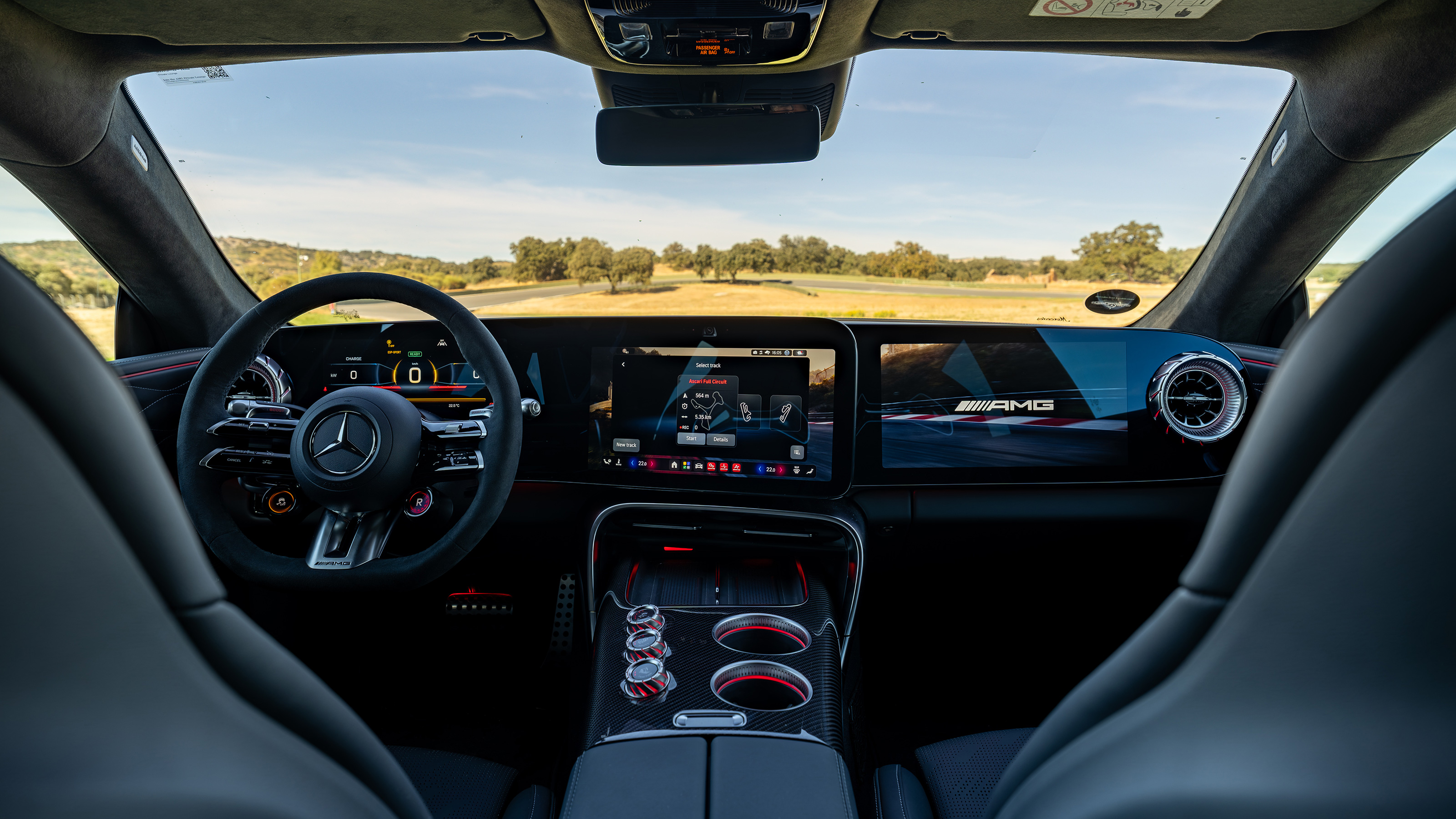
This we thoroughly investigated at the gorgeous Ascari Club, where we were invited to fiddle with the AMG Race Engineer. No need to call HR, that isn’t a person – it’s the name for the three rotary dials on the centre console labelled 'response', 'agility' and 'traction'. Respectively they affect throttle mapping, cornering behaviour and, erm, traction.
It’s an impressive level of customisability that enables drivers to intricately tailor the car to their own style and preferences but it’s perhaps a bit… much? The latter two dials can only be used by first turning the main TCS off on the wheel, something you suspect many owners will rarely/never do.
The car also sorely lacks shortcut buttons for preset modes like BMW’s M1 and M2 switches, meaning you’ll have to remember your preferred settings and then set the dials just so every time. It’s an impressive system and it really works, but we’re dubious about how much use it’s likely to get.
Get all the latest news, reviews and exclusives, direct to your inbox.