



25
Don’t be absurd. Pagani doesn’t really have any cars for sale right now. The Utopia coupé’s run of 99 units is sold out. All 130 Roadsters are accounted for already. There’s surely a hardcore Huayra BC-style version of the Utopia platform on the way… which is sold out even though it hasn’t been confirmed. The track-only Huayra R models in all variants are also sold-out. Considering Pagani has extricated itself from the power war raging in the hypercar segment, it isn’t half doing well.
And it’s easy to see why. Visit the factory or ‘Atelier’, right in the heart of Italy’s supercar valley and selling close relatives or body parts on the dark web suddenly seems like a great plan. It’s an astounding place and the cars coming to life here, or being restored or re-imagined by new owners enchanted with the incredible level of bespoke tailoring available, are impossibly cool, gorgeous, and intriguing. Pagani treads its own path with confidence and it’s a hugely successful route.
Yes.
Oh god, yes.
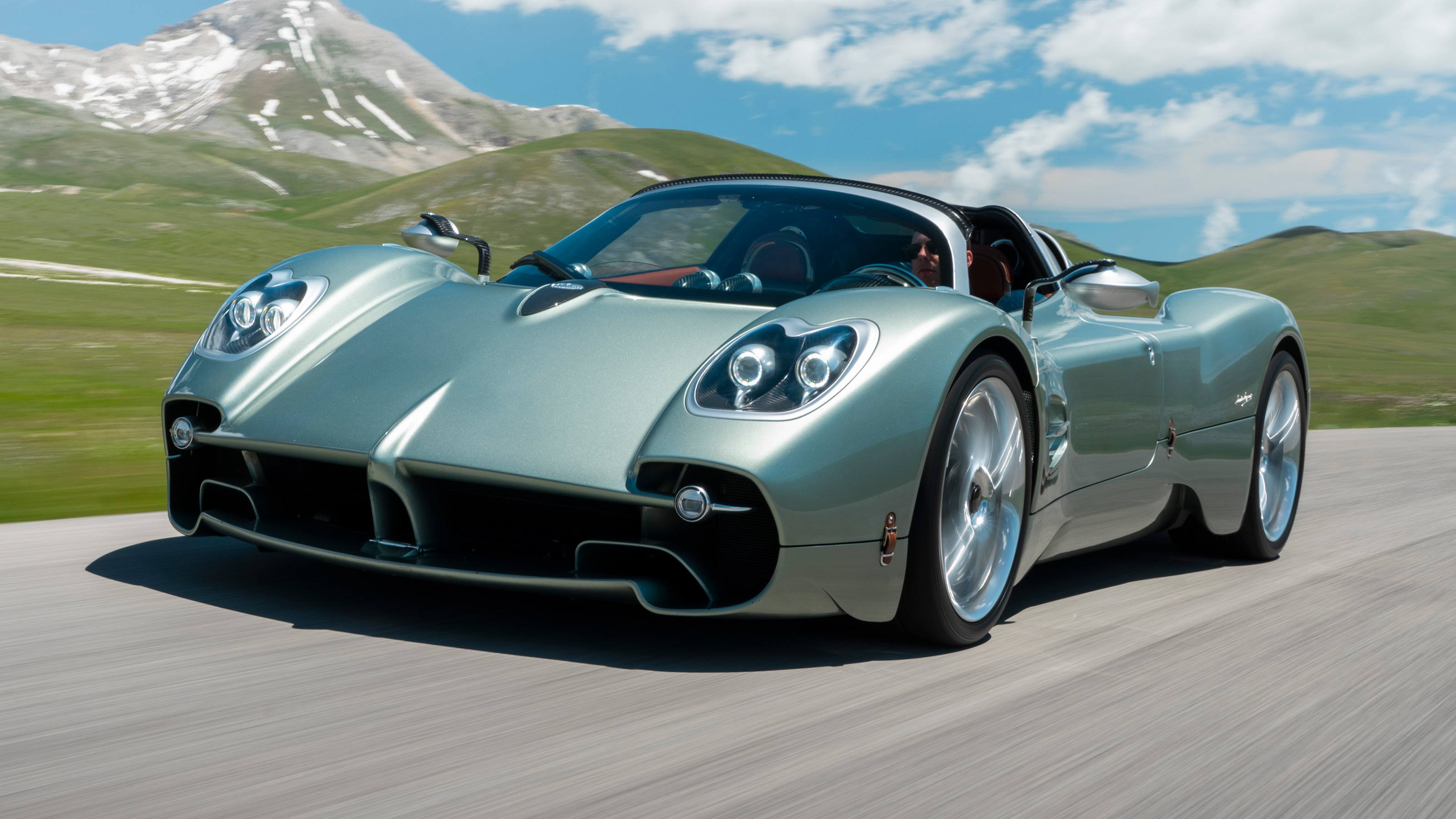
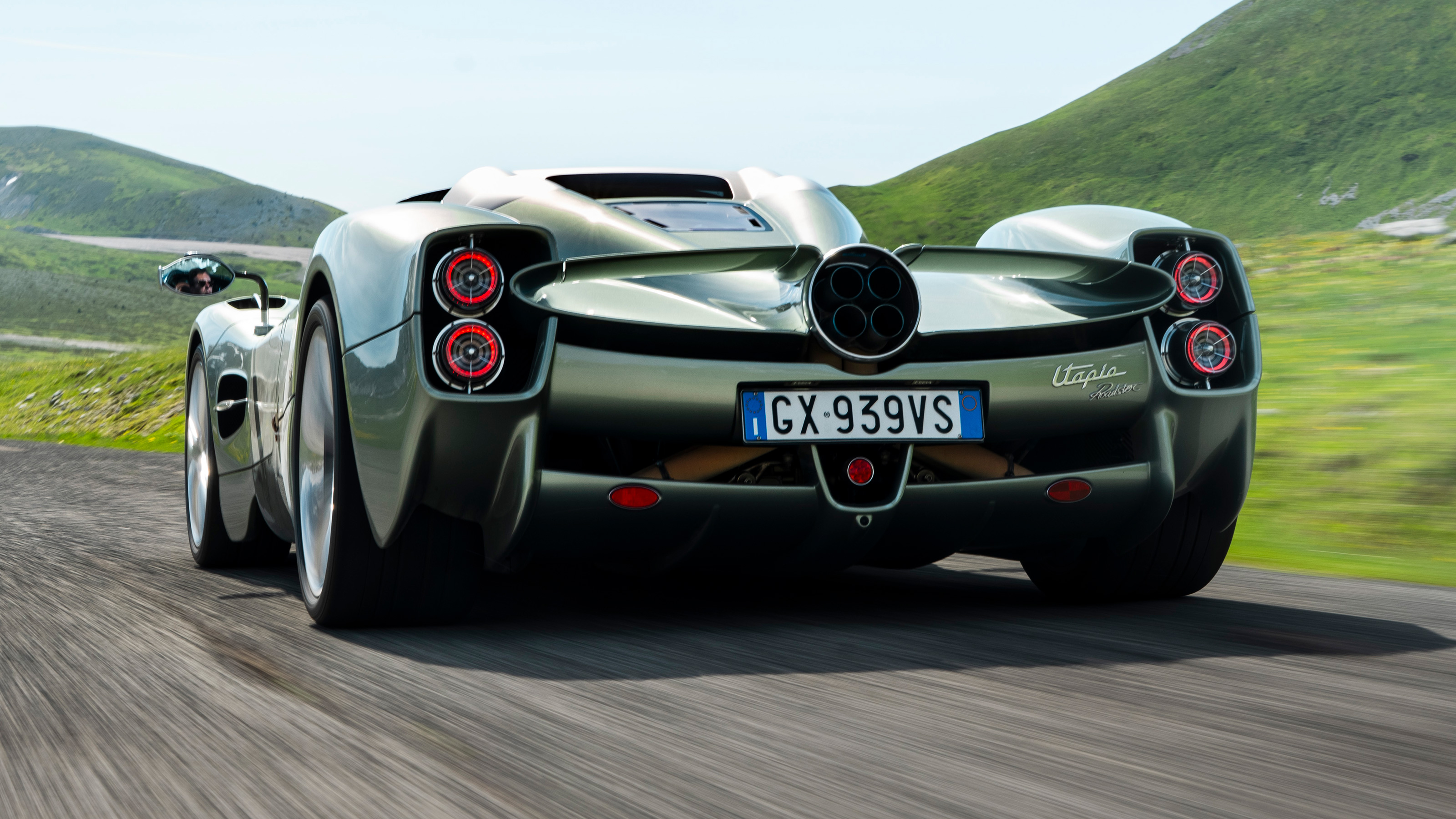
Okay, fine. Well, much of the Roadster’s mechanical make-up is familiar from the coupé version. Same 6.0-litre twin-turbocharged V12 from AMG producing 852bhp at 6,000rpm and 811lb ft from 2,800 to 5,900rpm. Same jaw-dropping design language, detailing and interior execution: seriously, if you’re not sure about the Utopia’s looks, we can only assure you that it’s stunning in the real world. It even weighs exactly the same at 1,280kg dry.
However, there are a myriad of engineering distinctions to keep the dynamics as close as possible to the closed car. For example, the tub’s construction is unique to ensure superb rigidity without the need for reinforcements. It utilises similar materials (40 different types of composite) including carbo-titanium, which lays titanium strands through the carbon fibre weave, but the thickness of the material and where it’s positioned is different to the closed roof model.
Suspension is by double-wishbones all round with bespoke Tractive dampers to account for the different chassis characteristics, plus the Pirelli Cyber Tyre system manages the engine’s torque until the P Zero Corsa, Winter or hardcore Trofeo RS are up to temperature. And, of course, there’s still the option of a manual version of the seven-speed XTrac transversely-mounted gearbox. You can get an automated version, too. But don’t.
The Roadster comes with both a lift-out carbon and glass hardtop (which can’t be stowed within the car) and a soft-top should you be travelling and want the option of weather protection. When removed it’s stowed in a suitcase behind the two seats. The system isn’t as convenient as a powered top, but somehow it feels more special as a result. Nobody does exotica quite like Pagani.
Not at all. In fact, the magic of the Utopia – and all Paganis since the Zonda was unveiled back in 1999 – is that Horacio’s obsession with design, craftsmanship and sense of theatre is backed-up by an amazing depth of engineering and a dynamic polish. Back then, the clarity of feedback and poise was defined by test driver Loris Bicocchi – who learned his craft with cars like the Bugatti EB110 GT and SS and has since gone on to work with Koenigsegg, Bugatti, Lamborghini and Dallara. Now there’s a bit more aggression heaped on top of the values the Zonda displayed, but the delicious feedback and cohesive, joyous character remains.
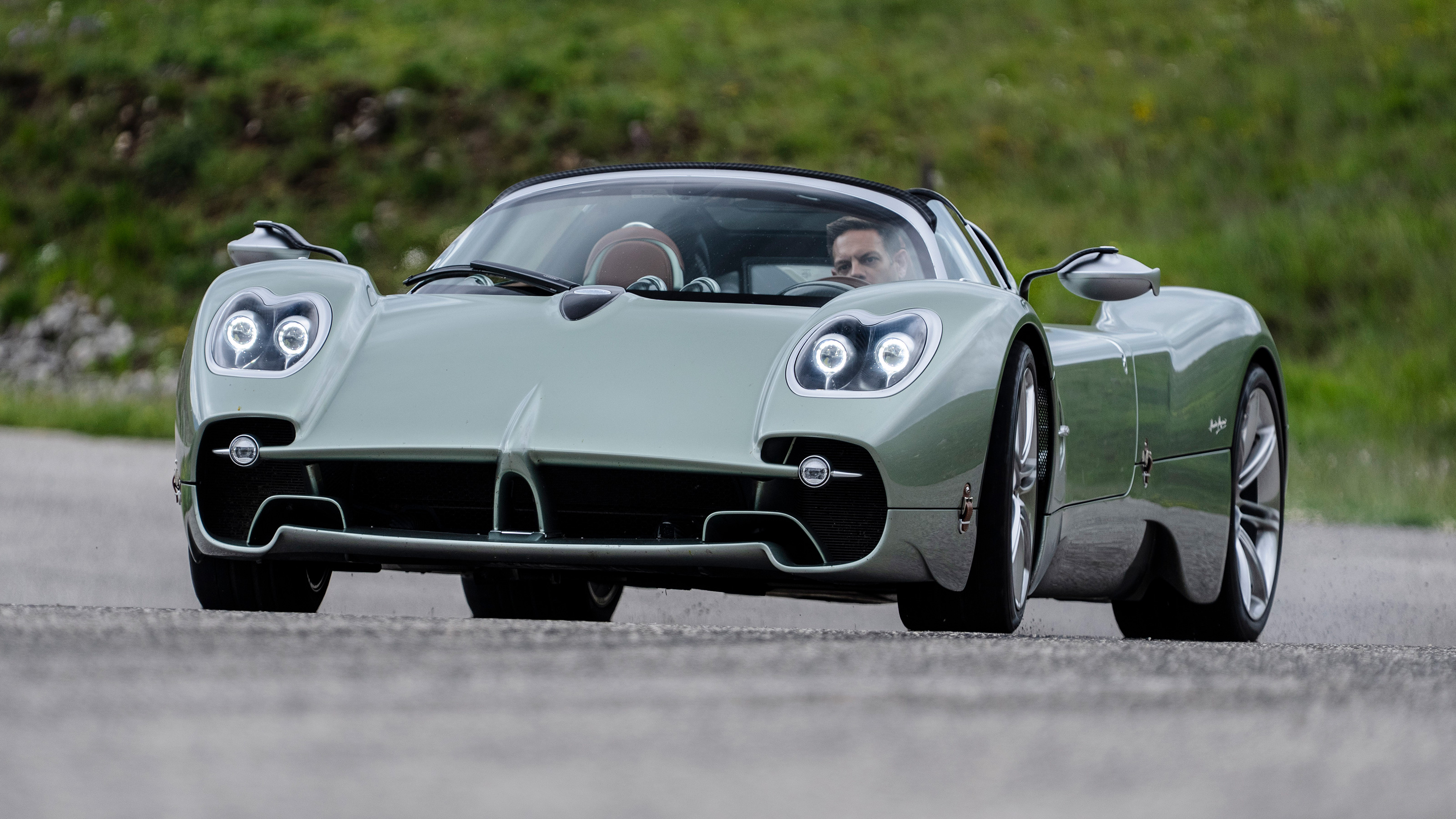
First, the evocative. The interior is all tactile delight and periscope air vents and an almost comedic level of Italian flamboyance. The Utopia could tip over into caricature but somehow it doesn’t at all. Instead the amazing environment and the superb view over the swoop of the front wings and through the teardrop side mirrors feels at once celebratory and perfectly realised to place the car with precision on the road. What it doesn’t feel like is a modern hypercar.
Get all the latest news, reviews and exclusives, direct to your inbox.
In fact, although the Roadster is very much hypercar money and presence, for us it feels more like an old-school supercar that’s been radically improved. The technology isn’t the focus here, more the tactile reward, and it feels very much made for the road rather than a track car that’s escaped its natural habitat.
There’s no doubt that the V12 doesn’t have the amazing soundtrack of the Zonda. Or the piercing brilliance of, say, the GMA T.50. But it’s really been improved since the early days of the Huayra (the first Pagani to move to this engine) and actually is something quite special now. There’s loads of turbo fizzing, whooshes and chuffs but beneath the percussion is a pure howl that’s unmistakably 12 cylinders. To have this engine wedded to a gated manual gearbox is fantastic… even if the seven-speed layout with a dogleg first takes a good period of acclimatisation.
To have this engine wedded to a gated manual gearbox is fantastic
It’s fast, too. Properly fast – the sort of performance that’s slightly scary. Although something like an F80 or W1 is more manic, the Utopia’s massive torque and the car’s analogue nature means you spend less time just pinning the throttle and snapping through gears. You really do have to steel yourself before giving it everything through one or two gears on a mountain pass. There’s loads of traction but even so, the Utopia Roadster demands respect and doesn’t give free and easy access to all of its capability in the way of other hypercars that lean so heavily on electronics.
The ‘box is a bit of a head-scrambler at first as you wrestle with the layout and the springing (it naturally sits in the 4th/5th plane). However, the moment you stop mentally counting the gears and instead just go with what feels right, it’s superb. The shift is soooo much better than a Zonda and it suits the kind of super-evolved supercar feeling we talked about earlier. A Ferrari F80 with a manual ‘box would feel incongruous. In the Utopia Roadster, it’s perfect.
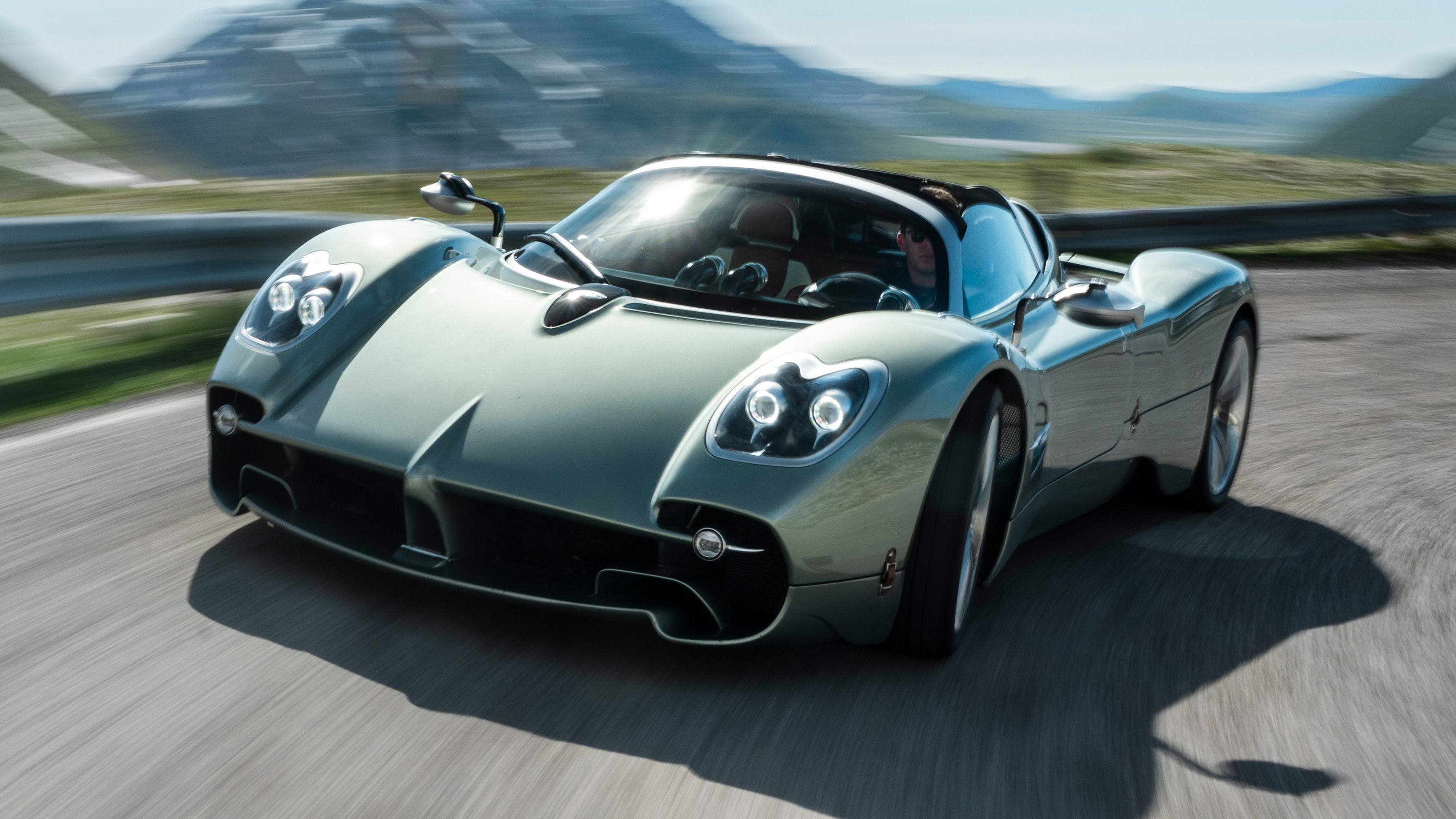
The steering is quite weighty and there isn’t the hyper-alert, pointy feel we’ve become so used to. However, this isn’t a lazy car in any way and the lack of mass is incredibly apparent. The way the suspension smothers the surface but keeps the body flat and consistent front-to-rear breeds confidence and gives the Roadster a long striding, invincible feeling. Aside from the fresh air and the swirling turbocharger sounds, you’d have no inkling this car is open-topped. The rigidity is top notch.
Start to really use the power on tap and lean on the grip and the Pagani only improves. The brakes have lovely bite and feel, the steering is accurate and lucid and the chassis feels up for it, too. The aesthetics might be haute couture, but the Roadster is happy to get down and dirty. You can fling it into corners, load-up the rear tyres with torque early and snap hard and fast through the ‘box and the car just eats it up.
You can fling it into corners, load-up the rear tyres with torque early and snap hard and fast through the ‘box and the car just eats it up
The drive modes (Wet, Comfort, Sport, Race) progressively ramp-up the experience, but in Sport and Race it’s a physical, thrilling car at the limit and all that turbocharged power can create some pretty exciting moments. You need to be on your A game to handle everything the Utopia has, that’s for sure. No wonder the button to disable all the electronics is hidden away on the roof panel…
This is where it gets tricky. The Utopia Roadster is an event. An experience. Nothing else is quite like it and hence it’s difficult to compare to – and this is a weird term to use – more ‘mainstream’ hypercars. The F80 and W1 would kill it on a track, for example. And yet… the more classical approach does make for a thrilling, intense but also deeply usable road car. It really does feel like something you’d always want to hop in and enjoy. Be that a trip to the shops or a long drive through the continent.
The lack of hybrid technology creates a lighter, more consistent and slightly more transparent car, too. And probably a more reliable one. There’s no battery to charge, no rapid-burn ‘qualifying’ mode and hence the Utopia Roadster gives you exactly the same response to any input at all times. That’s a very good thing. Perhaps it’s closest in spirit to a GMA T.50, although they could hardly be more different in terms of execution.
Ultimately, the Utopia is absolutely its own thing and the Roadster version seems to only heap more drama and excitement into an already formidable experience. I guess the very best thing we can say about this car is that even at €3.1m plus taxes it seems a bit of a bargain. Nuts, but true.
Photography: Mark Fagelson
Get all the latest news, reviews and exclusives, direct to your inbox.
