

11
Think the Ferrari 12Cilindri Manuale is strange? Check these out
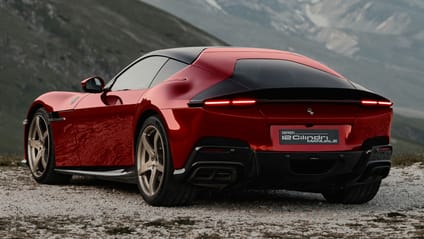
Well would you look at that: Ferrari has brought back the manual gearbox. With two large caveats, of course. First there’s a faintly staggering leap in price for the 12Cilindri supercar involved. Second is the fact it’s actually an eight-speed DCT that’s supplemented by a clutch pedal (with 599 GTB weight) and a classic open-gate stick.
Lovely idea, of course, but it’s not the first time Ferrari – nor indeed other carmakers – have blurred the lines between manual and automatic transmissions. Allow TopGear.com to take you by your favoured gear-shifting hand for a brief guide…
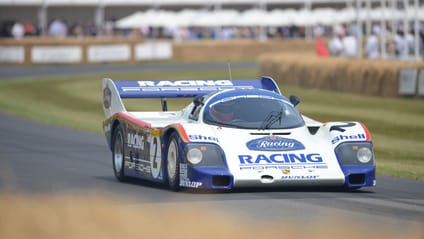
The PDK gearbox – Porsche Doppelkupplungsgetriebe in the firm’s native tongue, Porsche double-clutch transmission to the rest of us – first appeared in 1984 on a 956 racecar before graduating to the 962 and even the mighty Audi Quattro rally car.
“The idea was to combine the best of two worlds,” recalls Rainer Wüst, technical manager on the project. PDK gears were divided between a pair of sub-transmissions, each with its own clutch. Only one would be engaged at a time, a concept which allowed your next gear to be primed in the other sub-transmission for a near instantaneous shift when the time came.
Porsche’s period racing drivers were wary of the extra weight it added and it took another two decades before the idea would catch on in road cars. But the DCT ‘box is now used far and wide – that new 12Cilindri included.
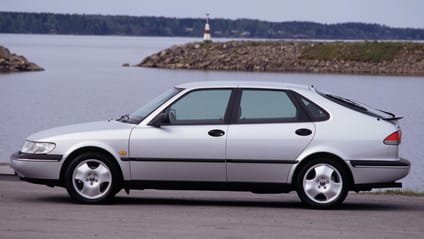
Saab introduced the Sensonic gearbox in its mid-Nineties, ‘NG’ 900 saloon. Much like the new 12Cilindri Manuale, its gearstick looked friendly and familiar, but there was witchcraft at play beyond it. There was no longer a clutch pedal, with a series of electric motors and hydraulic actuators doing its good work instead – and thus letting the driver rest their left leg entirely while still throwing a H-pattern stick around.
Discovering how to deftly use its pedals for a safe hill start sounds as complex as learning an Irish jig; small wonder the transmission didn’t live past the 900’s regeneration into the 9-3.
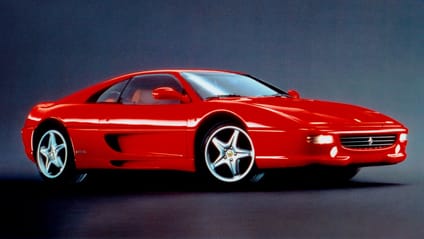
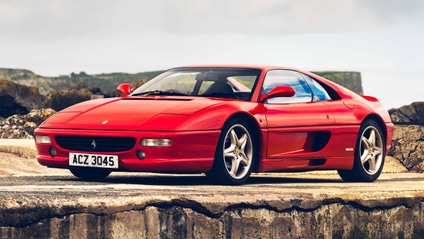
Yep, Ferrari has strong form already in reinventing the gearbox. The F355 is among the most gorgeous modern supercars and represents the Maranello firm’s irreversible shift from selling specialised exotica to producing sports cars which can be used every day, for any journey.
Some of the credit belongs to its optional F1 transmission. An aviation inspired semi-automatic transmission dates back to the 1979 Ferrari 312 T racecar; tests were successful but the project was parked for a decade before being kickstarted and by the mid-Nineties, semi-autos were scattered across the Formula 1 grid.
By 1997 the general public could specify their F355 with an automated version of the car’s stock six-speed manual, operated by metallic paddleshifters and named unashamedly after the sport which inspired it. Shifting your supercar’s gears has rarely been the same again since.
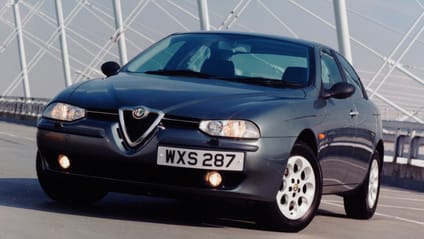
Just two years later, Alfa Romeo offered a similar technology with its Selespeed automated manual. Owners report it being far more satisfying left in its fully automatic City mode, with paddleshifts requiring significant patience (and driver sympathy) to execute smoothly. As it was for a number of early semi-automatics…
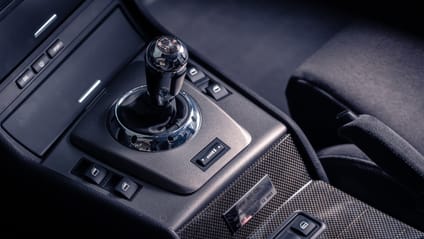
… BMW’s SMG included. Another automated manual with an electro-hydraulic actuator in place of a traditional clutch, it first appeared in E36-generation M3s in mainland Europe before being fully adopted (albeit as an option) in the E46 M3 of 2000. It was (in)famously standard on the stripped-out M3 CSL track special and remains the one area of the car many folks consider imperfect, with specialists now offering a pricey manual swap. Those wishing to take less aggressive tools to their priceless classic can explore aftermarket remaps to smooth out its rev-matching.
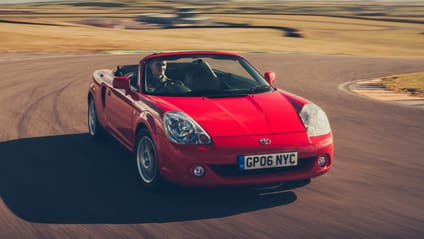
A clutchless automated manual also made a relatively brief appearance on the third-gen, purely open-top Toyota MR2. Dubbed ‘SMT’, it was operated via buttons on the steering wheel and period reviews seem positively glowing in its ability to accurately rev match. And given the car’s reputation for – ahem – spiky handling, perhaps any technology that keeps both hands firmly fixed on the wheel is a very welcome one indeed.
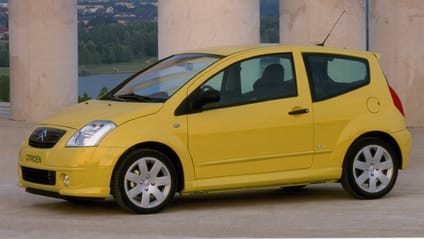
While nearly every hot hatchback sold new demands you shift its gears with two pedals and a set of paddles, the warmed up version of Citroen’s cute little C2 latched a five-speed semi-auto SensoDrive transmission to its modest 110bhp nat-asp 1.6-litre engine. As a follow-up to the rascal little Saxo VTR – and the enormous cultural moment which surrounded it – it was considered an enormous misstep. The C2 GT special edition righted this particular wrong with a return to the humble manual and is far more collectable now. If you can find one…
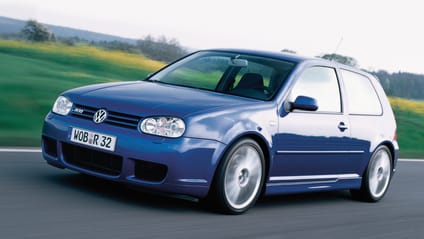
Fun fact: while the Mk1 Audi TT 3.2 V6 is considered the true production car launch of the DSG twin-clutch gearbox (a descendant of the PDK ‘box detailed above), a handful of left-hand drive Mk4 Golf R32s, using the same engine, appear to have got the inaugural six-speed transmission first. Bank that one if your local pub quizmaster is an irredeemable petrolhead…
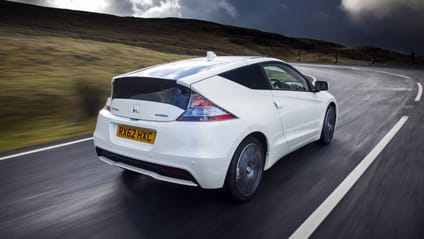
Okay, the CR-Z didn’t do anything to reinvent either manual or automatic gearboxes. But it’s noteworthy for being one of the tiny handful of full hybrid cars with a regular six-speed manual transmission. Enough to make up for its sluggish performance and unusable back seats? Judging by the teeny sums commanded by them now in the classifieds, no. Which does at least make these a proper second-hand bargain.
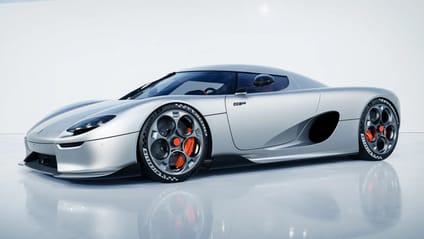
The most complex transmission on this list? Almost certainly. The CC850 arrived as a 20th birthday present to Koenigsegg and thus boss Christian von Koenigsegg threw copious gifts at it. Alongside a twin-turbo 5.0-litre V8 with comfortably over a thousand horsepower was its nine different gearbox ratios, channelled through a gorgeous open-gated manual ‘stick with six indents. Huh?
Each time you change drive mode, you get a new set of ratios to better suit your purpose – so Track mode is aggressive, Normal more civilised, and so on. It’s all made possible by ditching a regular clutch, to the point you can snick it all into a nine-speed automatic mode when you’re at a lower ebb and just want to trundle home. “There is sort of a direct hydraulic link from the clutch pedal to the clutches,” says CvK. “There are six clutches – but when you move the clutch pedal, it’s exactly one-to-one of pressure on these clutches like you use in a manual.”
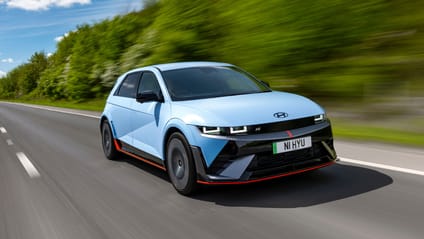
A car that’s arguably as pioneering as the PDK Porsche at the top, Hyundai’s N division magicians pulled a masterstroke the day they rubber-stamped a simulated eight-speed ‘box for their first all-electric hot hatch. The Ioniq 5 N does, under interrogation, feel contrived in how it delivers its fun. But apportioning its 650bhp with paddleshifters (and an accompanying, ‘i30 N at full hilt’ soundtrack) is a joyous anchor point in a car that might otherwise hold the power to bamboozle. Keep scrolling and you’ll see everyone else was inspired, too.
“Hyundai is a great company for letting you play around without the management saying ‘come on, this doesn't make sense,’” says Alexander Eichler, an engineering exec at Hyundai’s European HQ. “Having fun. That's the clear strategy. It’s a nice playground for us.”
The system has since made its way into the Kia EV6 GT, various Genesis SUVs and the new Ioniq 6 N saloon, which enjoys a new, yet more aggressive tune. Happy days.
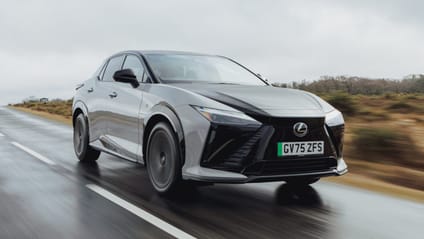
Clamber into the upper echelons of the RZ electric crossover range and your jaw will first be floored by its steering wheel yoke. It’s not the only car to offer one, of course, but witnessing one inside an utterly sensible Lexus is a definite surprise. Then you pull away and realise it’ll turn like a classic London cab, all without ever shuffling your hands or moving the wheel at all that much of an angle.
It’s the stubby little paddleshifters behind the wheel we’re interested in, though: like the Hyundai, the engineers have faked the impression of an eight-speed auto, piped in some (less convincing) fake noise, and even programmed it so you bap-bap-bap against the limiter if you don’t quickly get the hang of its very short ratios.
“The idea was born from the desire to play catch ball with the car,” says advanced drivetrain engineer Yoichiro Isami. “I purposefully made it jerky and added sound when it would otherwise be quiet. The system requires a certain amount of skill; it will return both your successes and your mistakes.” In that regard, then, it’s just like a good old manual ‘box…
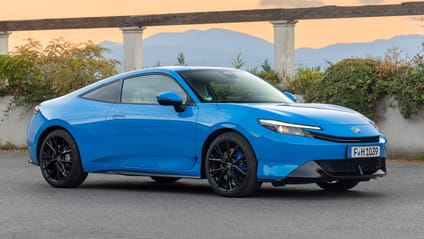
Japanese rival Honda has got in on the act, too. Its next car on this list is the Prelude, the star of an unlikely comeback in 2025 and a name we’ve thoroughly welcomed back onto the scene. Not least when BMW and Mercedes are the only other firms who seem to bother making coupes nowadays.
The good news is all the Civic Type R underpinnings which ensure it rides and handles fabulously; it really is terrific on a tricky stretch of road. Less thrilling is its regular Civic eHEV powertrain, which prioritises efficiency far, far more than performance. How very CR-Z. The engineers clearly knew as much and have simulated an ‘S+’ eight-speed transmission here, this time with an actual petrol engine to provide the music.
Its ratios are short enough to never truly convince you it’s real (Hyundai got that bit spot on) but it’s a fun system to immerse yourself in, nonetheless. And a welcome glimmer of light that enthusiasts still matter to carmakers.
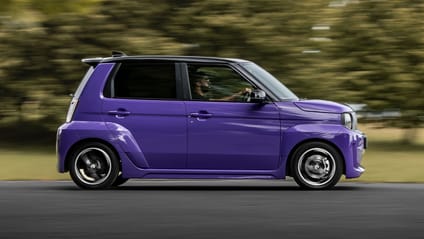
Honda has applied the same thinking to its spunky little Super-N city car, too. Counteracting any sadness this kei-looking electric car isn’t technically kei-sized (only just, mind) is the fitment of a faked seven-speed transmission which uses regen to simulate engine braking and, unlike the Prelude above, lets you bash merrily into the limiter. Which you might regularly do given its teeny ‘rev counter’ display.
“It’s a gimmick, yes, but it’s good clean fun and really does set the Super-N apart from its teeny EV rivals,” says TopGear.com stalwart Greg Potts.
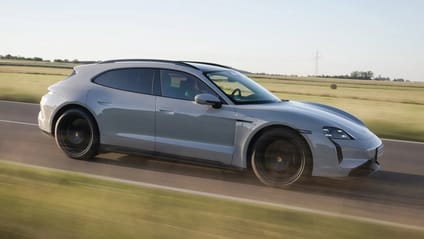
Yup, 2026 really is the era in which Porsche takes its inspiration from Hyundai. The situation is far more nuanced, of course, and it’s hardly an old three-cylinder diesel Accent they’ve stripped down in the hunt of ideas. The Taycan is the original fun EV, of course, and ignoring its wavering used values, it continues to be a beacon for all other electric cars to look up to. Its latest nip ‘n’ tuck has seen Porsche offer eight virtual gears, synthesised sound and a lovely big rev counter to its plug-in saloon.
Our first go suggests it exhibits even greater polish than the Ioniq’s, too, with more physicality fizzing through the car as you shift up and down while maximum performance is still available if you’re driving it properly (the torque limiting tricks of these systems might typically slow the car down). It’s a three grand option, or standard on the Taycan Turbo S. A no-brainer, surely…
Get all the latest news, reviews and exclusives, direct to your inbox.