

17
Want a break from the sensible SUV norm? Try one of these proudly kooky second-hand options
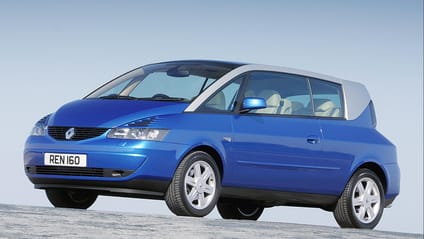
It’s impossible to carve a list like this without the most loveable weirdo of them all. The Avantime launched to a conservative early Noughties market with a bluster befitting a brand willing to try anything. Renault was squeezing V6 engines into the middle of Clios and installing the ‘boot shute’ on the back of the Modus around this time too, lest we forget.
But those border on the conventional when parked beside a coupe-MPV with two double-hinged doors and the silhouette of a giant sneaker. Avantime sales severely lacked lustre, and production lasted only two years, but its cult status followed in very short order and they’re highly desirable things now. The name translates as ‘ahead of time’ – they weren’t wrong there. Time for a reboot, Renault.
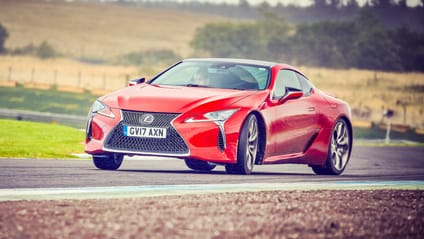
One of the best car designs of the 21st century? You won’t find us arguing. The LC is unmistakably Japanese in its slashes, angles and creases yet drops jaws like nothing outside of its LFA ancestor in the metal. You could have a hybrid or a nat-asp V8, and you naturally want the latter, but whether you then choose a coupe or cabriolet we really don’t mind.
It never drove badly, the LC 500, but nor did it ever titillate like the best rear-driven GT cars in corners. You instead buy for its marriage of sensational styling with an unforgettable soundtrack – and its impossibly cool sliding instruments. Underscoring it all is the engineering nous and reliability that makes Lexus’ usual (boring) fodder so simple to own.
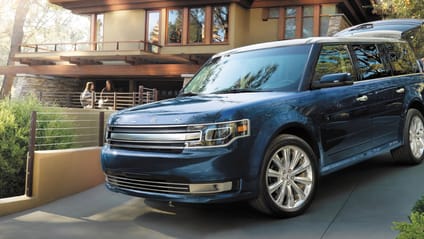
Hands up if you’ve ever holidayed in the States and come away swooning over these. Um, just us? Either way, this looks like another slice of the carefully modernised nostalgia that made the Mustang’s mid Noughties comeback such a success.
The Flex was sketched under the direction of Peter Horbury, a legend in Volvo design history, and makes forgoing an SUV for a boxy people carrier seem like the cool, insouciant thing to do. It’ll feel vast in UK multi-storeys and as a US-specific model, don’t expect its chassis or interior quality to hit the highs an old Ford S-Max could. But if you can forgive its left-hand-drive status, you’ll stand out spectacularly on the school run.
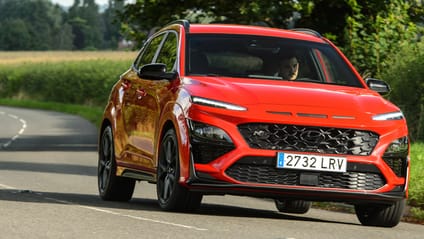
We know of Hyundai N’s pedigree by now. It hit the ground running with the outstanding i30N hot hatch, a car that clings onto an impressive amount of its value almost a decade since launch. The i20N sharpened the act even further, while the Ioniq 5 N has reframed what an EV can do – and is influencing all the legacy performance car brands in how to make an electric car genuinely enticing.
But the Kona N is the outlier among them all; its 276bhp, twin-clutch-shifted powertrain punches (and drinks) as hard as its i30N sibling, but its riotous mid-corner behaviour always felt odd with a higher driving position and more familial billing. Coolly peculiar, though, right? Especially at £20k.
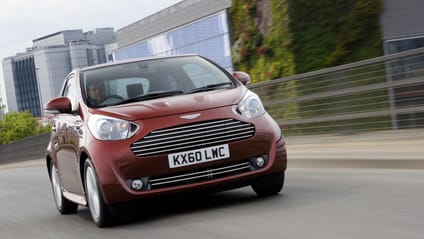
Another car that bamboozled everyone at launch which is now a cult classic all of its own. Aston Martin cynically cutting its average emissions by rebadging a Toyota iQ sounded like an April Fool’s joke gone awry, and yet something about a tarted-up city car with a proper Gaydon grille seems to have chimed with collectors.
You’ll pay over fifty grand for nice ones now, or ten times that if you’d like a one-off V8 version. Go to Milan and these things are parked up like Smart cars, too. Buying one to prize in a collection is one thing – you’ve our utmost respect if you put a Cygnet into daily commuting amongst Italian traffic.
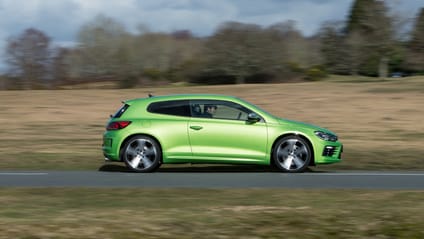
Alright, a TSI-powered, Golf-platformed Volkswagen isn’t weird in the slightest. Especially when the production-spec Scirocco looked so plain after the startling IROC concept which foresaw its existence. But look at VW’s range at the time and this was a car that still stands out for the chutzpah required to put it into mass production – a brisk Golf hatch or more flexible Eos coupe-cabriolet surely covered many (perhaps all) of the customers the ‘Roc would attract, but Wolfsburg resurrected an old badge and stormed into a shrinking coupe market anyway.
It still looks good today, and there’s a 60mpg diesel Bluemotion or 276bhp, 155mph Scirocco R – and several other flavours in between – to cover every base. Our favourite bit? The Mk5 Golf-era bottle opener betwixt the front seats. Spezis only please, folks.
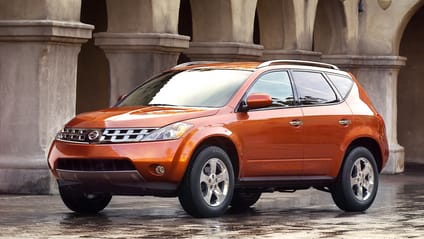
The Murano’s reputation has been sullied somewhat by its cabriolet spin-off, frequently cited among the most ill-advised car launches of – well – ever. But let’s not forget what came before; in 2003, Nissan slotted the 3.5-litre V6 engine of its bewitching 350Z coupe into a similarly curvaceous, retro-vibed crossover.
A car which felt niche at the time looks outright pioneering now, given the wealth of BMW X4s and Q5 Sportbacks that followed. Sure, it gets a CVT gearbox rather than a manual, but this is one of many examples painted in the same orange as the Zee. And it’s under two grand!
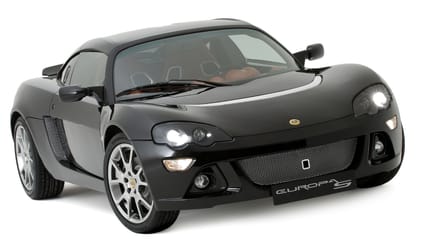
Lotus isn’t sure what it’s meant to be right now, rumours flying of its Hethel HQ shutting shop as it pushes electrified, two-tonne-plus saloons and SUVs into the market. The future of its iconic line in purist sports cars looks somewhat shaky, making it high time to cheer yourself up by purchasing an old one.
While all the handling geeks soar towards Elises or Exiges, why not join the much shorter queue for a Europa? Lotus’s attempt at a comfier, more everyday coupe didn’t strike the bullseye when it essentially amounted to a roofed Elise with thicker carpets, but it continues to look exotic on the very rare occasion you see one. And being so Elise-ish ensured it drove fabulously, too.
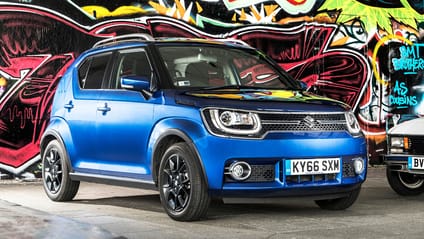
You want weird looks and naïve inventiveness? The city car market is the richest seam of all. Whether it’s the 3+1 seater Toyota iQ, rear-engined Renault Twingo or the original, segment bending Mercedes A-Class and Audi A2, diddly cars have the best ideas. Even when they don’t catch on.
The most recent Ignis didn’t exactly carve out anything pioneering, but it looked proudly and irresistibly bizarre – a cross between a double wardrobe and a retro pastiche of the old Suzuki Whizzkid – and it drove with enough charm to live up to the looks. And you could have ‘em with proper four-wheel drive, too. On fresh tyres, there won’t be much to beat one of those next time it snows…
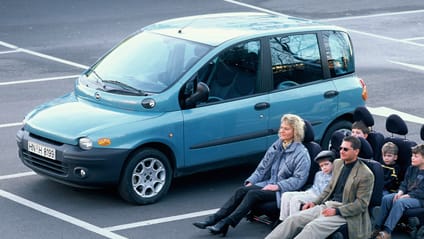
This is prime ‘weirdo’, even 25 years on from winning Top Gear’s hallowed Car of the Year crown. Yep, we don’t always forecast sales successes, but we do like to champion cars with inimitable personality and undisputable design clout.
The Multipla is rich in both (and more), its six seats split between two rows with flexibility put top, middle and bottom of its to-do list. For the Italians to create a car which cares so little about natural beauty seemed as hare-brained then as it does now, but the soaring popularity of ordinary classics and Festivals of the Unexceptional mean the Multipla may be finally having its day. The earliest, ugliest ones might need patience to find – this plainer facelift car is a late 2011 example for under four grand.
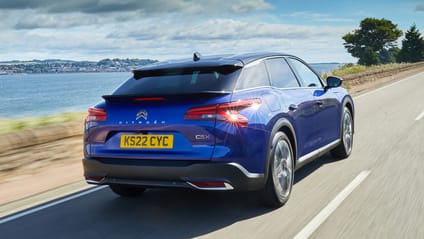
We could fill this whole list with curious French barges – nobody knows how to unite the strange and beautiful with imprudent levels of crystal-ball gazing quite like Citroen, Peugeot or Renault. Thankfully for us, beguilingly styled, slow selling cars new tend to translate as minor classic bargains used.
The C5-X is among the more recent examples of the breed; it’s perhaps the comfiest riding car this side of a Rolls-Royce Ghost, and while its oddball, fastback-crossover looks aimed to please all, they likely confused most. But it drives deftly for its size and like all the most graceful of folk, the C5-X retired long before we’d tired of its presence. Citroen pulled the plug after just three years but with a choice of downsized petrol turbo or plug-in hybrid power, it remains wholly relevant.
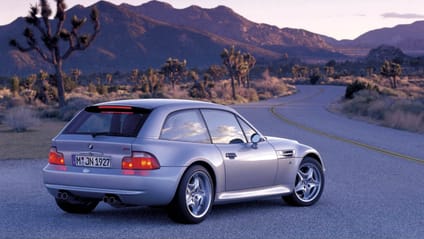
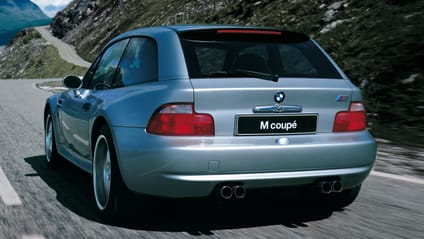
Folks have been ranting and raving about recent BMW design language as if the Bavarian firm hasn’t always pushed boundaries with its styling. In fact, it feels like a de facto part of the German company’s DNA. Perhaps the most vivid example of all is the Z3 M Coupe; a glint in the eye of an engineering department keen to explore the potential of an M Roadster with more structural rigidity, it sold in much smaller numbers, thanks surely in part to its undeniably odd silhouette.
As tends to happen, cult status quickly found the M Coupe, and values now bombilate well above £40k. Those willing to brave a high mileage can still source a bargain, however. Straight-six power, rear-wheel drive and 50/50 weight distribution ensure it handles a treat. But telling people you drive a Clown Shoe, face full of pride as you do so, should provide an even bigger thrill.
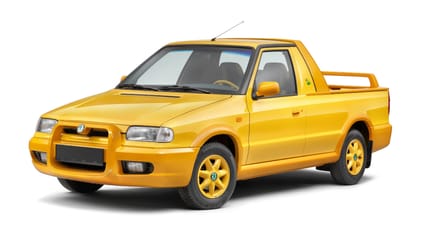
The trajectory of Skoda is a tale told often – and it’s now so long since the Czech company was an oddity, curio or truly left of field, Millennials onward probably don’t compute the old jokes. Go about your daily business in one of these, though, and the guffaws from onlookers may return. Truth is, this was a confident Skoda riding the wave of its Volkswagen-backed transition into normcore. A glorious slice of whimsy which proved its design team was having a ball. Small wonder they’ve given it an equally whimsical reboot.
A bright yellow pick-up with frogs stickered onto its pillars and a pair of sliding rear seats that only accommodate adults by exposing them to the prevailing conditions, the Fun makes a refreshingly small amount of sense on a streetscape of anodyne SUVs obsessed with nothing but. For that alone, its six grand price – with low miles and a recent restoration – is an unmitigated bargain.
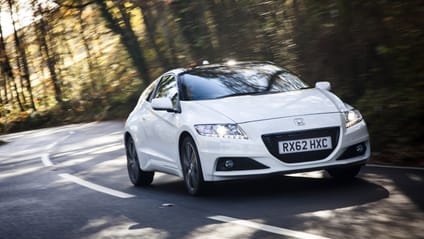
Welcome to one of the cheapest slices of curiosity you can buy in Britain. Japanese car makers really do offer us the ebb and flow of motoring, seemingly only ever churning out reliable but deliberately forgettable saloons, hatches and crossovers, or mislaying their marbles entirely and throwing obscene budget at limited-run performance cars or technological experiments.
The CR-Z appeared to launch with a foot in both worlds; a manually shifted hybrid (ten points for any more of those you can name) with a 2+2 coupe body and a low-ish entry price. Oh, and curious, wedge-shape styling that attempted to rekindle the romance of the original eighties CR-X. It was a decent little thing, too, but struggled for attention by way of not being sporty enough to justify its weeny boot and barely useable rear seats. Mugen briefly dabbled in cranking things up, though a proper production run didn’t follow. But with prices from under two grand – and the smart stuff asking of little more – this is an acutely affordable slice of charm.
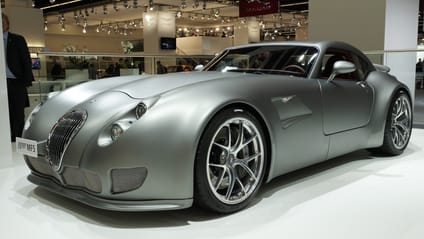
We all know about the wondrous 500bhp, 5.0-litre V10 that somehow found its way into the BMW M5, bringing a little taste of contemporary Formula One power to some otherwise sensible saloons and wagons. But what if you want to enjoy that engine, and its shrieking desire to rev, with two doors, two seats and the superstar styling to match?
Okay, extolling too much praise upon the design of a Wiesmann is something we should avoid. This bizarre, ‘modernised Jaguar XK120’ lozenge is the epitome of beauty being subjective. But these things are a riot to drive – a proper modern-day hot rod with an iconic powertrain – and your chances of parking alongside another are slim to none. Good job, with prices now beginning comfortably north of £200k.
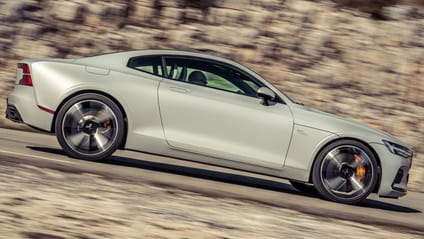
There are two shortcuts to achieving ‘weirdo’ status in the car world: oddball styling or a courageous attempt to forecast the future. The Polestar 1 can’t be accused of the former, its devilishly handsome three-box shape creased in all the right places. But its pairing of a twin-charged 2.0-litre petrol (so a turbo- and supercharger) with twin electric motors on the rear axle, geared up for agile torque vectoring, still feels bold even in the heavily hybridised marketplace we find ourselves in seven years after its launch.
Indeed, the Polestar 1 managed to correctly predict the future of the performance coupe while still slipping into the realm of the absurd, swiftly disappearing from a Polestar line-up that’s now solely electrified.
It peaks at 600bhp, handles tautly and looks the business – but UK sales can be counted on one hand and you’ll have to stomach left-hand drive to apply one in the daily role it will occupy so damn well. Prices have barely faltered from new, however, suggesting it’s a bona fide classic.
Get all the latest news, reviews and exclusives, direct to your inbox.