



25
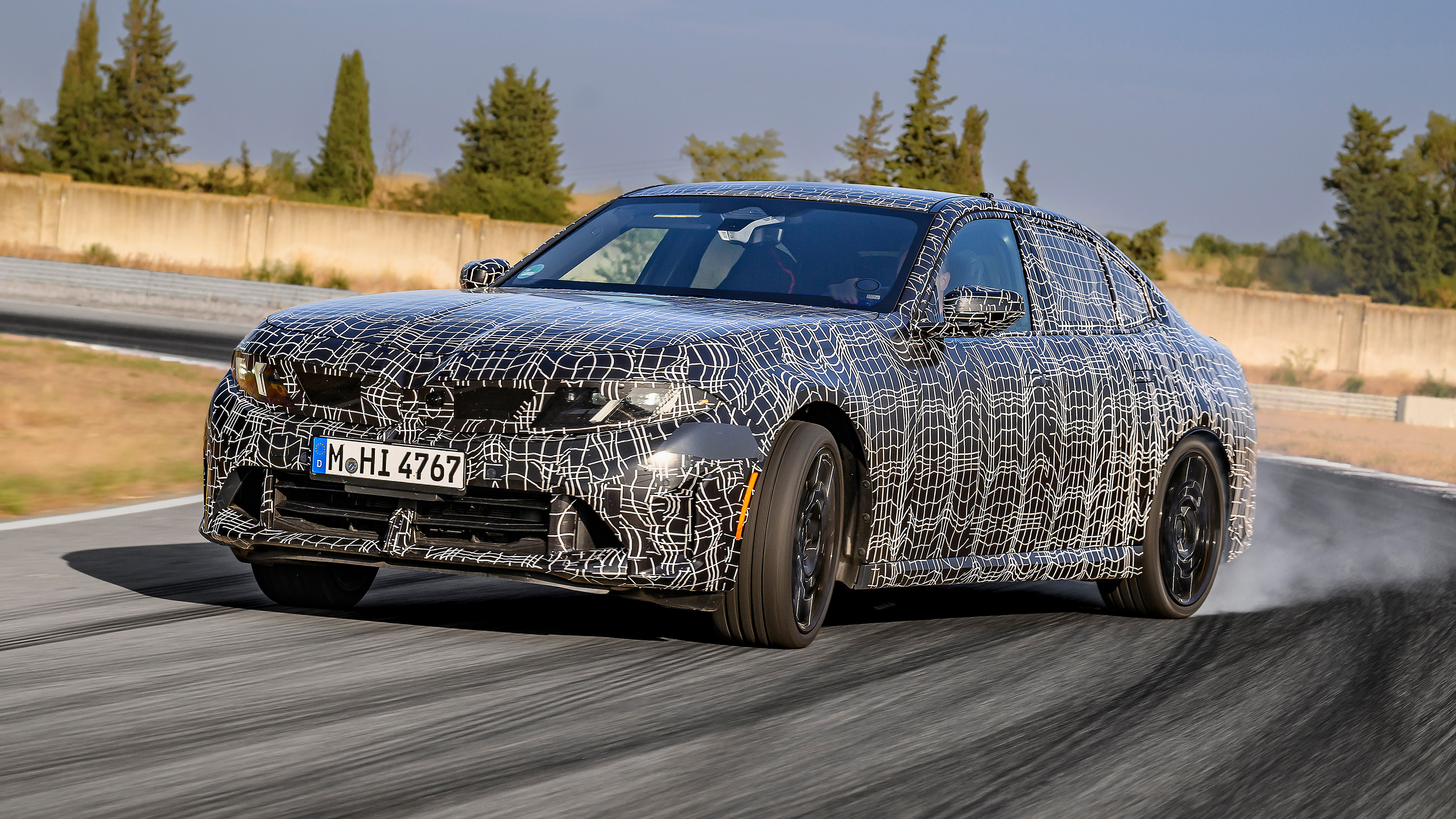
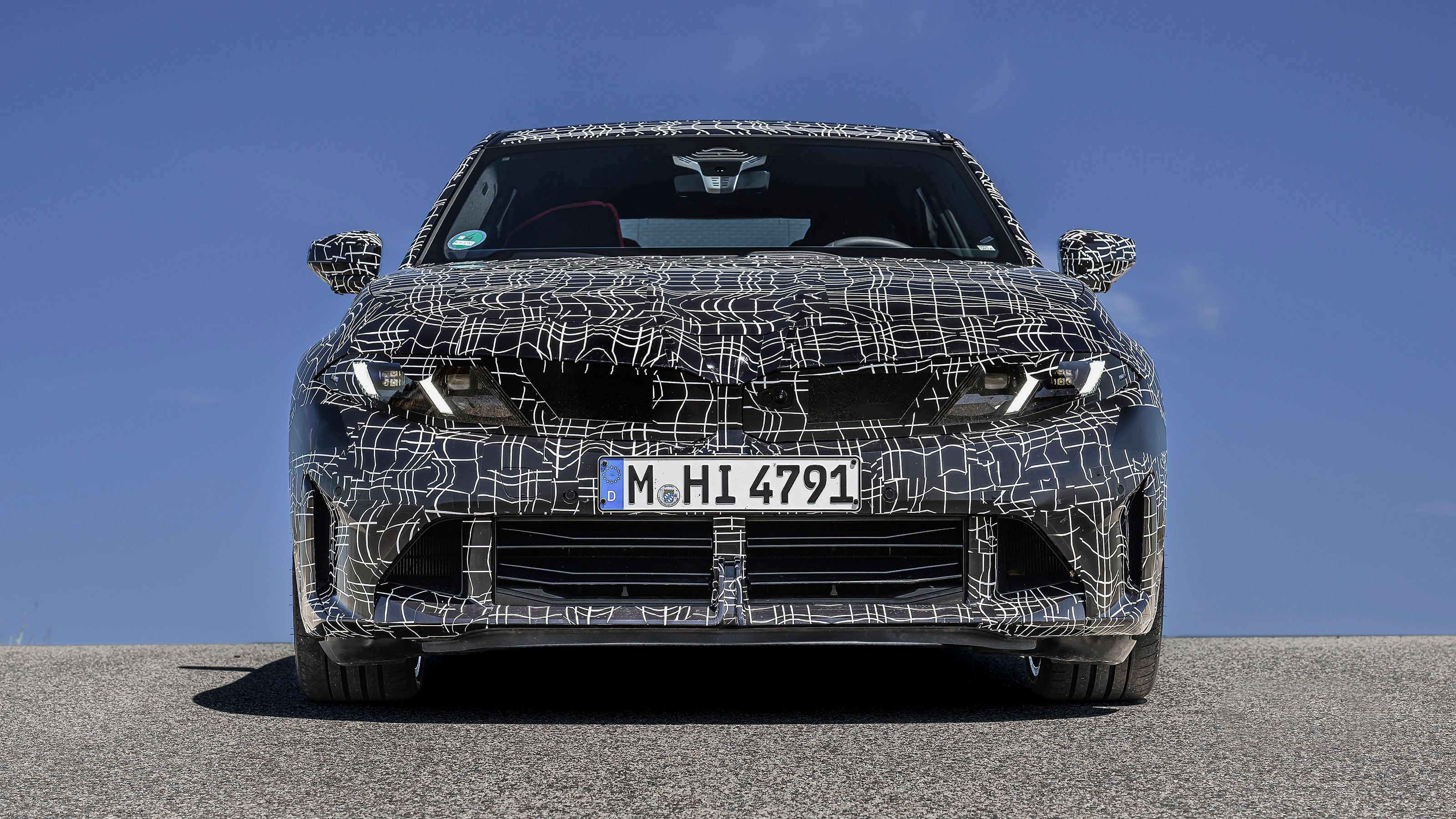
Despite all the effort it has been throwing into its electric cars, BMW isn't ignoring the ones with engines. So, as sure as the sun rises in the morning, it's time for a new 3 Series. We've driven a prototype. Undisguised photos will follow at the end of September.
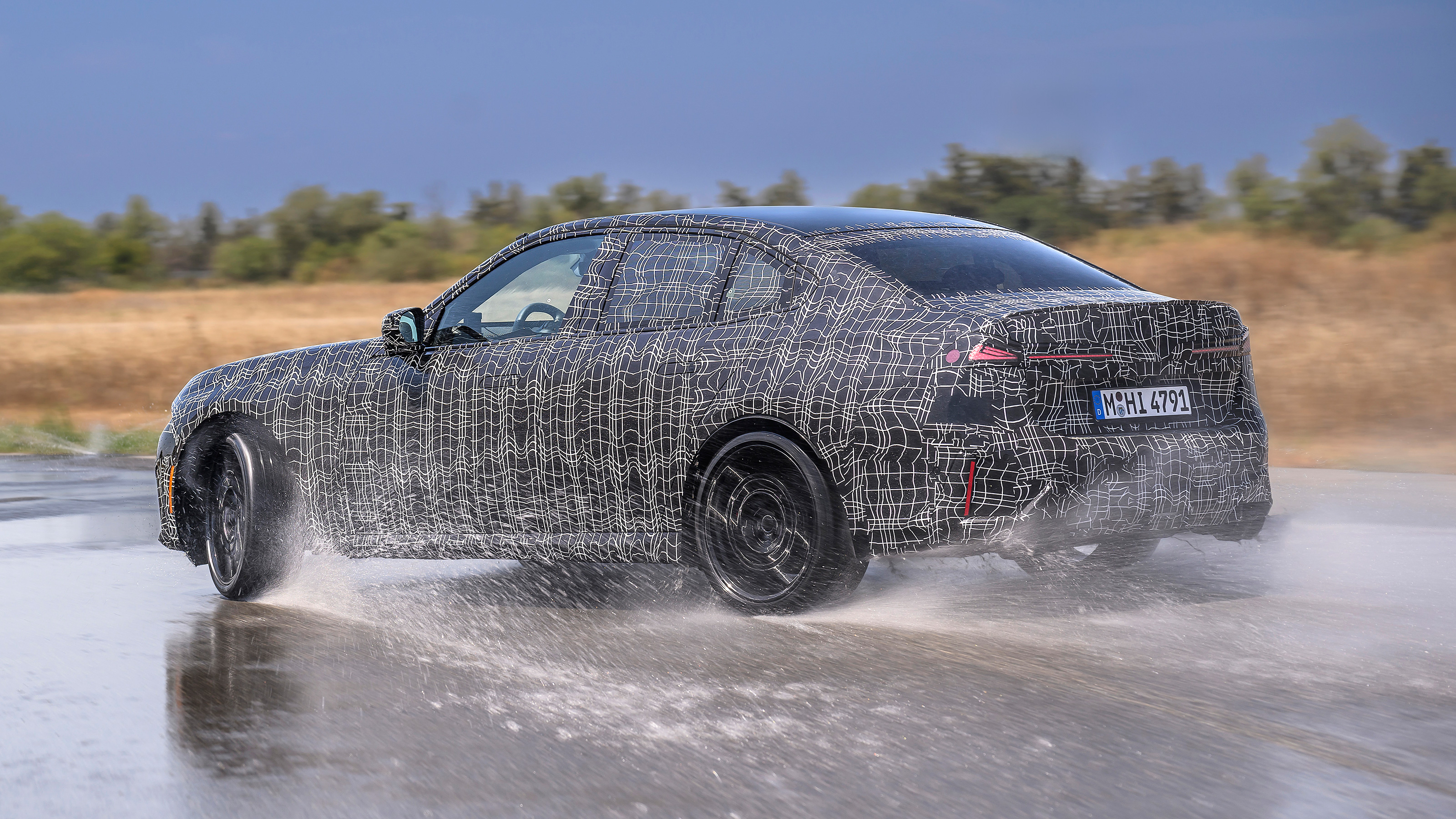
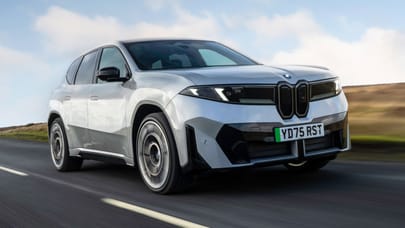
The clean, crisp body surfaces and the lighting signatures are very similar to the i3. What's subtly different are the proportions. The petrol car has a lower roof at the rear (the i3 compensates for the below-floor battery by raising the rear seat), a longer nose (to fit the straight-six and radiator) and slightly longer overhangs. Every panel and piece of glass is different between i3 and 3 Series. But an engineer tells me the differences are small enough that "even BMW people confuse them".
More power, a longer wheelbase (by 9mm), wider track, bigger tyres. Usual stuff for a new generation of German car. The one we drove, the only six-cylinder in the range, now has 443bhp and 428lb ft, fed to all four wheels. A big step from the old M340i's 374bhp. Although it's still a 3.0-litre, the blossoming power has led to a name change: it's now the M350 xDrive. Its 0-62mph time is 4.1 seconds – the same as the 2014-18 RWD manual M3.
Later there'll of course be other petrols: a 318 (maybe not for the UK) and a 320 this year. These two and this M350 have 48V mild hybrid assistance. Arriving next year is a new PHEV 330e.
Of course the petrol car has a wholly different underbody versus the electric. Most parts are changed versus the old 3 Series too. Some of it is relatively subtle: stronger suspension mounting points for better handling precision, says BMW.
Even the base four-cylinder now has dampers with hydraulic rebound stops, braces between strut towers and bulkhead, standard 245/45 18 tyres, plus revised springs, bushes and so on. Adaptive suspension is optional.
The M350 xDrive always gets adaptive dampers, plus an electronic control of its rear and centre diffs, better brakes, more underbody bracing and 235/35 20 tyres.
Inside, you get BMW's new display and Panoramic iDrive system – an oblique central screen, plus another display reflected across the bottom of the windscreen the whole width of the dash. It carries several widgets of your choice. See our review of the iX3 for more on this.
They drive well only if the fundamental mechanics are right. But yes, BMW has made a lot of fuss in recent years about its digital dynamics systems. The Neue Klasse EVs have something called 'Heart of Joy', a single controller that links the chassis, brakes and motors to control the dynamics.
But a petrol engine can't be controlled as finely as a motor, so the brakes and dampers and diffs shoulder more of the control work. Powertrain, ESP and 'agility' systems have separate processors, linked to a master brain. But one thing is similar to the EVs, and that's the measurement of what the car is up to. Sensors observe acceleration in six senses: lateral, longitudinal, vertical, yaw, pitch, roll.
Get all the latest news, reviews and exclusives, direct to your inbox.
Let's talk about the engine first, because why not celebrate a revvy six-cylinder? That's quietly ignoring the fact sixes are now only a tiny percentage of the 3 Series sold in Britain.
Get the thing working hard and there's a real song and snarl to it. It's as if they're celebrating being liberated from the need for quietness – that's the i3's job now. Indeed, the US version, which has no particulate filter, is almost antisocially loud when revved at low speed.
Get the thing working hard and there's a real song and snarl to it
Throttle response is spot-on progressive. Power swells beautifully, with basically no lag above 2,500rpm, and anyway you'd need to lock the transmission in a high ratio to feel it below. Normally it would downshift, and all of its shifts are wonderfully smooth and well-timed – even in an age when we've got used to the seamless drive of single-speed EVs.
Out on the road, the steering is beautifully measured and precise, and has cast aside the gluey weighting of some earlier M cars. So although it's fairly light there's feel: you sense through the wheel rim as the front tyres go light over a crest. And when the torque goes to the back and the rear tyres take the load on the way out of a corner.
You can't, though, tell which of the chassis control systems is doing what – the diffs or the dampers or the brake vectoring. They just integrate into a lovely fluent result.
Going slowly the ride is pretty tight, even if you've selected the softest damper programme. Things open up with speed, though, and it cushions sharp bumps well. The sensation is of the whole car moving up and down, not of pitch or roll-rock or wheel shudder. It's all very tidy.
Yup, after the road drive we took to the multiple layouts of BMW's test track. Of course a car should feel good at the place it was developed, but with that caveat it was quite a show.
If you set it to the M Sport+ mode, it throws as much torque as possible to the rear as much of the time as possible. This uses model-based predictive software, and as long as the computer figures you're in control, it allows wide-angle slides.
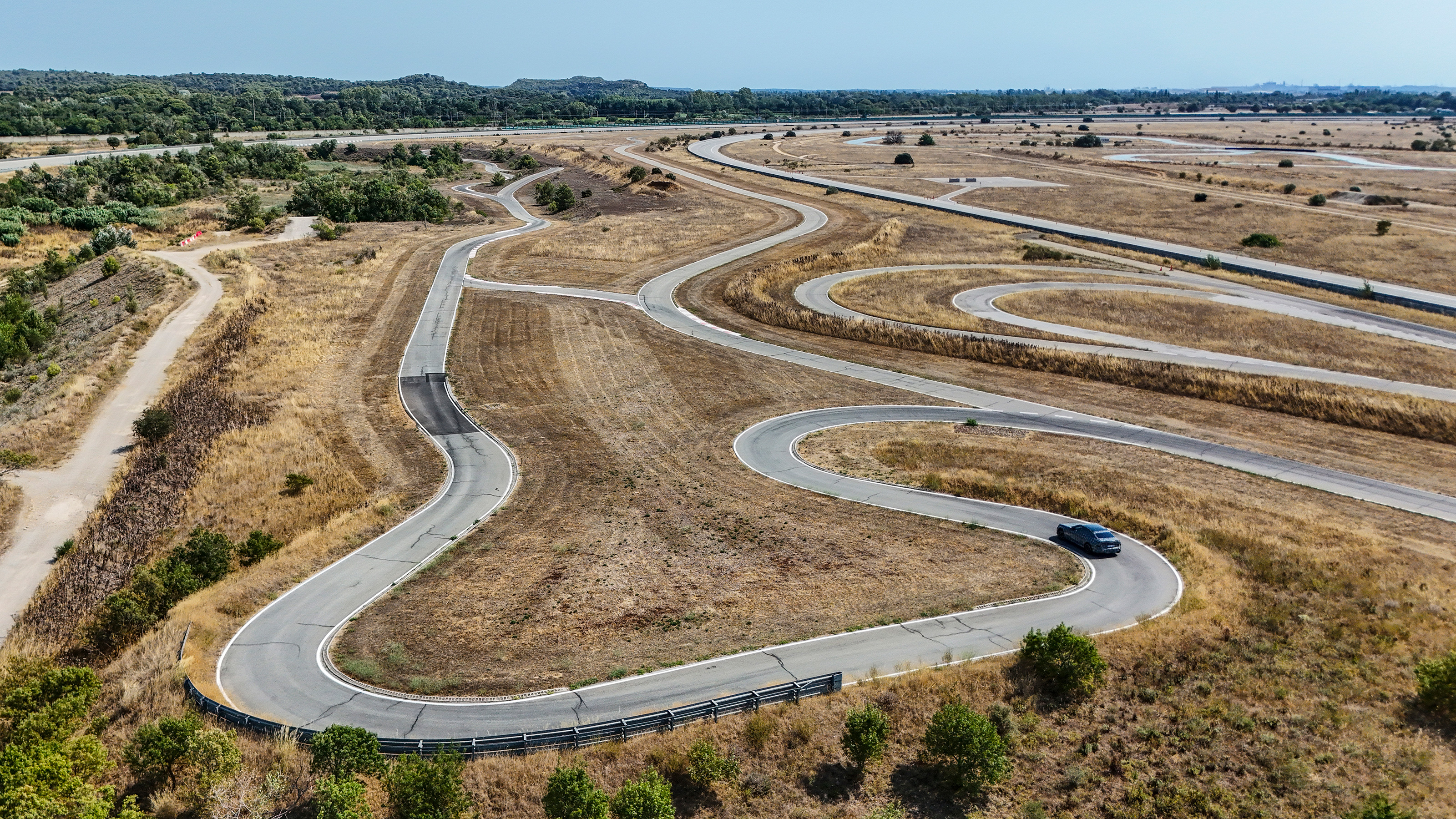
There's more to come. An over-the-air software update in 2027 will allow a full RWD-only drift mode. That's not as simple as telling the centre diff to organise full rear drive. It also needs separate calibration of brakes, rear diff and steering. This wasn't part of the car's spec at the beginning of the programme, hence the delay.
It's got launch control too, which is how come that 4.1-second 0-62mph run is no drama to perform. The drama is in the kick in your back.
A lot is common – the design is close, the interior interface very much the same. But yes, the new petrol 3 Series feels like a step forward for its kind. And though we haven't driven the i3, the iX3 is certainly at the tip of the arrow for its kind.
The new petrol 3 Series feels like a step forward for its kind
The 3 Series' project head Michael Keigler tells TopGear.com that with bigger cars, the 5 Series and 7 Series, there's enough space to fit batteries or engines under the same car. But with the smaller stuff, the tighter packaging means you need to do two different platforms from the ground up. That means max range with an EV and max dynamics with a petrol car. I'm thinking you can feel the benefit.
Get all the latest news, reviews and exclusives, direct to your inbox.
