



25
I know, right? We’re still getting used to new-era Brabus, too. There’s no question that creating monster Mercedes-Benz products is still their core business – around 85 per cent of revenue, in fact – but Brabus has also turned their attention to the Porsche 911 Turbo with the 900 Rocket R, there’s the similarly named but very different Brabus 900 based on a Bentley Continental GT and another car called the Brabus, erm, 900 based on the Lamborghini Urus SE.
They even do Rolls-Royce and Range-Rover modifications, too. Plus boats. And they’re building two Brabus islands. One in Baku, Azerbaijan and another in Abu Dhabi. You can see why they’re too busy to think of names other than ‘900’.
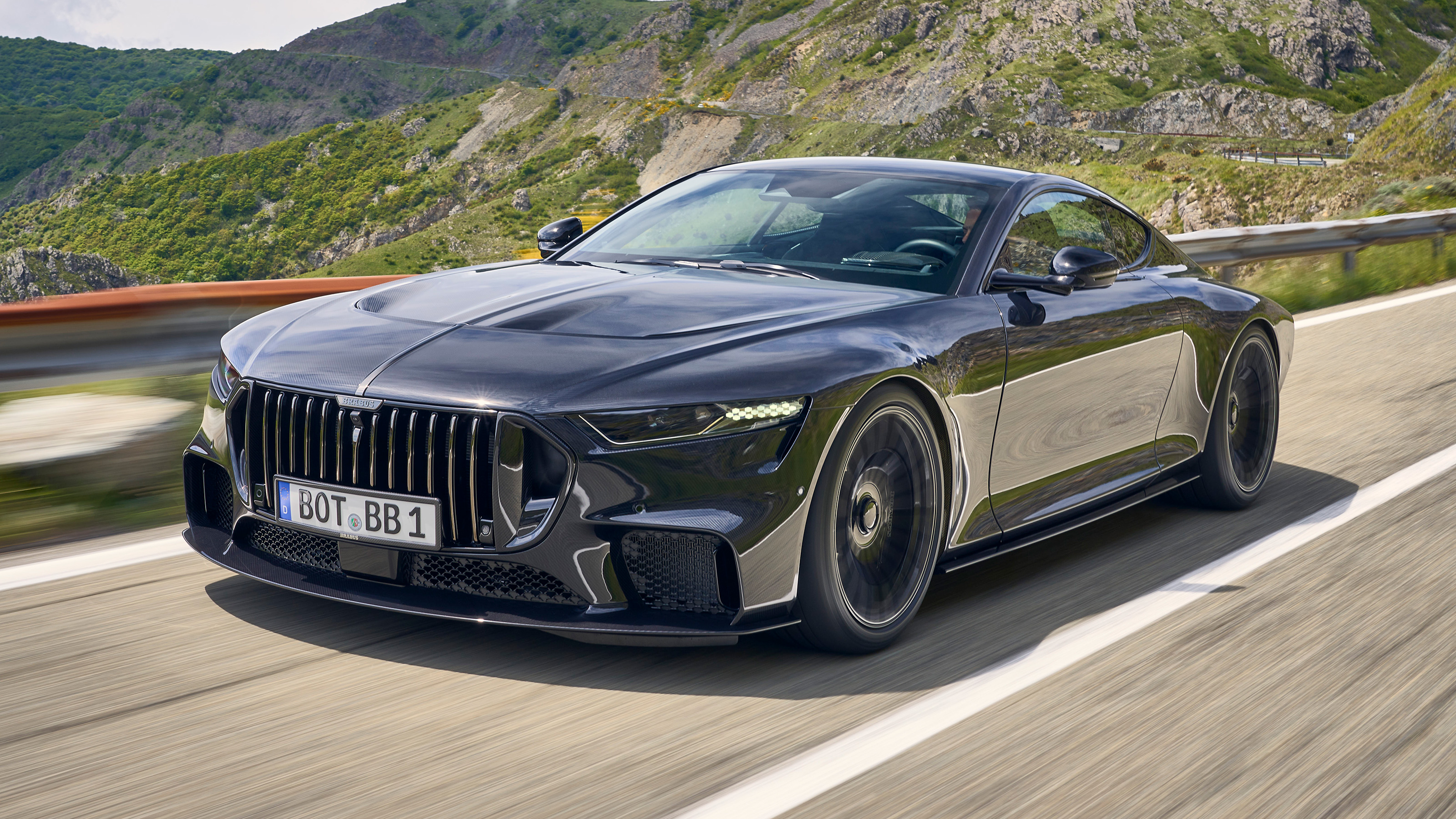
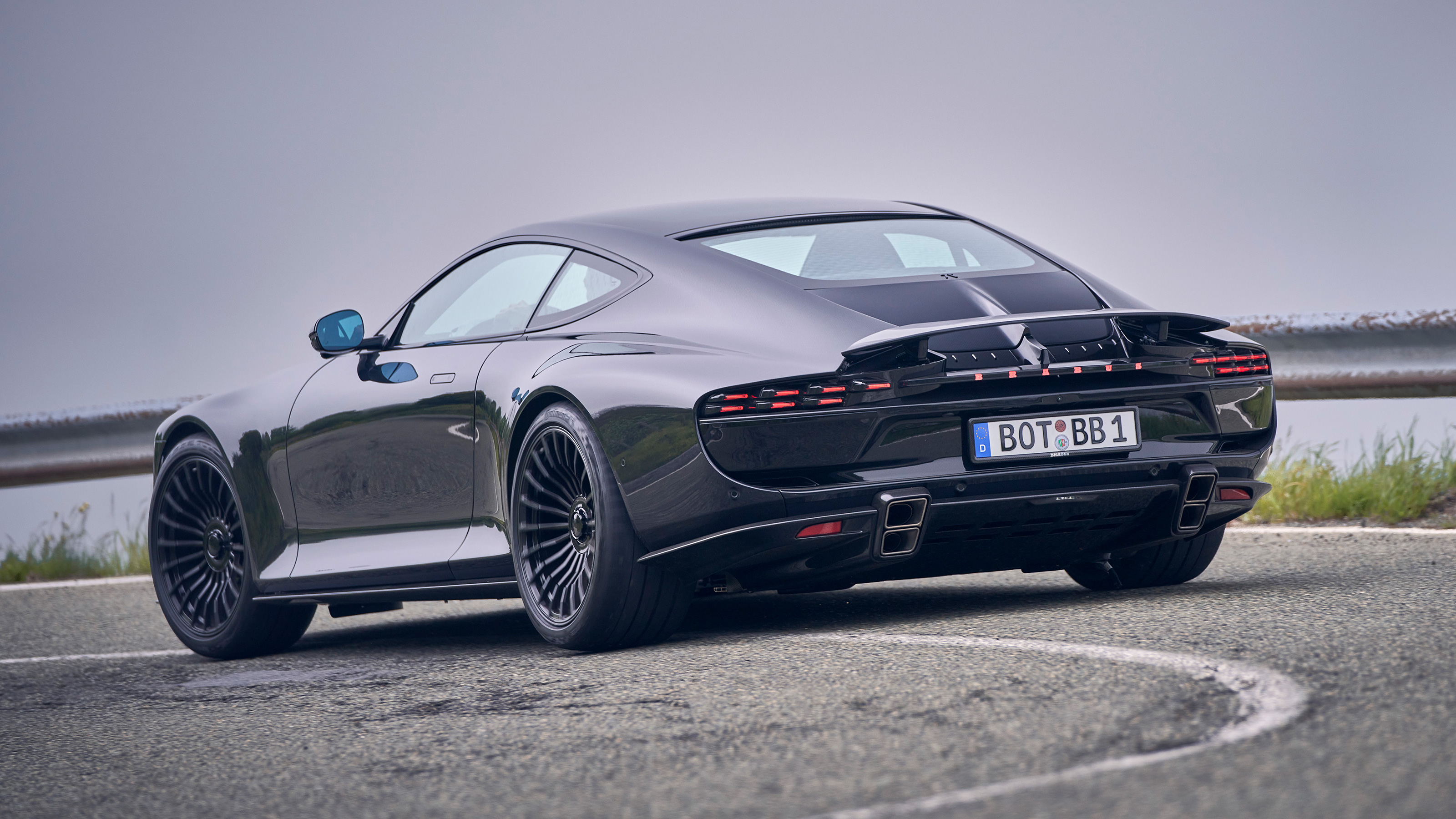
Perhaps this car would have been called the 900, too. But, rather inconveniently, its 5.2-litre twin-turbocharged V12 has 1000PS or 986bhp, backed up by 885lb ft. Blimey. It’s named Bodo after Brabus’s founder and guiding light, Bodo Buschmann. The company is now run by his son, Constantin. And yes, getting back to the original question, the Bodo is built around Aston Martin Vanquish architecture.
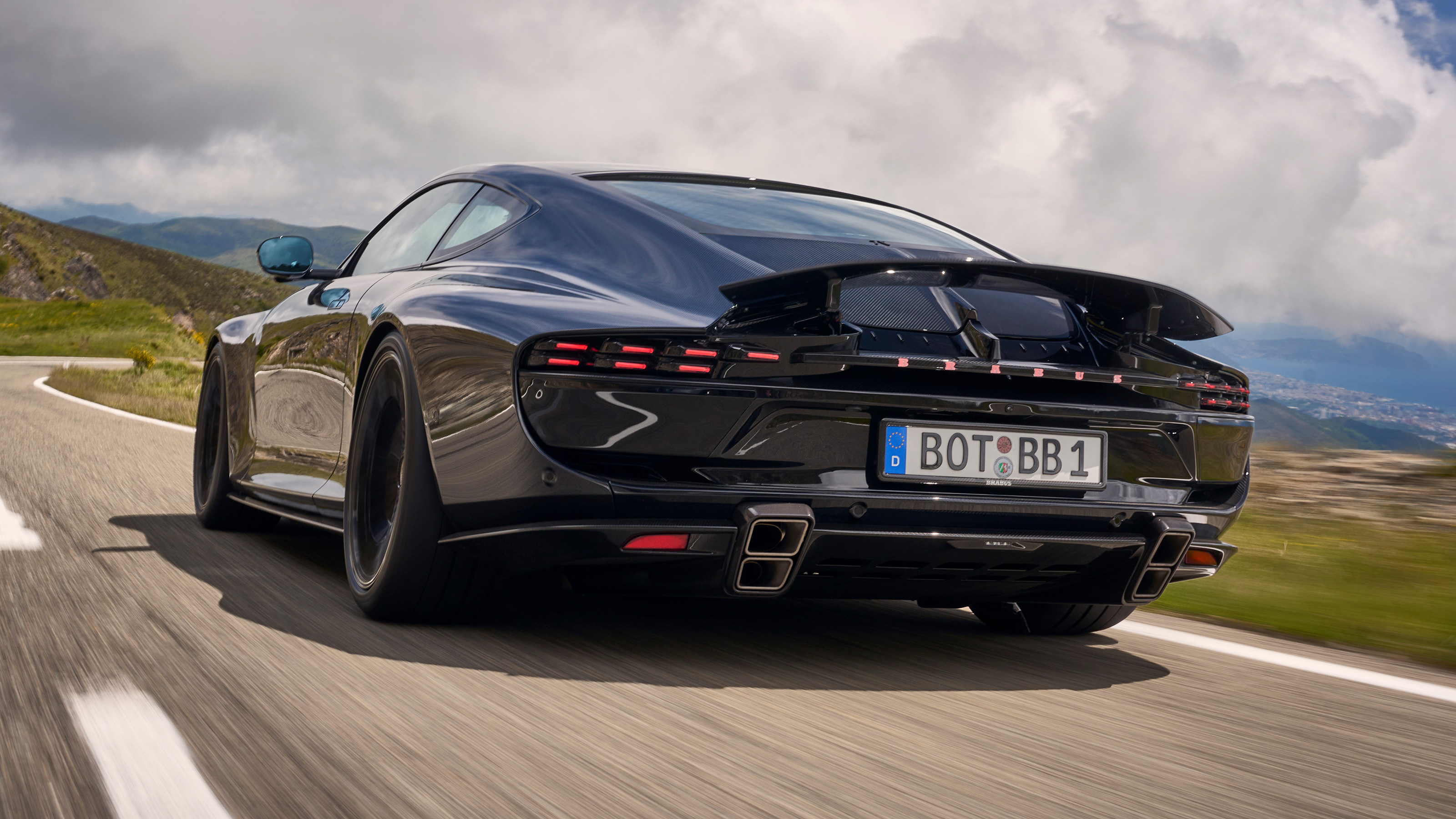
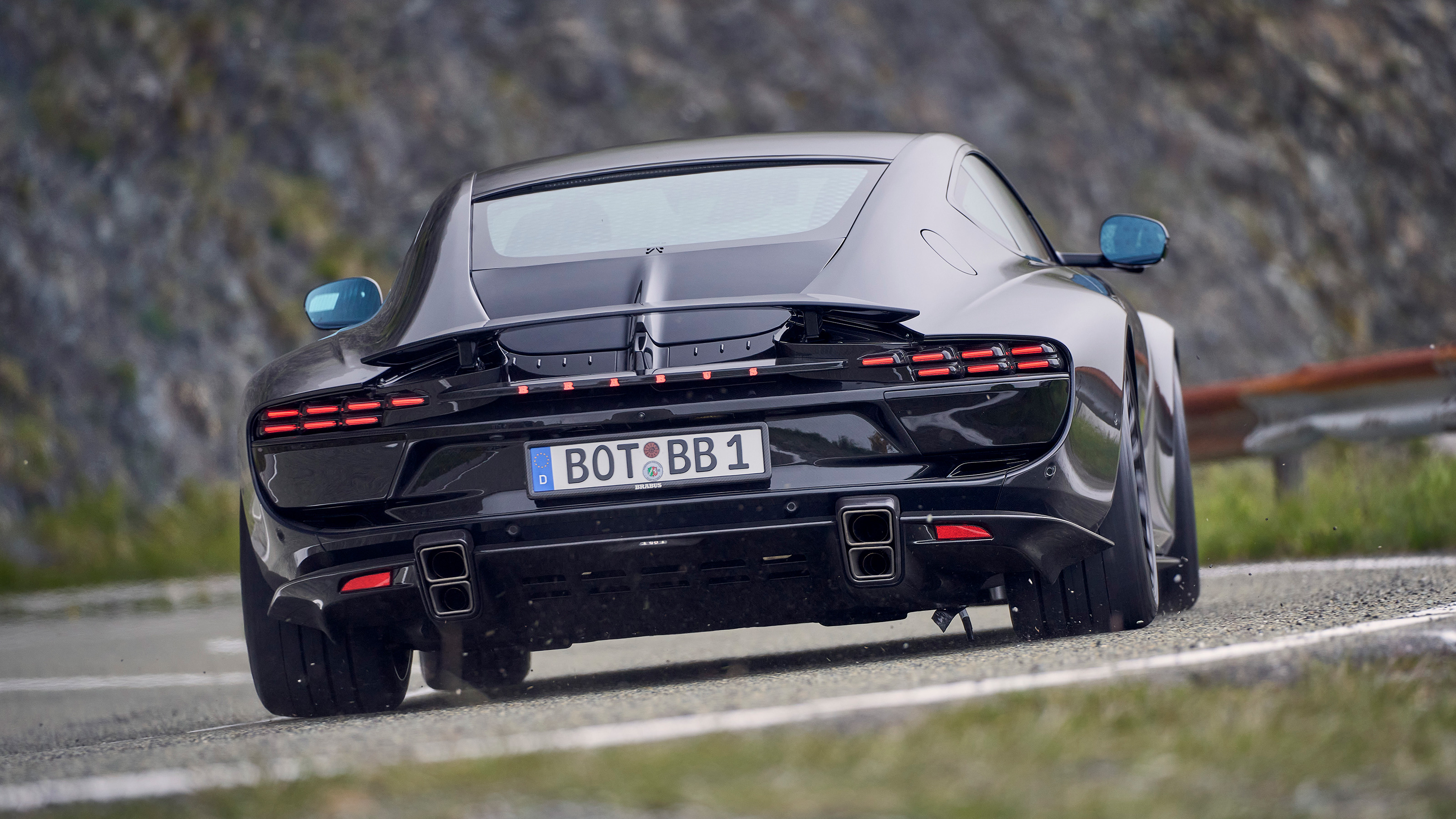
If you want to be really brutal and cynical, yes. But… Brabus is a proper company and they tear-down every aspect of the Vanquish mechanical package and dramatically change it. Literally from the ground up – check out those bespoke Continental SportContact 7 Force tyres – and right through to the tip of its sliver of active rear wing at the end of that elongated teardrop shape, nearly everything is new.
Pretty gorgeous too, right? Just 77 will be made (Brabus was formed in 1977) at a price starting from €1 million plus taxes. Call it just over £1 million before you start requesting seats stuffed with mermaid’s hair, for example.
Let’s start with the engine. Stripped down to component form and rebuilt with all sorts of new components, including new intake, heads, forged piston and titanium rods, bigger intercoolers, new and bigger turbochargers, plus a full-length titanium exhaust. It’s a monster, making its 986bhp at 6,400rpm and the 885lb ft from 2,900rpm-5,000rpm. Brabus claims 0-62mph in 3.0 seconds and a top speed of 223mph.
It still drives through an eight-speed automatic gearbox and e-diff to the rear wheels only. Those 325-section Contis have a lot to deal with. However, Brabus has worked hard on dynamics. The Bodo is lower, slightly more aggressive in its set-up and has unique suspension arms, bushes and springs and dampers. The whole lot.
Although it all feels OEM as the drive modes (Tour, Sport, Race) still work just as they do in the Vanquish, ensuring it’s not just a one-trick pony that sacrifices too much of the GT bones for pure sportscar aspirations. It also has a full body lift to spare those long overhangs.
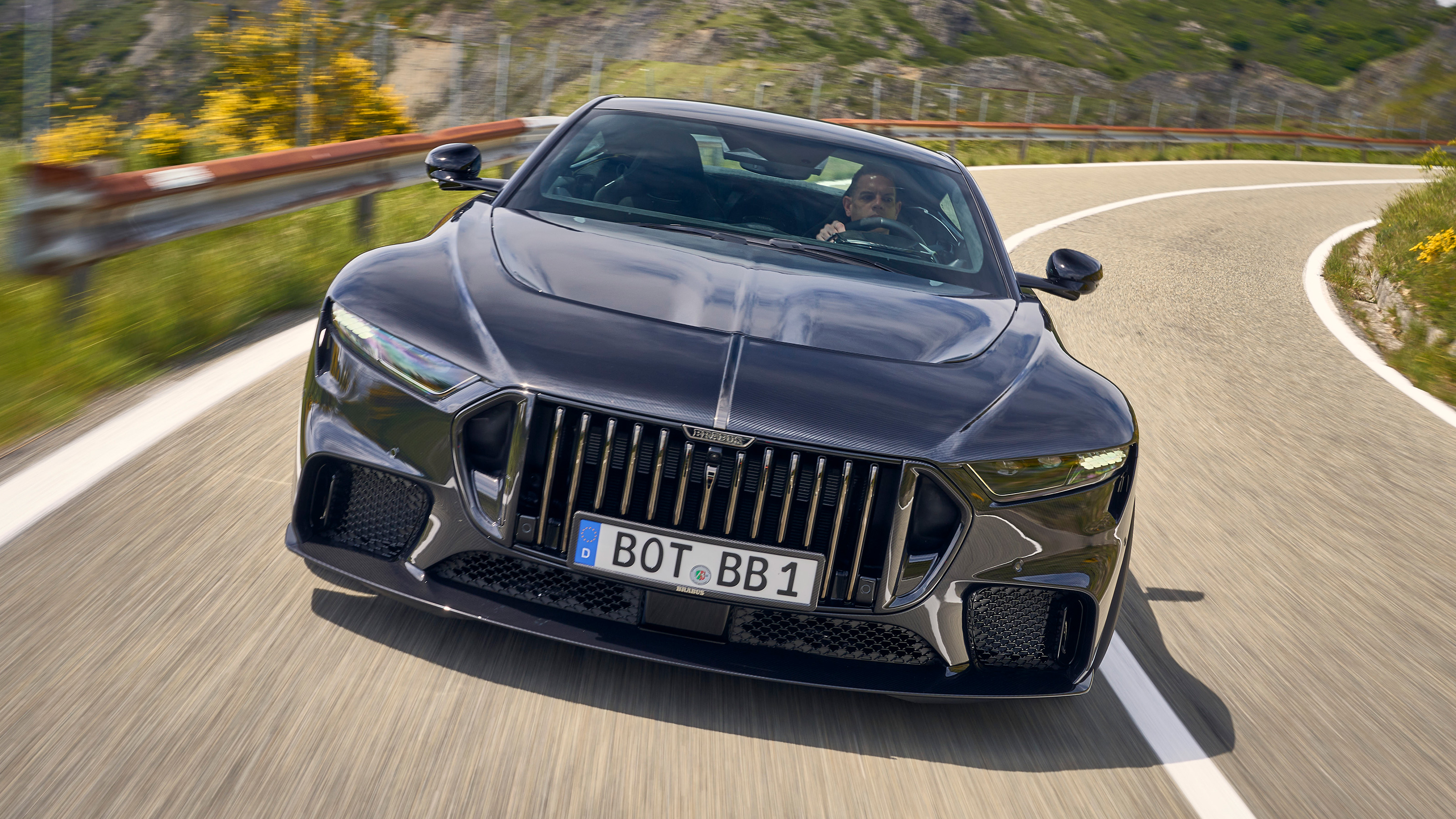
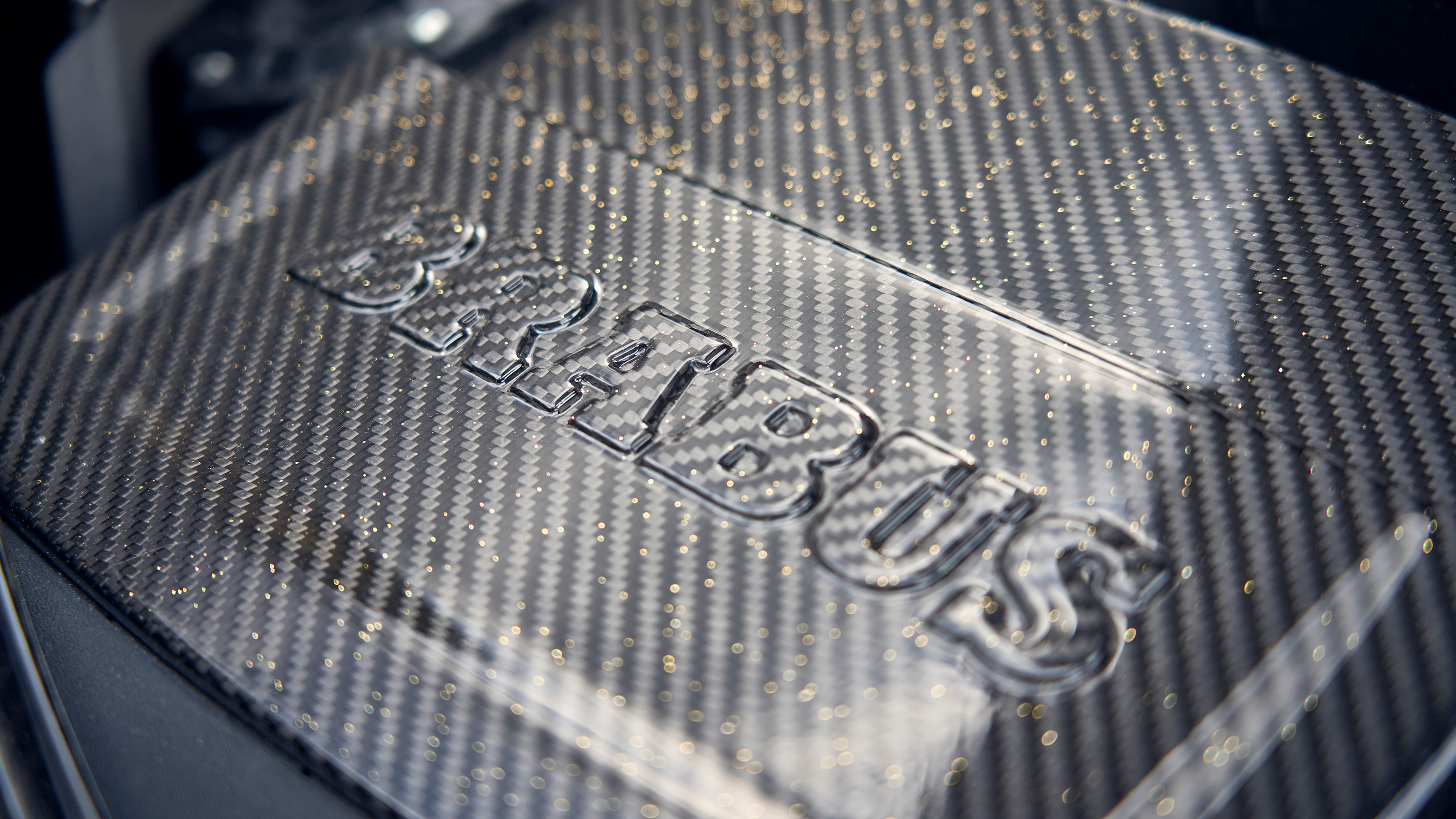
Oh yes. The Bodo has so much presence and builds on the amazing proportions of Vanquish. It’s inspired by the Vision Mercedes-Maybach 6 concept car but with added muscularity to keep that signature evil Brabus aesthetic. The body is all carbon-fibre and the execution is genuinely stunning. Brabus claim the car is slightly lighter than a Vanquish, too. Around 1,700kg dry.
Get all the latest news, reviews and exclusives, direct to your inbox.
Inside it’s very, very black. Very sinister. But also very lovely. As you’d expect of a car that mostly utilises the Vanquish architecture but with new materials. And if you are still upset about the Bodo not being based on a Mercedes, well the indicator/light stalk is unmistakably Benz.
The view out is obviously very different to a Vanquish and the whole vibe of the car is a little less playful and a lot more focussed. The lightness of touch is gone, replaced by a very intriguing swagger. There’s an irresistible magnetism about the Bodo.
It’s pretty awesome. Immediately there’s a familiarity, but also just enough new flavour to feel fresh. The ride is a bit more aggressive than the Vanquish but the platform feels flatter and more stable. The steering has a bit more heft. There’s an underlying control and responsiveness that moves this chassis into a new place.
The noise, gearbox feel and the basic balance doesn’t feel a million miles away from a Vanquish, but as you drive more quickly the Bodo displays real sharpness and monster front-end grip. It’s a huge car but pretty soon you find yourself hurling it at corners and feeling the rear immediately take-up a bit of yaw as those big front tyres bite.
The Aston is already a brilliant car, so Brabus has done great work to elevate the experience still further
In that sense, it’s even more alive than the Vanquish and feels more accurate and keener to really get stuck into a winding road. The Aston is already a brilliant car, so Brabus has done great work to elevate the experience still further.
At low speeds there’s plenty of refinement and the ride is just about supple enough to fulfil the GT role, too. Perhaps the best recommendation I can give is to say that each driving mode feels really well-defined and clicks-up the aggression but remains usable. You can feel the engineering expertise that’s gone in here.
Here’s the slight contradiction. The engine is immensely powerful and on a fast, flowing road I’m sure it would be endlessly entertaining and slightly other-worldly. However, on the tight mountain roads we found ourselves on in Italy, those bigger turbos mean less initial response out of turns and, for the most part, the Bodo doesn’t feel much quicker than the much less powerful donor.
Moreover, the extremely alert chassis is crying out for instant power to exploit its superb balance and attacking style, but sometimes you’re caught waiting for the big turbos to really deliver. It’s a small criticism and was arguably exacerbated by the environment, but it does go to show that sometimes a smaller headline figure can deliver a more energetic, accessible power curve.
Perhaps unsurprisingly – considering at its core is a stiff, superbly engineered platform with a stonking great engine – the Bodo is a bit of a blast. It feels bespoke and beautifully crafted, the driving experience melds performance of huge scale with surprising poise and its overflowing with attitude. It’s a compelling recipe and more than justifies its dramatic looks and much more sinister Brabus detailing.
If we’re entering an age of neo-coachbuilding, then the Bodo is a lesson in how to do it brilliantly. And if you don’t like it? That’s sort of the point. When just 77 will be built, dividing opinion is no problem at all.
Get all the latest news, reviews and exclusives, direct to your inbox.
