VOLVO
P10 375kW 95kWh Plus 5dr AWD Auto
£59,795


Refinement, thoughtfully designed, good touchscreen, well equipped
Lacks engagement, ride quality isn’t fully resolved, iX3 knocks spots off it
It’s the all-new, pure-electric reimagining of Volvo’s best-selling XC60. That’s shifted 2.7 million units since arriving in 2008, so this is a biggie for the Swedes. While others row back on their promise to go fully electric, Volvo ploughs on, confident in its technology and robust in its rebuttal of mission creep.
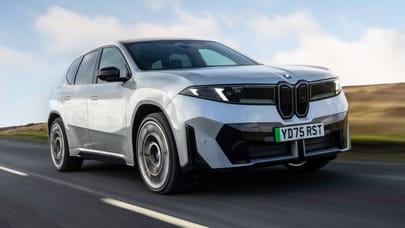
Besides, Volvo reckons the market for electric is demonstrably growing, and the EX60 is among that elite band of new-age EVs that can claim a headline-grabbing range figure of 503 miles (WLTP). But it also has the misfortune to arrive just as BMW’s superb new iX3 gets into its stride.
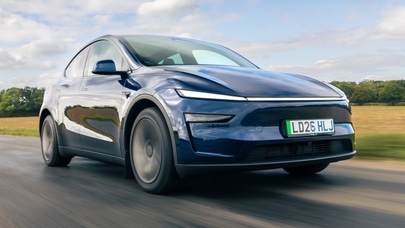
Yep, and it’s getting fierce in this segment. As well as the BMW, the EX60 is up against the ultra-refined Audi Q6 e-tron and Mercedes GLC Electric, ever popular Tesla Model Y, and immensely capable Porsche Macan. In the US you could – and should – factor in the truly excellent Rivian R2.
No, actually. Both cars run systems based on Google's Android Automotive OS, but the EX60's is far better thought out, easier to use, and won't drive you hopping mad. Phew. The one caveat is that the vents are digitally operated, which is an inexplicable design choice. But other than that, it's all right.
Underneath, the EX60 is built on Volvo's new SPA3 platform, and sees the car’s neural soft- and hardware characteristics more seamlessly integrated than ever. It’s another car – like the Rivian – that will bombard owners with regular over-the-air updates, rendering the idea of mid-life facelifts redundant.
Key to this is the introduction of the new HuginCore computing system which evolves Volvo’s superset tech stack (the name is derived from Norse mythology). It’s been developed in-house and combines an Nvidia Orin X core computer that can manage 254 TOPS (trillion operations per second) with a new Qualcomm Snapdragon User Experience Computer (UXC). Rather than hundreds of separate control units, the EX60 is now very efficiently networked.
Google services are fully embedded, such that the smartphone on wheels analogy is more accurate than ever. That includes Gemini, conversational AI tech that takes voice activation to the next level. Ever seen the 2013 film Her? It’s like that, only without Scarlett Johansson. It’s truly brilliant to use. Careful you don't become romantically attached to it.
Four. The P6 and P10 arrive first, with the more powerful P12 due to arrive later this year, followed by a Cross Country version. Prices start at £56,860 for the P6 in Plus trim, rising to £70,360 for the P12 AWD Ultra. They’re all pretty well stocked, but Ultra brings desirable additions such as hi-def pixel headlights, diamond cut alloys, electrochromic roof, and the sublime Bowers & Wilkins audio system.
Here’s how the line-up plays out: the single motor, rear-drive P6 has an 80kWh (usable capacity) battery, makes 369bhp and manages a claimed 385 miles fully charged. Then we have the dual motor AWD P10, with a 91kWh battery, 503bhp, and 410 miles of range.
Top of the heap, but yet to be driven by us, is the P12, also twin motor but with a 112kWh battery and a resounding 671bhp. That’s the one for which Volvo claims a range of ‘up to’ 503 miles. It’ll also accelerate to 62mph in 3.9 seconds, though too much of the latter will not help the former.
Just so you know, the Ferrari F40 is 0.2 seconds slower to 62mph than the EX60 P12. The times, they have truly a-changed.
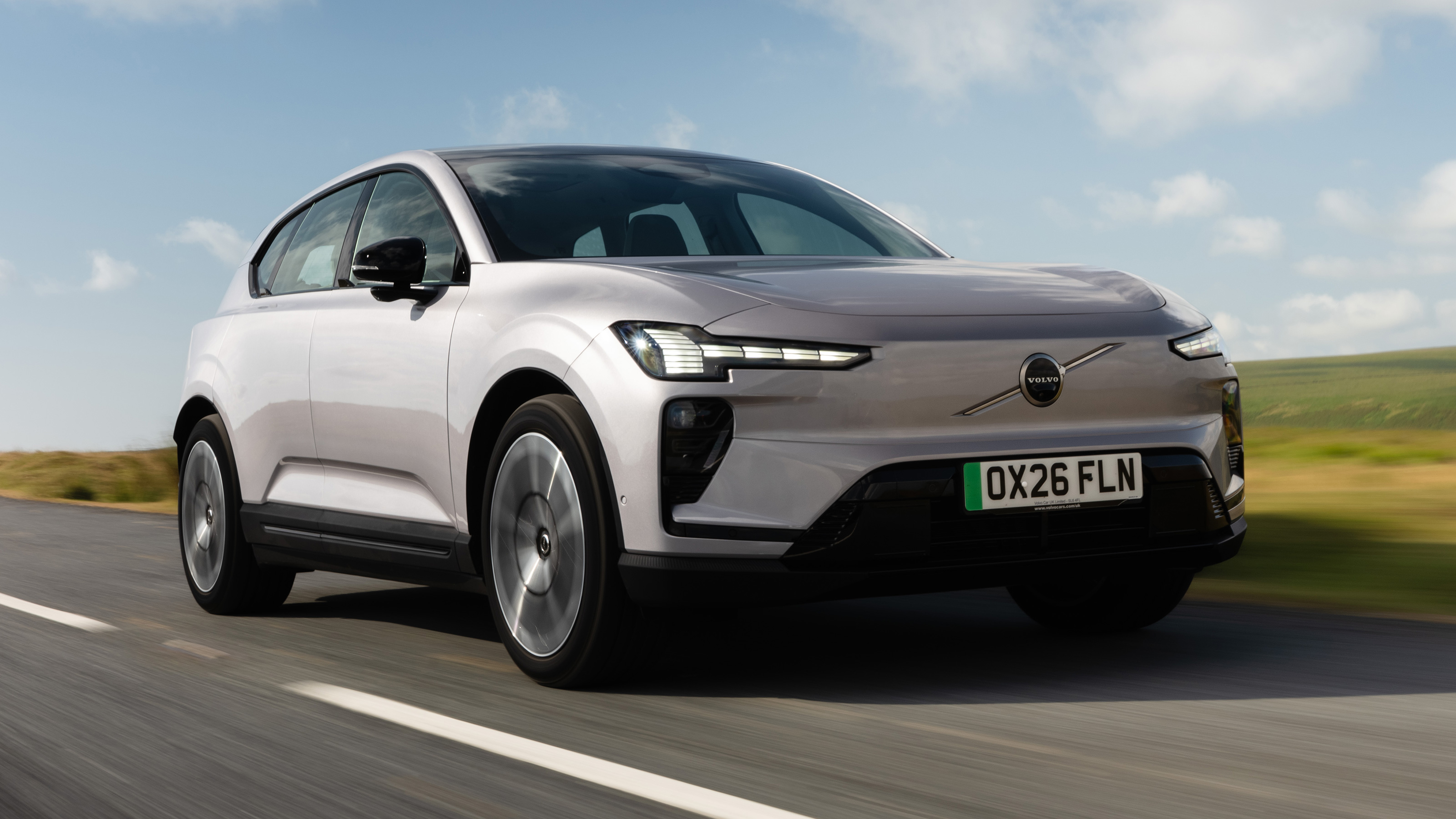
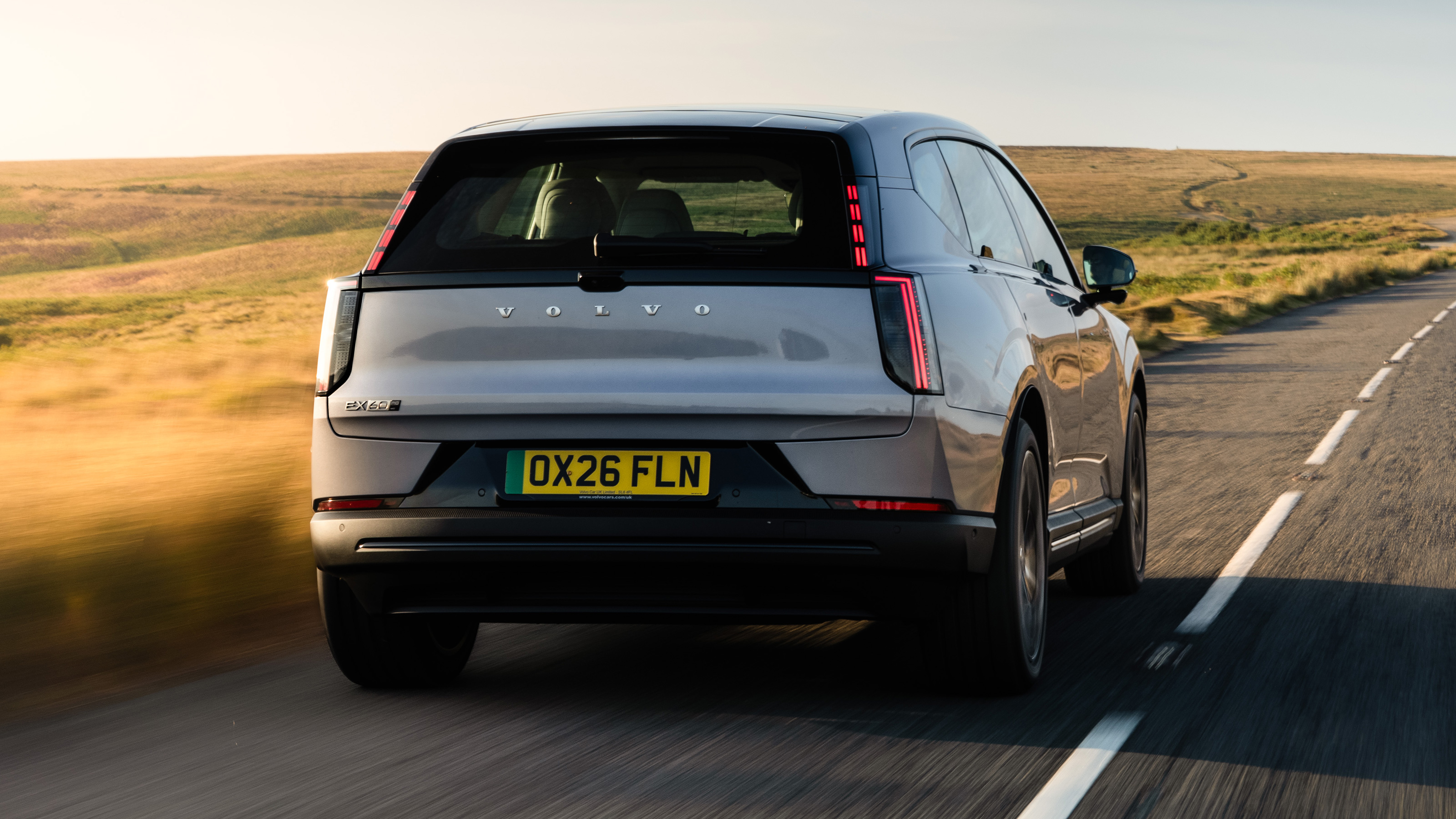
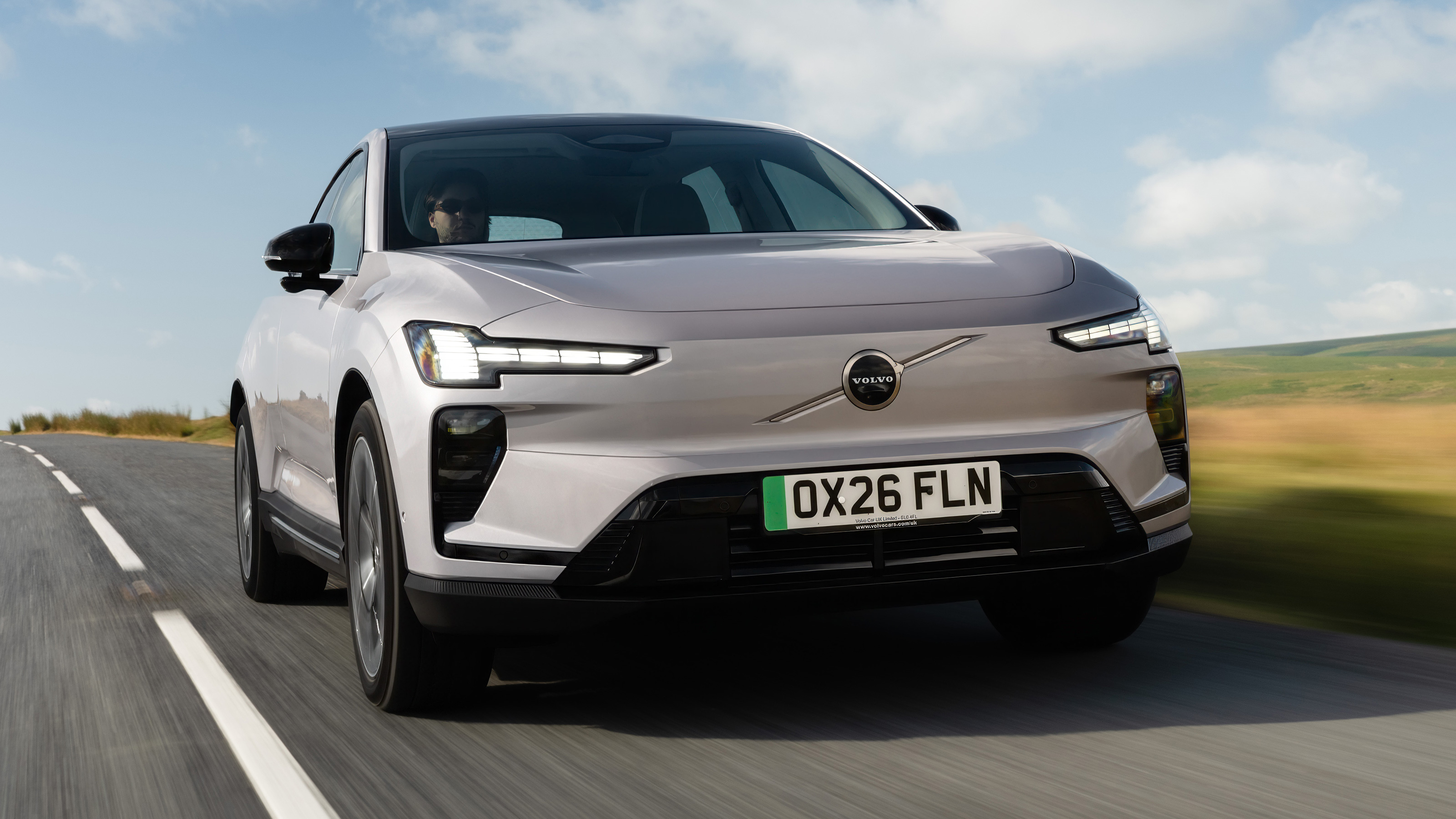
It does. Like other contemporary Volvos, the EX60 is clean, confidently surfaced, and undeniably Scandinavian. In a sea of dreary cross-over conformity, Volvo continues to stand out. We like the ‘Thor’s hammer’ lights and smooth nosed frontal aspect. EVs run the risk of looking soap bar bland, but the Volvo logo cuts a dash here, and the lower air intake adds drama. An active shutter system regulates the amount of cooling air the car needs.
You’ll also notice that the EX60 has a particularly clean silhouette. That’s partly down to the absence of conventional door handles. Instead, it uses ‘wing grip’ handles, which gives the body sides the sheer look that all designers love while enhancing the aero efficiency. Locking is done via a smartphone digital key or key tag. Don't scoff, it actually works quite well.
One giant leap for Volvo-kind. This is a generational machine for the Swedish company: with its new platform and ‘cell-to-body’ battery, the EX60 is lighter and costs less to manufacture. Rather than grouping cells into modules, assembling them in a pack and bolting that to the chassis, the EX60’s set-up stacks the cells directly and integrates the battery pack so that it becomes a load-bearing part of the vehicle structure. That improves energy density, and reduces emissions and charging times.
Key takeaway: the physically smaller EX60 P12 AWD has more battery capacity and range than the seven-seat EX90. For now, anyway.
The rear motor is a permanent magnet one that does most of the work; the front one on the dual motor models is asynchronous, magnet-free, and adds extra torque up front when required. It decouples at motorway speeds for more efficiency. There’s a new cooling system, revised inverter and power module, and reduced torque losses, claims Volvo.
As we’ve pointed out in previous reviews, this might be more important than the overall range. The EX60 runs an 800V setup that allows the P12 AWD to ingest enough energy to add 210 miles of range in 10 minutes, assuming you can find a 400kW charging point. Volvo’s third generation electric drivetrain is also bi-directional, so you can use it to power your home or to return energy to the grid. It’s ticking all the currently available boxes.
Glad you asked. The EX60 is impressive, if a little aloof. As in other Volvos, it doesn’t deliver a surfeit of driving pleasure, but then steering feel or chassis interactivity aren’t top of the list of priorities here. We reckon its ride is more settled on the fixed damper set-up than the more expensive active system.
Buyers want competence, connectivity, quality, practicality, and safety. No problems on any of those fronts.
The EX60 proves that Volvo’s mastery of the tech that underpins the next-gen of EVs is rapidly evolving. This is another highly accomplished car, thoughtfully designed, engineered and executed, and one that manages to inject some humanity into the electric experience. Which is a little ironic given that the Google Gemini AI functionality is the best we’ve ever used in a car.
As a driving machine, everything’s polished and refined – the EX60 is just as comfortable whisking the family off to a posh restaurant as it is lugging rubble to the tip. A proper Volvo, then. That it doesn’t major on driving thrills probably doesn’t matter that much. But being more expensive and less rangey than an iX3... does.
Get all the latest news, reviews and exclusives, direct to your inbox.