

OMODA
1.5T SHS-P Noble 5dr 1DHT
£34,835
PHEV is good value, loads of space inside, soft and comfortable ride
Rolls around corners, key functions hidden in the screen, generic styling
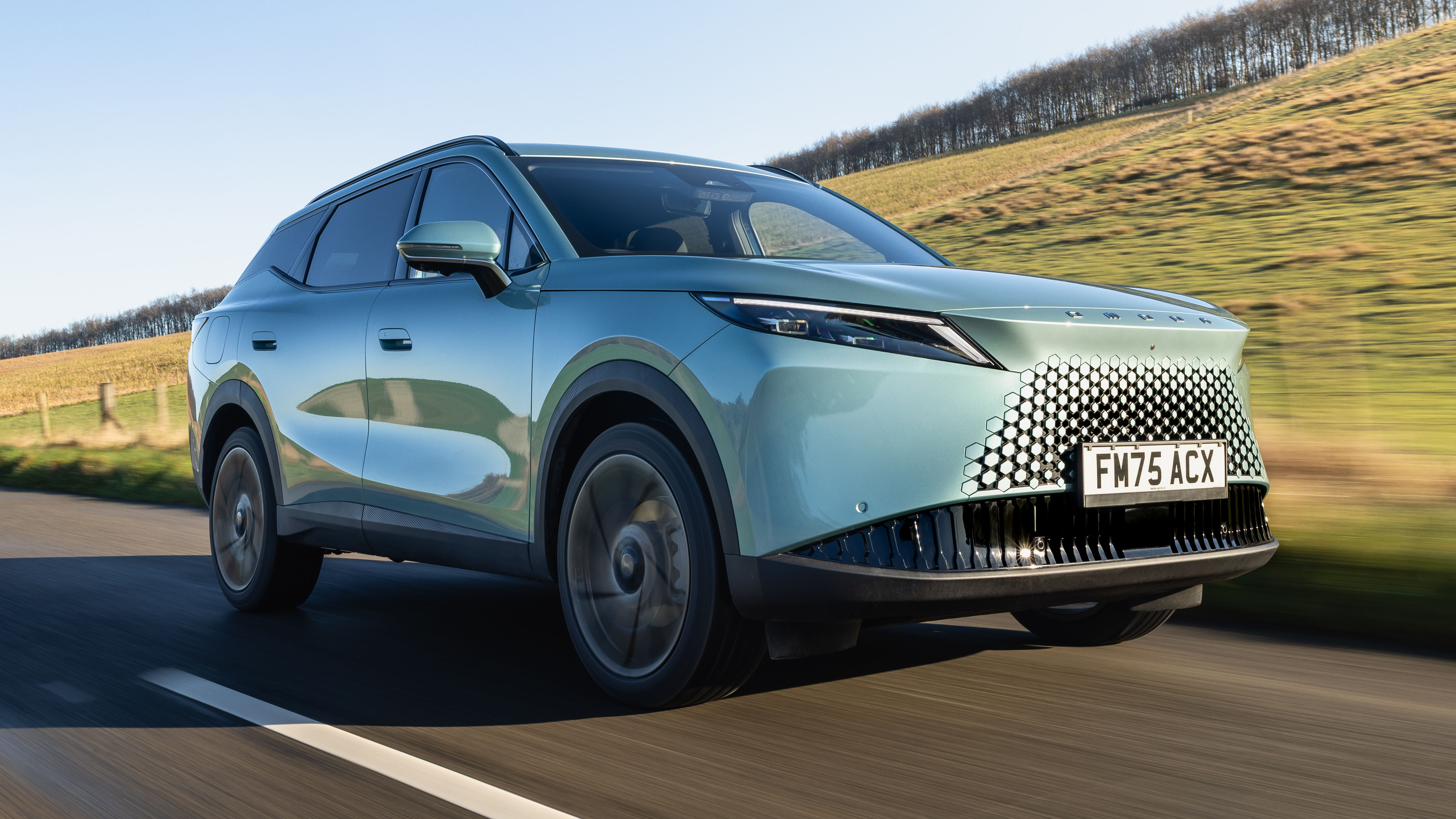
Strangely enough, it’s a mid-size Chinese crossover that slots neatly between the Omoda 5 and the Omoda 9. Who’d have thunk it?
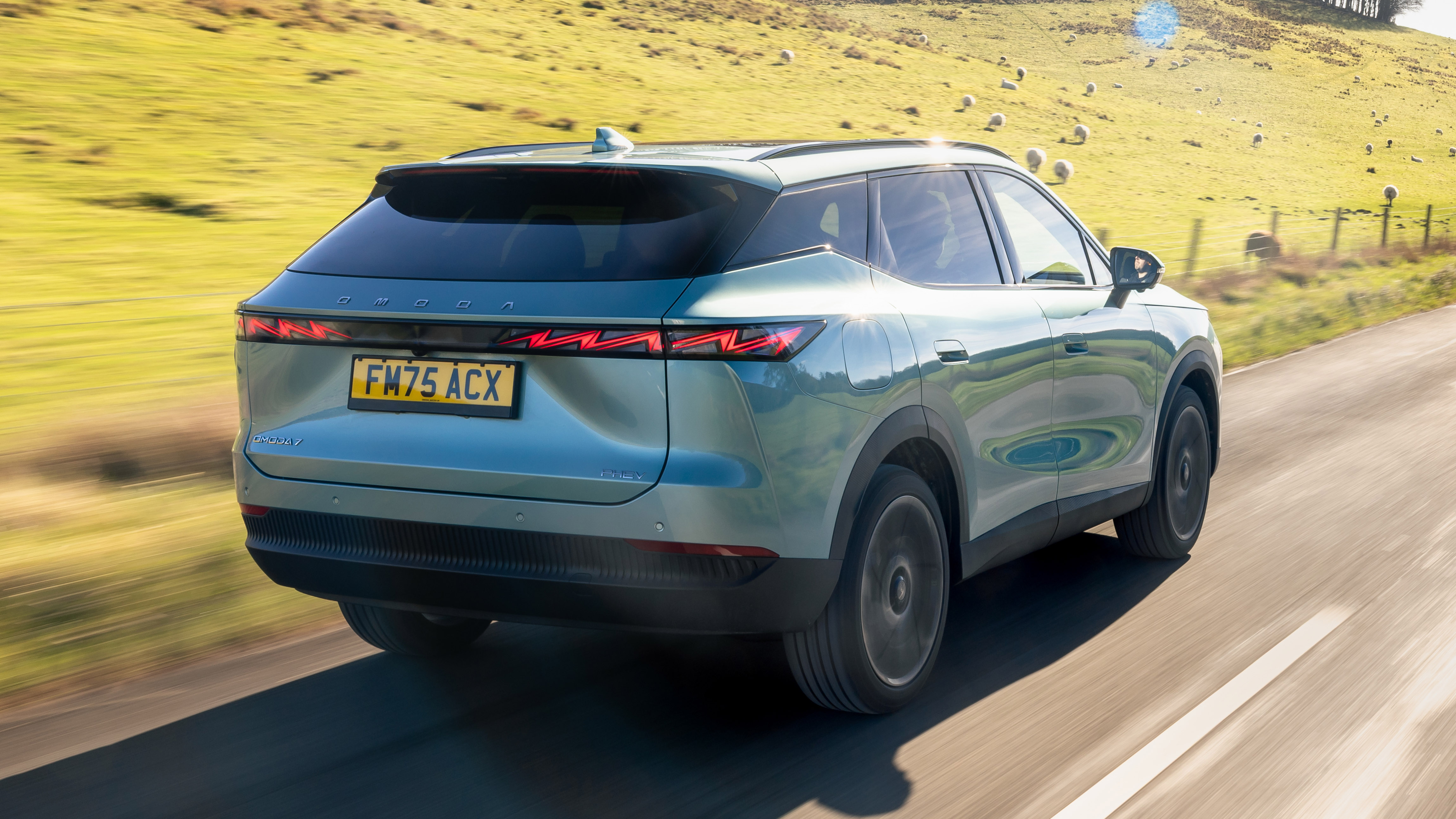
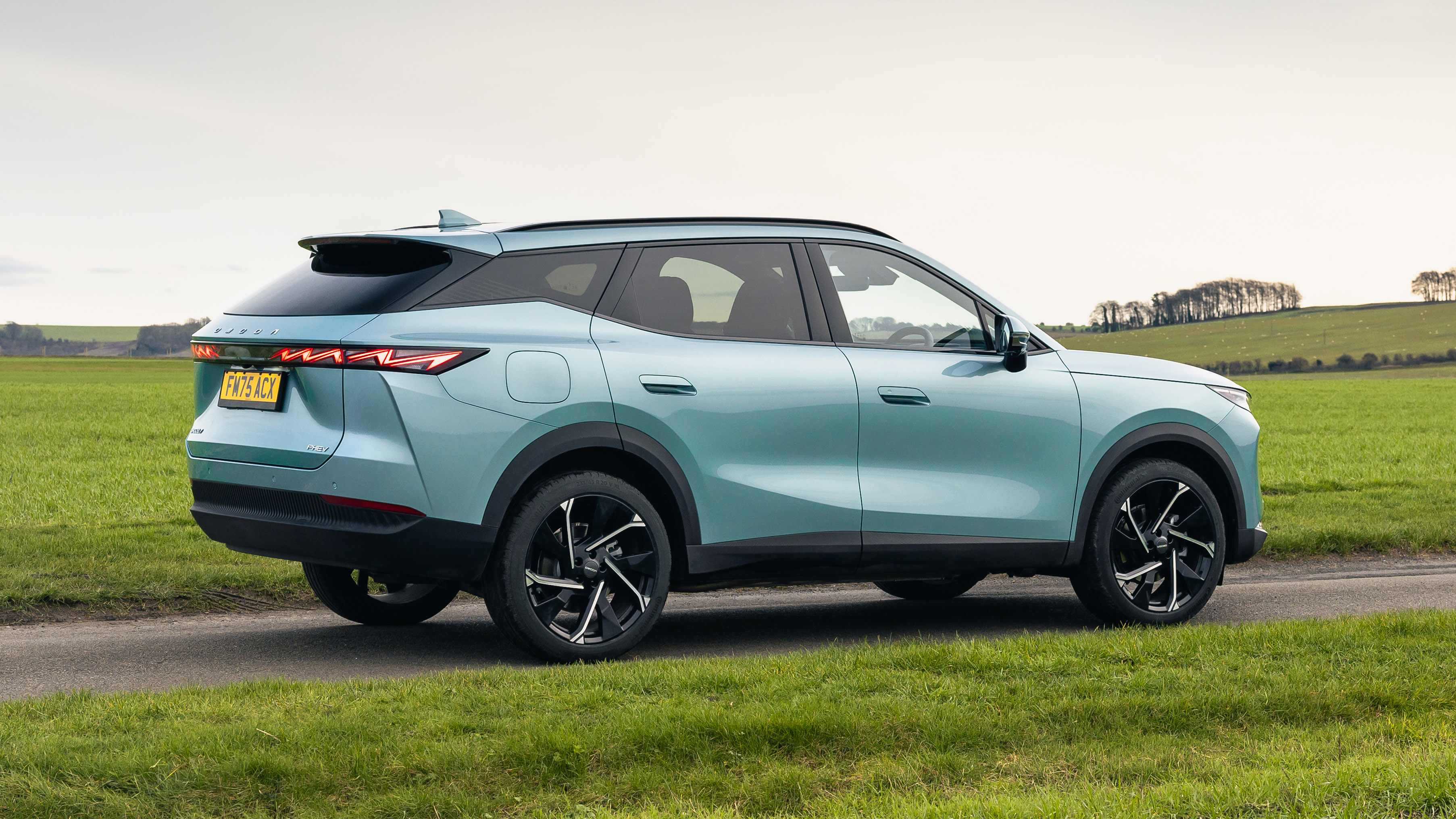
The styling is fairly generic for the segment, but it does get a funky LED rear light signature, shoulders like prime Schwarzenegger and a front grille that blends into the bodywork.
Ah yes, that probably still needs explaining, doesn’t it? Heck, as one of Chery Automobile’s offshoot brands, Omoda was only established in 2022 and didn’t even make it to the UK until 2024. And yet, alongside sister brand Jaecoo, it has burst onto the scene like a young Micah Richards in early 2006.
That’ll be the Omoda 7 SHS-P that you’re referring to, with the suffix rather clunkily standing for ‘Super Hybrid System – Plug-in Hybrid’. Anyway, that means that it’s running Chery’s 1.5-litre petrol engine and electric motor combo connected to an 18.4kWh battery.
It’s the same setup as you’ll find in both the Jaecoo 7 and the Chery Tiggo 7, with the headline figures being 201bhp, 269lb ft of torque and 56 miles of all-electric range.
Currently that PHEV is your only powertrain option, but later in 2026 you’ll also be able to spec a pure petrol one with a 1.6-litre turbo four-pot making 145bhp and 203lb ft.
As expected, the interior is dominated by a massive central touchscreen. This one is a 15.6-inch effort that’s powered by a Snapdragon 8155 processing chip, and it’s both responsive and looks smart. The menu structure can be a little complicated though, and as is so often the case these days, there are very few physical buttons.
In fact, there’s not even a permanent home button on the screen, which can be frustrating if you’re using the wireless Apple CarPlay or Android Auto.
The rest of the interior is nicely equipped with ‘eco-leather’ on the seats and steering wheel. Most of the materials feel pretty premium, and standard kit includes wireless phone charging, connected navigation, a Sony audio system and many USB ports. For more info, click through to the Interior tab of this review.
Not very much, it turns out. Well, prices start at £32,000 for the entry-level plug-in hybrid in Knight trim. A £3,000 jump gets top spec Noble trim with every possible optional extra, meaning the Omoda 7 undercuts all of its main hybrid competitors from mainstream manufacturers by quite some margin.
There’s more info over on the Buying tab, but it’s also worth noting that the pure petrol will kick off at £29,915.
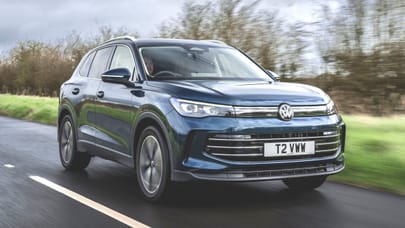
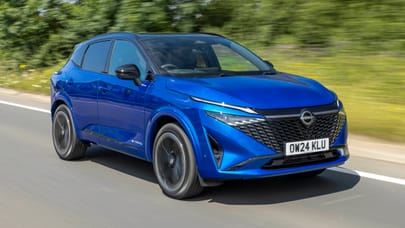
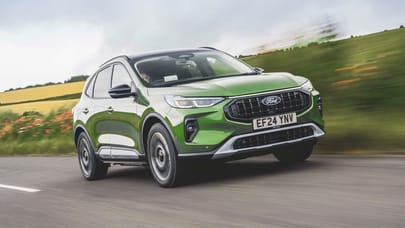
If you’re looking at the legacy manufacturers, you’ll be cross shopping with big sellers such as the Volkswagen Tiguan, the Kia Sportage, the Hyundai Tucson and the Nissan Qashqai. All four of those found a spot in the top 10 best-selling cars in the UK in 2025. The best-driving car in this arena is the Ford Kuga, but the plug-in version of that is £40k plus.
In 2026, you’re certainly not short of Chinese rivals either. Think the MG HS, BYD Seal U DM-i and Geely Starray EM-i, plus the related Jaecoo 7 and Chery Tiggo 7 Super Hybrid.
The 7 might just be Omoda’s most convincing model yet. It’s a big, comfortable bus with a hybrid system that offers plenty of all-electric range and a decent amount of poke. It might not be as interesting to drive as its big-selling main rivals, but it undercuts them on price quite comfortably.
There are still too many functions bundled into the main touchscreen and the menus could do with clearing up, but the 7 gets a huge kit list and a pleasant enough interior.
Get all the latest news, reviews and exclusives, direct to your inbox.