



25
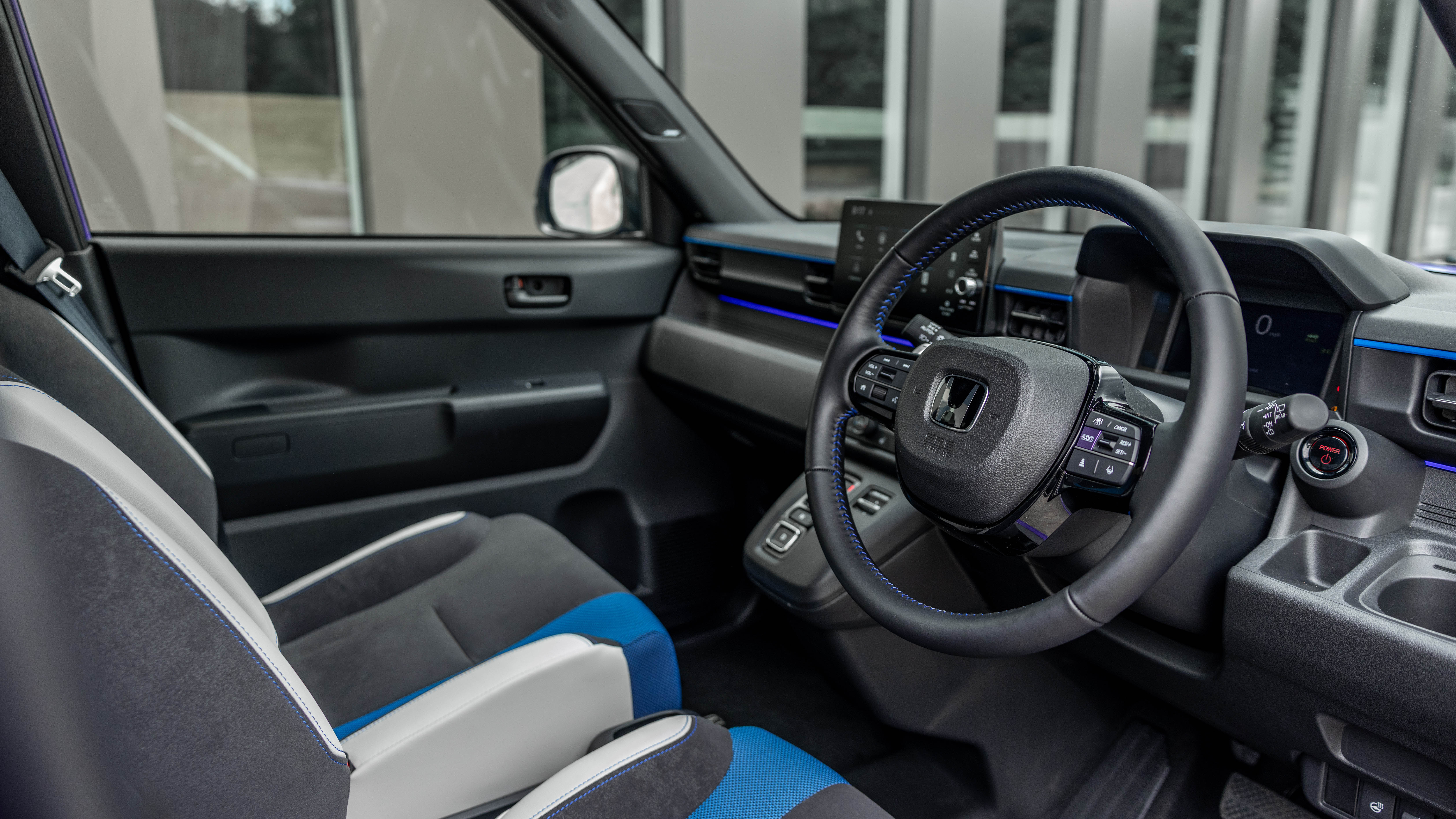
We’ll start with what it’s like once you’ve pressed that purple Boost button on the steering wheel, because that’s what you’ll be tempted to do every time you get behind the wheel. Unlocking the full 94bhp, it drops the 0-62mph time down from 14.5 seconds to a much more respectable 10 seconds.
It feels urgent off the line, and acceleration is accompanied by a disco-spec four-cylinder soundtrack that was apparently inspired by both the City Turbo II and the DC2 Integra Type R. If Honda was going all out on fun though we’d get further customisation. NSX or S2000 noises, anyone?
The simulated seven-speed transmission also kicks in but in its auto mode, so your progress is only slightly interrupted by the little breaks in the delivery of 119lb ft of torque. Hold the left-hand paddle for three seconds and you’ll activate manual mode, where you can flick through ‘gears’ at will or hold onto them up to a virtual redline. And yes, you will bang into the limiter if you miss a shift, which you may well do as the ‘rev counter’ on the screen in front of you is super small and often obscured by sat nav instructions. Oops.
‘Engine braking’ is simulated with different levels of regen. It’s a gimmick yes, but it’s good clean fun and really does set the Super-N apart from its teeny EV rivals. We like it.
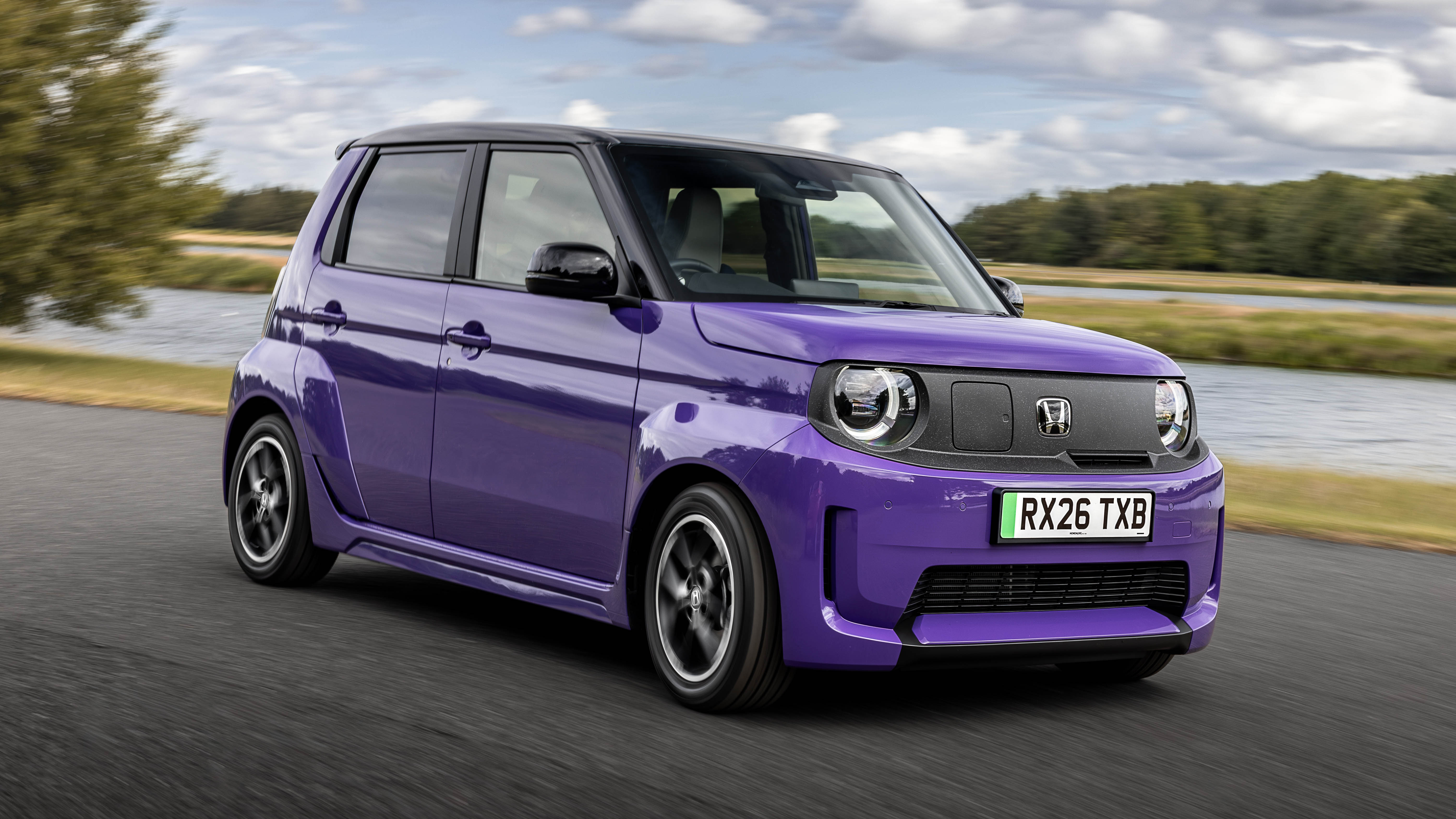
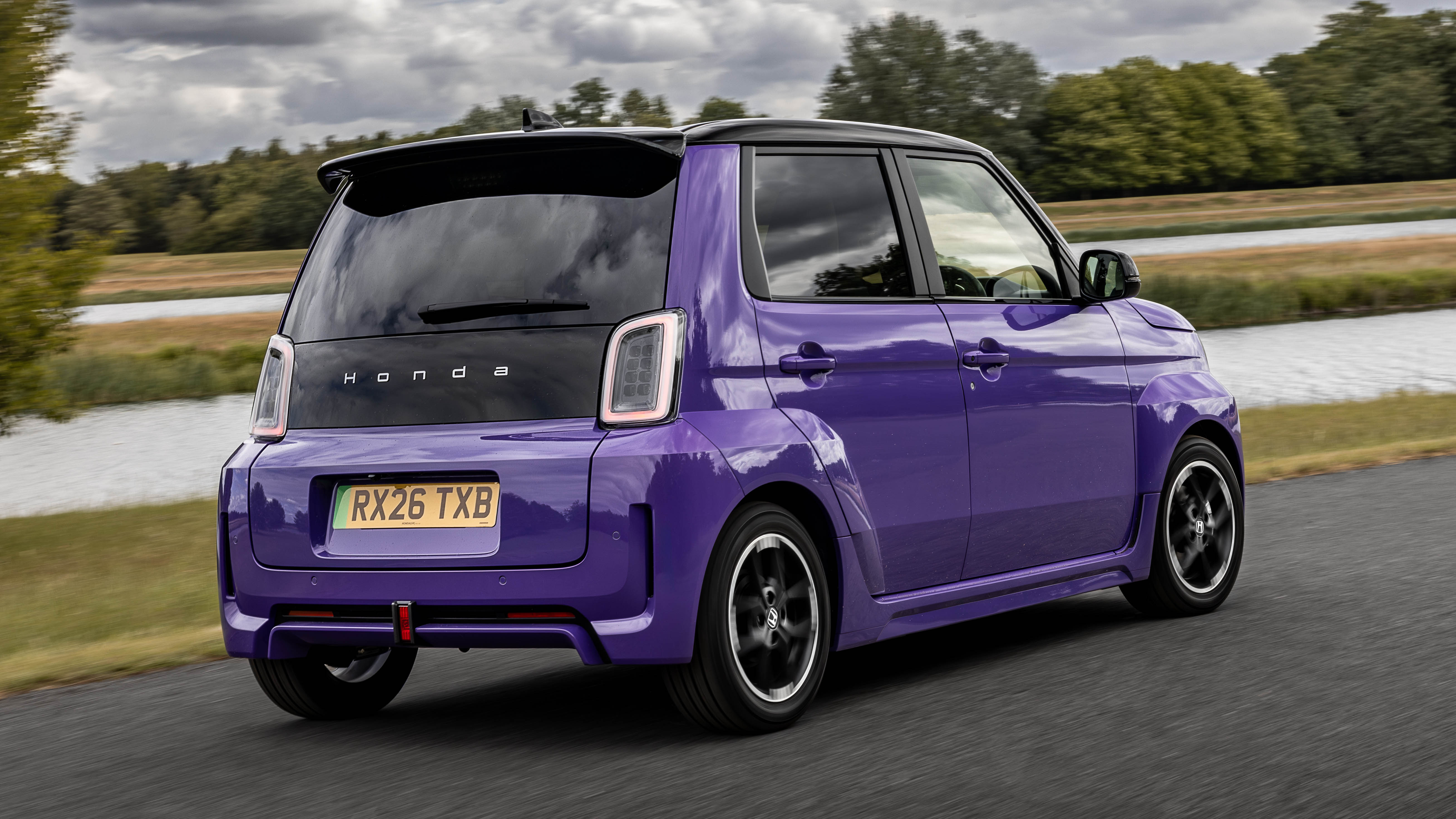
It does look a little like a shrunken block of flats, but with its battery under the floor the Super-N has a low centre of gravity, and the 50mm wider track means it’s actually quite agile. Helps that the kerb weight is a featherweight 1,097kg. That’s around 200kg less than the larger electric Twingo.
There is a bit of body roll through bends as is to be expected, but you can play with the throttle and get it to move a little on its tiny tyres. The suspension is on the stiffer side but there’s decent feel to the Super-N’s steering. Can be a little crashy over bumps mind, despite being tested extensively on UK roads.
In all the other modes you’ve only got 63bhp and the Super-N does feel a little sluggish, but Sport retains the fake gearshifts (albeit with a 30 per cent lower ‘redline’) while City mode activates full one-pedal driving. There’s also a Normal mode where you can use the paddles to change the regen level, and you’ve got an Eco mode if you want to maximise the range.
The WLTP figure is 128 miles of range, which isn’t really that far. Still, this is a small, lightweight city car that doesn’t need to carry around a giant battery. It’s efficient too. On a hot day with air con blasting and a fair few blasts in boost mode, we still saw an average of 4.6 mi/kWh. We’d imagine any motorway mileage would reduce that figure, but aside from that and a little road noise, the Super-N is still perfectly happy at 70mph.
It’s got all the kit you might expect. More in fact. Think adaptive cruise control, lane keep assist and many different forward collision warnings. None seem too intrusive though, and the Super-N bongs far less than most Honda’s we’ve driven in recent years. Hurrah!
Get all the latest news, reviews and exclusives, direct to your inbox.
