
Advertisement
“Audi’s re-issue of the iconic A2, this time as an EV with a focus on efficiency. But does it have the quirky charm of the original?”
Good stuff
Competent in all areas, efficient enough to satisfy, feels nicely built and handles very well
Bad stuff
Driver’s display has too much bezel, does it have enough character?
Overview
What is it?
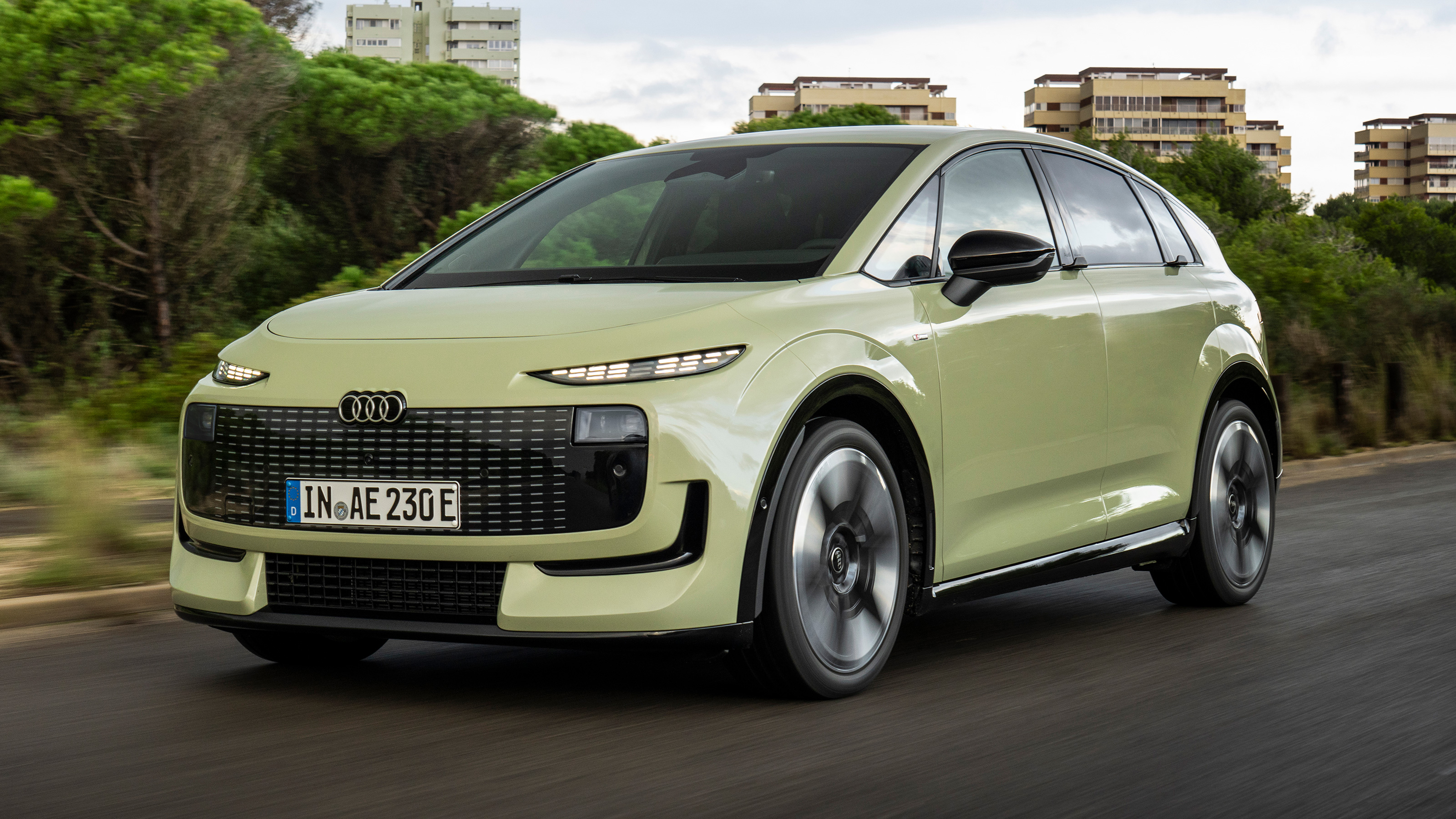
Audi’s re-issue of the A2 nameplate, this time in efficiency-focussed EV format. Longer and wider than before, it jumps up a size or two, promising exceptional parsimony for your valuable volts. Sister car to the VW ID.3 Neo and Cupra Born and therefore with a five-seat hatch body and rear-wheel drive.
The most range-led version (228bhp with the biggest battery) manages almost 400 miles of range. And it’s got a co-efficient of drag of 0.24 – the best of any electric Audi to date. Although not that slippery in terms of electric cars – it doesn’t take long to search-engine your way to several EVs that do the same or better. And it sort of, ish, looks a bit like the original. If you peer through someone else’s reading glasses.
Advertisement - Page continues below
So what’s the range? The model range, I mean…
Sort of simple. There are four power levels and three battery sizes. So the batteries are 50 and 58kWh (usable, both LFP), or 79kWh (NMC). Those range from 261 miles of range WLTP to 397, with the lower-powered car with the biggest battery posting the highest mileage. More on that in a minute.
Power levels are 170, 190, 231 and 326 – all in PS, as that’s how Audi refers to the models. Sigh. So 168, 187, 228 and 322bhp, then. The wheels range from 18 to 20 inches, with the 19s being the most efficient, and there are four trim lines: Technik, Sport, S-Line (which adds chunkier bumpers and front intakes, gloss black side skirts and window trim, and a ‘sportier’ rear diffuser) and Edition 1. Which is bells-plus-whistles.
Prices run from £32,200 for the least powerful, least battery’d Technik, to £50,880 for the big battery in Edition 1.
Is it especially efficient?
For an electric Audi, yes. In the wider context, it’s fine. That 397 miles of range with the 79kWh battery relies on marginal gains and great-but-not-exceptional drag. Tesla’s Model 3, the Hyundai Ioniq 6, the Mercedes CLA 250+ Sport Electric – heck, even the Dacia Spring – all return that or more.
Advertisement - Page continues below
But Audi is at least paying attention rather than just wedging in bigger batteries to get the attractive range. There’s a shuttered grille in the front intake, ‘gap reducers’ in the wheelarches to close down the turbulent air, a flat floor and decently slippery shape that apes some of the forms of the original A2.
Hmm. It looks… clean?
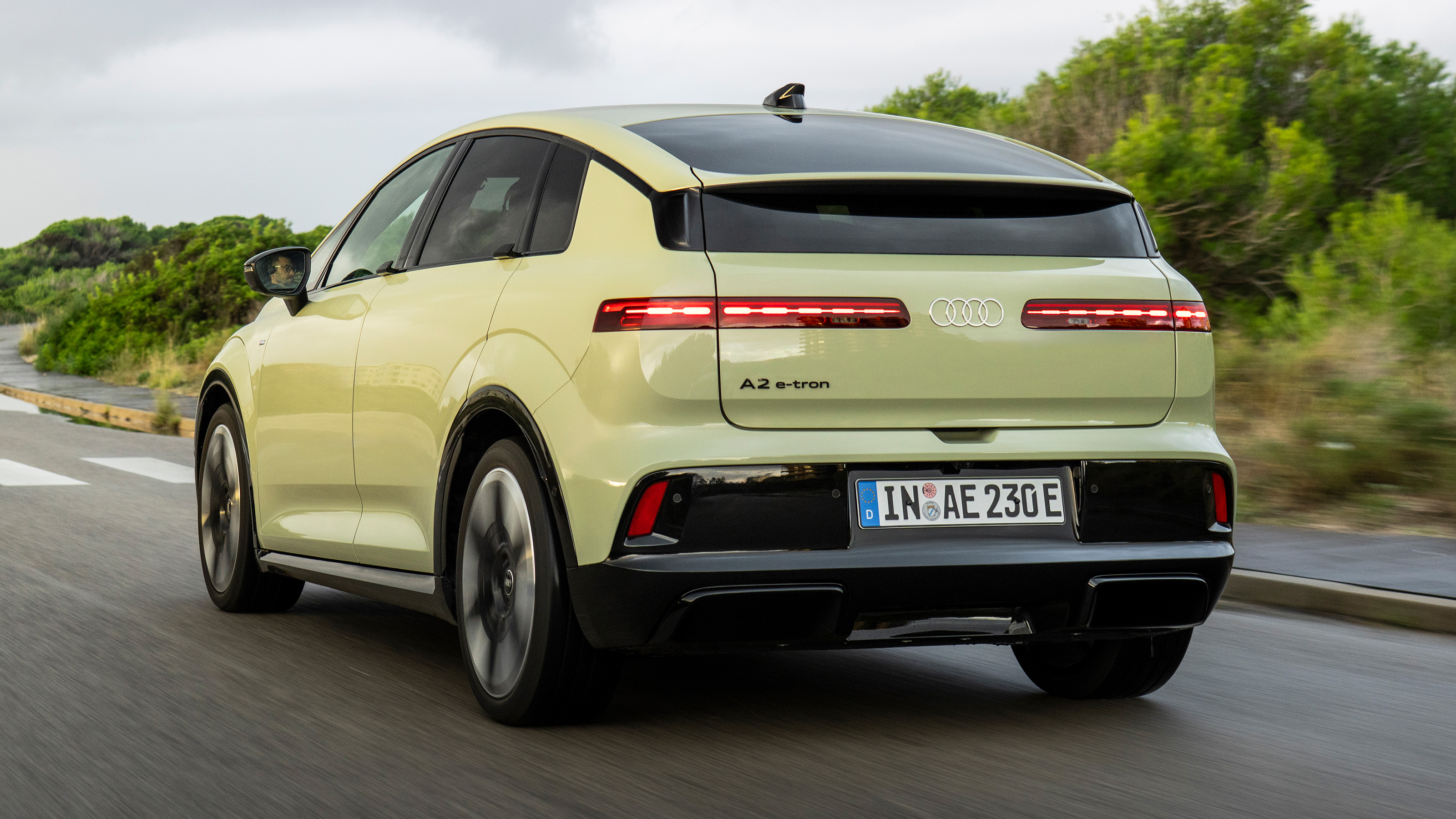
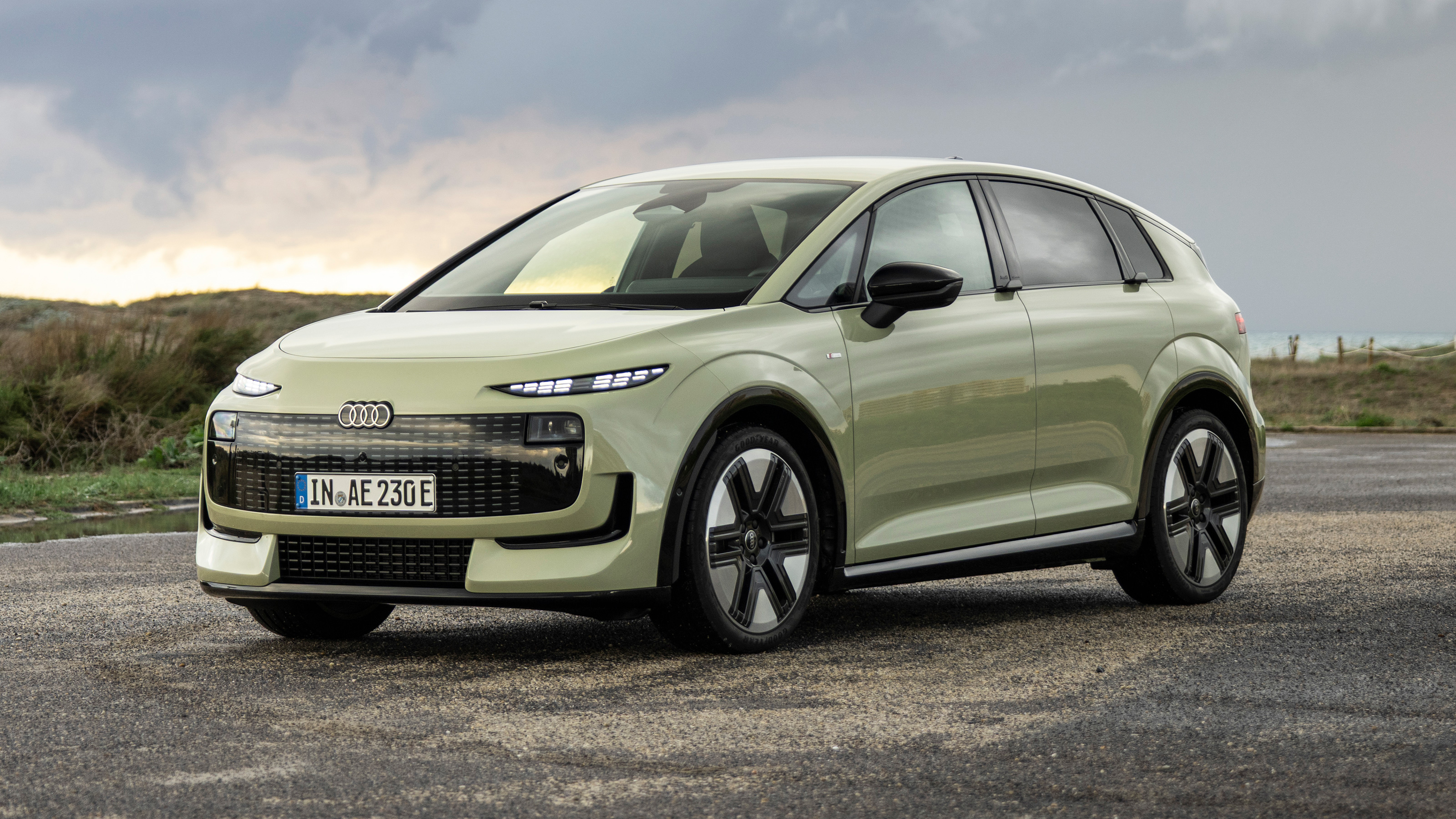
It might not be the wilful eccentricity of the original A2, but there’s a detailed – if sometimes a bit bland – EV in here. The profile and roofline are nicely teardropped with a floating element at the rear, and a rear spoiler that splits the rear windscreen like the original. The Kamm-style tail chops off the airflow, and there are big, rounded wheelarches over aero wheels with those ‘gap reducers’ in the edges – basically little air blades-slash flow curtains.
Door handles are little touch sensitive blades at the bottom of the windows like the Ford Mustang Mach-E, keeping those door surfaces clean, and the wheelbase is relatively long at 2.77 metres, the same as an Audi Q4 e-tron. Audi insists that the whole idea is to maximise interior space for the footprint. Which it pretty much does.
To be honest, this might well be more of a grower than an instant hit – it just takes some time to appreciate. The sensors for the ADAS (advanced driver assistance systems) are integrated into the large, flat black panel at the front, as are the LED headlights. Above that, slim daylight running light LEDs that seem to be ultra-common on a lot of cars at the moment. The lower mouth is both shuttered and bracketed by chinstraps that aim air past the front wheels, and at the back that split rear window adds some character. And the rear lights are broad but slim, sitting over a defined rear bumper and diffuser underneath.
What about the inside?
The interior is actually a bit like the outside – initially a little stark, but it gets more authentic with use. The all-electric blade door handles are light and easy to use – and if there was a concern, there’s a separate battery under the floor that works the doors even if the A2’s electrical system completely fails. Doors are wide and accommodating, and the ‘softwrap’ fabric-covered beltline around the cabin gives it a cosy feel.
Seats are comfortable over long distances, the ergonomics are excellent and everything feels defiantly premium – though the 11.9-inch Audi Virtual Cockpit only uses part of the glassed in arch that it sits inside, next to the 12.8-inch MMI touchscreen. Weird, but the rest would be obscured by the top of the steering wheel rim, so you can see the thought process.
There’s plenty of space in the back, loads of storage and lovely mag-mount wireless phone charging, and the ‘Fidlock’ system as standard. That’s a magnetised locking system for accessories like cupholders or phone mounts (and the charging cable bag in the boot) so you can move them about – more usually used thus far on bicycles for clip-in water bottles. And similarly in Dacias, although that version is Dacia’s own and called YouClip. The boot is fine for this class at 396-litres: not excessively huge, but not small either. The ambient lighting’s good, too.
What’s the motivation like?
It’s desperate to put in a good performance in front of the fans. Oh, you’re referring to the motors aren’t you? Well, something like the VW ID. Polo gets the new VW Group APP290 permanent magnet synchronous motor drive system with the latest efficiency upgrades, and the A2 gets a similar system, but … more of it. So either APP350 or APP550 depending on the power output. Yes, the bigger number means ‘more’.
Unlike the Polo all A2s are rear-wheel drive, and in this application get four levels of brake regen. But this is all about marginal gains; so the A2 also has polished gear teeth, low viscosity oils and things like friction-optimised bearings to help smooth it down the road. It feels like it, too: the A2 has a frictionless vibe that makes it appear to slip through the air rather than batter its way through it.
How does it drive though?
Well. Actually much better than you’d imagine. Though it depends a bit on what mixture of spec you’ve optioned. There are basically several possible setups. You can have standard Comfort suspension, or optional Sport suspension with stiffer anti-roll bars. Then you can have electronic damper control or passive damping, with Sport suspension and active dampers available on the 228bhp version, and active dampers standard on the top-of-the-range 322bhp on. Though you can also have Sport suspension on the 188bhp car, because it comes as part of the optional efficiency package, which includes low-rolling resistance tyres and a few other bits.
Confused? Well, confused that there’s an ‘efficiency package’ on what’s billed as Audi’s most efficient car, at least. But on a smooth road, the A2 is far from banal – it’s calm, sorted and remarkably amusing to thread down a faster road. Yes, a Cupra product has more enthusiasm from the chassis, but the Audi feels a bit more grown up – and also feels like it would make for a really satisfying daily.
What’s it got to beat?
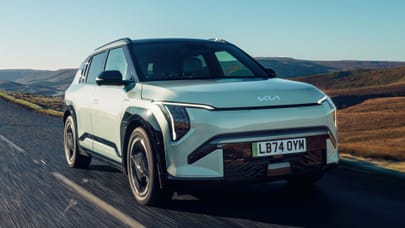
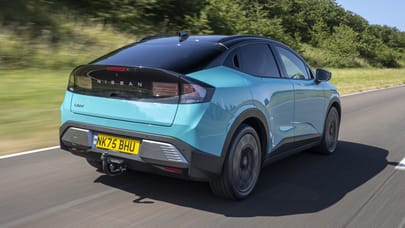
As well as the ID.3 and Born? Renault has set the benchmark in this segment for several years with the soon-to-be updated Megane E-Tech Electric, but the Kia EV3 is a top notch all-rounder (most Kias are) and the Volvo EX30 is a minimalist’s dream. The Nissan Leaf is a crossover these days and that’s marvellous, albeit lacking in badge clout. Lots of tastes catered for there.
What's the verdict?
“It’s not pushing the boundaries like the original, and it’s not the kind of thing that immediately blows your mind”
The new Audi A2 is a really very nice small-ish electric car. It feels thoughtful, thorough and efficient, has good space for its size, feels premium inside and steers – literally steers – very nicely. It’s quiet, can be as fast as you need it to be and offers largely decent value for money if a legacy badge is something that matters.
It’s a very calmly satisfying car. It’s not pushing the boundaries like the original, and it’s not the kind of thing that immediately blows your mind. But you get the feeling this is a car that will resolve the longer you drive it. Good, yes. But this one might need some time to percolate.